Australia’s battery-electric fleet passes 500,000 as Electric Vehicle Council warns a far bigger task lies ahead
The Electric Vehicle Council says more than half a million battery-electric vehicles are now on Australian roads, with a record 24.9 per cent share of new-vehicle sales in August — but reaching five million by 2035 would require nine times the pace of adoption achieved over the past 16 years.
Automatically researched, written and checked using AI. Verify details against the sources.
Half a million electric cars on Australian roads
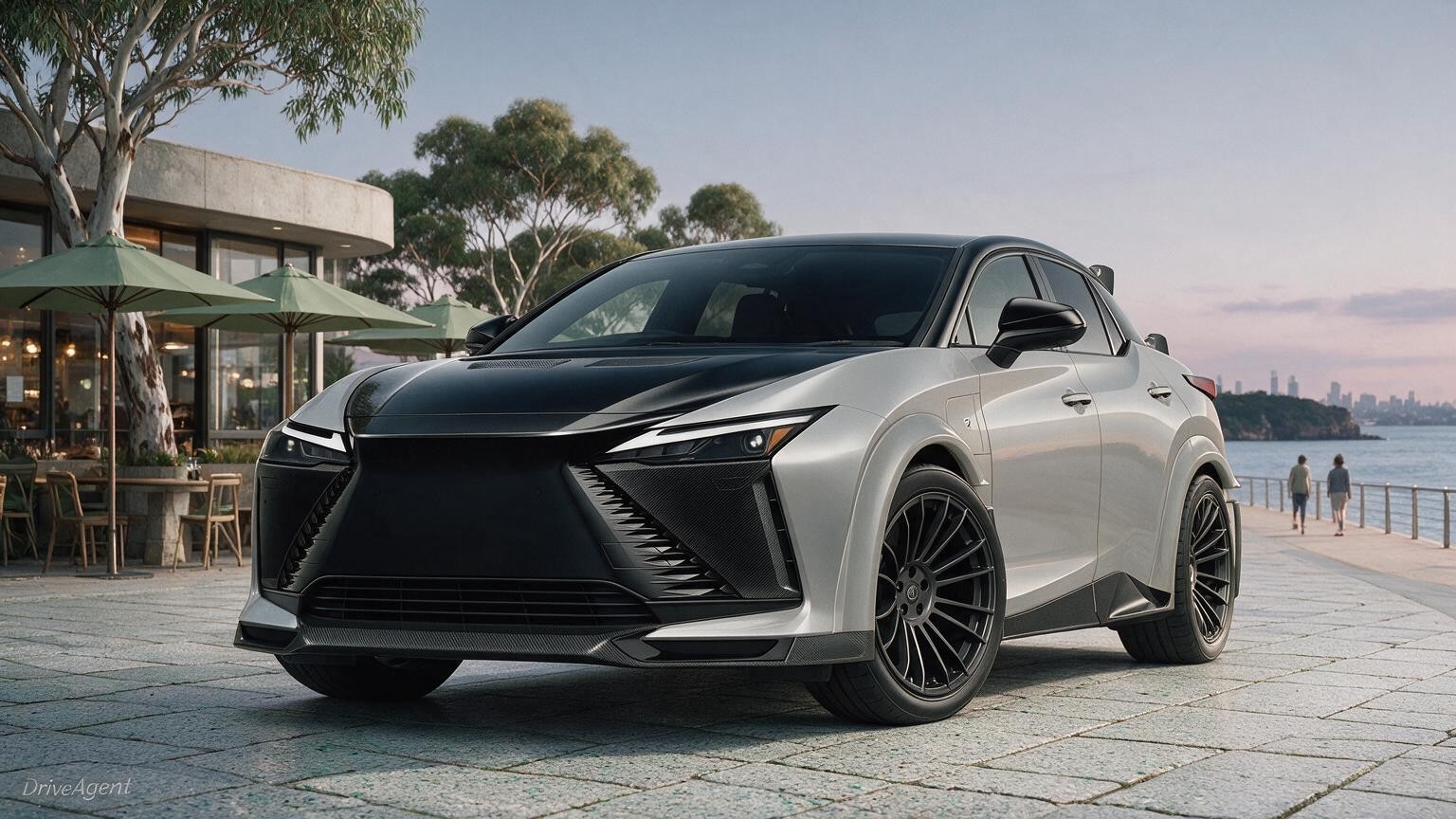
Australia has officially passed 500,000 battery-electric vehicles on its roads, according to an announcement by the Electric Vehicle Council (EVC) made on World EV Day. The milestone measures the cumulative number of BEVs in the national fleet rather than a single period of sales, and comes 16 years after the Mitsubishi i-MiEV became the first battery-electric car available to buy in Australia in 2010. 15
The milestone was reported separately by Australasian Paint & Panel, EV Infrastructure News and the Australian Fleet Managers Association (AfMA), all attributing the announcement to the EVC and the same core figures. AfMA’s account states that more than 500,000 BEVs are now registered, describing the milestone as a significant step in the transition. 145
EVC chief executive Julie Delvecchio framed the milestone as evidence of how far the market has come. “Hitting 500,000 battery electric cars on Australian roads is a remarkable achievement that we always believed was possible, even when others doubted it,” she said, according to AfMA’s and EV Infrastructure News’ coverage of the announcement. 45
A record August for electric sales
The announcement coincided with a record month for electric sales. In August 2026, battery-electric vehicles accounted for 24.9 per cent of all new-vehicle sales — the highest monthly share on record and more than any other individual fuel type, according to the EVC as reported by EV Infrastructure News. BEVs represented almost one in four new vehicles sold that month. 145
The EVC says BEVs and plug-in hybrids combined accounted for more than a third of the new-vehicle market in August, while petrol and diesel vehicles fell below half of all new sales for the first time. AfMA notes the 24.9 per cent figure applies across all reporting sources for the month. 145
EV Infrastructure News, citing EVC-reported figures, says EV sales rose 91 per cent year-on-year in the first eight months of 2026, with Tesla and Polestar alone delivering 7,821 battery-electric vehicles in August, up 148 per cent on the same month in 2025. It also cites the Australian Automobile Association’s EV Index, which put electric, plug-in hybrid and conventional hybrid vehicles combined at 49.16 per cent of new light-vehicle sales in Q2 2026, with battery EVs alone at a record 21.03 per cent share. 4
Why the EVC says sales are growing — and what must happen next
The EVC points to increasing model choice, falling costs and supportive government policies as factors behind growing sales, with almost 200 EV models now available in Australia. Delvecchio highlighted running costs as a primary driver of consumer uptake, telling the EVC’s own messaging and AfMA’s account that EVs are among the most effective cost-of-living measures available. “When people realise they can save $3,000 per year driving electric, they don’t need convincing — they just buy one,” she said. 145
Despite the milestone, the EVC cautions that adoption must accelerate substantially. It says Australia needs to reach five million BEVs on the road by 2035, meaning another 4.5 million vehicles must be added over the next nine years — nine times the growth achieved during the previous 16 years. “That means achieving nine times the growth it took us 16 years to deliver, in little more than half the time,” Delvecchio said, as quoted by EV Infrastructure News. 145
The EVC identified three areas it says will be important to sustaining momentum: choice and affordability across vehicle segments; coordinated delivery of charging access for apartment residents, renters, businesses and regional communities; and policy certainty around measures including the New Vehicle Efficiency Standard and the Electric Car Discount. 45
Delvecchio singled out the upcoming review of the New Vehicle Efficiency Standard as a pivotal moment. “The review of the Vehicle Efficiency Standard is a crucial moment in our path to 5 million BEVs. If the Standard is allowed to stagnate after 2029, Australians will be forced to drive expensive petrol cars,” she said in the AfMA report. The EVC also notes that upcoming discussions around the NVES and a potential road user charge could influence the next phase of the transition. 45
Charging and industry readiness build on the milestone
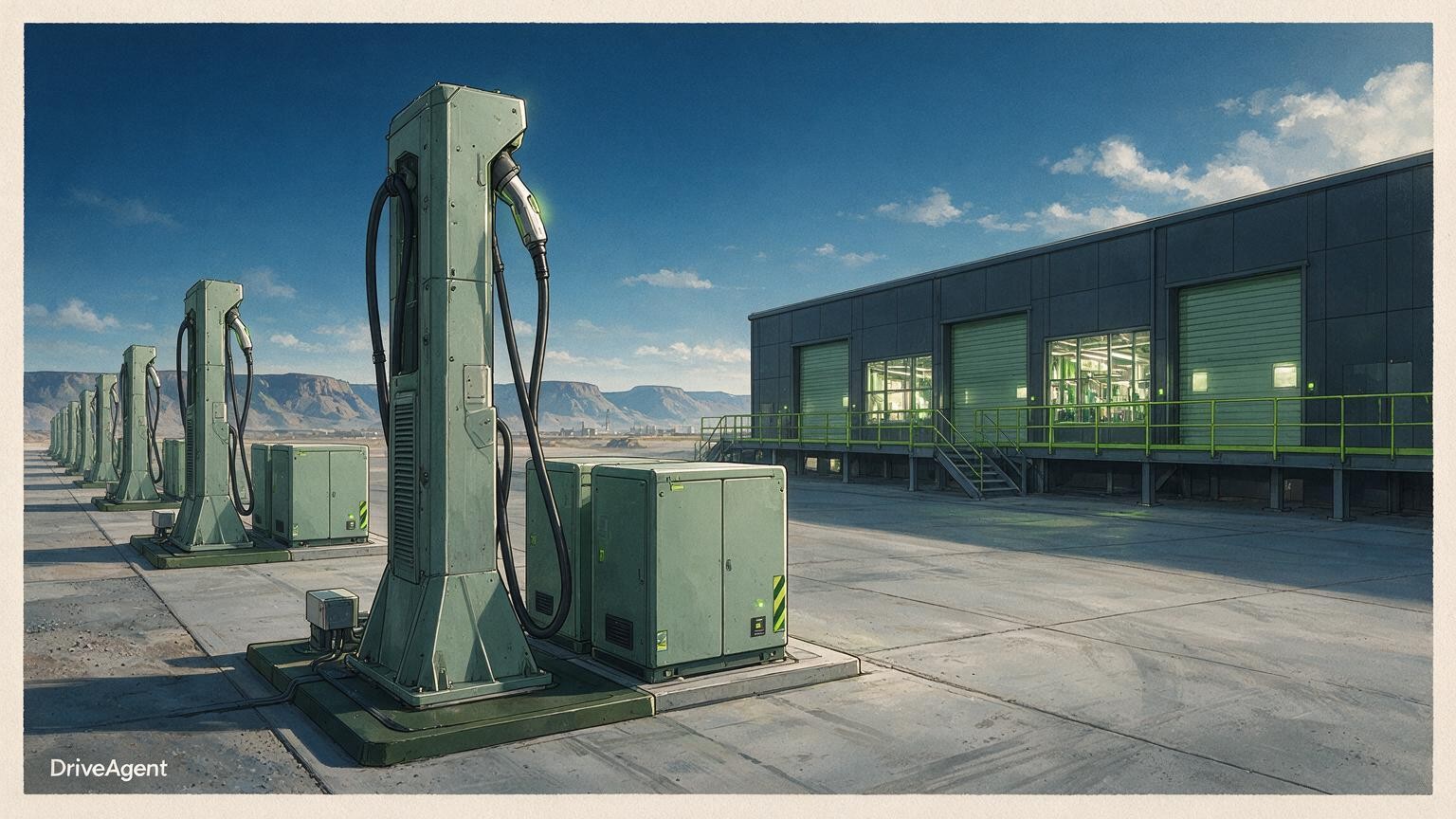
Charging access features in related policy work around the milestone. EV Infrastructure News reports that the Australian Energy Market Commission has released a draft rule enabling the rollout of about 14,000 EV chargers in regional blackspots and high-density kerbside areas under the Commonwealth’s $40 million Accelerating EV Charging Program. The Commonwealth would cover roughly 30 per cent of eligible infrastructure costs, with participating networks recovering the remaining 70 per cent from consumers — an estimated A$1 per year for a typical residential customer over five years. Submissions on the draft close on 5 November 2026, with a final determination due by the end of 2026 so the program can commence in 2027, and the program is scheduled to conclude on 30 June 2029. 6
Separately, EV Infrastructure News reports the New South Wales government is investing $16.5 million to co-fund kerbside chargers — up to $6,000 per AC charge port and $30,000 per DC fast-charge port across 37 Local Government Areas — and to help businesses electrify fleets of 21 or more vehicles. The state has more than 155,000 EVs registered, according to NSW Energy Minister Penny Sharpe. 7
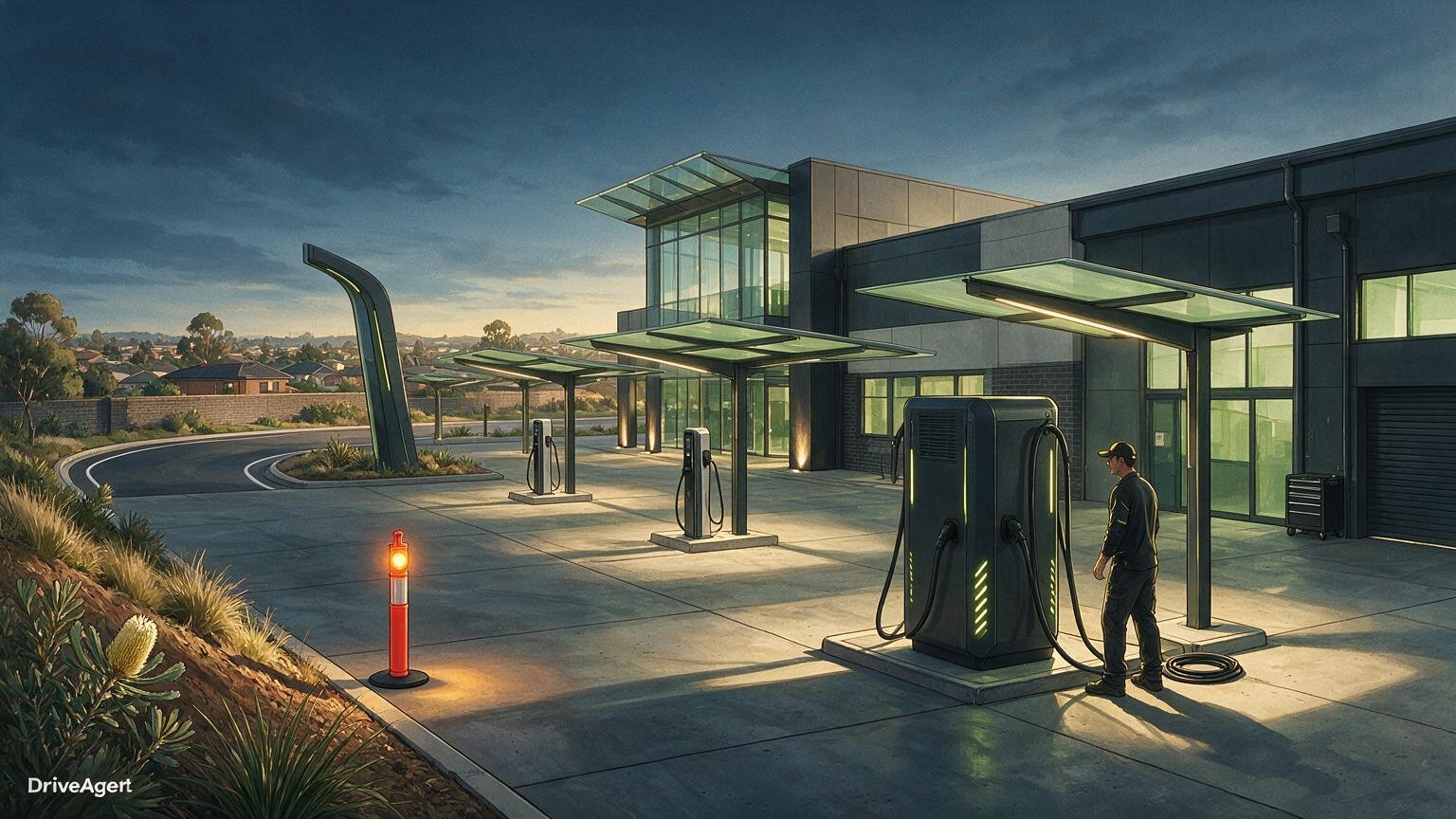
On servicing capability, EV Infrastructure News cites research published by NRMA Insurance finding that only around one in 10 repairers in Australia are currently EV-certified, even as more than 80 per cent of Australians say they would consider buying an EV, up from 20 per cent considering a battery-electric vehicle in 2024. 47
To address that readiness gap, the EVC welcomed the latest round of the federal government’s DRIVEN rebate, under which eligible businesses can claim up to 80 per cent of the cost of EV-specific tooling, protective equipment and workshop upgrades, capped at $50,000. “Dealerships and repair workshops right across the country need to be ready for the customers already walking through their doors,” Delvecchio said, according to Australasian Paint & Panel. The EVC says the support will make it easier for dealerships to sell, demonstrate and service electric vehicles as the fleet grows. 145
Where the milestone sits in the wider market
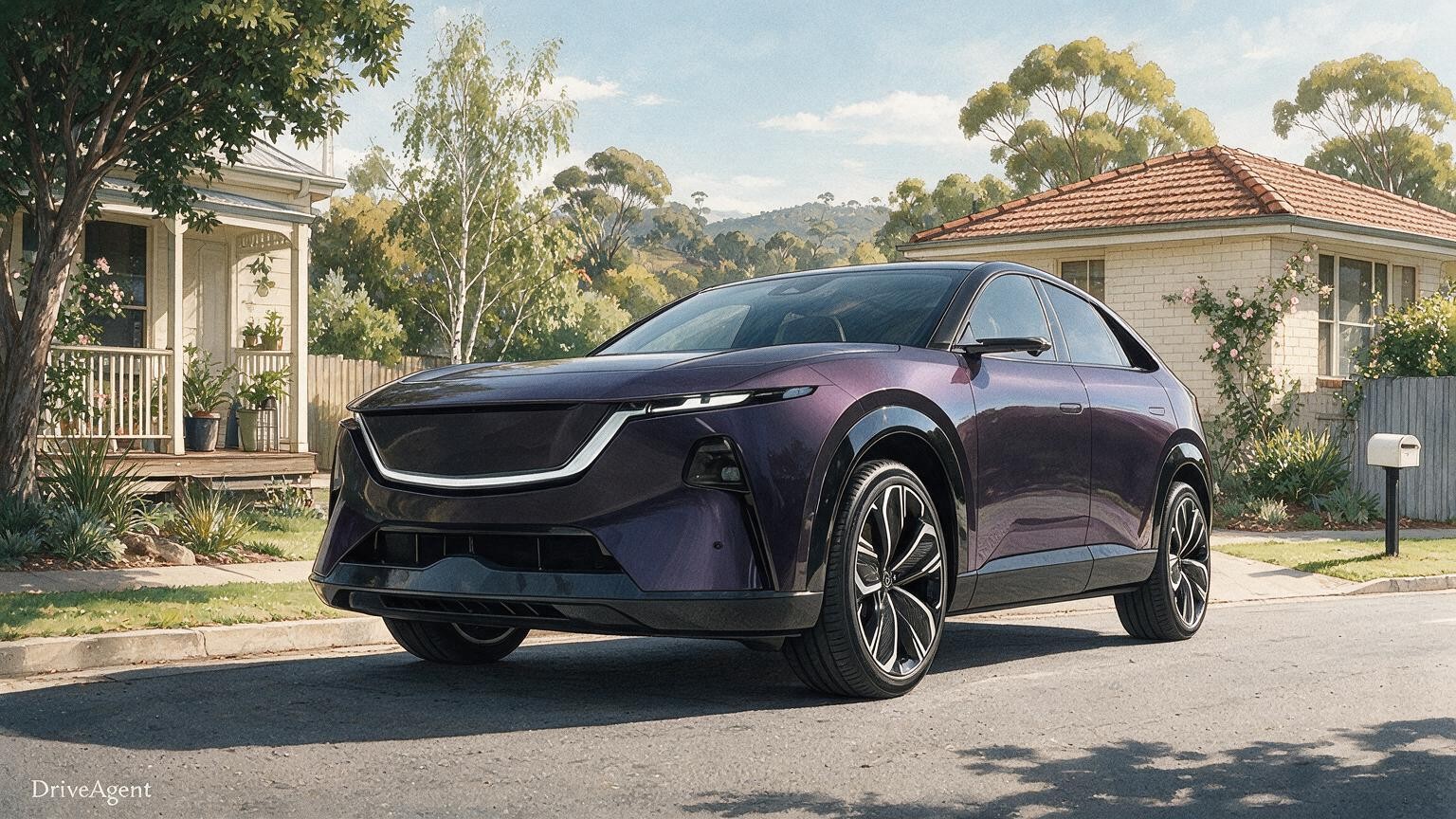
GoAuto reports that the sustained BEV demand growth in Australia has had direct consequences for manufacturers. Mazda Australia managing director Vinesh Bhindi told GoAuto that the fuel supply crisis that has persisted since the Strait of Hormuz crisis began in February had triggered significantly stronger BEV demand, and that the brand’s two new Chinese-built BEVs — the 6e sedan, from $49,990 plus on-road costs, and the CX-6e SUV, from $53,990 plus on-road costs — would play a bigger role than Mazda had planned eight months earlier. 2
GoAuto also reports that under the New Vehicle Efficiency Standard, Mazda needs its BEV range to grow rapidly to offset the diesel-powered BT-50, with headline limits for passenger vehicles and SUVs falling from 92g/km in 2027 to 68g/km in 2028 and 58g/km in 2029. GoAuto notes BEVs accounted for 24.9 per cent of Australian new-vehicle registrations in August 2026, matching the EVC’s headline figure for that month. 23
AI evidence finder
Ask about this article
Ask a question to find relevant published passages and source links. AI selects evidence; the passages remain exactly as published.
Behind this report
Sources & context
Cited source mix
7 cited pages across 4 websites
- News publisher 2
- Role not assessed 5
Website breakdown
- evinfrastructurenews.com3 pages
- GoAutogoauto.com.au2 pages
- afma.org.au1 page
- paintandpanel.com.au1 page
5 cited pages with an undocumented publisher role. Websites may share ownership or repeat the same reporting.
Saved research extracts
7 / 7 cited pages with saved extracts
0 shortened at our text limit · 0 without a saved-extract record
Extracts retrieved 29 Sep 2026.
Extracts can omit page content. These counts do not verify claims or measure independent reporting. Political leaning and reliability are not rated.
- Australia’s BEV fleet passes 500,000, EVC saysRole not assessedSource extract saved
Why these labels?Australia’s BEV fleet passes 500,000, EVC says
Who produced it
We have not documented this publisher’s role. An unassigned label is not a negative rating.
How this report uses it
Cited in 7 paragraphs: Half a million electric cars on Australian roads; A record August for electric sales; Why the EVC says sales are growing — and what must happen next; Charging and industry readiness build on the milestone.
This describes its use in our report. It does not establish the source’s editorial stance or independently corroborate every claim.
Evidence record
Text retrieved 29 Sep 2026. The retained extract did not reach our text limit. Extraction can still omit page content.
- Mazda considering additional Chinese EVsNews publisherSource extract saved
Why these labels?Mazda considering additional Chinese EVs
Who produced it
GoAutoMedia publishes automotive industry and consumer news, vehicle reviews and model information. Identity reference ↗
How this report uses it
Cited in 2 paragraphs: Where the milestone sits in the wider market.
This describes its use in our report. It does not establish the source’s editorial stance or independently corroborate every claim.
Evidence record
Text retrieved 29 Sep 2026. The retained extract did not reach our text limit. Extraction can still omit page content.
- Mazda to surge EV sales to offset BT-50 emissionsNews publisherSource extract saved
Why these labels?Mazda to surge EV sales to offset BT-50 emissions
Who produced it
GoAutoMedia publishes automotive industry and consumer news, vehicle reviews and model information. Identity reference ↗
How this report uses it
Cited in 1 paragraph: Where the milestone sits in the wider market.
This describes its use in our report. It does not establish the source’s editorial stance or independently corroborate every claim.
Evidence record
Text retrieved 29 Sep 2026. The retained extract did not reach our text limit. Extraction can still omit page content.
- Australia surpasses 500,000 battery electric vehiclesRole not assessedSource extract saved
Why these labels?Australia surpasses 500,000 battery electric vehicles
Who produced it
We have not documented this publisher’s role. An unassigned label is not a negative rating.
How this report uses it
Cited in 11 paragraphs: Half a million electric cars on Australian roads; A record August for electric sales; Why the EVC says sales are growing — and what must happen next; Charging and industry readiness build on the milestone.
This describes its use in our report. It does not establish the source’s editorial stance or independently corroborate every claim.
Evidence record
Text retrieved 29 Sep 2026. The retained extract did not reach our text limit. Extraction can still omit page content.
- Australia reaches 500,000 BEVs - AfMARole not assessedSource extract saved
Why these labels?Australia reaches 500,000 BEVs - AfMA
Who produced it
We have not documented this publisher’s role. An unassigned label is not a negative rating.
How this report uses it
Cited in 10 paragraphs: Half a million electric cars on Australian roads; A record August for electric sales; Why the EVC says sales are growing — and what must happen next; Charging and industry readiness build on the milestone.
This describes its use in our report. It does not establish the source’s editorial stance or independently corroborate every claim.
Evidence record
Text retrieved 29 Sep 2026. The retained extract did not reach our text limit. Extraction can still omit page content.
- AEMC draft rule enables AU$40m EV charging rollout in ...Role not assessedSource extract saved
Why these labels?AEMC draft rule enables AU$40m EV charging rollout in ...
Who produced it
We have not documented this publisher’s role. An unassigned label is not a negative rating.
How this report uses it
Cited in 1 paragraph: Charging and industry readiness build on the milestone.
This describes its use in our report. It does not establish the source’s editorial stance or independently corroborate every claim.
Evidence record
Text retrieved 29 Sep 2026. The retained extract did not reach our text limit. Extraction can still omit page content.
- NSW invests AU$16.5m in EV chargers as registrations hit 155KRole not assessedSource extract saved
Why these labels?NSW invests AU$16.5m in EV chargers as registrations hit 155K
Who produced it
We have not documented this publisher’s role. An unassigned label is not a negative rating.
How this report uses it
Cited in 2 paragraphs: Charging and industry readiness build on the milestone.
This describes its use in our report. It does not establish the source’s editorial stance or independently corroborate every claim.
Evidence record
Text retrieved 29 Sep 2026. The retained extract did not reach our text limit. Extraction can still omit page content.
Keep reading
Related subjects and more from this section.
Battery-electric vehicles outsell petrol models in August Australian new-car sales
August’s new-car figures put battery-electric vehicles ahead of petrol models for the first time. The broader fleet, charging access and repair support present a different picture of Australia’s EV growth.