Australian drivers pay among the world's biggest fuel price increases as EV interest climbs
New analysis from the Centre for Research on Energy and Clean Air puts Australia third globally for extra fuel costs per person since the Middle East conflict began, with experts pointing to heavy diesel reliance and rising electric vehicle uptake as partial buffers.
Synthesised from the cited sources. Research, writing and factual checks are automated using AI. Verify details against the sources. How we produce these reports
Australians third-highest hit globally, analysis finds
Australians have paid roughly $546 more than usual for fuel per person during the global fuel crisis, placing the country third behind the United States and Canada, according to analysis from the Centre for Research on Energy and Clean Air (CREA) reported by SBS News. The analysis compared average fuel prices in January and February, before disruption of shipments through the Strait of Hormuz, with prices from March to October, and found price shocks cost 169 countries a combined $665 billion. SBS News reported the national impact of fuel price shocks exceeded $14 billion since March. 1
Yahoo Finance Australia reported the same CREA analysis as showing Australians paid an extra $550 per person on average since February, more than six times the global average of $85, with only Americans ($671) and Canadians ($601) paying larger per-person increases. Yahoo Finance Australia also reported that CREA research put Australians' additional petrol and diesel spending since the war started at $10.5 billion, a lower national total than the more than $14 billion since March cited by SBS News. CREA co-founder Lauri Myllyvirta told the publication that Australians were "paying an exceptionally high price for this war because they use so much oil". 23
What drivers are paying at the bowser
Yahoo Finance Australia reported that the average retail petrol price across the country's five major cities sits at 241.9 cents per litre according to the ACCC's weekly fuel price monitoring, a 1 per cent increase week on week and 71 cents per litre higher than in February when the overseas conflict began. Separately, NRMA fuel watch figures reported by Yahoo Finance Australia put the average Sydney unleaded price at 236 cents per litre and diesel at 280.4 cents per litre as of Monday, with Brent crude settling at $US115 a barrel after rallying the previous week. 23
Nine.com.au reported in late September that diesel had surged almost 40 cents a litre in a single month, nearing record highs, with experts predicting averages likely to exceed $2.50 per litre for petrol and $3 for diesel for at least two months. That report also noted the federal government had ruled out another fuel excise cut, and that despite the May federal budget forecasting oil prices to drop to $US80 a barrel by mid-2027, experts predicted oil could reach up to $US150 per barrel before any relief. 4
Nine.com.au's reporting included individual examples of the cost burden: full-time traveller Seamus Campbell, driving a 1999 Toyota Troopy, told the publication his fuel cost rose from about $23 to about $50 per 100 kilometres, with diesel around $2.70 to $2.80 and a full tank costing up to $500. Kate Irwin and her husband Gordon spent $5260.85 on diesel over a nearly 10,000-kilometre caravan trip from Brisbane to central Australia, with their dearest fill-up in Oodnadatta, South Australia, at $3.24 per litre, the publication reported. 4
Why Australia is so exposed: diesel and imports
SBS News reported that Australia imports more than 90 per cent of its refined and crude oil, and as the world's largest importer of diesel represents 10 per cent of the global seaborne diesel trade, while also the third-largest importer of petrol and jet fuel. Institute for Energy Economics and Financial Analysis (IEEFA) CEO Amandine Denis-Ryan told SBS News that between 2000 and recent years Australia increased its diesel intensity by 33 per cent while the world decreased it by 30 per cent, and countries like the US and Japan reduced it by 50 per cent. 1
University of Sydney senior economist Luke Hartigan told SBS News that Australia's position alongside Canada, the US and New Zealand reflected the world's highest per capita diesel usage rates, driven by mining and farming, plus geography: freight distances between production centres and consumers can be comparable to crossing Europe. SBS News reported government figures show diesel comprises 44.1 per cent of transport energy use, and Denis-Ryan attributed rising diesel use to shifts from rail to road freight and from underground to open-cut coal mining, plus geological factors requiring more diesel per tonne of ore. 1
Yahoo Finance Australia noted Australia's high dependence on fuel and limited public transport options outside major cities left households particularly exposed, with the CREA analysis attributing the country's vulnerability to high fuel consumption per person and heavy reliance on private cars. Myllyvirta told the publication that other countries had been able to reduce their oil needs, and that the best protection against volatile fuel prices "isn't producing more oil, it's needing less of it". 32

Inflation and interest rate pressure
Yahoo Finance Australia reported inflation pushed to 4.0 per cent as transport, manufacturing and consumer goods costs rose, with the September quarter inflation report released on Wednesday providing key insights for the Reserve Bank's November meeting. CommSec equity market strategist James Gruber told News.com.au, as cited by Yahoo Finance Australia, that markets were pricing a 65 per cent chance of a 25 basis point rate hike, up from 23 per cent a week earlier, which would take the cash rate to 4.85 per cent. 2
SBS News reported that IEEFA research assessing the link between inflation and oil shocks found that in the last six inflation flare-ups in Australia since 2000, oil price shocks were a key contributor every time. Australia Institute senior economist Matt Grudnoff told SBS News that while the public conversation focuses on household fuel costs, a large share of the economic impact happens through freight and transport, which contributes to inflation across the economy. 1
EVs as a partial buffer
SBS News reported the CREA analysis found US electric vehicle drivers had seen just a $17 increase in charging costs since the start of March, while US fuel costs overall exceeded $226 billion in additional expense. Hartigan told SBS News there had been an "enormous" uptake of EVs in Australia starting at the height of the fuel crisis in March, with National Australia Bank data showing EV loans doubled as Australians sought to dodge soaring petrol and diesel prices. 1
SBS News also cited a Climate Council report finding Australia paid more than twice as much as any other nation in additional diesel import costs during the global fuel crisis, at $9 billion over six months, and that electric and hybrid cars had cut $1.7 billion in costs while saving the equivalent of 17.4 million litres of petrol and diesel per week. Denis-Ryan told SBS News she hoped the fuel crisis would be a "wake-up call", particularly for accelerating transport electrification. Grudnoff told SBS News governments could reduce or offset the upfront purchase cost of EVs, but said electrification efforts should focus on industry. 1
AI evidence finder
Ask about this article
Ask a question to find relevant published passages and source links. AI selects evidence; the passages remain exactly as published.
Behind this report
Sources & context
Cited source mix
4 cited pages across 3 websites
- Role not assessed 4
Website breakdown
- au.finance.yahoo.com2 pages
- nine.com.au1 page
- sbs.com.au1 page
4 cited pages with an undocumented publisher role. Websites may share ownership or repeat the same reporting.
Saved research extracts
4 / 4 cited pages with saved extracts
0 shortened at our text limit · 0 without a saved-extract record
Extracts retrieved 29 Oct 2026.
Extracts can omit page content. These counts do not verify claims or measure independent reporting. Political leaning and reliability are not rated.
- Australia's $550 fuel hit is among world's highestRole not assessedSource extract saved
Why these labels?Australia's $550 fuel hit is among world's highest
Who produced it
We have not documented this publisher’s role. An unassigned label is not a negative rating.
How this report uses it
Cited in 6 paragraphs: Australians third-highest hit globally, analysis finds; Why Australia is so exposed: diesel and imports; Inflation and interest rate pressure; EVs as a partial buffer.
This describes its use in our report. It does not establish the source’s editorial stance or independently corroborate every claim.
Evidence record
Text retrieved 29 Oct 2026. The retained extract did not reach our text limit. Extraction can still omit page content.
- Australia's $550 fuel shock exposed amid worrying interest rates forecast: 'Volatile'Role not assessedSource extract saved
Why these labels?Australia's $550 fuel shock exposed amid worrying interest rates forecast: 'Volatile'
Who produced it
We have not documented this publisher’s role. An unassigned label is not a negative rating.
How this report uses it
Cited in 4 paragraphs: Australians third-highest hit globally, analysis finds; What drivers are paying at the bowser; Why Australia is so exposed: diesel and imports; Inflation and interest rate pressure.
This describes its use in our report. It does not establish the source’s editorial stance or independently corroborate every claim.
Evidence record
Text retrieved 29 Oct 2026. The retained extract did not reach our text limit. Extraction can still omit page content.
- Insane amount war has cost Aussies in fuelRole not assessedSource extract saved
Why these labels?Insane amount war has cost Aussies in fuel
Who produced it
We have not documented this publisher’s role. An unassigned label is not a negative rating.
How this report uses it
Cited in 3 paragraphs: Australians third-highest hit globally, analysis finds; What drivers are paying at the bowser; Why Australia is so exposed: diesel and imports.
This describes its use in our report. It does not establish the source’s editorial stance or independently corroborate every claim.
Evidence record
Text retrieved 29 Oct 2026. The retained extract did not reach our text limit. Extraction can still omit page content.
- 'No option': Soaring fuel prices costing Australian travellers ...Role not assessedSource extract saved
Why these labels?'No option': Soaring fuel prices costing Australian travellers ...
Who produced it
We have not documented this publisher’s role. An unassigned label is not a negative rating.
How this report uses it
Cited in 2 paragraphs: What drivers are paying at the bowser.
This describes its use in our report. It does not establish the source’s editorial stance or independently corroborate every claim.
Evidence record
Text retrieved 29 Oct 2026. The retained extract did not reach our text limit. Extraction can still omit page content.
Keep reading
Related subjects and more from this section.
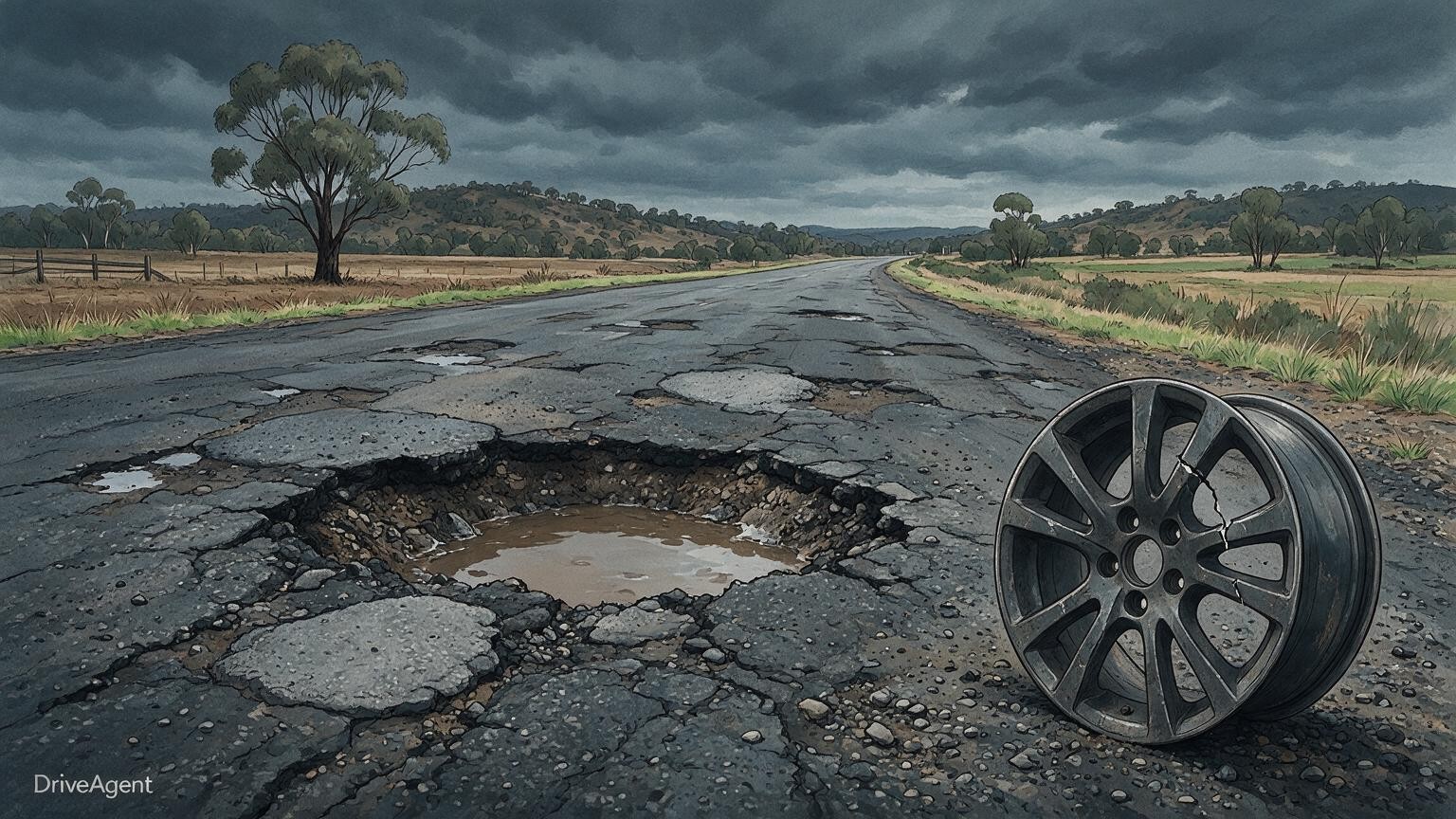
Potholes named the biggest road safety challenge for Australian drivers, says Continental Tyres boss
Continental Tyres Australia's managing director Mitchell Golledge has told CarExpert that deteriorating road conditions, particularly in Victoria, pose a greater danger to motorists than tyre technology itself, as regional operators report record demand for wheel and tyre repairs.