Continental boss calls for mandatory tyre recycling laws as federal inquiry splits the industry
Continental Tyres Australia chief Mitch Golledge says the voluntary Tyre Stewardship Australia scheme leaves too many importers as 'free riders', while the federal parliamentary inquiry into end-of-life tyres has recommended an independent audit of the scheme followed by consideration of a mandatory national system – a move industry bodies are already disputing.
Synthesised from the cited sources. Research, writing and factual checks are automated using AI. Verify details against the sources. How we produce these reports
Continental boss makes the case for a mandatory system
The managing director of Continental Tyres Australia, Mitch Golledge, has called for tyre recycling to be made a mandatory requirement in Australia, telling CarExpert the current voluntary system is falling behind and that the topic is not being spoken about enough. He labelled many tyre importers 'free riders' who bring tyres into the country without contributing to recycling. 1
'We've currently got a voluntary system in terms of [there being] 16 members that belong to the Tyres Stewardship Australia association. Not all tyre manufacturers and importers contribute to that,' Mr Golledge told CarExpert. According to Mr Golledge, each TSA member commits $1 for every tyre sold or brought into the country, funding research and development projects to return recycled tyres to the marketplace. 1
His proposal, as told to CarExpert, is straightforward: 'Make recycling a mandatory requirement, or make a cost for every tyre importer into the Australian marketplace – to pay a fee for the recycling or making a closed-loop system for tyres.' CarExpert reports that TSA membership includes Ascenso, Bearcat, Bridgestone, GetaGrip, Goodyear, Hankook, Kal Tire, Kumho, Michelin, Pirelli, Sailun, Toyo Tires and Yokohama, alongside Continental – with Porsche the only automaker in the association. 1
The voluntary scheme's current reach – and its limits
According to the TSA, 87 per cent of used passenger, bus and truck tyres are recovered in Australia, with 66 per cent of all used tyres going to an environmentally sound use, CarExpert reports. The remainder goes to landfill or is dumped in areas including national parks. The TSA also offers councils $250 per tonne of crumb rubber – up to 100 tonnes and $25,000 per project – to encourage use in road construction. 1
The ABC's February 2026 reporting paints a similar picture of the gap. Of the 530,000 tonnes of tyres reaching end of life each year, TSA chief executive Lina Goodman says 66 per cent are 'recovered', but only 26 per cent are reused or recycled, while the other 40 per cent are shredded and sent offshore to be burnt as fuel in cement kilns and other industrial processes. 4
Ms Goodman told the ABC that 'rogue operators' will typically take about $5 from a retailer for each tyre they promise to dispose of, then dump it, and that making a stewardship program mandatory could curb illegal dumping and level the playing field for legitimate recyclers. She cited New Zealand's mandatory scheme, where one local council recorded a 47 per cent decrease in illegally dumped tyres in the first year of regulation. 4
Illegal dumping illustrates the enforcement problem
The ABC reported in February 2026 on an illegal dump estimated to hold close to 1,000 tyres in a ditch around 90 minutes' drive from Townsville, discovered by Dave Dudley of the community anti-dumping group TIDY Up Townsville. He reported the site to Queensland's Department of Environment, Tourism, Science and Innovation, which was still investigating and had been unable to identify who was responsible; fines of up to $166,900 apply for serious environmental breaches in Queensland. 4
Mr Dudley estimated the clean-up would cost well over $100,000 given the machinery, crew, transport and sorting required, and argued the state government should step in. The ABC notes tyres are highly flammable, burn hotter than many materials when ignited, and create breeding grounds for mosquitos and vermin. A spokesperson for the federal environment department told the ABC it was undertaking a review of the recycling and waste reduction act, including rules supporting the regulation of waste tyre exports and tyre stewardship. 4
The ABC also documented a potential innovation pathway: University of New South Wales Professor Veena Sahajwalla, director of the Sustainable Communities and Waste Hub, told the broadcaster that tyres contain carbon and hydrogen that could be applied in green steelmaking, with rubber crumbs injected into an electric arc furnace replacing coal and coke as a carbon source. 'Waste is really not a waste, it's a resource, and if it's a resource, you have to know how to harness that resource,' she said, arguing that markets for such materials need to be 'intentionally created' by working with industrial players rather than left to emerge on their own. 4
Parliamentary inquiry recommends audit, then possible mandate
The House of Representatives Standing Committee on Industry, Innovation and Science has tabled its report, 'When the rubber hits the road', proposing 12 measures to strengthen end-of-life tyre management, domestic circular material markets and product stewardship, according to BCSD Australia. These are recommendations to government, not new regulatory requirements, and BCSD Australia cautions businesses not to treat them as settled policy before decisions are adopted and implemented. 5
The report recommends nationally harmonised end-of-life tyre rules, a staged five-year transition away from onsite burial of large off-the-road tyres, a review of replacement tyre performance and durability rules, and tighter enforcement of waste tyre export controls, BCSD Australia says. It also calls for an independent audit of the voluntary tyre stewardship scheme, followed by consideration of a mandatory national scheme – a measure that is conditional on the audit. 5
Other recommendations support regional collection and processing infrastructure, recycled crumb rubber in roads, retreading, stronger Commonwealth procurement of Australian recycled-tyre products and research partnerships to commercialise recycling technologies, per BCSD Australia. The committee referred to BCSDA's submission in its analysis of areas including imported tyres, electric vehicle tyre wear, low off-the-road tyre recovery and export outcomes. 5
BCSD Australia also flags an unresolved design question in the report: while it discusses separating genuinely circular material recovery from energy recovery, its formal recommendations set no specific domestic material-retention indicator and prescribe no binding minimum recycled content in public procurement, leaving those choices open as the government considers its response. 5
Industry splits over the mandate – and the off-the-road problem
Recycler Tyrecycle, responding to the inquiry in April 2026 through chief executive Jim Fairweather, supported mandatory market-based regulation and increased government procurement, but argued regulatory changes must target specific market gaps rather than burdening parts of the sector that already work. Tyre & Trends reports that Tyrecycle cited a 96 per cent recovery rate for passenger and truck tyres against only two per cent for off-the-road tyres from mining and agriculture, which account for about 29 per cent of Australia's tyre market, and warned a complete system overhaul could raise consumer prices with little benefit. 3
Tyre & Trends reports Mr Fairweather also highlighted regional disparities within the off-the-road segment: Western Australia produces 60,000 tonnes of the national total of 155,000 tonnes of OTR tyres, while Queensland and New South Wales together contribute another 75,000 tonnes. He argued passenger and truck tyres benefit from established state-based regulation and infrastructure, but OTRs require targeted intervention, and said Tyrecycle is prepared to process every tyre in Australia provided the right supporting system is in place. 3
Tyrecycle also flagged a shortage of domestic end markets for recycled tyre material as the central problem, with Mr Fairweather cautioning that extended producer responsibility schemes do not inherently create market demand, and arguing that existing state-based regulations need proper enforcement rather than new laws, according to Tyre & Trends. 3
The Sustainable Tyre Recycling Australia association has gone further, formally rejecting the mandatory stewardship recommendation after the report's 15 October release. STRA director Greg Turnbull said the move would threaten the viability of many small recyclers and create a 'lowest common denominator' market, arguing recovery percentages would fall if smaller innovative firms went out of business; he pointed to an approximately 90 per cent recovery rate for passenger and truck-and-bus tyres, Klean Industries reports. 2
STRA also criticised the committee's failure to recommend a ban on onsite burial of off-the-road tyres – which Klean Industries says STRA's data puts at 8 to 12 per cent recovery – and pushed back on expanding crumb rubber use, citing the European Commission's phased microplastics ban on crumb rubber infill for synthetic turf. STRA does support stronger enforcement of existing laws, including the export ban on whole baled waste tyres, which it says is not currently enforced adequately. 2
Where the debate now stands
The evidence shows a policy question in motion, not a settled outcome. The parliamentary committee's mandatory stewardship recommendation is conditional on an independent audit of the voluntary scheme, and BCSD Australia stresses that the proposals are recommendations to government rather than requirements, with the formal government response yet to come. 5
The positions are genuinely contested: Continental's Mr Golledge and TSA's Ms Goodman argue a mandate would close the free-rider gap and curb dumping; Tyrecycle backs mandatory market-based regulation but wants it targeted at weak segments, particularly off-the-road tyres; and STRA argues a mandate would harm small recyclers while the real priority is enforcing the existing export ban. What unites most voices is the off-the-road segment, where Tyrecycle's two per cent and STRA's 8 to 12 per cent recovery figures both mark it as the weakest part of the Australian market. 2314
AI evidence finder
Ask about this article
Ask a question to find relevant published passages and source links. AI selects evidence; the passages remain exactly as published.
Behind this report
Sources & context
Cited source mix
5 cited pages across 5 websites
- News publisher 1
- Role not assessed 4
Website breakdown
- abc.net.au1 page
- bcsda.org.au1 page
- CarExpertcarexpert.com.au1 page
- kleanindustries.com1 page
- tyre-trends.com1 page
4 cited pages with an undocumented publisher role. Websites may share ownership or repeat the same reporting.
Saved research extracts
5 / 5 cited pages with saved extracts
0 shortened at our text limit · 0 without a saved-extract record
Extracts retrieved 24 Oct 2026.
Extracts can omit page content. These counts do not verify claims or measure independent reporting. Political leaning and reliability are not rated.
- Industry boss calls for mandatory tyre recycling lawsNews publisherSource extract saved
Why these labels?Industry boss calls for mandatory tyre recycling laws
Who produced it
Publishes automotive news and reviews and operates a car-buying service connecting buyers with dealers. Identity reference ↗
How this report uses it
Cited in 5 paragraphs: Continental boss makes the case for a mandatory system; The voluntary scheme's current reach – and its limits; Where the debate now stands.
This describes its use in our report. It does not establish the source’s editorial stance or independently corroborate every claim.
Evidence record
Text retrieved 24 Oct 2026. The retained extract did not reach our text limit. Extraction can still omit page content.
- Mandatory Tyre Stewardship Backfire: STRA Rejects Inquiry Recommendation | Klean IndustriesRole not assessedSource extract saved
Why these labels?Mandatory Tyre Stewardship Backfire: STRA Rejects Inquiry Recommendation | Klean Industries
Who produced it
We have not documented this publisher’s role. An unassigned label is not a negative rating.
How this report uses it
Cited in 3 paragraphs: Industry splits over the mandate – and the off-the-road problem; Where the debate now stands.
This describes its use in our report. It does not establish the source’s editorial stance or independently corroborate every claim.
Evidence record
Text retrieved 24 Oct 2026. The retained extract did not reach our text limit. Extraction can still omit page content.
- Tyrecycle Outlines Path To Circular Economy For TyresRole not assessedSource extract saved
Why these labels?Tyrecycle Outlines Path To Circular Economy For Tyres
Who produced it
We have not documented this publisher’s role. An unassigned label is not a negative rating.
How this report uses it
Cited in 4 paragraphs: Industry splits over the mandate – and the off-the-road problem; Where the debate now stands.
This describes its use in our report. It does not establish the source’s editorial stance or independently corroborate every claim.
Evidence record
Text retrieved 24 Oct 2026. The retained extract did not reach our text limit. Extraction can still omit page content.
- Untouched illegal tyre dump sparks continued calls for ...Role not assessedSource extract saved
Why these labels?Untouched illegal tyre dump sparks continued calls for ...
Who produced it
We have not documented this publisher’s role. An unassigned label is not a negative rating.
How this report uses it
Cited in 6 paragraphs: The voluntary scheme's current reach – and its limits; Illegal dumping illustrates the enforcement problem; Where the debate now stands.
This describes its use in our report. It does not establish the source’s editorial stance or independently corroborate every claim.
Evidence record
Text retrieved 24 Oct 2026. The retained extract did not reach our text limit. Extraction can still omit page content.
- Australian tyre inquiry: the business implications of ...Role not assessedSource extract saved
Why these labels?Australian tyre inquiry: the business implications of ...
Who produced it
We have not documented this publisher’s role. An unassigned label is not a negative rating.
How this report uses it
Cited in 5 paragraphs: Parliamentary inquiry recommends audit, then possible mandate; Where the debate now stands.
This describes its use in our report. It does not establish the source’s editorial stance or independently corroborate every claim.
Evidence record
Text retrieved 24 Oct 2026. The retained extract did not reach our text limit. Extraction can still omit page content.
Keep reading
Related subjects and more from this section.
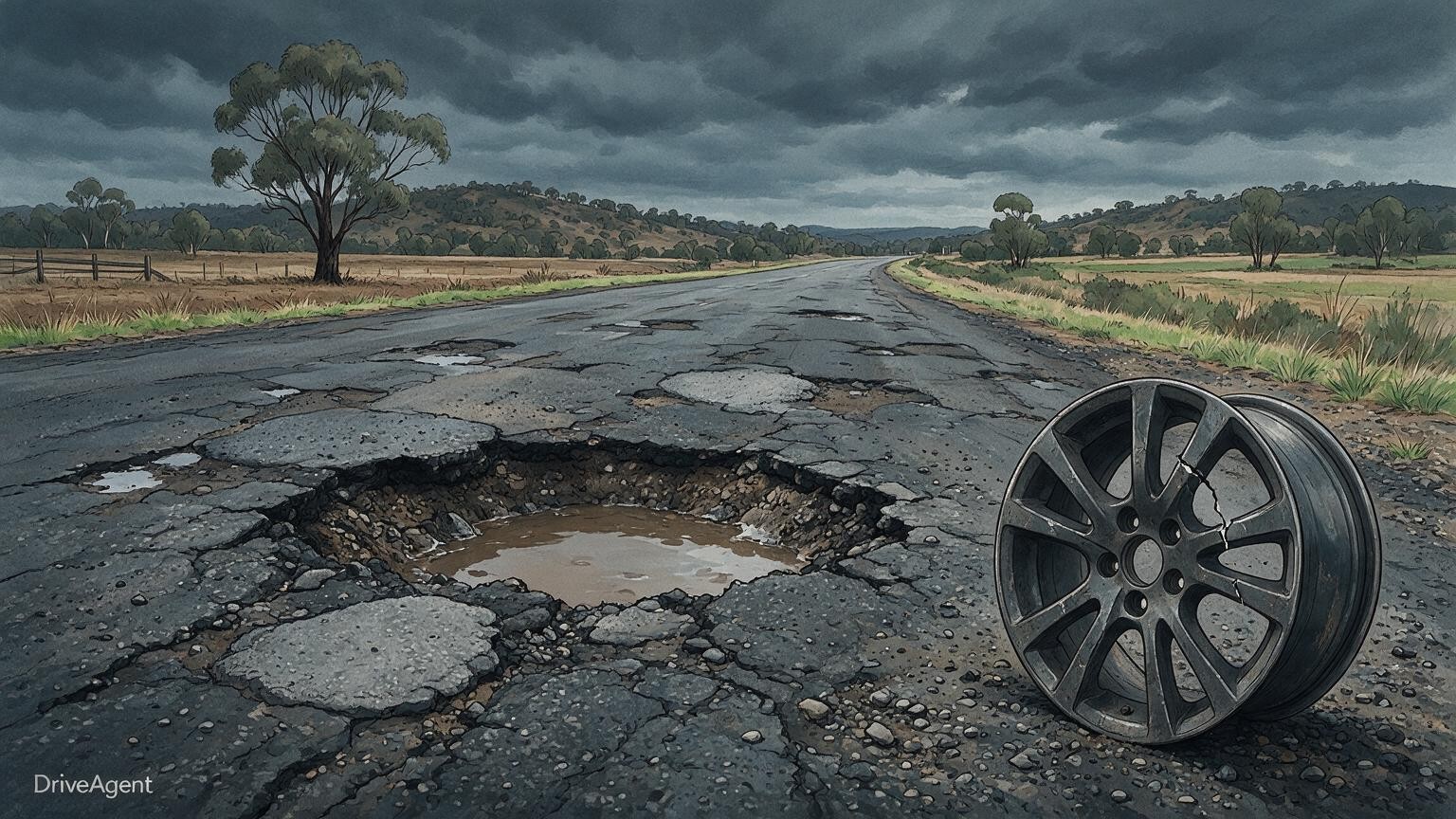
Potholes named the biggest road safety challenge for Australian drivers, says Continental Tyres boss
Continental Tyres Australia's managing director Mitchell Golledge has told CarExpert that deteriorating road conditions, particularly in Victoria, pose a greater danger to motorists than tyre technology itself, as regional operators report record demand for wheel and tyre repairs.