Japanese automakers move to slash development times in bid to match Chinese rivals
Toyota, Honda, Nissan, Suzuki, Mitsubishi and Subaru have all outlined programs to shorten vehicle development cycles, according to Kyodo News reporting relayed by multiple outlets and separate Chinese-language analysis. The targets are announced strategies, not results, with most changes timed for 2028 and beyond.
Synthesised from the cited sources. Research, writing and factual checks are automated using AI. Verify details against the sources. How we produce these reports
Japanese makers outline acceleration plans as development gap widens
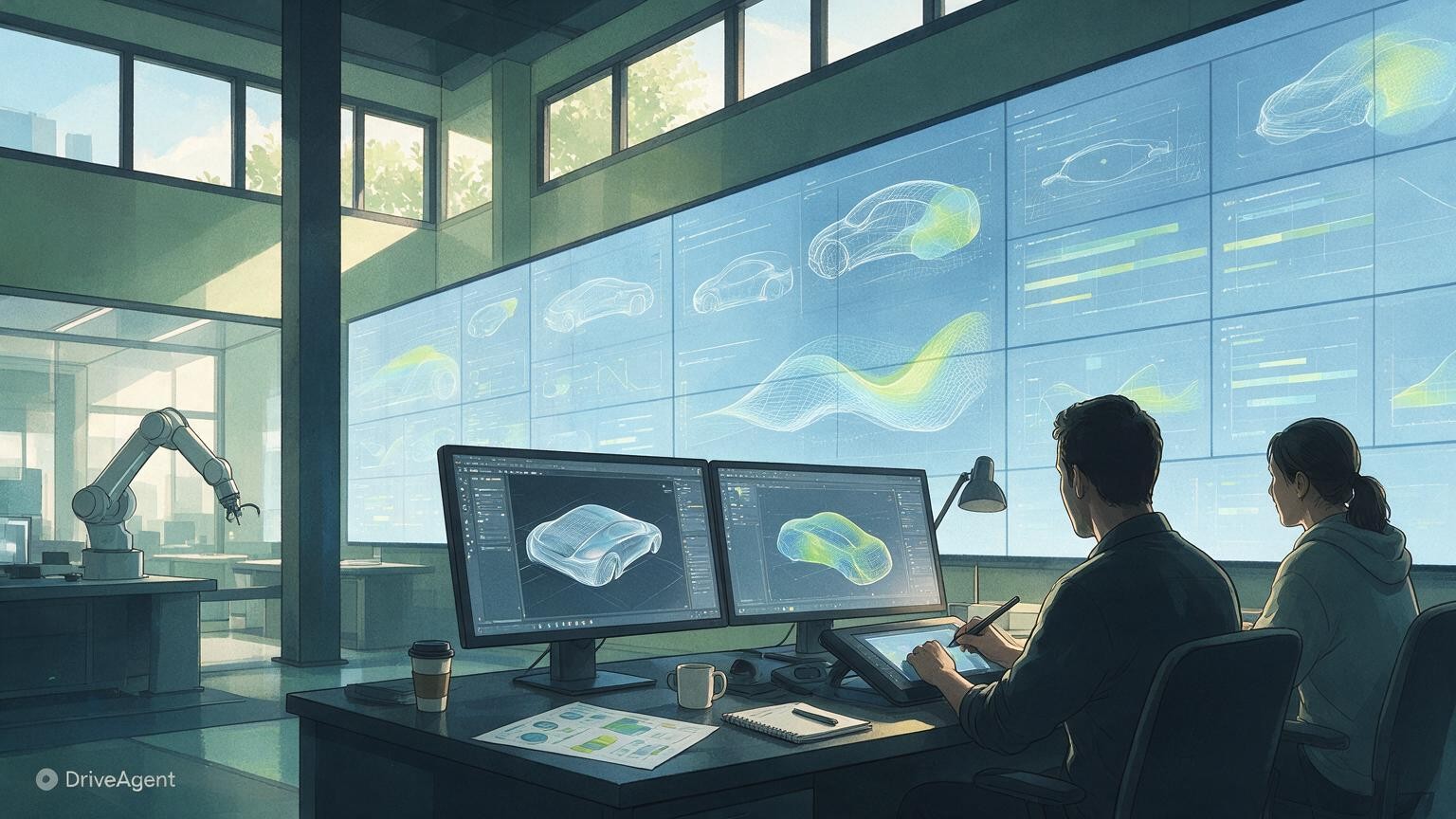
Japanese automakers are stepping up efforts to shorten vehicle development times as they try to respond to competition from Chinese manufacturers and shifting customer demand. According to Kyodo News reporting published on 25 October 2026 and relayed in English by paultan.org and in Bahasa Indonesia by ANTARA, Toyota, Honda, Nissan and other Japanese carmakers typically spend around four to five years developing a new model — more than twice the less-than-two-year cycle attributed to Chinese companies. The reporting presents these as announced company strategies; none of the targets has yet been demonstrated as achieved. 145
Chinese-language analysis carried by 36Kr, originally from the WeChat account Auto Commune on 22 October 2026, frames the backdrop: it states that Chinese automobiles surpassed Japanese competitors in global sales for the first time last year, and cites development cycles of two to three years for Chinese brands against three to four for Japanese makers on that outlet's figures. The article's viewpoint is the author's, as 36Kr itself notes, and its cycle figures differ from Kyodo's — both are source-specific estimates rather than independently verified measurements. 6
Nissan: shared platforms and a 2028 North American SUV target
Nissan aims to slash development times under a new family-based vehicle development strategy, designing a common platform for multiple models of the same size. As reported by Kyodo News via paultan.org, the company plans to shorten the lead time for a new SUV model to three years and one month for launch in North America in 2028, then use the same platform for derivative models, reducing development time by up to 40% to two and a half years. The new product strategy is expected to cover 80% of Nissan's global sales and to cut the number of part types by 70%. 145
Hidemi Sasaki, deputy general manager of Nissan's product planning division, described the program in the Kyodo reporting as a reform intended to make Nissan a company that responds to changes and delivers good cars in a timely manner. Separate Auto Commune reporting adds context on Nissan's methods: it says Nissan draws on agile development experience at Dongfeng Nissan, using AI technology and digital simulation in testing and design, with a plan to cut mainstream model development from 50 months to 30 months and a claim that its latest-generation Skyline series was compressed to 26 months. These are that outlet's figures, not Kyodo's, and no independent verification is presented. 16
Honda's Triple Half and Toyota's parts-reduction program
Honda, seeking a recovery from its first net loss in the last fiscal year, has introduced a Triple Half approach designed to halve development costs, timeframes and workloads from 2025 levels, making full use of artificial intelligence and other digital technologies. The new initiatives will begin with model developments the company starts in 2028, according to the Kyodo News reporting. Auto Commune separately reports that Honda stated in August that it has begun using AI to help design car bodies, that it targets halving minor facelift R&D cycles from fiscal 2026 and full facelift cycles from 2028. 1456
Toyota, described by Kyodo as the world's largest carmaker by volume, is working to reduce the types of parts used depending on customer needs, on the basis that fewer parts improve productivity and speed up development. Under its Area 35 project, Toyota aims to improve plant floor space utilisation by 35%. Toyota's own published materials show this sits within a longer software strategy: a 2021 presentation by chief product integration officer Keiji Yamamoto outlined the in-house Arene vehicle software platform being developed by Woven Planet, which separates hardware from software development with the stated aim of making software development more productive and shortening development lead time. 12
Honda's own corporate history also documents earlier efficiency reforms of a similar kind, including the fusion of its purchasing and design divisions from 2020 and collective planning for global models to expand common parts across models — background that shows parts commonality is a long-running lever, not a new idea unique to the current push. 3

Suzuki, Mitsubishi and Subaru targets
Suzuki is planning to halve its current development time to around two years, according to the Kyodo News reporting, while Mitsubishi aims to shorten its period by 20% to three years by around 2030. Auto Commune adds detail on Suzuki: it says Suzuki announced in September that for vehicles on standardised platforms it targets cutting a previous 40–48 month cycle to 24 months by 2030, moving from sequential development to synchronous parallel working so that planning, design, production, quality and procurement share goals from the start. 156
Subaru's plans appear only in the Auto Commune reporting, which states that Subaru showed a next-generation electric vehicle test car with a new electric architecture at a test track north of Tokyo in October, and that an engineering executive said at an 18 October press conference that digital modelling, overlapping planning stages and early supplier coordination could halve the time needed to develop and verify vehicles and shorten time-to-market by up to 40%. The same article reports that Mitsubishi has increased models developed independently of Nissan, with a next-generation Outlander SUV expected around 2028 on a self-developed platform, though Mitsubishi's own financial situation and the loosening of the Nissan relationship are that outlet's analysis. 6
What the targets do and do not establish
Taken together, the reporting describes a broad, dated set of announced intentions: Nissan's 2028 North American SUV and 70% parts-type reduction target, Honda's Triple Half starting with 2028 development programs, Toyota's Area 35, Suzuki's around-two-year goal and Mitsubishi's three-year goal by around 2030. These are forecasts and strategies as reported by Kyodo News and, in the case of Subaru and the Outlander platform, by Auto Commune — not evidence that any reduction has been delivered. 1456
Neither Kyodo's relays nor Auto Commune's analysis establishes Australian availability or pricing implications for any specific future model, and no such connection should be assumed. As paultan.org's own closing note observes, how these shortened programs stack up competitively in terms of cost and scale remains to be seen. 1
AI evidence finder
Ask about this article
Ask a question to find relevant published passages and source links. AI selects evidence; the passages remain exactly as published.
Behind this report
Sources & context
Cited source mix
6 cited pages across 6 websites
- Role not assessed 6
Website breakdown
- eu.36kr.com1 page
- finance.sina.cn1 page
- global.honda1 page
- global.toyota1 page
- jatim.antaranews.com1 page
- paultan.org1 page
6 cited pages with an undocumented publisher role. Websites may share ownership or repeat the same reporting.
Saved research extracts
6 / 6 cited pages with saved extracts
0 shortened at our text limit · 0 without a saved-extract record
Extracts retrieved 28 Oct 2026.
Extracts can omit page content. These counts do not verify claims or measure independent reporting. Political leaning and reliability are not rated.
- Japanese automakers seek faster model development as competition intensifiesRole not assessedSource extract saved
Why these labels?Japanese automakers seek faster model development as competition intensifies
Who produced it
We have not documented this publisher’s role. An unassigned label is not a negative rating.
How this report uses it
Cited in 8 paragraphs: Japanese makers outline acceleration plans as development gap widens; Nissan: shared platforms and a 2028 North American SUV target; Honda's Triple Half and Toyota's parts-reduction program; Suzuki, Mitsubishi and Subaru targets; What the targets do and do not establish.
This describes its use in our report. It does not establish the source’s editorial stance or independently corroborate every claim.
Evidence record
Text retrieved 28 Oct 2026. The retained extract did not reach our text limit. Extraction can still omit page content.
- Toyota's Discerning Approach to Car-making and ...Role not assessedSource extract saved
Why these labels?Toyota's Discerning Approach to Car-making and ...
Who produced it
We have not documented this publisher’s role. An unassigned label is not a negative rating.
How this report uses it
Cited in 1 paragraph: Honda's Triple Half and Toyota's parts-reduction program.
This describes its use in our report. It does not establish the source’s editorial stance or independently corroborate every claim.
Evidence record
Text retrieved 28 Oct 2026. The retained extract did not reach our text limit. Extraction can still omit page content.
- Chapter IV: Business Foundation Initiatives Section 3: A ...Role not assessedSource extract saved
Why these labels?Chapter IV: Business Foundation Initiatives Section 3: A ...
Who produced it
We have not documented this publisher’s role. An unassigned label is not a negative rating.
How this report uses it
Cited in 1 paragraph: Honda's Triple Half and Toyota's parts-reduction program.
This describes its use in our report. It does not establish the source’s editorial stance or independently corroborate every claim.
Evidence record
Text retrieved 28 Oct 2026. The retained extract did not reach our text limit. Extraction can still omit page content.
- 和中国竞争?日本多家车企:力求缩短新车开发周期Role not assessedSource extract saved
Why these labels?和中国竞争?日本多家车企:力求缩短新车开发周期
Who produced it
We have not documented this publisher’s role. An unassigned label is not a negative rating.
How this report uses it
Cited in 4 paragraphs: Japanese makers outline acceleration plans as development gap widens; Nissan: shared platforms and a 2028 North American SUV target; Honda's Triple Half and Toyota's parts-reduction program; What the targets do and do not establish.
This describes its use in our report. It does not establish the source’s editorial stance or independently corroborate every claim.
Evidence record
Text retrieved 28 Oct 2026. The retained extract did not reach our text limit. Extraction can still omit page content.
- Saingi China, pabrik mobil Jepang pangkas masa pengembangan model baru - ANTARA News Jawa TimurRole not assessedSource extract saved
Why these labels?Saingi China, pabrik mobil Jepang pangkas masa pengembangan model baru - ANTARA News Jawa Timur
Who produced it
We have not documented this publisher’s role. An unassigned label is not a negative rating.
How this report uses it
Cited in 5 paragraphs: Japanese makers outline acceleration plans as development gap widens; Nissan: shared platforms and a 2028 North American SUV target; Honda's Triple Half and Toyota's parts-reduction program; Suzuki, Mitsubishi and Subaru targets; What the targets do and do not establish.
This describes its use in our report. It does not establish the source’s editorial stance or independently corroborate every claim.
Evidence record
Text retrieved 28 Oct 2026. The retained extract did not reach our text limit. Extraction can still omit page content.
- Global Auto Industry Learning from China Speed – Japanese Local Automaker Alliance Faces Potential DisintegrationRole not assessedSource extract saved
Why these labels?Global Auto Industry Learning from China Speed – Japanese Local Automaker Alliance Faces Potential Disintegration
Who produced it
We have not documented this publisher’s role. An unassigned label is not a negative rating.
How this report uses it
Cited in 6 paragraphs: Japanese makers outline acceleration plans as development gap widens; Nissan: shared platforms and a 2028 North American SUV target; Honda's Triple Half and Toyota's parts-reduction program; Suzuki, Mitsubishi and Subaru targets; What the targets do and do not establish.
This describes its use in our report. It does not establish the source’s editorial stance or independently corroborate every claim.
Evidence record
Text retrieved 28 Oct 2026. The retained extract did not reach our text limit. Extraction can still omit page content.
Keep reading
Related subjects and more from this section.
MG leans on Australian dealer, parts and accessories network as Chinese-brand rivals multiply
MG Motor Australia has used the Australian launch of its MGU9 EV electric ute to argue that its dealer network, parts inventory and service workforce give it an edge over a wave of new Chinese entrants, with a broader Thule accessories rollout now expanding the retail offer.