Mazda Australia says NVES repeal would not halt the shift to EVs
Mazda Australia managing director Vinesh Bhindi tells GoAuto that scrapping the New Vehicle Efficiency Standard would not materially reverse buyer demand for electric and plug-in hybrid vehicles, as the Coalition pledges to repeal the scheme within 30 days of taking office.
Automatically researched, written and checked using AI. Verify details against the sources.
Mazda weighs in as the Coalition pledges repeal
Mazda Australia believes a move to scrap the New Vehicle Efficiency Standard would be unlikely to materially reverse the shift in demand towards lower-emission vehicles, arguing that Australian buyers are increasingly seeking more efficient technologies regardless of regulation. GoAuto reports the view from managing director Vinesh Bhindi, whose comments came just ahead of the federal Liberal-National Coalition pledging to repeal the NVES, with shadow energy minister Dan Tehan confirming legislation would be introduced within the first 30 days of a hypothetical Liberal-National government taking office. 1
“Regardless of whether the (NVES) legislation changes or not, I think there is still a pathway towards where we are today,” Mr Bhindi told GoAuto. “Will it slow down? Maybe. Will it influence some product decisions? Possibly. But in the end, Australia is a ‘technology taker’ from all the other regions. We’re not totally on our own, dictating what technology will come here.” Asked about a hypothetical environment where the standard had been scrapped, he said demand for EVs might slow “a little bit, but I'm not sure it's going to be significant.” 1
This is the company's stated position, not a change to the standard or a government decision. As GoAuto notes, the Federal Chamber of Automotive Industries — of which Mr Bhindi is deputy chair — has cautioned against abrupt policy change. “Australia’s automotive industry needs stable, predictable and workable policy settings because decisions about which vehicles are developed and supplied to this market are made years in advance,” an FCAI spokesperson told The Australian newspaper, as quoted by GoAuto. 1
Why regulation is only part of the EV story
GoAuto's reporting points to several forces shaping Mazda's confidence that electrification would continue regardless of the NVES. The company says the Australian market will keep receiving technologies developed for larger overseas counterparts in response to consumer demand, long-term OEM business planning, and regulation affecting other markets. While strict emissions rules continue in key sourcing regions such as Europe and China, the United States last month substantially weakened its fuel economy standards through to 2031 — GoAuto notes the projected fleet-wide requirement fell from 50.4mpg (4.6L/100km) under Biden-era rules to about 34.9mpg (6.7L/100km) — which at the margin could alter products developed for markets including Australia, particularly in large SUV and pick-up segments. 1
The broader sales context also supports the shift. According to GoAuto, Australian Automobile Association data shows battery-electric vehicles accounted for 21.0 per cent of new light vehicle sales in the April–June quarter of 2026, with plug-in hybrids at another 10.5 per cent — up from 12.25 and 6.82 per cent respectively in the January–March quarter. That publication attributes the rapid change to fuel price pressure from the Middle East conflict and the rise of Chinese ‘new energy’ vehicles in Australia, alongside the compliance effect of the standard itself. 1
Mazda's local boss has previously tempered expectations about the pace of that growth. CarExpert reports that Mr Bhindi, speaking at the launch of the 6e electric liftback, said the surge in EV demand was “a unique event” that had “somewhat normalised”, with growth expected to be gradual over the next few years. He warned that if EV sales did not reach 30 to 40 per cent of the market over those years, “there will be a problem in the industry that the fines will outweigh the credits.” 4
Changan partnership to anchor Mazda's EV supply
The repeal debate intersects directly with Mazda's product strategy. GoAuto reports Mr Bhindi confirmed the brand expects its 20-year joint venture with China's Changan Automobile to play a larger role in supplying battery-electric models for Australia, including the Mazda 6e sedan and CX-6e SUV. “We've got to meet the Australian consumer demand rather than play in this political sphere of tariffs…it doesn't add anything to the industry,” he said. 1
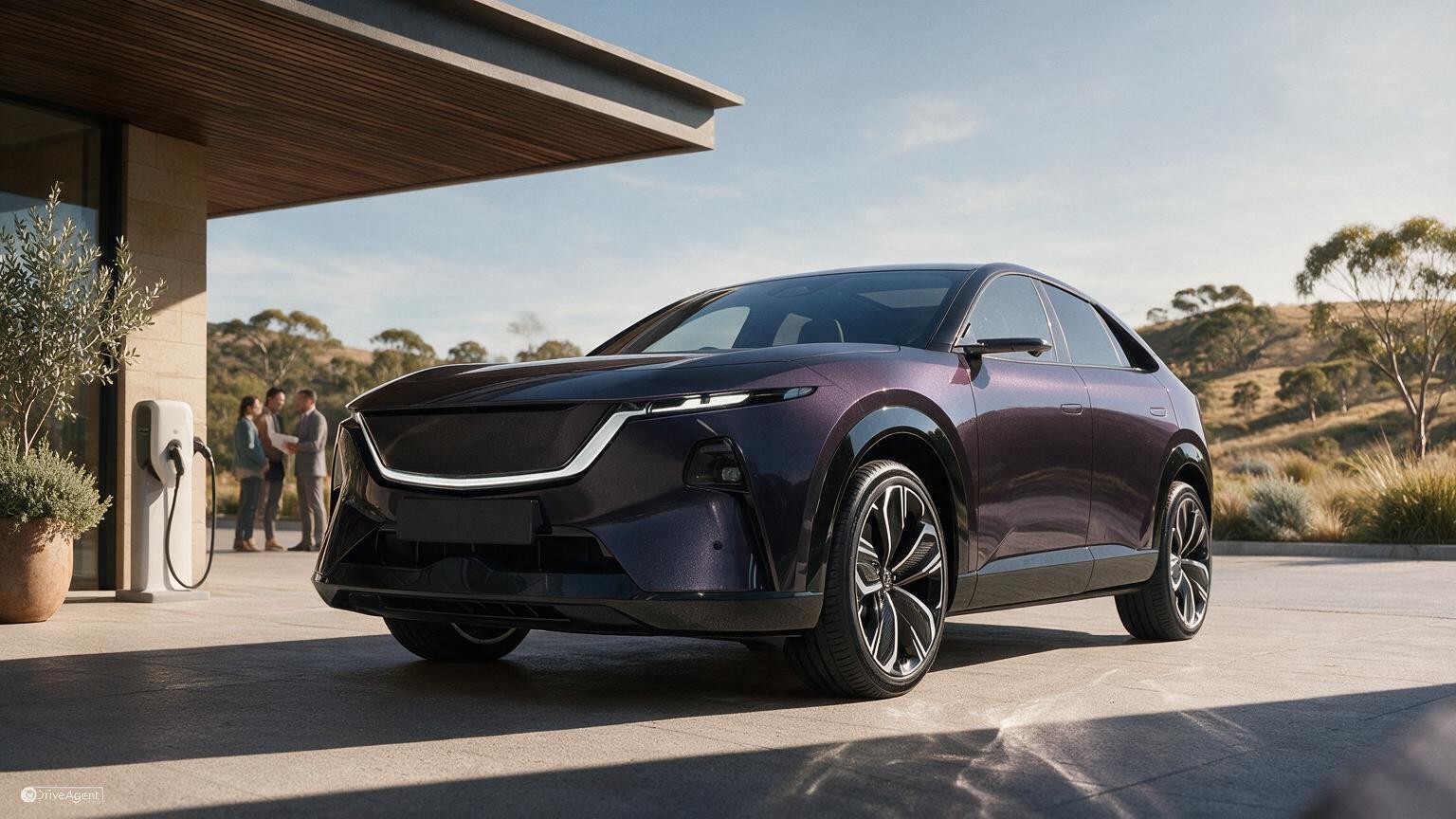
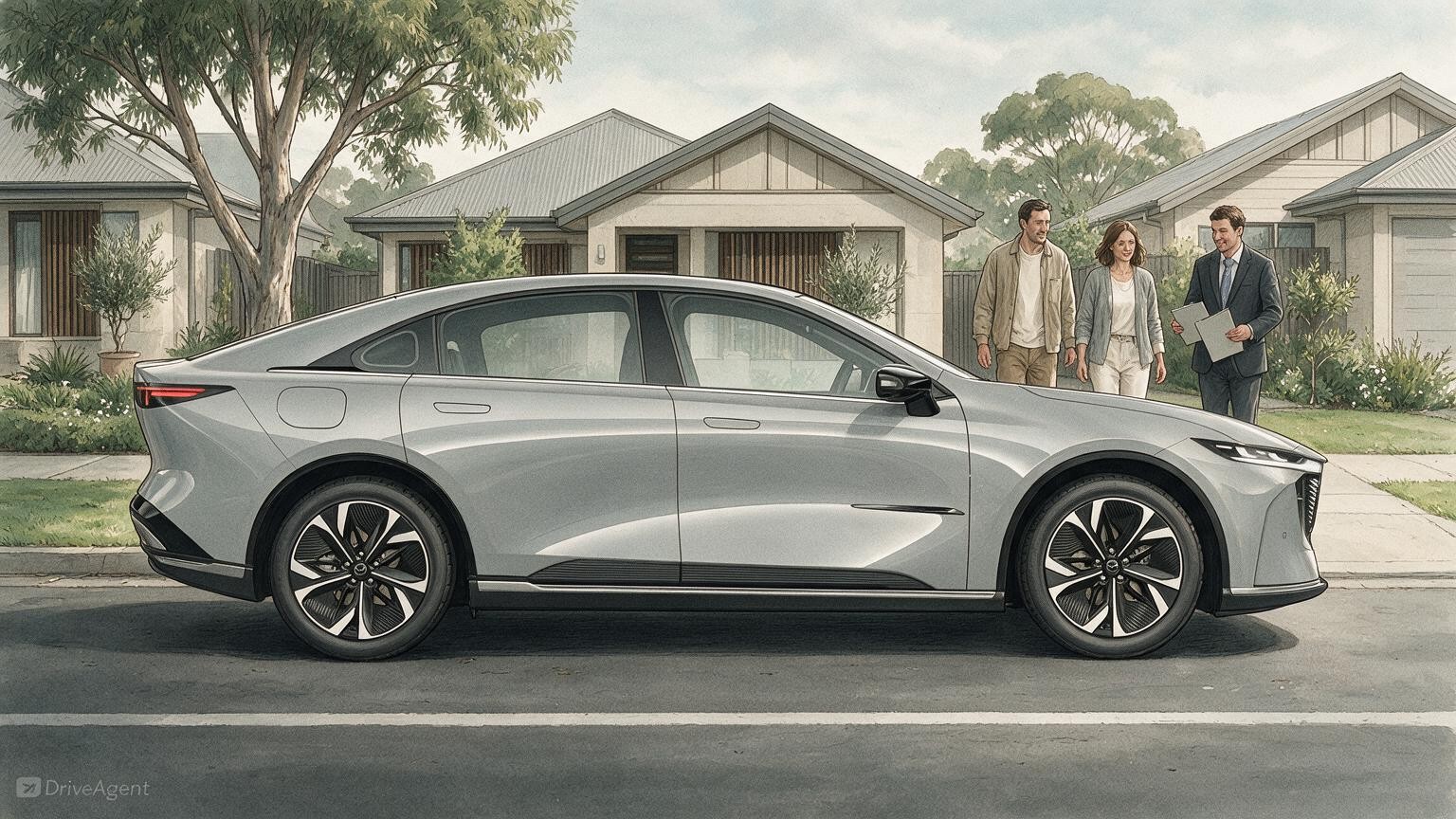
Those two models arrive with compliance built into the plan. GoAuto reports very sharp pricing — the 6e sedan from $49,990 plus on-road costs and the CX-6e midsize SUV from $53,990 plus on-road costs — set with a view to rapidly growing Mazda's BEV share from zero to an estimated one-third of its sales. That publication estimates that on a trajectory of around 80,000 total sales in 2027 — resting on its view that Mazda will likely continue to sell about 12,000 BT-50 units per year — roughly 24,500 units, about 31 per cent, would need to be BEVs to hit NVES equilibrium, and that somewhere north of 40 per cent of sales would need to be fully electric in 2028 as headline CO2 limits tighten. The 6e and CX-6e may be joined by at least one additional Changan-built Mazda BEV in 2027 or 2028, according to GoAuto. 2
Expanding the Changan collaboration depends on local demand, not politics. GoAuto earlier reported Mazda Motor Corporation general manager Manabu Osuga saying the 6e and CX-6e are the first two Changan-made products provided outside China, and that consumer feedback from the global market would dictate whether further models follow. “So, at this moment, I really don’t know what type of car we will produce next,” Mr Osuga told GoAuto, adding that Mazda's 200,000-unit annual production capacity in China could be increased if customers asked for more. 3
Mazda's largest-in-class NVES liability and its three levers
Mazda has an immediate compliance problem to manage regardless of the political outlook. CarExpert reports Mazda had 38,465 vehicles recorded on the Register of Approved Vehicles in the standard's first update and accrued 508,517 liabilities — the highest of any company and more than twice those of second-placed Nissan at 215,261. Nineteen brands missed their emissions targets in the Australian Government's first NVES results, including Mazda, while around two-thirds beat them. CarExpert also reports that brands like Mazda with a positive interim emissions value for 2025 will need to trade units with another company by December 31, 2027 or risk a penalty in February 2028 of $50 multiplied by their final emissions value. 45
GoAuto quantifies the theoretical exposure: Mazda's 508,517 interim emissions units for the second half of 2025 would incur an infringement notice of $25.4 million after the make-good period if the brand did nothing to alleviate it. Mr Bhindi views the penalties as a wider industry issue rather than a Mazda-specific one. “It's an industry issue,” he told CarExpert when asked whether his brand was worse placed than rivals, adding “we're not thinking about that yet” regarding a potential 2028 fine. 24
The company's response has been consistent. GoAuto and CarExpert both report Mr Bhindi describing three pathways: offer products that earn credits, with the 6e and CX-6e carrying the biggest potential; buy discounted credits from other brands, which CarExpert notes became possible after the first results showed a net surplus of 15.9 million NVES units; and pass the cost on via pricing, which he told CarExpert the brand wants to “leave that as our last option”. Speaking with GoAuto earlier in 2026, he framed NVES as “secondary” and said passing on penalties to customers “will be the last option we take.” 2345
Tariffs, the BT-50 and the powertrain mix
Mr Bhindi's rejection of trade barriers is unequivocal, GoAuto reports. The European Union currently applies countervailing duties to Chinese-made BEVs after concluding state subsidies were distorting pricing, with rates varying by manufacturer, and Britain is considering similar measures. “I understand regions where they have a manufacturing industry, they have something to protect. In Australia, we don't have a manufacturing base. Creating these barriers, there will be other implications…I don't see that's where the industry will go or government will go, and I don't think we need to,” Mr Bhindi told GoAuto. 1
Electrification also has to balance the diesel-powered BT-50, which GoAuto reports will remain combustion-reliant even though the next-generation ute has been locked in for Australia without a PHEV or BEV option at launch. GoAuto reports headline NVES limits for utes fall from 150g/km in 2027 to 122g/km in 2028 and 110g/km in 2029, while limits for passenger vehicles and SUVs fall from 92g/km in 2027 to 68g/km in 2028 and 58g/km in 2029 — tightening so fast that strong BEV sales are required to offset the BT-50 and avoid foreshadowed price increases on combustion models. 2
The wider powertrain mix will fill the gaps, though the timing of one key model remains unclear across sources. GoAuto's September report said a fuel-saving hybrid engine would not be added to the CX-5 range locally until 2028, while its March report stated a petrol-electric hybrid CX-5 would not arrive until late 2027; CarExpert separately reports Mazda's first in-house developed hybrid will be based on the new-generation CX-5 due to launch in 2027. GoAuto also reports upgraded PHEV versions of the CX-60, CX-80 and CX-90 are set to land next year with further pricing rationalisation, and that Mazda will continue a portfolio approach under which Changan-sourced BEVs and in-house PHEVs rise from a low share of sales to a very large chunk by 2029. CarExpert reports Mr Bhindi saying the CX-70 and CX-90 will not gain PHEV versions locally because the CX-60 and CX-80 offer “sufficient coverage” of the technology. 235
Mr Bhindi's planning, as reported by GoAuto, assumes this year's statutory review of the NVES will not result in major changes to the design of the legislation, though the brand is preparing for longer-term headline CO2 targets beyond 2029 to be announced at some stage. “If NVES significantly changes from the current path, we’ll have to review what that means, but I expect it will be more on the same lines,” he told GoAuto. Whether a repeal would change that path now rests with the federal Parliament. 2
AI evidence finder
Ask about this article
Ask a question to find relevant published passages and source links. AI selects evidence; the passages remain exactly as published.
Behind this report
Sources & context
Cited source mix
5 cited pages across 2 websites
- News publisher 5
Website breakdown
- GoAutogoauto.com.au3 pages
- CarExpertcarexpert.com.au2 pages
Publisher roles are documented for all cited pages. Websites may share ownership or repeat the same reporting.
Saved research extracts
5 / 5 cited pages with saved extracts
0 shortened at our text limit · 0 without a saved-extract record
Extracts retrieved 6 Oct 2026.
Extracts can omit page content. These counts do not verify claims or measure independent reporting. Political leaning and reliability are not rated.
- Mazda says NVES repeal would not stop buyers moving towards EVsNews publisherSource extract saved
Why these labels?Mazda says NVES repeal would not stop buyers moving towards EVs
Who produced it
GoAutoMedia publishes automotive industry and consumer news, vehicle reviews and model information. Identity reference ↗
How this report uses it
Cited in 7 paragraphs: Mazda weighs in as the Coalition pledges repeal; Why regulation is only part of the EV story; Changan partnership to anchor Mazda's EV supply; Tariffs, the BT-50 and the powertrain mix.
This describes its use in our report. It does not establish the source’s editorial stance or independently corroborate every claim.
Evidence record
Text retrieved 6 Oct 2026. The retained extract did not reach our text limit. Extraction can still omit page content.
- Mazda to surge EV sales to offset BT-50 CO2News publisherSource extract saved
Why these labels?Mazda to surge EV sales to offset BT-50 CO2
Who produced it
GoAutoMedia publishes automotive industry and consumer news, vehicle reviews and model information. Identity reference ↗
How this report uses it
Cited in 6 paragraphs: Changan partnership to anchor Mazda's EV supply; Mazda's largest-in-class NVES liability and its three levers; Tariffs, the BT-50 and the powertrain mix.
This describes its use in our report. It does not establish the source’s editorial stance or independently corroborate every claim.
Evidence record
Text retrieved 6 Oct 2026. The retained extract did not reach our text limit. Extraction can still omit page content.
- Mazda updates NVES positionNews publisherSource extract saved
Why these labels?Mazda updates NVES position
Who produced it
GoAutoMedia publishes automotive industry and consumer news, vehicle reviews and model information. Identity reference ↗
How this report uses it
Cited in 3 paragraphs: Changan partnership to anchor Mazda's EV supply; Mazda's largest-in-class NVES liability and its three levers; Tariffs, the BT-50 and the powertrain mix.
This describes its use in our report. It does not establish the source’s editorial stance or independently corroborate every claim.
Evidence record
Text retrieved 6 Oct 2026. The retained extract did not reach our text limit. Extraction can still omit page content.
- Mazda Australia says it won't be alone in feeling the pain of ...News publisherSource extract saved
Why these labels?Mazda Australia says it won't be alone in feeling the pain of ...
Who produced it
Publishes automotive news and reviews and operates a car-buying service connecting buyers with dealers. Identity reference ↗
How this report uses it
Cited in 4 paragraphs: Why regulation is only part of the EV story; Mazda's largest-in-class NVES liability and its three levers.
This describes its use in our report. It does not establish the source’s editorial stance or independently corroborate every claim.
Evidence record
Text retrieved 6 Oct 2026. The retained extract did not reach our text limit. Extraction can still omit page content.
- Mazda isn't rushing to add more PHEVs despite new emissions regulationsNews publisherSource extract saved
Why these labels?Mazda isn't rushing to add more PHEVs despite new emissions regulations
Who produced it
Publishes automotive news and reviews and operates a car-buying service connecting buyers with dealers. Identity reference ↗
How this report uses it
Cited in 3 paragraphs: Mazda's largest-in-class NVES liability and its three levers; Tariffs, the BT-50 and the powertrain mix.
This describes its use in our report. It does not establish the source’s editorial stance or independently corroborate every claim.
Evidence record
Text retrieved 6 Oct 2026. The retained extract did not reach our text limit. Extraction can still omit page content.
Keep reading
Related subjects and more from this section.
GoAuto reports Mazda Australia must lift EV sales sharply to offset BT-50 diesel emissions under NVES
Mazda Australia managing director Vinesh Bhindi told GoAuto that the brand's Chinese-built electric models must play a central role in balancing CO2 emissions from its diesel-powered BT-50, as GoAuto estimates roughly a third of Mazda's 2027 sales would need to be electric to reach NVES equilibrium.