Audi tests mobile humanoid robots for parts sequencing at Ingolstadt plant
Agile Robots, Audi, Dassault Systèmes and NVIDIA have announced a proof-of-concept to automate parts sequencing at Audi's Ingolstadt plant using mobile humanoid robots, unveiled at NVIDIA GTC Berlin. The trial targets one of automotive logistics' hardest automation problems, but it remains a proof-of-concept rather than a confirmed production rollout.
Synthesised from the cited sources. Research, writing and factual checks are automated using AI. Verify details against the sources. How we produce these reports
A four-way proof-of-concept at NVIDIA GTC Berlin
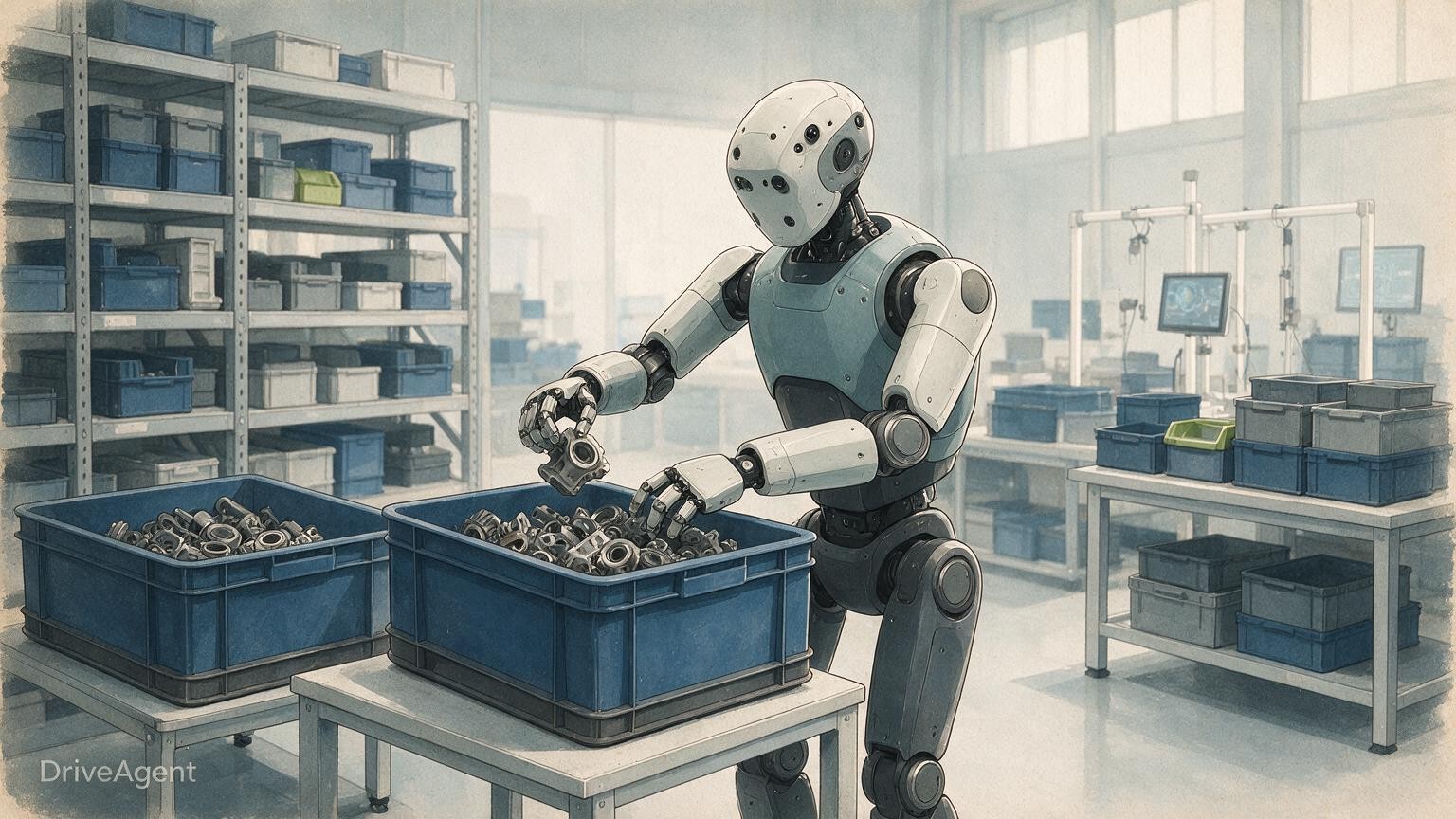
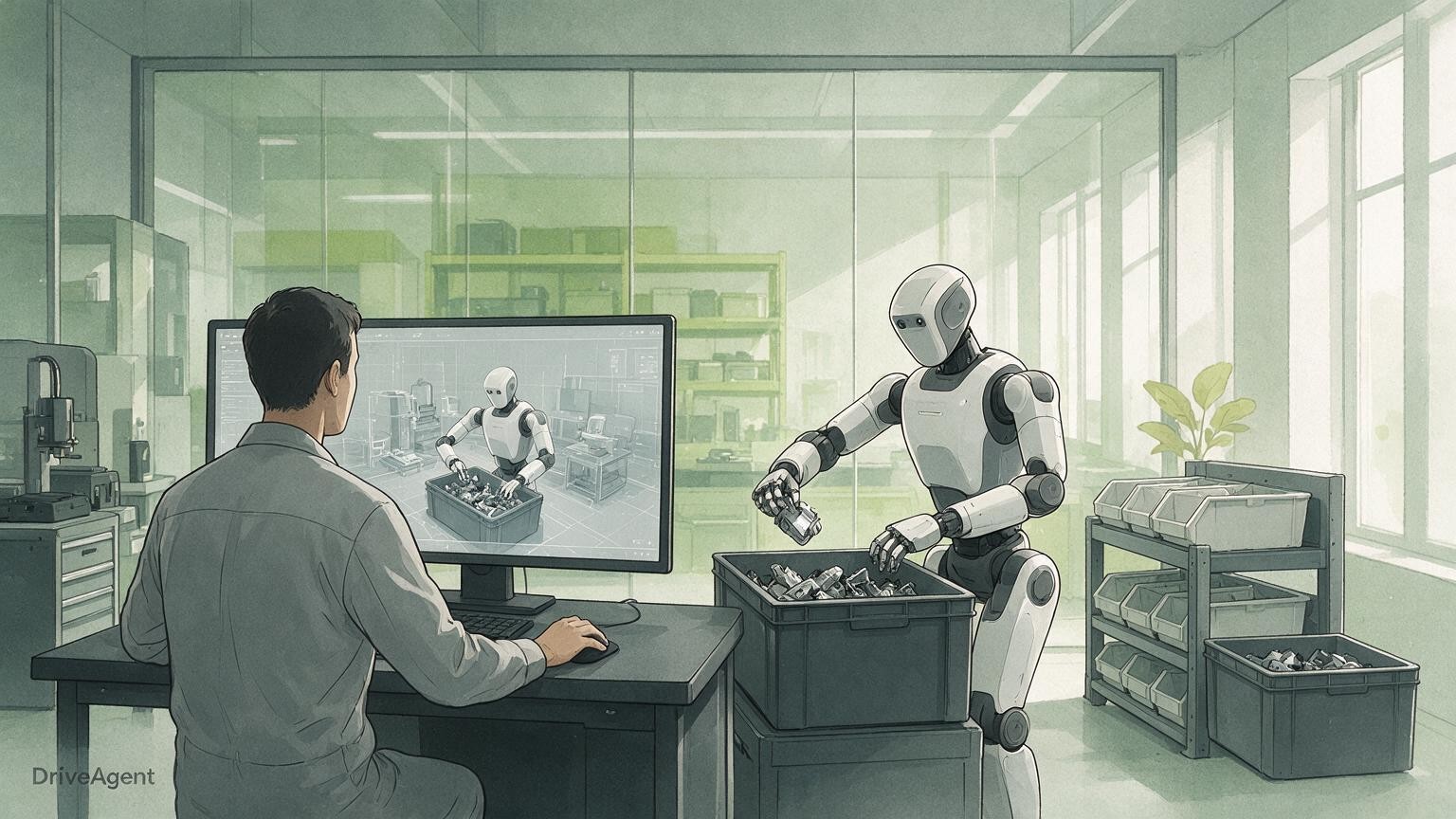
Agile Robots, Audi, Dassault Systèmes and NVIDIA announced on 21 October 2026 at NVIDIA GTC Berlin a proof-of-concept to automate parts sequencing at Audi's Ingolstadt plant using mobile humanoid robots. According to Audi's media release, the project is already underway: in the Production Lab, Audi's innovation space for testing future production and logistics technologies, mobile humanoids from Agile Robots are picking parts from material containers and placing them in the correct sequence for final assembly of Audi premium vehicles. 1
The announcement describes a logistics trial rather than a confirmed production rollout, and Audi has not announced any deployment beyond Ingolstadt. Audi Supply Chain experts contribute sequencing expertise and define the operational requirements for testing the use case under real-world conditions, per the media release. 1
Audi frames the work within its vision of highly automated in-house logistics in its 'thinking factory', where AI and robotics work alongside employees. By automating complex and repetitive sequencing tasks, the company says the technology can help reduce manual workload, increase efficiency and enable employees to focus on higher-value activities. 1
Why sequencing is a hard automation problem
Demand-driven material supply at Audi relies on highly complex sequencing operations. Audi's media release states that around one million picks every day ensure the right parts reach the right workstation in the right order for assembly, and Gerd Walker, Board Member for Production and Logistics at AUDI AG, called picking within the sequencing process one of the toughest automation challenges in automotive logistics. 1
Two persistent automation challenges are named in the release: handling high-variant or semi-rigid parts, and reliably picking unsorted components from containers. Agile Robots says its mobile humanoids are designed to address both, with dual-arm manipulation for large and flexible parts and AI-powered perception to identify and grasp a wide variety of components, even in mixed containers or in varying positions and packaging. 1
The Munich-based robot maker, founded in 2018 by robotics researchers from the German Aerospace Center (DLR), says it has more than 20,000 robotic solutions deployed with customers worldwide. Its newly developed mobile humanoids combine humanoid reach and dexterity with the robustness of a mobile base and work at human height, so they slot into Audi's existing environment without facility redesign, according to the release. 1
Virtual twin validation before physical deployment
Before robots are deployed within Audi's smart intralogistics environment, a virtual twin of the logistics environment is being created using Dassault Systèmes' DELMIA application, per the joint announcement. Feasibility, timings, ergonomics and safety for the robot's tasks will be tested within the virtual twin on Dassault Systèmes' 3DEXPERIENCE platform, leveraging the company's Industry World Models and NVIDIA Omniverse libraries. 1
In the future, LEO, Dassault Systèmes' AI-powered Virtual Companion, is expected to assist engineers and accelerate the process from months to days, according to the announcement. Dassault Systèmes executive vice president Philippe Laufer said the breakthrough is being able to engineer and validate the robots' mission and role before they ever enter it physically, reducing work that can take months to days and speeding up commissioning within the plants. 1
NVIDIA's Deepu Talla, vice president of robotics and edge AI, said Audi and Agile Robots are using DELMIA and NVIDIA Omniverse physical AI libraries to simulate and validate mobile humanoids for parts sequencing, tackling one of automotive logistics' toughest workflows with minimal changes to existing operations. These vendor statements describe aims and design intent, not verified production outcomes. 1
Part of Audi's wider AI and robotics program
The humanoid trial sits within Audi's broader push to digitise production. In a separate release dated 27 January 2026, Audi described scaling up artificial intelligence across its plants via its Edge Cloud 4 Production (EC4P) cloud platform, which first ran in large-scale series production in the Neckarsulm body shop for the A5 and A6 series, where around 100 robots work together via EC4P with millisecond precision. 3
That January 2026 release also details AI-supported weld spatter detection at Neckarsulm, planned series introduction at six plants in Ingolstadt, Audi's own ProcessGuardAIn process-monitoring solution planned for series production in the second quarter of 2026, and the Next2OEM project at Ingolstadt to fully automate wiring loom production and installation, an area where Audi says less than ten percent of the industry's wiring loom work is currently automated. 3
Audi has also been researching the picking process directly. A June 2025 release describes Audi Sport and Fraunhofer institutes trialling AI and mobile robotics, including articulated-arm robots with grippers and 3D sensor technology, in a real-world laboratory at Böllinger Höfe, where the high-customisation e-tron GT family makes picking particularly complex. That project built on a needs analysis using eye-tracking smartglasses to identify the most mentally strenuous picking activities. 2
Industry context: humanoids on the factory floor
Audi is not alone in exploring humanoid robotics for lineside logistics. Automotive Logistics reported in February 2025 that carmakers including Audi, BMW and Mercedes-Benz were testing humanoids for lineside and warehouse tasks, noting that the robots can operate in environments already designed for humans. BMW trialled Figure's Figure 02 robot at its Spartanburg plant in South Carolina for inserting sheet-metal parts into chassis fixtures, and Mercedes-Benz trialled Apptronik's Apollo robot at its Kecskemét plant in Hungary for delivering kitted parts and inspection tasks. 4
Automotive Logistics also reported that Audi FAW NEV, Audi's joint venture with FAW in Changchun, China, which builds the Q6L e-tron on the PPE platform, signed a memorandum of understanding with the Beijing Innovation Center of Humanoid Robotics and UBtech Robotics to further explore the technology. Nio has separately tested UBtech's Walker S robot at its Hefei manufacturing base, with tests indicating the robots still need considerable training. These parallel trials underline that the Ingolstadt proof-of-concept is at the exploratory stage of a technology the wider industry has yet to industrialise. 4
AI evidence finder
Ask about this article
Ask a question to find relevant published passages and source links. AI selects evidence; the passages remain exactly as published.
Behind this report
Sources & context
Cited source mix
4 cited pages across 2 websites
- Role not assessed 4
Website breakdown
- audi.com3 pages
- automotivelogistics.media1 page
4 cited pages with an undocumented publisher role. Websites may share ownership or repeat the same reporting.
Saved research extracts
4 / 4 cited pages with saved extracts
0 shortened at our text limit · 0 without a saved-extract record
Extracts retrieved 22 Oct 2026.
Extracts can omit page content. These counts do not verify claims or measure independent reporting. Political leaning and reliability are not rated.
- Audi and partners test mobile humanoid robots for factory logisticsRole not assessedSource extract saved
Why these labels?Audi and partners test mobile humanoid robots for factory logistics
Who produced it
We have not documented this publisher’s role. An unassigned label is not a negative rating.
How this report uses it
Cited in 9 paragraphs: A four-way proof-of-concept at NVIDIA GTC Berlin; Why sequencing is a hard automation problem; Virtual twin validation before physical deployment.
This describes its use in our report. It does not establish the source’s editorial stance or independently corroborate every claim.
Evidence record
Text retrieved 22 Oct 2026. The retained extract did not reach our text limit. Extraction can still omit page content.
- [PDF] Audi develops the picking process of the futureRole not assessedSource extract saved
Why these labels?[PDF] Audi develops the picking process of the future
Who produced it
We have not documented this publisher’s role. An unassigned label is not a negative rating.
How this report uses it
Cited in 1 paragraph: Part of Audi's wider AI and robotics program.
This describes its use in our report. It does not establish the source’s editorial stance or independently corroborate every claim.
Evidence record
Text retrieved 22 Oct 2026. The retained extract did not reach our text limit. Extraction can still omit page content.
- artificial intelligence in productionRole not assessedSource extract saved
Why these labels?artificial intelligence in production
Who produced it
We have not documented this publisher’s role. An unassigned label is not a negative rating.
How this report uses it
Cited in 2 paragraphs: Part of Audi's wider AI and robotics program.
This describes its use in our report. It does not establish the source’s editorial stance or independently corroborate every claim.
Evidence record
Text retrieved 22 Oct 2026. The retained extract did not reach our text limit. Extraction can still omit page content.
- Carmakers trialling humanoid robots for inplant logisticsRole not assessedSource extract saved
Why these labels?Carmakers trialling humanoid robots for inplant logistics
Who produced it
We have not documented this publisher’s role. An unassigned label is not a negative rating.
How this report uses it
Cited in 2 paragraphs: Industry context: humanoids on the factory floor.
This describes its use in our report. It does not establish the source’s editorial stance or independently corroborate every claim.
Evidence record
Text retrieved 22 Oct 2026. The retained extract did not reach our text limit. Extraction can still omit page content.
Keep reading
Related subjects and more from this section.
GM to close Brownstown Battery Assembly plant near Detroit by next summer
General Motors has confirmed it will shut its Brownstown Battery Assembly plant, which built battery packs for the Cadillac Celestiq and batteries and drive units for the Chevrolet Corvette E-Ray, when its lease expires. The company says the closure is tied to the lease rather than its EV strategy, as reported by Automotive News and corroborated by TechCrunch.