CATL unveils Dual-Electric Range Extender for heavy trucks with five-minute battery swap claim
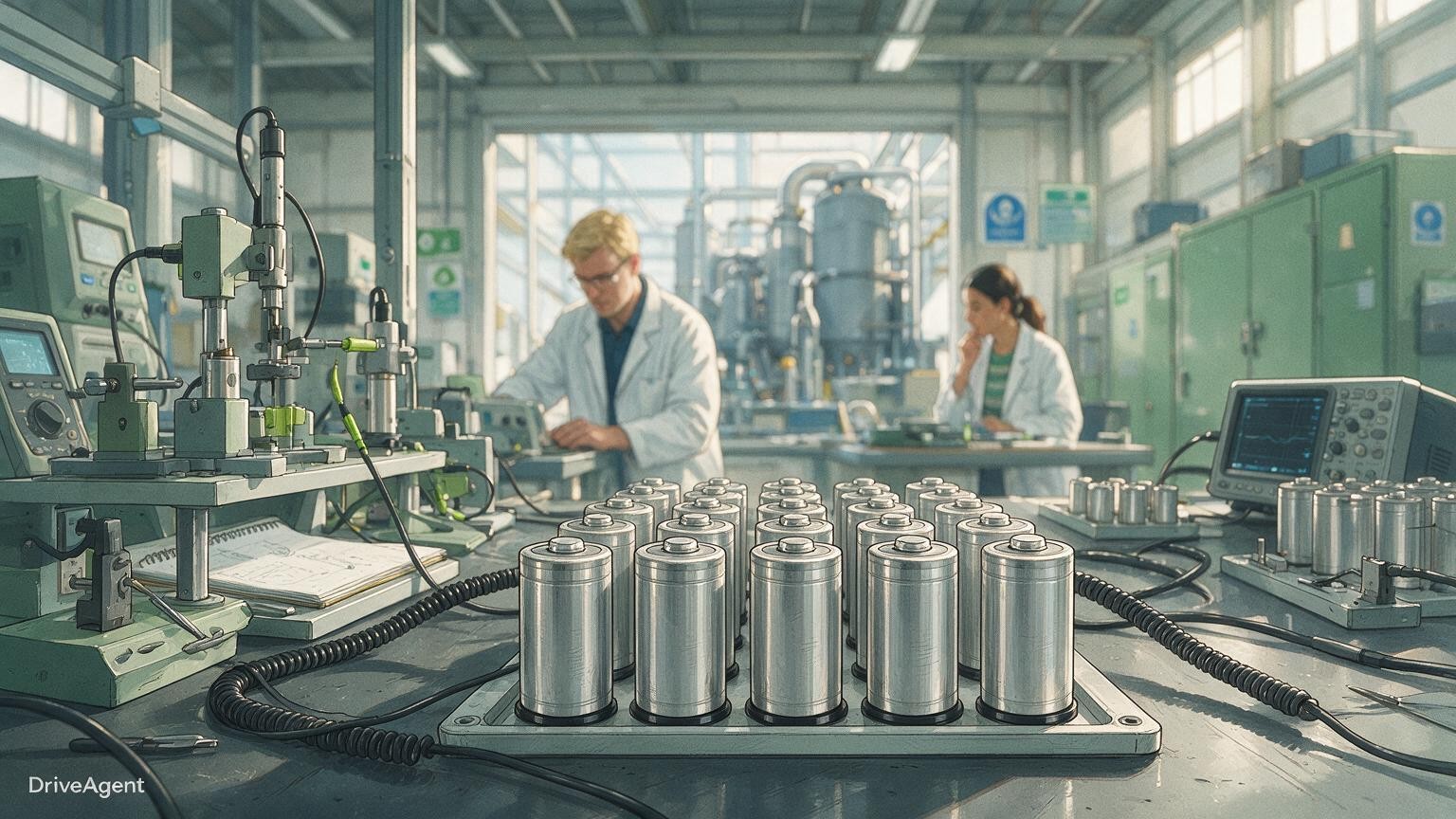
CATL has officially revealed its Dual-Electric Range Extender system for heavy-duty trucks in China, pairing swappable 432 kWh or 513 kWh main packs with a fixed 77 kWh backup battery, alongside an expansion of its QiJi swap-station network. CarNewsChina reported the launch.
Synthesised from the cited sources. Research, writing and factual checks are automated using AI. Verify details against the sources. How we produce these reports
The announcement and what it changes
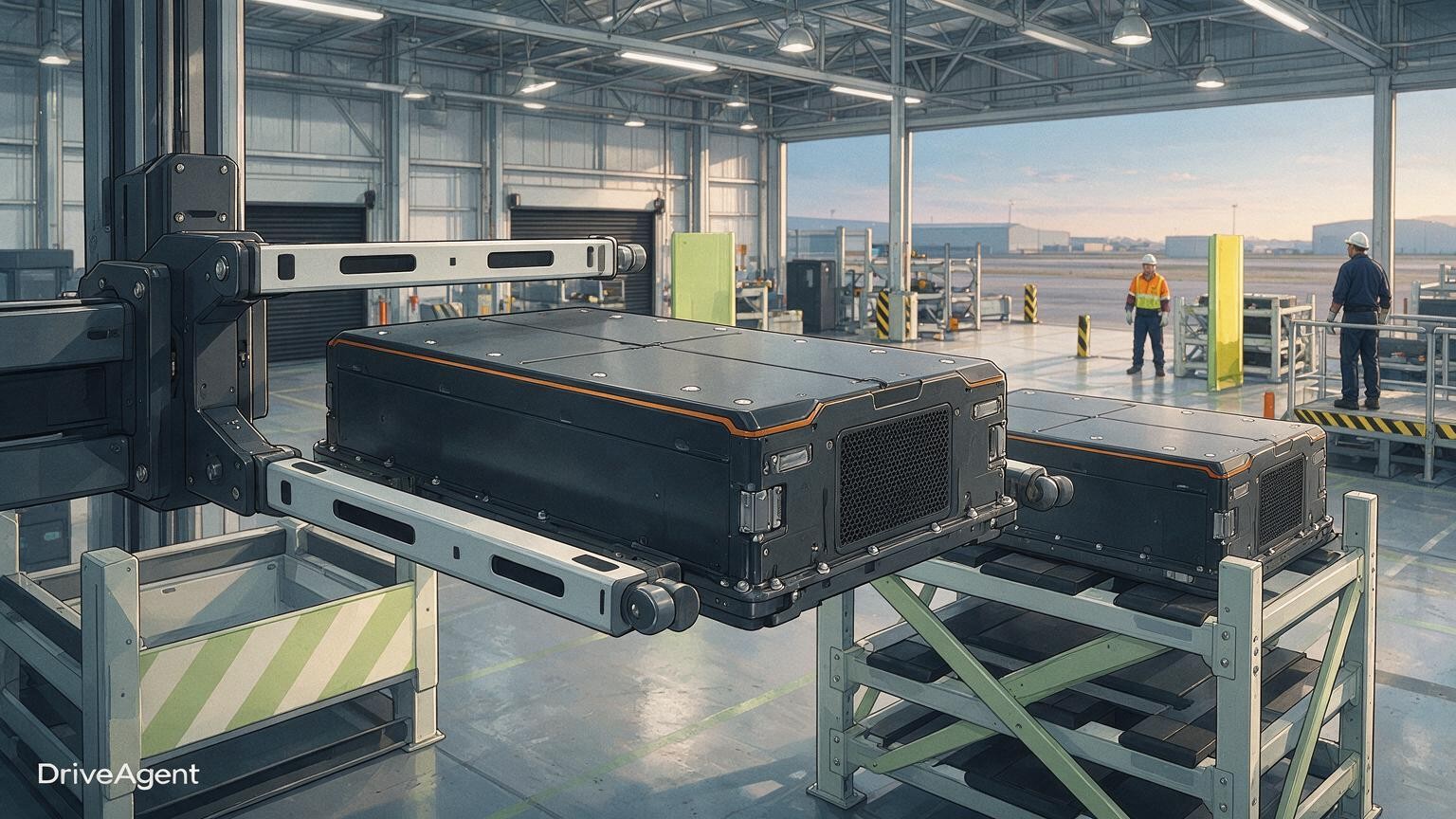
Chinese battery giant CATL officially unveiled its Dual-Electric Range Extender technology on October 20, alongside a plan to expand its QiJi heavy-duty truck battery-swapping ecosystem. As reported by CarNewsChina, the system uses an A+B architecture: the A component is a bottom-mounted, swappable high-capacity battery available in 432 kWh or 513 kWh capacities, leased flexibly to reduce upfront costs, while the B component is a fixed 77 kWh backup pack providing reserve power. 1
CATL says the architecture allows the primary battery to be deeply discharged to as low as 5% state of charge without range anxiety, because the system switches to the range-extender pack when the main battery runs low. The company also claims a five-minute battery swap capability. These figures are manufacturer claims and have not been independently verified. 1
CATL estimates that, compared with diesel trucks, the Dual-Electric Range Extender system can save users more than 460,000 yuan — approximately 68,700 US dollars — over a three-year operating cycle. This is a company estimate, not an independently confirmed figure. 1
Market context in China
According to figures cited at the launch by CATL, more than 430,000 electric heavy trucks already run on the company's batteries, representing over 70% of the global market. The company argues the debate between diesel and electric heavy trucks is effectively settled, with competition now entering an electric-versus-electric phase. 1
Data presented by CATL shows the penetration rate of electric heavy trucks in China surged from 5.2% in 2022 to 50.28% in September 2026. The company attributed this shift to falling total cost of ownership for electric operation. 1
The announcement builds on a longer-running national push. In May 2025, as reported by People's Daily Online via the Chinese Academy of Engineering, China launched a next-generation battery-swapping ecosystem for heavy trucks at an event co-hosted by the China Communications and Transportation Association and CATL in Datong, Shanxi province, targeting 50% electric penetration in the sector within three years — a threshold CATL's own data suggests has now effectively been reached in China. 12
Scaling the QiJi swap network
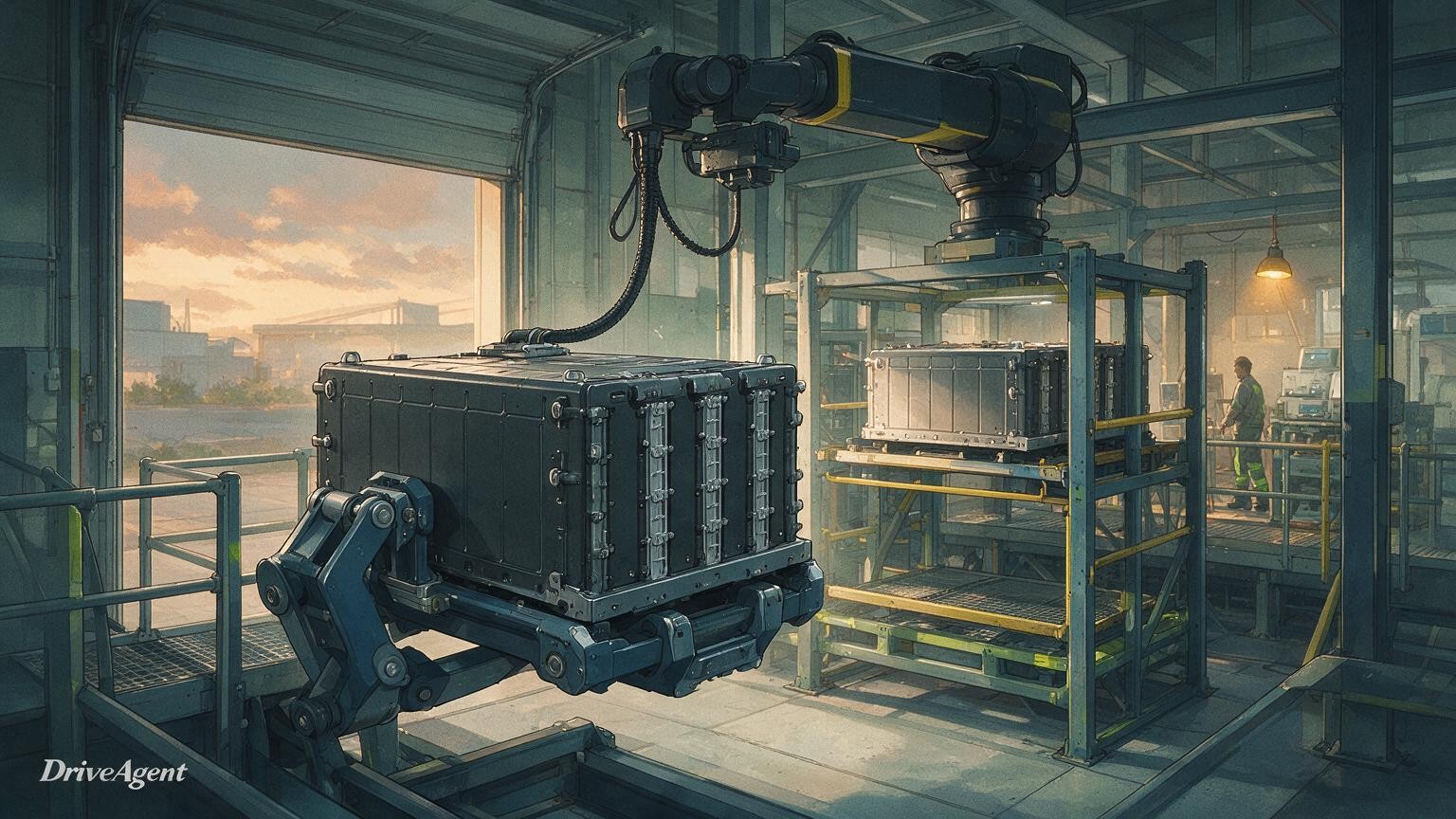
To support the new system, CATL has standardised its swappable battery blocks into two sizes for the Chinese market: the 260# block at 432 kWh for vehicles with 3,800 mm wheelbases, and the 300# block at 513 kWh for 4,200 mm wheelbase vehicles. CarNewsChina reports five major trunk lines are currently operational, with more than 5 million kilometres of stable operation claimed. 1
CATL's rollout targets are 900 battery-swapping stations by the end of 2026, rising to 2,000 stations by 2027 covering China's national highway network, with an ultimate stated target of 10,000 stations. These are company goals rather than completed milestones. 1
At the launch event, CATL signed agreements with 14 major partners, including SF Express, ZTO Express and YTO Express, with an initial order volume of 13,000 units. These commitments are specific to the Chinese logistics market and do not indicate availability in other countries. 1
This infrastructure ambition extends the plan CATL outlined in May 2025, when the company said it would establish 300 stations by 2025 across key regions including Beijing-Tianjin-Hebei, the Yangtze River Delta and the Greater Bay Area, before building an 'Eight Horizontal and Ten Vertical' nationwide network by 2030 covering 150,000 km of expressways and trunk roads. That plan was reported by People's Daily Online. 2
Wider Tectrans II product range
Alongside the Dual-Electric Range Extender, CATL introduced four specialised Tectrans II products for specific truck operations, as detailed by CarNewsChina. Tectrans II Ultra-Light targets standard-load short-haul work with low weight to improve payload capacity. Tectrans II Ultra-Thin, aimed at construction and dump trucks, reduces battery thickness from 860 mm to 580 mm, allowing 8.8-metre cargo beds. 1
Tectrans II Short-Wheelbase is intended for mountainous regions and port areas, with a 3,350 mm short-wheelbase configuration that CATL says matches comparable diesel trucks. Tectrans II Long-Range targets long-haul trunk lines with a 760 kWh capacity, claimed range of more than 600 km and 800V high-voltage support. All range and performance figures are manufacturer statements. 1
Background and outlook for buyers
The concept of separating the battery from the truck to cut costs is not new for CATL. At the May 2025 launch, reported by People's Daily Online via the Chinese Academy of Engineering, CATL unveiled its #75 standardised battery model and an all-scenario chassis-based swapping solution. The company claimed trucks using its system saved 0.62 yuan — about 8.6 US cents — per kilometre over diesel models, translating to more than 60,000 yuan annually for high-mileage operators. 2
At that 2025 event, CATL general manager for the battery swapping business Yang Jun said the #75 model allowed flexible configurations and met standardised swapping requirements, and founder and chairman Robin Zeng projected 50% electrification of the heavy-duty truck sector within three years. CATL also said it had partnered with more than 10 automakers to offer more than 30 chassis-based swapping truck models. 2
For fleet buyers, the significance of the new announcement lies in the leasing model for the swappable main pack, which CATL says lowers upfront purchase costs, and in the backup pack architecture designed to reduce operational risk from a depleted main battery. The TCO saving figures are company estimates and actual results will depend on usage patterns and swap-station availability. 1
All of this concerns the Chinese market. Neither CATL's announcements nor the swap-station expansion establish any Australian availability of the Dual-Electric Range Extender system, the Tectrans II products or the QiJi network, and no Australian specifications or pricing have been announced. 1
AI evidence finder
Ask about this article
Ask a question to find relevant published passages and source links. AI selects evidence; the passages remain exactly as published.
Behind this report
Sources & context
Cited source mix
2 cited pages across 2 websites
- Role not assessed 2
Website breakdown
- carnewschina.com1 page
- en.cae.cn1 page
2 cited pages with an undocumented publisher role. Websites may share ownership or repeat the same reporting.
Saved research extracts
2 / 2 cited pages with saved extracts
0 shortened at our text limit · 0 without a saved-extract record
Extracts retrieved 20 Oct 2026.
Extracts can omit page content. These counts do not verify claims or measure independent reporting. Political leaning and reliability are not rated.
- CATL unveils dual-battery swap system for heavy trucksRole not assessedSource extract saved
Why these labels?CATL unveils dual-battery swap system for heavy trucks
Who produced it
We have not documented this publisher’s role. An unassigned label is not a negative rating.
How this report uses it
Cited in 13 paragraphs: The announcement and what it changes; Market context in China; Scaling the QiJi swap network; Wider Tectrans II product range; Background and outlook for buyers.
This describes its use in our report. It does not establish the source’s editorial stance or independently corroborate every claim.
Evidence record
Text retrieved 20 Oct 2026. The retained extract did not reach our text limit. Extraction can still omit page content.
- en.cae.cn › cae › htmlChina accelerates large-scale battery swapping for heavy-duty ...Role not assessedSource extract saved
Why these labels?en.cae.cn › cae › htmlChina accelerates large-scale battery swapping for heavy-duty ...
Who produced it
We have not documented this publisher’s role. An unassigned label is not a negative rating.
How this report uses it
Cited in 4 paragraphs: Market context in China; Scaling the QiJi swap network; Background and outlook for buyers.
This describes its use in our report. It does not establish the source’s editorial stance or independently corroborate every claim.
Evidence record
Text retrieved 20 Oct 2026. The retained extract did not reach our text limit. Extraction can still omit page content.
Keep reading
Related subjects and more from this section.
Huawei's Newcool joins CATL's Choco battery-swap ecosystem, with an Epicland model reportedly planned for 2027
Huawei's automotive unit Yinwang, or Newcool, and CATL have signed a framework agreement to develop automated battery swapping for Qiankun-equipped vehicles, joining a network of 2,520 stations. No model or launch date was confirmed in the deal itself, though a later report points to a 2027 Epicland debut.