Chinese-made vehicles now dominate Australia's record electric vehicle sales
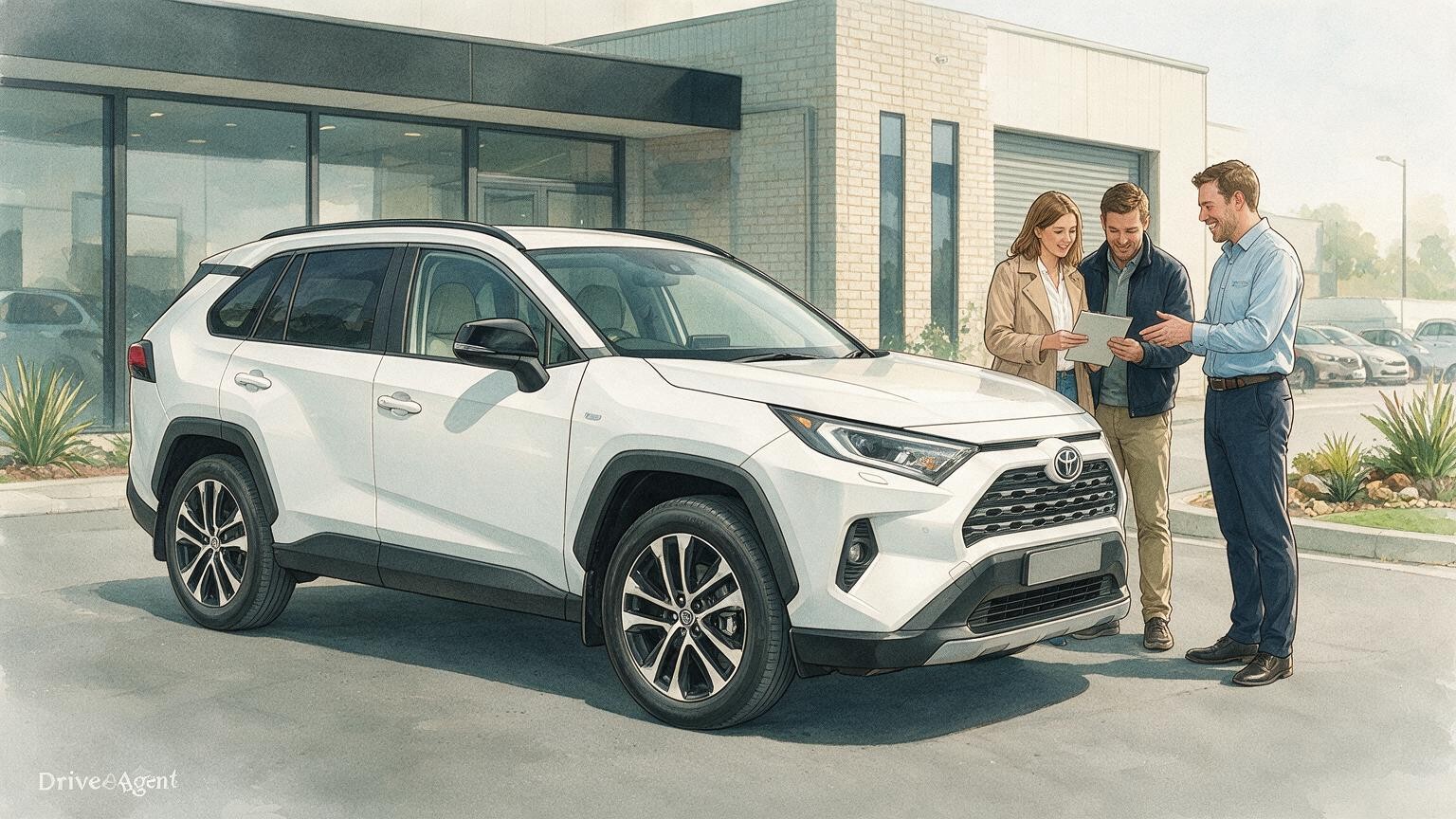
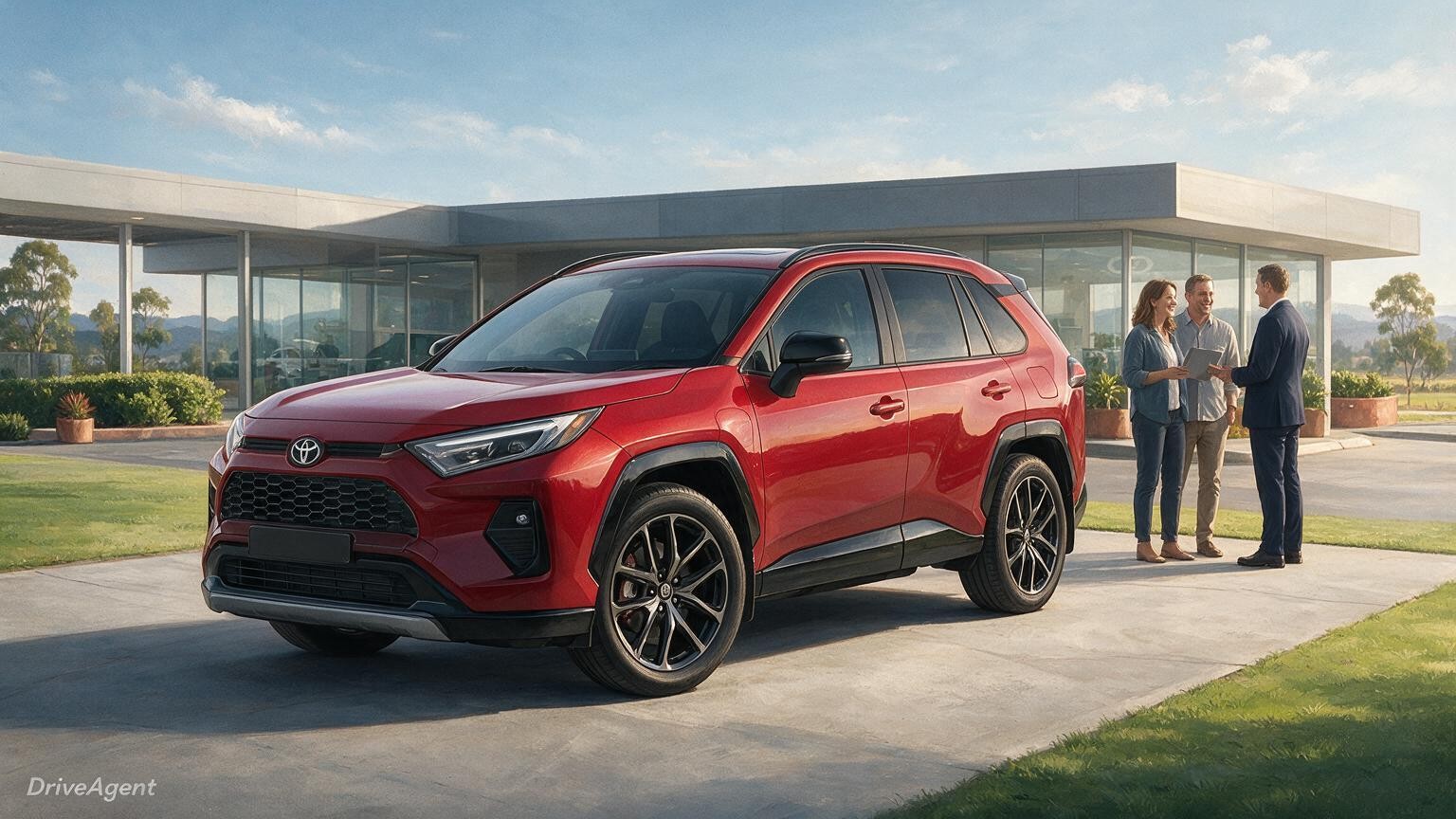
About 85 per cent of battery electric vehicles sold in Australia in 2026 were built in China, according to the Australian Financial Review, as an oil-price shock, tax incentives and a flood of affordable Chinese brands reshape the national market.
Synthesised from the cited sources. Research, writing and factual checks are automated using AI. Verify details against the sources. How we produce these reports
A Chinese-built majority in a record EV year
The Australian Financial Review reported that more than four in every five battery electric vehicles purchased in Australia since February 2026 were made in China, with Chinese brands accounting for more than half of all EV sales. The AFR attributed the surge to high fuel costs following United States attacks on Iran, generous government tax breaks and a flood of affordable Chinese brands including BYD and MG. 312
According to the AFR's figures, more than 180,000 battery electric vehicles were sold in Australia in the first nine months of 2026, a 136 per cent year-on-year increase. CGTN's report on the AFR story noted that barely five years earlier these Chinese brands were still largely unfamiliar to Australian consumers. 312
As AFPBB relayed via CGTN, the AFR reported that Chinese brands have now established a firm position in the Australian market, and that some competitors finding it difficult to match Chinese manufacturers on price have begun withdrawing from the Australian market. Among them, the AFR reported, was Nissan, which scrapped plans to launch its new Leaf EV in Australia early this year. In CGTN's report, Mike Costello of Cox Automotive said Chinese brands now combine affordability and reliable quality with new technology and modern design, saying the old stereotype of poor Chinese build quality should be dispelled. 12
August's milestone month on VFACTS data
Official VFACTS data released by the Federal Chamber of Automotive Industries showed that in August 2026, 27,089 fully electric vehicles were delivered — 24.9 per cent of the new car market — topping petrol (25,824) and diesel (23,608) in a single month for the first time on record, as reported by Tech Times. Including plug-in hybrids and conventional hybrids, electrified vehicles took 53.9 per cent of August sales from a total market of 108,760 vehicles. 4
Policy settings were also in play during the surge. Tech Times reported the federal government responded to the fuel-price spike with a temporary fuel excise reduction of 32 cents per litre, which began winding back on 1 July 2026 and ended completely on 2 August — a relief measure the publication noted did not slow EV adoption, which had already become structural. 4
Tech Times noted that every one of Australia's eight best-selling EVs in August was manufactured in China, including the Tesla Model Y (6,414 deliveries) and Model 3, which are built at Tesla's Giga Shanghai plant for right-hand-drive markets. The Chinese-branded models included the BYD Sealion 7, Geely EX5, Zeekr 7X, Jaecoo J5, Geely EX2 and BYD Atto 2. The sub-$40,000 Geely EX2 jumped 170 per cent month-on-month from 474 to 1,279 sales. 4
On the same VFACTS figures, five Chinese brands — BYD, GWM, MG, Geely and Chery — combined for 26,610 sales in August, 26.4 per cent of the entire market, while Chinese-sourced vehicles across all fuel types reached 43,882 deliveries, a record 40.3 per cent of the total. BYD alone accumulated 8,231 deliveries in August, ranking second among all brands, while the Tesla Model Y was the best-selling vehicle of any type. 4
Tech Times also reported the Lowy Institute's published analysis that four in five EVs sold in Australia are now made in China — including models marketed as Swedish, Japanese and Korean, such as Volvo's Chinese-built EVs and certain Hyundai and Kia models. The publication observed Australia imposes no tariffs on Chinese EVs, unlike the United States (100 per cent) and the European Union (up to 35 per cent), making it the most accessible tariff-free market for Chinese exports. 4
September confirms the structural shift
The most recent VFACTS figures show the trend extended into September, as reported by Marketing-Interactive. Chinese-built vehicles accounted for more than a third of all new cars sold, China took top spot as the largest source of new vehicles at 35.5 per cent of the market ahead of Japan (22.5 per cent) and South Korea (9.6 per cent), and BYD cemented its place as the second-biggest selling marque with 8,191 sales, up 61 per cent year-on-year. Only Toyota sold more, with 17,682 sales and a 17.2 per cent share. 6
The shift is entrenched in the year-to-date figures as well. Marketing-Interactive reported that BYD's market share more than doubled from 4.1 per cent in the first nine months of 2025 to 8.4 per cent this year, on 76,614 vehicles sold, while Chery climbed from 2.6 to 4.2 per cent and GWM from 4.3 to 4.9 per cent. Toyota's share fell from 19.9 to 16.7 per cent, and Ford, Kia, Mazda, Hyundai and Mitsubishi all lost ground. 6
Marketing-Interactive reported that Geely surged from 461 sales in September 2025 to 4,473, an increase of almost 620 per cent driven largely by its EX5, while GWM sold 5,212, MG 4,635 and Chery 4,205. Established brands lost ground: Toyota's share slipped from 18 to 17.2 per cent, Ford fell from 8.1 to 7.4 per cent, Kia from 7.2 to 5.7 per cent, Hyundai from 6.4 to 4.9 per cent, and Mazda slipped from second place in January to fifth, selling 5,702 vehicles. 6
Battery electric vehicles took 24.2 per cent of September sales — more than double their 11.3 per cent share a year earlier — while plug-in hybrid sales jumped 122.7 per cent and petrol sales fell 36.2 per cent, according to Marketing-Interactive's report on the VFACTS data. Across the first nine months of 2026, battery electric vehicles captured 18.9 per cent of the market versus 8.1 per cent at the same point in 2025. FCAI acting chief executive Dianne O'Hara said motorists were embracing a broader range of powertrains following greater model choice and growing competition. 6
Commonwealth Bank's own analysis, published in its newsroom, found Chinese brands accounted for 57 per cent of Australia's EV market in May 2026, up from 33 per cent a year earlier, with CommBank sustainable energy economist John Oh describing Chinese brands as now dominant suppliers of EVs in Australia. The bank recorded a 161.5 per cent lift in weekly EV loan volumes in March against the February average, and a 171 per cent year-on-year rise in new BEV loan volumes in Q1 FY27, according to CommBank's Tim Burdon. 7
The growth is also visible in the fleet itself. Commonwealth Bank reported that Australia's battery EV and plug-in hybrid fleet had reached about 612,000 vehicles by the end of June 2026, after passing 500,000 in March — though petrol and diesel vehicles still dominate the total vehicle fleet on the road. 7
Drivers beyond the fuel-price shock
Commonwealth Bank's newsroom analysis argued the conflict-driven fuel-price spike was one part of the story but did not create the EV trend, noting sales remained strong well beyond the initial shock. The bank pointed to a wider range of models: the Electric Vehicle Council counts 196 battery EV and plug-in hybrid models available in Australia in 2026, up from 153 in 2025, including 125 battery EVs and 71 plug-in hybrids. 7
The scale of the public charging network is reported differently by different sources, and the conflict remains unresolved. Commonwealth Bank, citing the Electric Vehicle Council, reported 4,268 public charging locations and 11,602 connectors by June 2026 — locations up 235 per cent and connectors up 175 per cent year-on-year. Tech Times, by contrast, reported approximately 1,250 public charging sites with nearly 3,800 charge ports nationwide, roughly 45 EVs per public charger, compared with 14 in the European Union. The two counts differ materially and their methodologies are not reconciled in the available reporting. 74
Consumer indicators point in the same direction, per Tech Times: an NRMA survey of 42,472 members found EV owners now less worried about charging availability than petrol owners are about fuel costs, a mycar survey found 46 per cent of owners planned a hybrid or EV next, and NRMA's total-cost-of-ownership analysis found EVs "almost at parity" with petrol equivalents across a full ownership lifecycle. 4
Tech Times also flagged the counterweights: EVs represent only about 2 per cent of all vehicles on Australian roads, and an Allianz Australia survey of 1,096 motorists conducted by Pureprofile in July found 47 per cent of non-EV drivers said they were not yet ready to switch. Regional charging coverage remains thin, with more than two-thirds of Australian towns lacking a charger within five kilometres, and the federal government committed AUD $40 million in the 2026 budget to regional and kerbside charging over four years. 4
Forecast: a market transforming further
The Australian Automotive Dealer Association forecast in July that China would account for 58 per cent of Australia's new car market by 2035 — almost 900,000 cars — a significant increase on the 43 per cent the Centre for International Economics had forecast the previous year, as reported by Yahoo Finance. Voortman of the AADA described the market as undergoing "the most significant transformation in its history", with brands entering at an extraordinary rate; the association expects the number of competing brands to rise from 67 to 75 by 2031. 5
Yahoo Finance reported that since 2010, ten new brands have entered the Australian market, nine of them made in China, and that China overtook Japan as Australia's biggest source of new vehicles in February 2026 for the first time in 28 years. The outlet also noted XPENG's announcement it would launch five new vehicles in Australia within six months, while European brands retreated: Fiat confirmed it would stop importing passenger cars, Inchcape ended its distribution partnership with Peugeot, and a Wodonga dealership group closed several franchises. 5
AI evidence finder
Ask about this article
Ask a question to find relevant published passages and source links. AI selects evidence; the passages remain exactly as published.
Behind this report
Sources & context
Cited source mix
7 cited pages across 6 websites
- Role not assessed 7
Website breakdown
- afpbb.com2 pages
- afr.com1 page
- au.finance.yahoo.com1 page
- commbank.com.au1 page
- marketing-interactive.com1 page
- techtimes.com1 page
7 cited pages with an undocumented publisher role. Websites may share ownership or repeat the same reporting.
Saved research extracts
7 / 7 cited pages with saved extracts
0 shortened at our text limit · 0 without a saved-extract record
Extracts retrieved 17 Oct 2026.
Extracts can omit page content. These counts do not verify claims or measure independent reporting. Political leaning and reliability are not rated.
- AFP report: China-made vehicles account for most Australian EV salesRole not assessedSource extract saved
Why these labels?AFP report: China-made vehicles account for most Australian EV sales
Who produced it
We have not documented this publisher’s role. An unassigned label is not a negative rating.
How this report uses it
Cited in 3 paragraphs: A Chinese-built majority in a record EV year.
This describes its use in our report. It does not establish the source’s editorial stance or independently corroborate every claim.
Evidence record
Text retrieved 17 Oct 2026. The retained extract did not reach our text limit. Extraction can still omit page content.
- オーストラリアで購入されたEVの8割以上が中国製Role not assessedSource extract saved
Why these labels?オーストラリアで購入されたEVの8割以上が中国製
Who produced it
We have not documented this publisher’s role. An unassigned label is not a negative rating.
How this report uses it
Cited in 3 paragraphs: A Chinese-built majority in a record EV year.
This describes its use in our report. It does not establish the source’s editorial stance or independently corroborate every claim.
Evidence record
Text retrieved 17 Oct 2026. The retained extract did not reach our text limit. Extraction can still omit page content.
- Chinese cars devour Australia's electric vehicle marketRole not assessedSource extract saved
Why these labels?Chinese cars devour Australia's electric vehicle market
Who produced it
We have not documented this publisher’s role. An unassigned label is not a negative rating.
How this report uses it
Cited in 2 paragraphs: A Chinese-built majority in a record EV year.
This describes its use in our report. It does not establish the source’s editorial stance or independently corroborate every claim.
Evidence record
Text retrieved 17 Oct 2026. The retained extract did not reach our text limit. Extraction can still omit page content.
- Electric Cars Beat Petrol in Australia for First Time, Led by Chinese BrandsRole not assessedSource extract saved
Why these labels?Electric Cars Beat Petrol in Australia for First Time, Led by Chinese Brands
Who produced it
We have not documented this publisher’s role. An unassigned label is not a negative rating.
How this report uses it
Cited in 8 paragraphs: August's milestone month on VFACTS data; Drivers beyond the fuel-price shock.
This describes its use in our report. It does not establish the source’s editorial stance or independently corroborate every claim.
Evidence record
Text retrieved 17 Oct 2026. The retained extract did not reach our text limit. Extraction can still omit page content.
- Half of all new cars on Aussie roads to be from China by 2035: 'Significant transformation'Role not assessedSource extract saved
Why these labels?Half of all new cars on Aussie roads to be from China by 2035: 'Significant transformation'
Who produced it
We have not documented this publisher’s role. An unassigned label is not a negative rating.
How this report uses it
Cited in 2 paragraphs: Forecast: a market transforming further.
This describes its use in our report. It does not establish the source’s editorial stance or independently corroborate every claim.
Evidence record
Text retrieved 17 Oct 2026. The retained extract did not reach our text limit. Extraction can still omit page content.
- Australia's auto hierarchy is shifting as Chinese brands pile on the ...Role not assessedSource extract saved
Why these labels?Australia's auto hierarchy is shifting as Chinese brands pile on the ...
Who produced it
We have not documented this publisher’s role. An unassigned label is not a negative rating.
How this report uses it
Cited in 4 paragraphs: September confirms the structural shift.
This describes its use in our report. It does not establish the source’s editorial stance or independently corroborate every claim.
Evidence record
Text retrieved 17 Oct 2026. The retained extract did not reach our text limit. Extraction can still omit page content.
- Have EVs reached a tipping point in Australia? Here’s 8 things you need to knowRole not assessedSource extract saved
Why these labels?Have EVs reached a tipping point in Australia? Here’s 8 things you need to know
Who produced it
We have not documented this publisher’s role. An unassigned label is not a negative rating.
How this report uses it
Cited in 4 paragraphs: September confirms the structural shift; Drivers beyond the fuel-price shock.
This describes its use in our report. It does not establish the source’s editorial stance or independently corroborate every claim.
Evidence record
Text retrieved 17 Oct 2026. The retained extract did not reach our text limit. Extraction can still omit page content.
Keep reading
Related subjects and more from this section.
September 2026 VFACTS: Chinese brands claim half the top 10 as battery electric sales edge out petrol
Australian new-vehicle sales rose 0.9 per cent in September to 102,924 units on the VFACTS count, with battery electric vehicles outselling petrol for a second straight month and Chinese brands occupying five of the top 10 spots.