Fuel economics push Australian fleets towards electrification as diesel costs bite
A JET Charge analysis published by AFMA estimates a 100-vehicle heavy fleet could save $4.5 million a year by switching from diesel to electric depot charging, while government and industry sources point to compressed transition timelines, infrastructure lead times and the fuel-security value of electrification as the key forces at work.
Synthesised from the cited sources. Research, writing and factual checks are automated using AI. Verify details against the sources. How we produce these reports
Heavy fleet savings put at $4.5 million a year
New data from commercial EV charging specialist JET Charge, published by AFMA, suggests the economics of electrifying heavy fleets have shifted decisively. At current diesel prices of $1.91 a litre, a 100-vehicle heavy fleet spends about $5.8 million a year on fuel, and electric depot charging cuts that to roughly $1.3 million — a saving of $4.5 million annually before maintenance savings, avoided carbon compliance costs and tariff optimisation are counted. 2
"At current diesel prices, the fuel cost savings of switching a commercial fleet to electric are not marginal. They are transformational," JET Charge co-founder and chief executive Tim Washington said in the AFMA-published analysis. He added that the question facing operators is whether charging infrastructure will be ready when the vehicles arrive, warning that infrastructure lead times mean the decision must be made well before delivery. 2
JET Charge claims payback periods on charging infrastructure are measured in months rather than years for most operators, and that electrification has moved from a future consideration to an active procurement decision as fuel volatility compounds pressure on thin logistics margins, according to the AFMA item. 2
Fuel price volatility as the trigger
The acceleration in fleet electrification is being driven by sustained fuel price volatility linked to the Middle East conflict. Rainbow Power Company reported in June 2026 that petrol had reached $2.50 a litre in parts of New South Wales and diesel more than $3 at some pumps, after strikes on Iran's South Pars gas field and disruption to oil export routes, with supply hits estimated at 17 per cent and repairs expected to drag into 2029. The same article notes Australia imports 90 per cent of its crude. 4
ABC News reported in August 2026 that the war in Iran had caused the largest supply disruption in the history of the global oil market, and that Australia holds 36 days of diesel in the national stockpile. The 2026 federal budget included an $11.9 billion National Fuel Security Plan, of which $3.2 billion is for physically stockpiling diesel and jet fuel, aiming to lift reserves to 50 days. 3
ABC News noted a policy tension at the heart of that package: the only electrification measure in the fuel security plan was $40 million allocated to electrifying Australia Post's delivery fleet, not even 1 per cent of the total. By contrast, the passenger-car EV tax break has so far cost the government $3.35 billion in forgone revenue, with a further $2.8 billion projected by the 2028-29 financial year. 3
AFMA notes that in June 2026 one in four new passenger vehicles sold in Australia was an electric vehicle, a monthly sales record, while ABC News separately reported EVs hit a record 23 per cent of new car sales in May 2026, up from 7.5 per cent a year earlier. JET Charge reports operators who had planned gradual five-year transitions are now compressing them into 18 months, driven by fuel volatility, government programs such as ARENA's Driving The Nation fund, and the Transport and Infrastructure Net Zero Roadmap targeting 62-70 per cent emissions reduction by 2035. 23
Light commercial and small-business fleets: the entry point
For smaller fleets, the savings case rests on lower per-kilometre energy costs. Geotab, citing Australian Institute of Petroleum data for the week ended 15 March 2026, put petrol at an average 219.5 cents a litre and diesel at 245.6 cents nationally, and pointed to rooftop solar making the effective daytime charging cost near zero for businesses with their own arrays. 5
The Electric Vehicle Council estimate cited by Valiant Finance puts an average Australian driver travelling about 12,000 km a year at roughly $2,500 in annual petrol spending, versus about $500 a year to charge an electric vehicle over the same distance. Rainbow Power Company separately cites minimum fuel savings of $2,000 a year per vehicle at 12,000 km, and describes a delivery-firm client that switched three vans to plug-in hybrids with workplace solar and cut fuel use 60 per cent. 64
Policy settings are supporting the switch. Geotab notes the Electric Car Discount's fringe benefits tax exemption for eligible EVs provided through salary packaging, the import tariff exemption, and the New Vehicle Efficiency Standard effective from January 2025. It also flags that Commonwealth Treasury has commenced a statutory review of the FBT concessions, with no immediate changes proposed, and advises businesses structuring fleets under the scheme to seek specific tax advice. 5
The NSW Government, in resources updated on 9 October 2026, lists lower running costs, improved fuel security and reduced emissions among the benefits for businesses that electrify, and says it is investing $105 million in an EV fleets incentive to help NSW businesses accelerate the shift. Valiant Finance notes NSW fleet incentives ranging from $5,000 to $50,000 depending on vehicle type, and free registration plus stamp duty concessions of up to $1,500 in the Northern Territory. 16
Infrastructure: the hard constraint
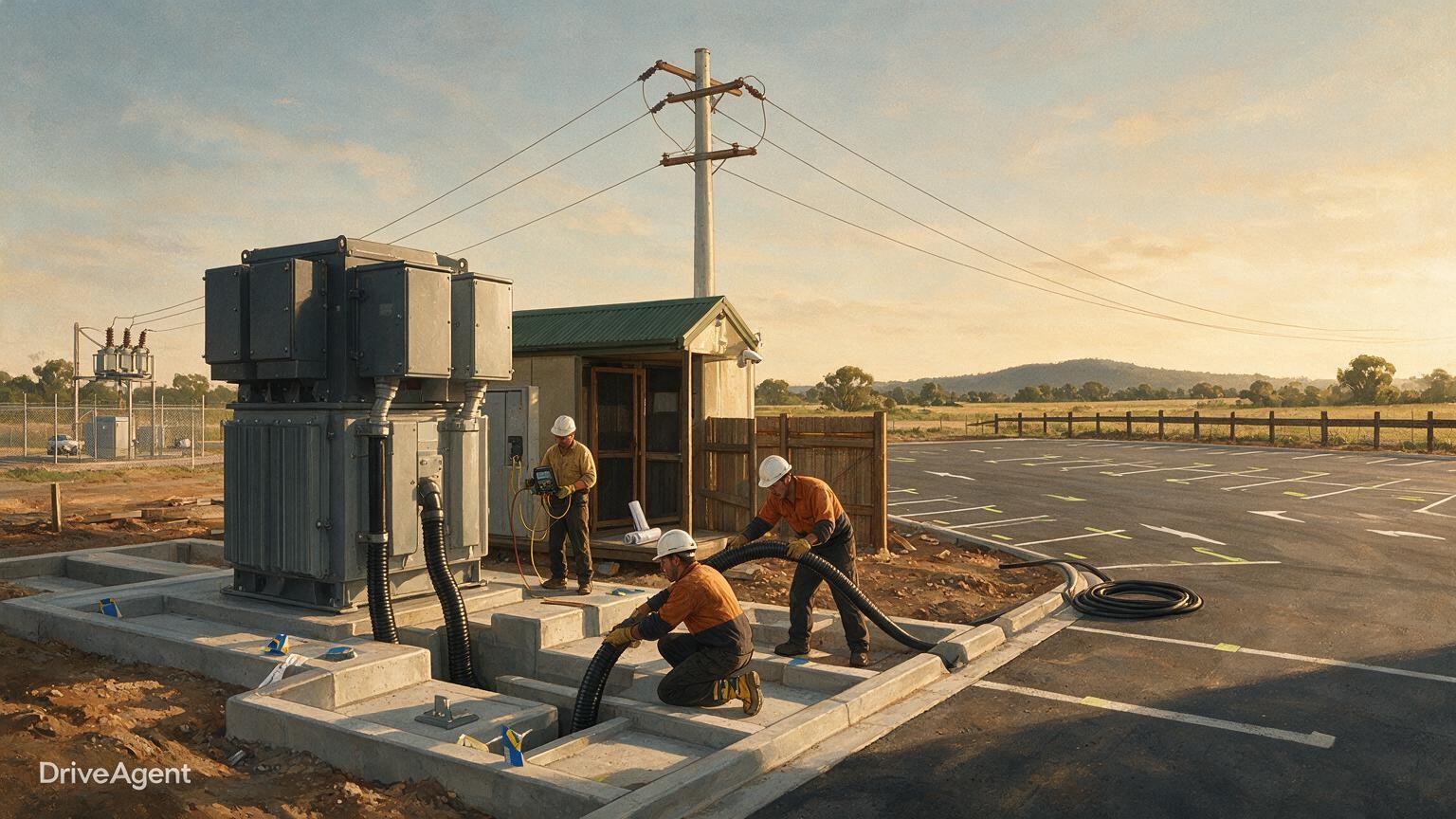
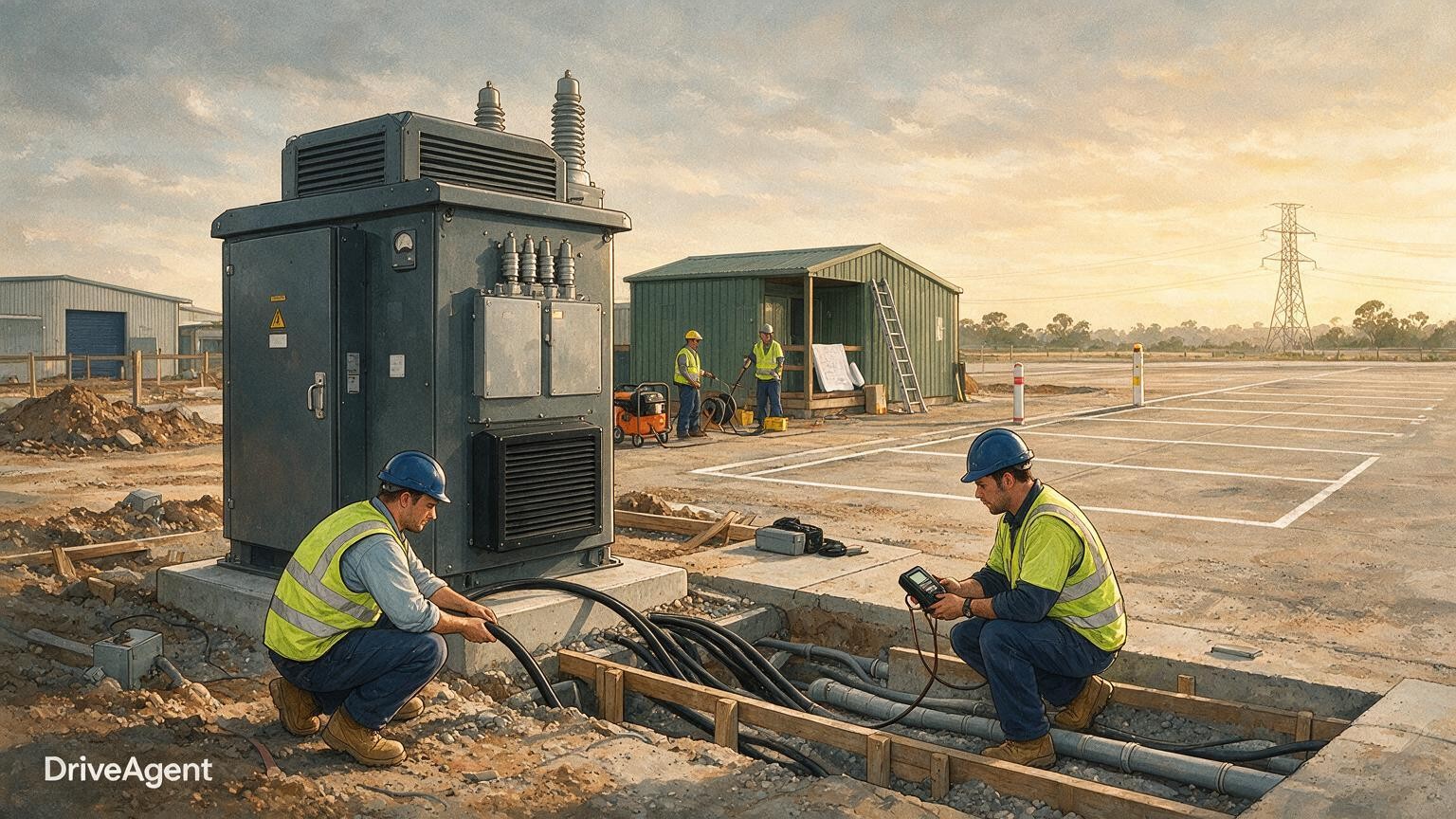
JET Charge argues depot charging, not public charging, is the real bottleneck. Public charging accounts for only about 30 per cent of national EV charging needs, with the remaining 70 per cent required from private infrastructure such as homes, depots and transport hubs — many of which lack the electrical capacity to support a fleet transition. AFMA reports depot charging projects are operating on 18-24 month lead times, meaning operators that do not commit now could be effectively locked out until 2027 or 2028. 2
JET Charge's case studies illustrate what large-scale deployment looks like. Its $4.5 million national charging network across seven IKEA sites — 59 chargers supporting more than 100 electric delivery vehicles — helped IKEA Australia go from 5 per cent zero-emission deliveries in 2022 to 83 per cent by October 2025. It has also supported a truck charging network with NewVolt and charging for Team Global Express, one of the world's largest electric delivery fleets. 2
At the heavy end, ABC News reports charging is the chicken-and-egg problem at the heart of freight electrification. An ARENA-commissioned report estimates at least 165 megawatt-scale charging hubs are needed nationally, and analyst David Leitch calculates a megawatt-scale hub with 20 to 50 bays would cost $35 million to $85 million each, putting a countrywide network at $6 billion to $14 billion. He notes grid connection is the single biggest cost variable, with a 20-megawatt connection alone requiring upgrades of $US3 million to $US8 million. 3
Where electrification is achievable first
ARENA's commissioned report found electrifying shorter urban routes first is far more achievable: light commercial and medium rigid vehicles that return to base and charge overnight at depots. ABC News reports industry observers say electric versions of urban delivery trucks now cost the same as diesel equivalents, and Climate Council analyst Ben McLeod cites proposals suggesting a $3 billion five-year package could support 30,000 to 50,000 new electric trucks, displacing upwards of a billion litres of diesel a year and cutting operator costs by more than $30,000 a year per truck. 3
Long-haul remains the harder problem. ABC News reports electric prime movers still cost two to three times their fuel-powered equivalents, though Leitch's modelling suggests they could cut fuel costs by 47-71 per cent — a B-double costing roughly $1 a kilometre on diesel versus 30 cents on electricity, saving up to $73,000 a year at 100,000 km and recouping the up-front premium within three to four years. Leitch has disclosed a shareholding in New Energy Transport, a company building electric truck charging infrastructure. 3
NatRoad chief executive Warren Clark welcomed the metropolitan focus, telling ABC News: "We 100 per cent agree that freight within metropolitan areas can be transitioned to electric … they're back-to-base, they can be charged overnight." But he cautioned that only about 1 per cent of the national truck fleet is electric, average truck age is around 15 years, and building charging infrastructure across regional Australia is an enormous project that will not happen overnight. He argues there is no funding available for small one- or two-truck operators, who make up the bulk of the sector: ARENA's report found 98 per cent of transport operators are small-to-medium enterprises with a median profit margin of just 2 per cent, and 70 per cent own only one truck. 3
The scale of the potential diesel savings is large. ABC News's modelling — verified by the Climateworks Centre — estimates electrifying Australia's diesel light commercial vehicles would save about 5.85 billion litres of diesel a year, or 17.3 per cent of national consumption, extending the current 36-day diesel reserve to 44 days; adding rigid trucks would take that to about 9.47 billion litres, or 28 per cent, extending the reserve to 50 days; and electrifying the full diesel road freight fleet including semi-trailers would save an estimated 14.36 billion litres a year, roughly 42.5 per cent of what Australia currently consumes, stretching the reserve to 63 days — 27 days more than now, and well beyond the roughly 10 extra days the government's stockpiling program aims to add. Each scenario assumes full electrification and is an estimate, not a forecast. 3
The Superpower Institute, a not-for-profit policy think tank, offers a counterpoint to the stockpiling approach: its report argues Australia could improve fuel security from about 17 per cent today to 87 per cent by 2040 through electrification. "Every litre of fuel that we are able to save through electrification makes us more fuel secure," the institute's chief executive Baethan Mullen told ABC News, adding that saved fuel leaves sectors that cannot yet electrify with easier access to diesel. 3
AI evidence finder
Ask about this article
Ask a question to find relevant published passages and source links. AI selects evidence; the passages remain exactly as published.
Behind this report
Sources & context
Cited source mix
6 cited pages across 6 websites
- Role not assessed 6
Website breakdown
- abc.net.au1 page
- afma.org.au1 page
- energy.nsw.gov.au1 page
- geotab.com1 page
- rpc.com.au1 page
- valiantfinance.com1 page
6 cited pages with an undocumented publisher role. Websites may share ownership or repeat the same reporting.
Saved research extracts
6 / 6 cited pages with saved extracts
0 shortened at our text limit · 0 without a saved-extract record
Extracts retrieved 27 Oct 2026.
Extracts can omit page content. These counts do not verify claims or measure independent reporting. Political leaning and reliability are not rated.
- Electric vehicle resources for businessesRole not assessedSource extract saved
Why these labels?Electric vehicle resources for businesses
Who produced it
We have not documented this publisher’s role. An unassigned label is not a negative rating.
How this report uses it
Cited in 1 paragraph: Light commercial and small-business fleets: the entry point.
This describes its use in our report. It does not establish the source’s editorial stance or independently corroborate every claim.
Evidence record
Text retrieved 27 Oct 2026. The retained extract did not reach our text limit. Extraction can still omit page content.
- Fuel economics accelerate Australia's fleet electrificationRole not assessedSource extract saved
Why these labels?Fuel economics accelerate Australia's fleet electrification
Who produced it
We have not documented this publisher’s role. An unassigned label is not a negative rating.
How this report uses it
Cited in 6 paragraphs: Heavy fleet savings put at $4.5 million a year; Fuel price volatility as the trigger; Infrastructure: the hard constraint.
This describes its use in our report. It does not establish the source’s editorial stance or independently corroborate every claim.
Evidence record
Text retrieved 27 Oct 2026. The retained extract did not reach our text limit. Extraction can still omit page content.
- Australia is spending billions on fuel security. What if ... - ABC NewsRole not assessedSource extract saved
Why these labels?Australia is spending billions on fuel security. What if ... - ABC News
Who produced it
We have not documented this publisher’s role. An unassigned label is not a negative rating.
How this report uses it
Cited in 9 paragraphs: Fuel price volatility as the trigger; Infrastructure: the hard constraint; Where electrification is achievable first.
This describes its use in our report. It does not establish the source’s editorial stance or independently corroborate every claim.
Evidence record
Text retrieved 27 Oct 2026. The retained extract did not reach our text limit. Extraction can still omit page content.
- Petrol and Diesel Price Surge: Time to Electrify Your Fleet - Rainbow Power CompanyRole not assessedSource extract saved
Why these labels?Petrol and Diesel Price Surge: Time to Electrify Your Fleet - Rainbow Power Company
Who produced it
We have not documented this publisher’s role. An unassigned label is not a negative rating.
How this report uses it
Cited in 2 paragraphs: Fuel price volatility as the trigger; Light commercial and small-business fleets: the entry point.
This describes its use in our report. It does not establish the source’s editorial stance or independently corroborate every claim.
Evidence record
Text retrieved 27 Oct 2026. The retained extract did not reach our text limit. Extraction can still omit page content.
- Why the EV moment is now for Australian SMBsRole not assessedSource extract saved
Why these labels?Why the EV moment is now for Australian SMBs
Who produced it
We have not documented this publisher’s role. An unassigned label is not a negative rating.
How this report uses it
Cited in 2 paragraphs: Light commercial and small-business fleets: the entry point.
This describes its use in our report. It does not establish the source’s editorial stance or independently corroborate every claim.
Evidence record
Text retrieved 27 Oct 2026. The retained extract did not reach our text limit. Extraction can still omit page content.
- Future-Proof Your Fleet: The Business Case for EVs in 2026Role not assessedSource extract saved
Why these labels?Future-Proof Your Fleet: The Business Case for EVs in 2026
Who produced it
We have not documented this publisher’s role. An unassigned label is not a negative rating.
How this report uses it
Cited in 2 paragraphs: Light commercial and small-business fleets: the entry point.
This describes its use in our report. It does not establish the source’s editorial stance or independently corroborate every claim.
Evidence record
Text retrieved 27 Oct 2026. The retained extract did not reach our text limit. Extraction can still omit page content.
Keep reading
Related subjects and more from this section.
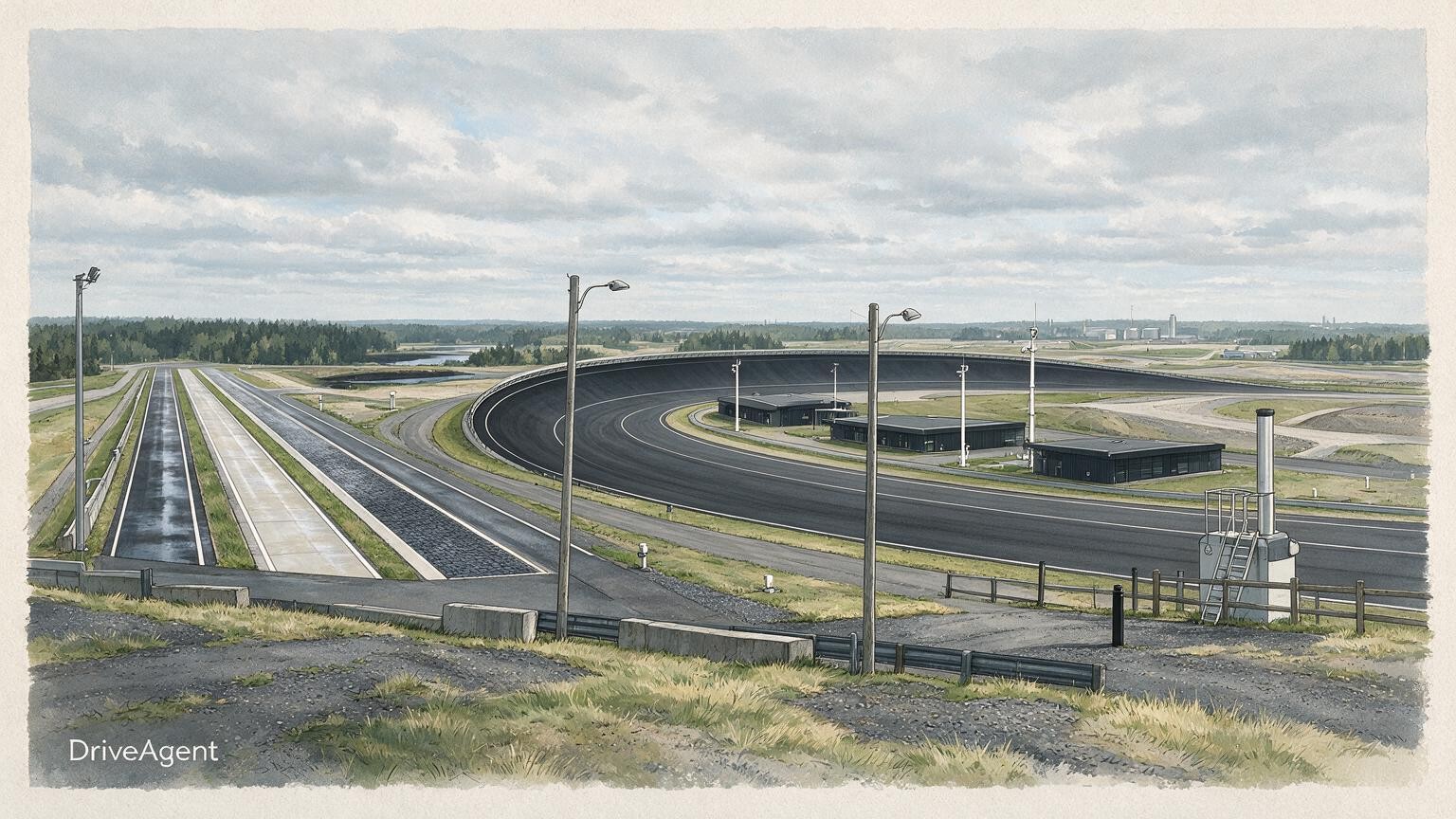
Scania opens SEK975 million proving ground in Södertälje for electrification and safety testing
Scania has inaugurated an 85-hectare R&D proving ground at its Swedish headquarters, an investment of approximately SEK975 million that brings electrification, autonomous, safety and vehicle-dynamics testing in-house for the TRATON Group.