Hyundai Ioniq 3 first drives: affordable electric hatch detailed ahead of Australian launch in 2027
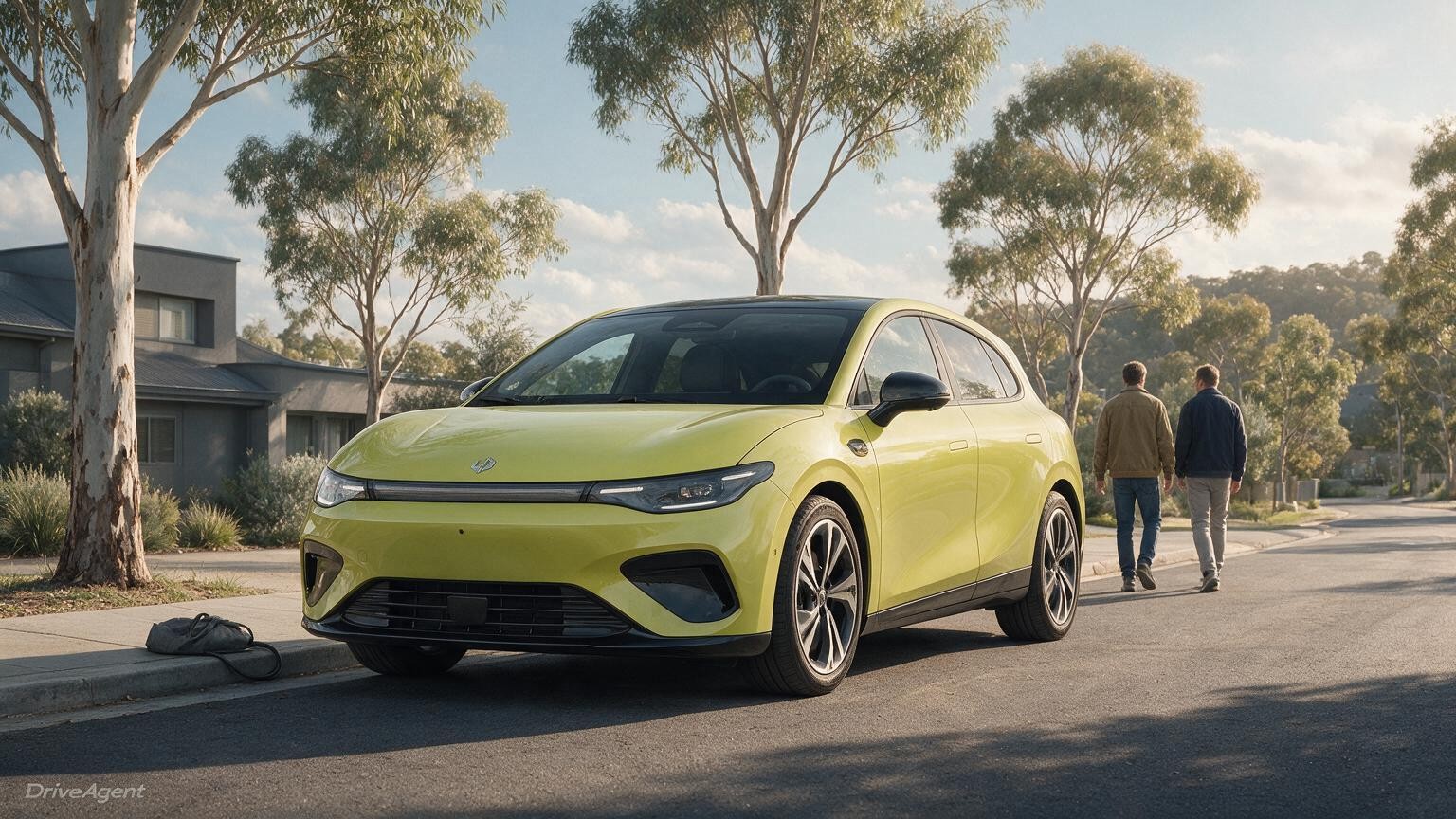
The first international drives of Hyundai's smallest Ioniq EV have emerged, with the compact hatch confirmed for Australia in early 2027 and expected to price from the low-to-mid $40,000 range against the MG4, BYD Dolphin and GAC Aion UT.
Synthesised from the cited sources. Research, writing and factual checks are automated using AI. Verify details against the sources. How we produce these reports
What has happened
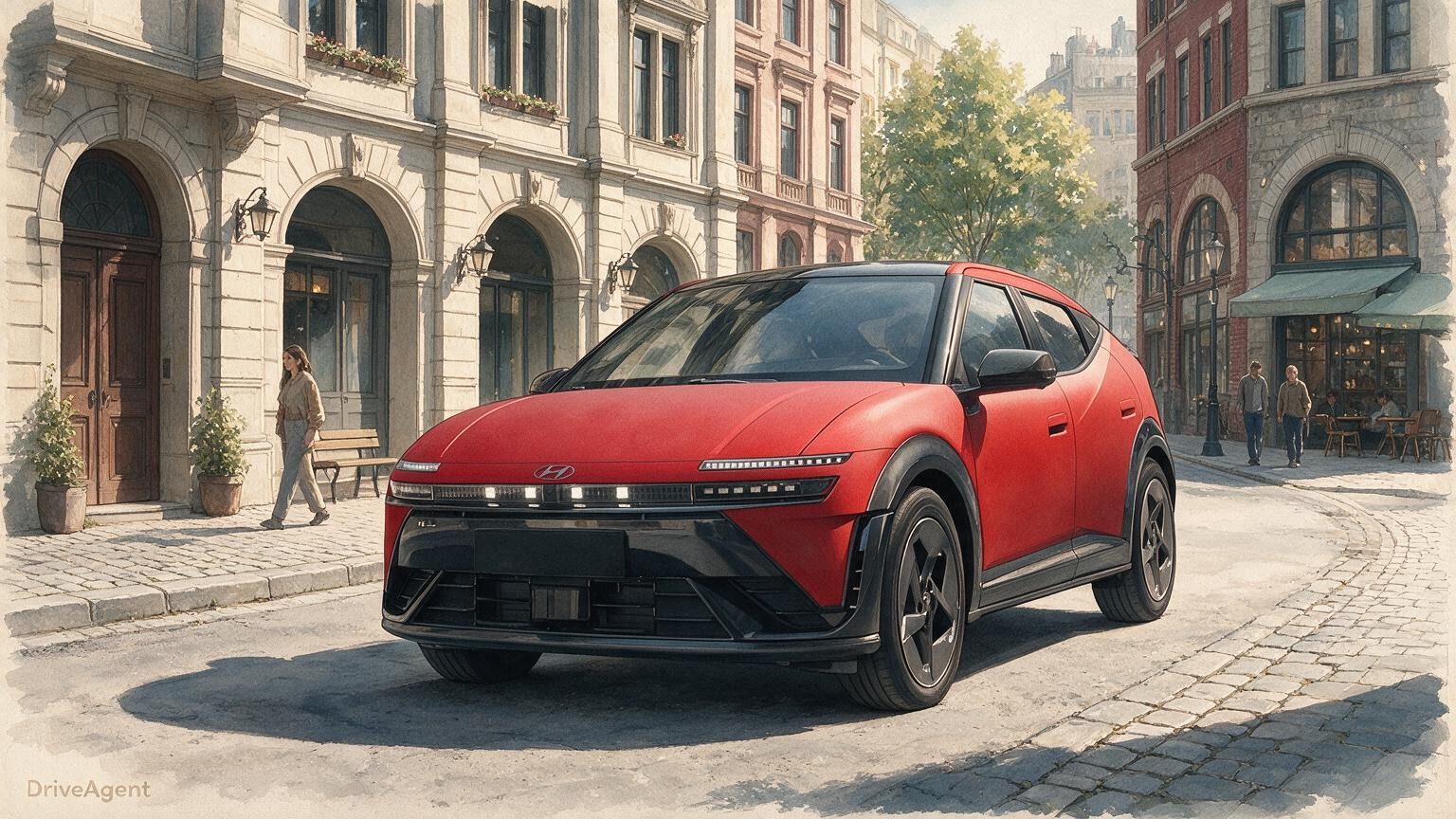
Hyundai's smallest and most affordable dedicated Ioniq model, the Ioniq 3 compact electric hatchback, has now been driven by international media following its global reveal, with the car confirmed for an Australian launch in early 2027. zecar reported in April 2026 that Hyundai had officially confirmed the model locally, positioning it against value-focused rivals including the MG4, BYD Dolphin and GAC Aion UT, with expected Australian pricing in the low-to-mid $40,000 range. 2
Two first-drive reviews have followed in late October 2026. TechRadar drove the Ioniq 3 and called it one of the most well-rounded affordable EVs currently on sale, while Poland's Autokult was broadly impressed with the car itself but criticised its pricing, arguing the cheapest versions start where a petrol SUV in the C segment should finish. 13
Specifications and platform detail
The Ioniq 3 is a five-seat, front-wheel-drive compact hatch using a 400-volt electrical architecture. Two battery versions have been revealed globally: a Standard Range with a 42.2kWh battery and a Long Range with a 61kWh unit, Hyundai figures reported by zecar. zecar quotes claimed WLTP range of up to 344km for the Standard Range and up to 496km for the Long Range, while TechRadar separately cites WLTP ranges of over 344km and over 497km. DC fast charging supports a 10 to 80 per cent recharge in roughly 29 to 30 minutes on a suitable charger, with AC charging up to 22kW. The hatch measures 4155mm long, 1800mm wide and 1505mm high on a 2680mm wheelbase, with 16 to 19-inch wheels and total luggage space of 441 litres. 21
Platform attribution differs between outlets. zecar describes the car as built on Hyundai Motor Group's dedicated E-GMP electric platform in its front-wheel-drive 400V configuration for smaller, more affordable EVs, while TechRadar reports that all versions ride on Hyundai's latest K3 Platform with a 400-volt architecture. Both outlets agree on the 400-volt, front-drive layout; the platform naming has not been reconciled in the available reporting. 12
There is also a direct conflict over motor outputs. zecar's specification table lists the Standard Range at 99.5kW and the Long Range at 108kW, with 250Nm of torque and 0-100km/h times of 9.0 and 9.6 seconds respectively. TechRadar reports the opposite arrangement, stating the Standard Range produces 107.8kW (147hp) and the Long Range 99.5kW (135hp). Autokult's review likewise says the smaller-battery cars carry the stronger 147hp motor. The weight of the driving-review evidence supports the TechRadar and Autokult arrangement, but no authoritative resolution has been published. 123
Driving impressions and real-world range
TechRadar's drive, conducted on broken road surfaces outside Istanbul, Turkey, found the Ioniq 3 tuned for quick city sprints rather than long motorway stretches, with noticeable wind noise at Turkey's roughly 90mph highway limits. The reviewer clocked around 4.2 miles per kWh and expected about 250 miles from Long Range versions and more than 200 miles from the Standard Range in typical driving, calling acceleration brisk and the cabin more mature than its budget price tag would suggest. 1
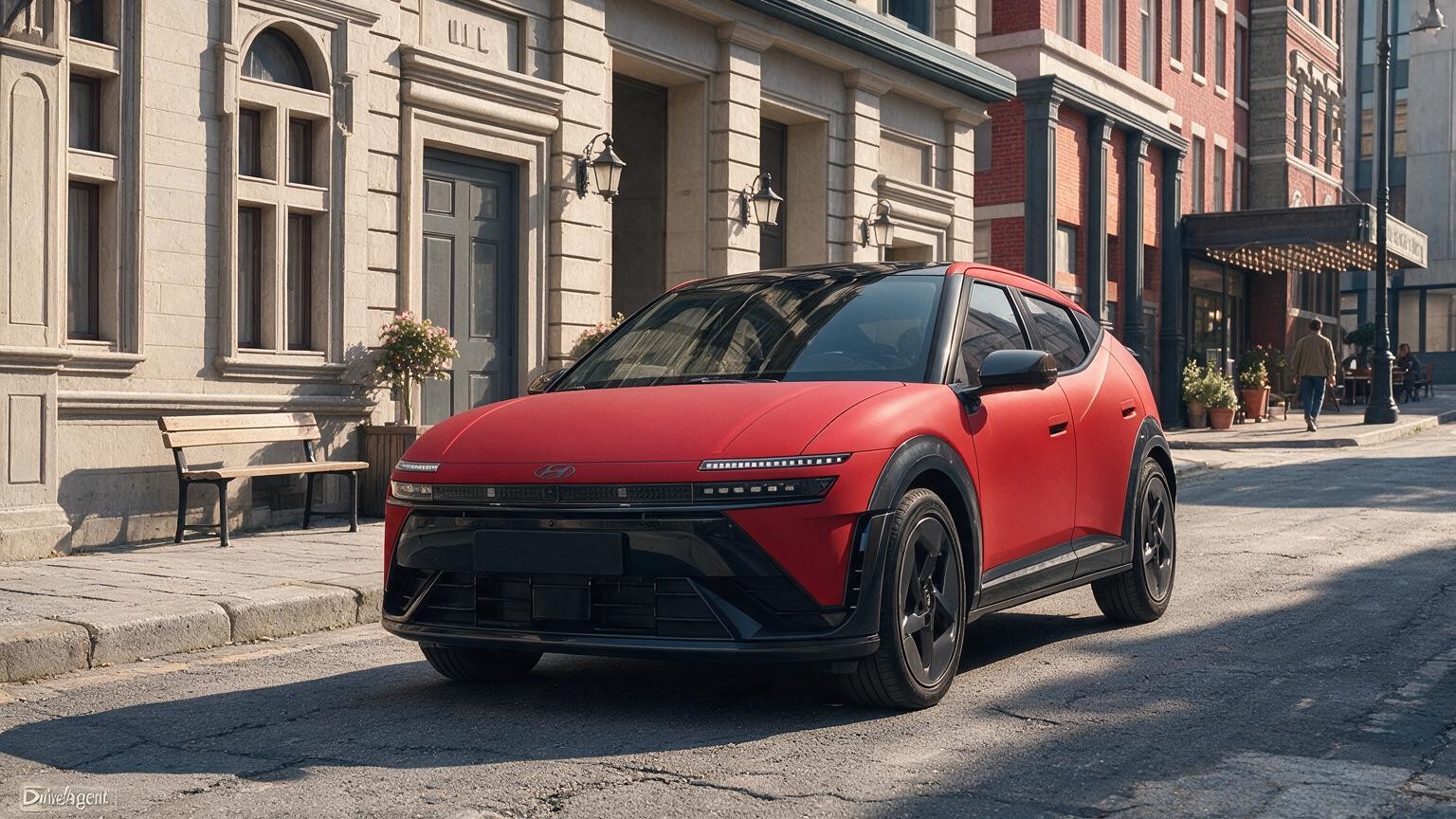
Autokult's Polish test highlighted the low-drag design, reporting that a 61kWh example exceeded 500km of city range thanks to the steeply falling roofline and battery packaged in the floor. TechRadar separately reports that Hyundai said it targeted a drag coefficient of approximately 0.263 to boost EV efficiency, part of the 'Aero Hatch' silhouette that pairs a low front end with a roofline that tapers toward the rear spoiler. 31
Autokult's reviewer, who is 180cm tall, could sit behind his own driving position without difficulty, but flagged two practical compromises: visibility rearward is limited by the kinked tailgate, and thick A-pillars demand care when turning at city intersections. Rear headroom for very tall passengers was also raised as a question given the tapering roof. 3
Technology and interior
The Ioniq 3 debuts Hyundai's next-generation Pleos Connect infotainment software, based on Android Automotive, with either a 12.9-inch or 14.6-inch central touchscreen depending on grade. zecar reports the system is expected to roll out across future Hyundai models, and lists features including wireless Apple CarPlay and Android Auto, Bose premium audio, a digital phone key, Highway Driving Assist 2, remote smart parking assist, a surround-view camera and blind-spot cameras. Physical buttons for major climate and audio functions have been retained. 2
TechRadar adds that the system includes the Gleo AI voice assistant integrated into Pleos Connect, which handled natural-language commands well in testing, including adjusting cabin temperature conversationally and interacting with third-party apps such as Spotify. The system offers connected navigation with EV route planning, over-the-air software updates and a Pleos App Market. Hyundai Digital Key 2 allows compatible smartphones and wearables to lock, unlock and start the car. The publication noted the interface's layout closely resembles Tesla's and judged the system fast and seamless, if less visually polished than other Hyundai set-ups. 1
Practicality and packaging
Despite its compact dimensions, Hyundai claims strong cabin practicality, with zecar reporting a flat floor and clever packaging alongside a 441-litre total luggage capacity split, per TechRadar, into a 322-litre trunk and a 119-litre Megabox underfloor storage compartment. zecar also lists vehicle-to-load (V2L) power capability among the practical features, along with dual-zone climate control and heated and ventilated seats on higher grades. 21
Autokult describes the deep luggage compartment trend, noting that with no fuel tank or spare wheel, the 322-litre standard boot is supplemented by 119 litres under the floor, and confirms the battery is housed in the floor and effectively hidden stylistically. The publication highlights the 2680mm wheelbase as generous for a B-segment car, longer than the Peugeot 2008's. 3
Pricing, market context and Australian availability
Overseas pricing is confirmed for two markets and applies only there. In the UK, the Ioniq 3 starts at £18,495 after the full £3,750 Electric Car Grant, which TechRadar equates to roughly $25,000 or AU$35,000. In Poland, Autokult reports base versions start at 119,900 zloty, rising to 155,400 zloty for the larger-battery car, with the reviewed example priced around 170,000 zloty. No Australian pricing has been announced; zecar's low-to-mid $40,000 expectation is an estimate for the local market, and Australian specifications, grades and prices will require separate confirmation from Hyundai Australia. 132
For Australian buyers, the competitive context is the fast-growing affordable EV hatch segment, where Chinese brands dominate. zecar's comparison table places the Ioniq 3's expected pricing well above the MG4's $31,990-$34,990 drive-away range, the BYD Dolphin and the GAC Aion UT, while pointing to the claimed 496km WLTP Long Range figure, the established Hyundai dealer network and retained physical controls as differentiators. The publication also argues Hyundai could attract buyers hesitant about newer Chinese marques if it prices the Ioniq 3 aggressively in the $40,000 bracket. The car is produced in Turkey, according to zecar's specification table, and the local launch is expected in early 2027. 2
AI evidence finder
Ask about this article
Ask a question to find relevant published passages and source links. AI selects evidence; the passages remain exactly as published.
Behind this report
Sources & context
Cited source mix
3 cited pages across 3 websites
- Role not assessed 3
Website breakdown
- autokult.pl1 page
- techradar.com1 page
- zecar.com1 page
3 cited pages with an undocumented publisher role. Websites may share ownership or repeat the same reporting.
Saved research extracts
3 / 3 cited pages with saved extracts
0 shortened at our text limit · 0 without a saved-extract record
Extracts retrieved 28 Oct 2026.
Extracts can omit page content. These counts do not verify claims or measure independent reporting. Political leaning and reliability are not rated.
- I've driven the the Hyundai Ioniq 3 — and it's one of 'most well-rounded affordable EVs' you can buy right nowRole not assessedSource extract saved
Why these labels?I've driven the the Hyundai Ioniq 3 — and it's one of 'most well-rounded affordable EVs' you can buy right now
Who produced it
We have not documented this publisher’s role. An unassigned label is not a negative rating.
How this report uses it
Cited in 9 paragraphs: What has happened; Specifications and platform detail; Driving impressions and real-world range; Technology and interior; Practicality and packaging; Pricing, market context and Australian availability.
This describes its use in our report. It does not establish the source’s editorial stance or independently corroborate every claim.
Evidence record
Text retrieved 28 Oct 2026. The retained extract did not reach our text limit. Extraction can still omit page content.
- 2027 Hyundai Ioniq 3 confirmed for Australia as new ...Role not assessedSource extract saved
Why these labels?2027 Hyundai Ioniq 3 confirmed for Australia as new ...
Who produced it
We have not documented this publisher’s role. An unassigned label is not a negative rating.
How this report uses it
Cited in 8 paragraphs: What has happened; Specifications and platform detail; Technology and interior; Practicality and packaging; Pricing, market context and Australian availability.
This describes its use in our report. It does not establish the source’s editorial stance or independently corroborate every claim.
Evidence record
Text retrieved 28 Oct 2026. The retained extract did not reach our text limit. Extraction can still omit page content.
- Pierwsza jazda: Hyundai Ioniq 3 – bardzo tak, ale nie za taką cenęRole not assessedSource extract saved
Why these labels?Pierwsza jazda: Hyundai Ioniq 3 – bardzo tak, ale nie za taką cenę
Who produced it
We have not documented this publisher’s role. An unassigned label is not a negative rating.
How this report uses it
Cited in 6 paragraphs: What has happened; Specifications and platform detail; Driving impressions and real-world range; Practicality and packaging; Pricing, market context and Australian availability.
This describes its use in our report. It does not establish the source’s editorial stance or independently corroborate every claim.
Evidence record
Text retrieved 28 Oct 2026. The retained extract did not reach our text limit. Extraction can still omit page content.
Keep reading
Related subjects and more from this section.
Hyundai Ioniq V electric sedan launched in China as first dedicated Ioniq model for that market
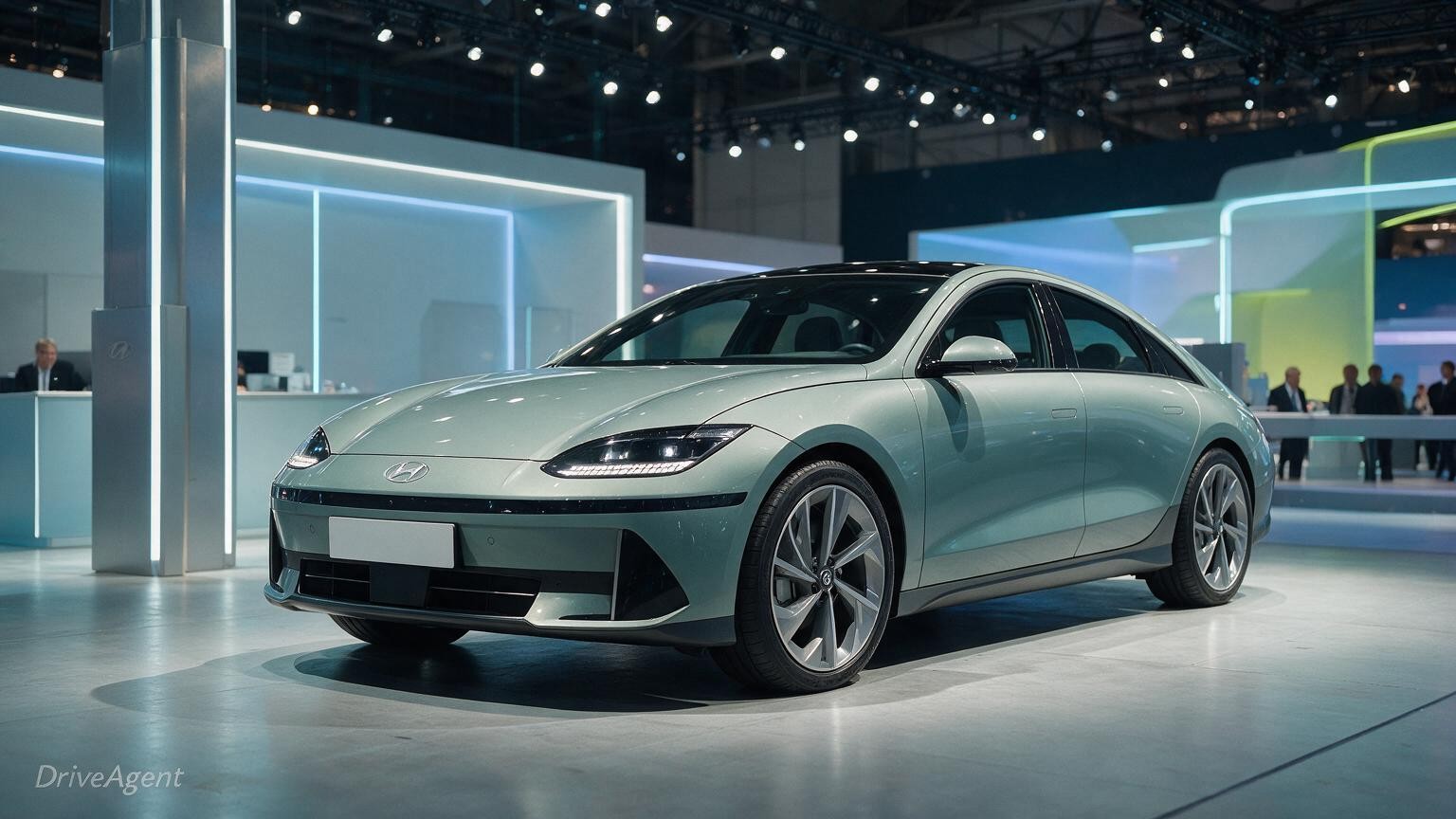
Hyundai unveiled the China-developed Ioniq V at Auto China 2026 as the first dedicated Ioniq production model for the Chinese market, claiming a CLTC range above 600 km within a rollout plan of 20 models over five years. An Australian introduction has been raised only as a possibility under consideration, not confirmed.