MAZDA DICTIONARY
Do you know the origin of the name Mazda? Ever heard the phrase “jinba ittai” and wondered what it means or how to pronounce it? Enlighten yourself with our definitive guide to Mazda’s Japanese terminology.
Manufacturer announcement. This is the manufacturer’s announcement. It is separate from DriveAgent’s original reporting. How we source stories
Do you know the origin of the name Mazda? Ever heard the phrase “jinba ittai” and wondered what it means or how to pronounce it? Enlighten yourself with our definitive guide to Mazda’s Japanese terminology.
Mazda's Japanese Glossary
Hacho / Hashiru yorokobi / Jinba ittai / Kaicho / Kansei / Kodo / Ma / Mazda / Monotsukuri / Mottainai / Musubu / Sori / Takumi / Takuminuri / Utsuroi / YohakuHacho 破調
ha-chō
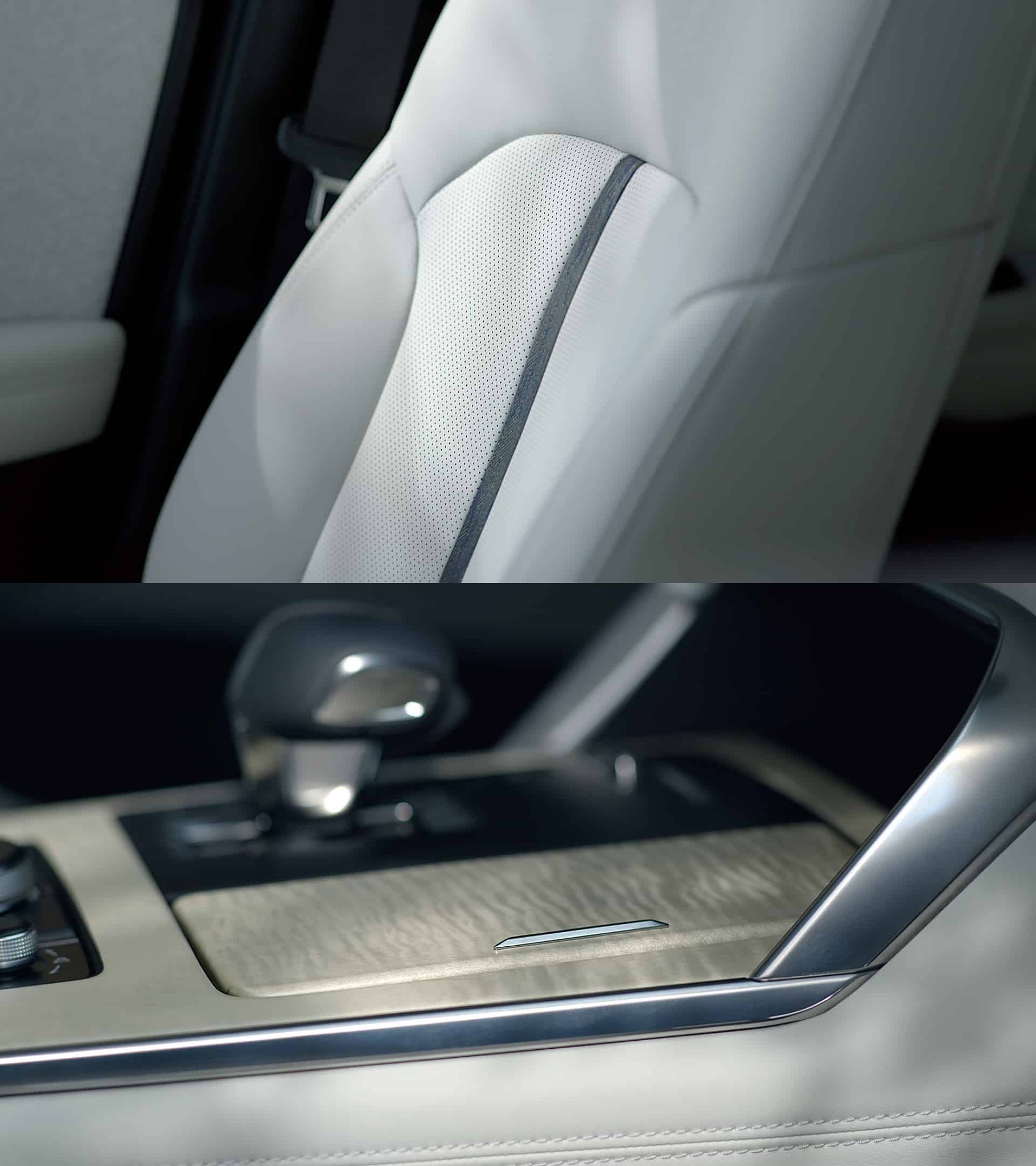
Hacho means “broken rhythm” and describes Mazda’s process of deliberately selecting contrasting materials for a vehicle’s cabin, to create an environment that is simultaneously calming and uplifting for the occupants. In the Mazda CX-60, the designers set out to reflect this mood with the use of materials including Nappa leather and maple wood. Mazda Interior Designer Mai Utagawa calls this “a comfortable disturbance”.
Hashiru Yorokobi 走る歓び
ha-shi–lu yo-lo-ko-biHashiru Yorokobi describes the very soul of Mazda and means “celebrate driving”. It’s an ethos that applies to every Mazda, from SUV to sports car, and is central to Mazda’s belief that cars are not merely transportation; they also enrich the lives of their drivers and passengers.
Jinba Ittai 人馬一体
ji–n-ba i-tta–iTranslating as “horse and rider as one”, jinba ittai refers to the intuitive connection between a Mazda and its driver. It is the cornerstone that Mazda’s designers and engineers base their work on. The phrase was first coined during the development of the MX-5 but applies to every Mazda model since.
Kaicho 諧調
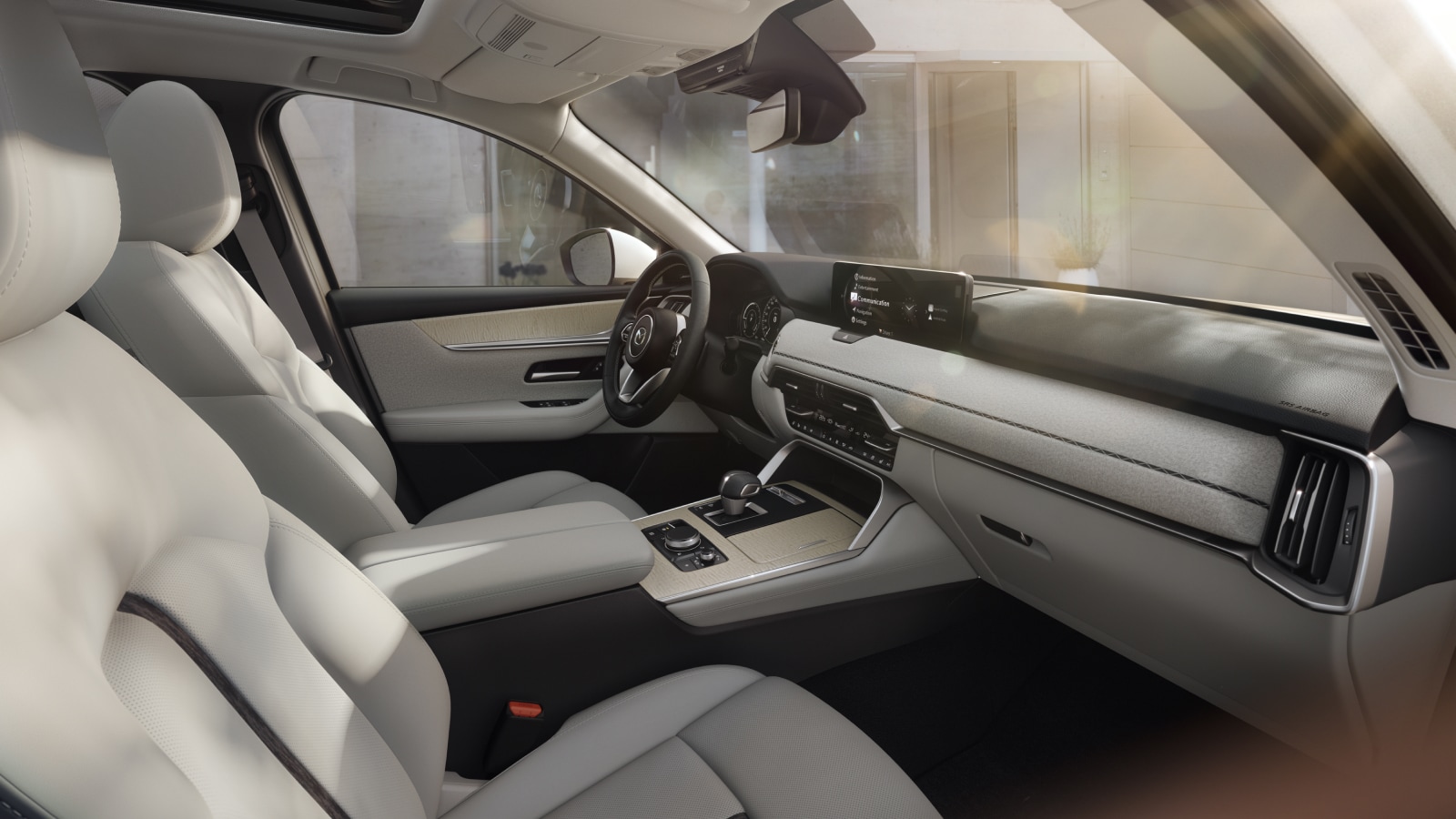
kai-chōKaicho literally means “harmony” and, in context, refers to curating a harmonious space. Mazda’s designers choose a variety of materials and textures that complement each other in order to achieve harmony (kaicho). It’s this considered attention to detail that makes Mazda interiors so beautiful.

Kansei 感性
kan-se-iKansei describes Mazda’s approach to engineering with emotion. It’s about connecting people to products by really considering their feelings during the design process. Kansei engineering plays a huge role at every touchpoint in a Mazda car, from the way the door opens and shuts to each individual switch.
Kodo 魂動
ko-dōKodo is a Mazda-unique word that means “soul of motion”. It applies to the overall design philosophy introduced by Mazda’s Global Head of Design Ikuo Maeda, who says it “breathes life into metal because Mazda believes a car is more than just a means of transportation”. Kodo design’s intention is to create a soul-stirring emotional bond between the car and its driver.
Ma 間
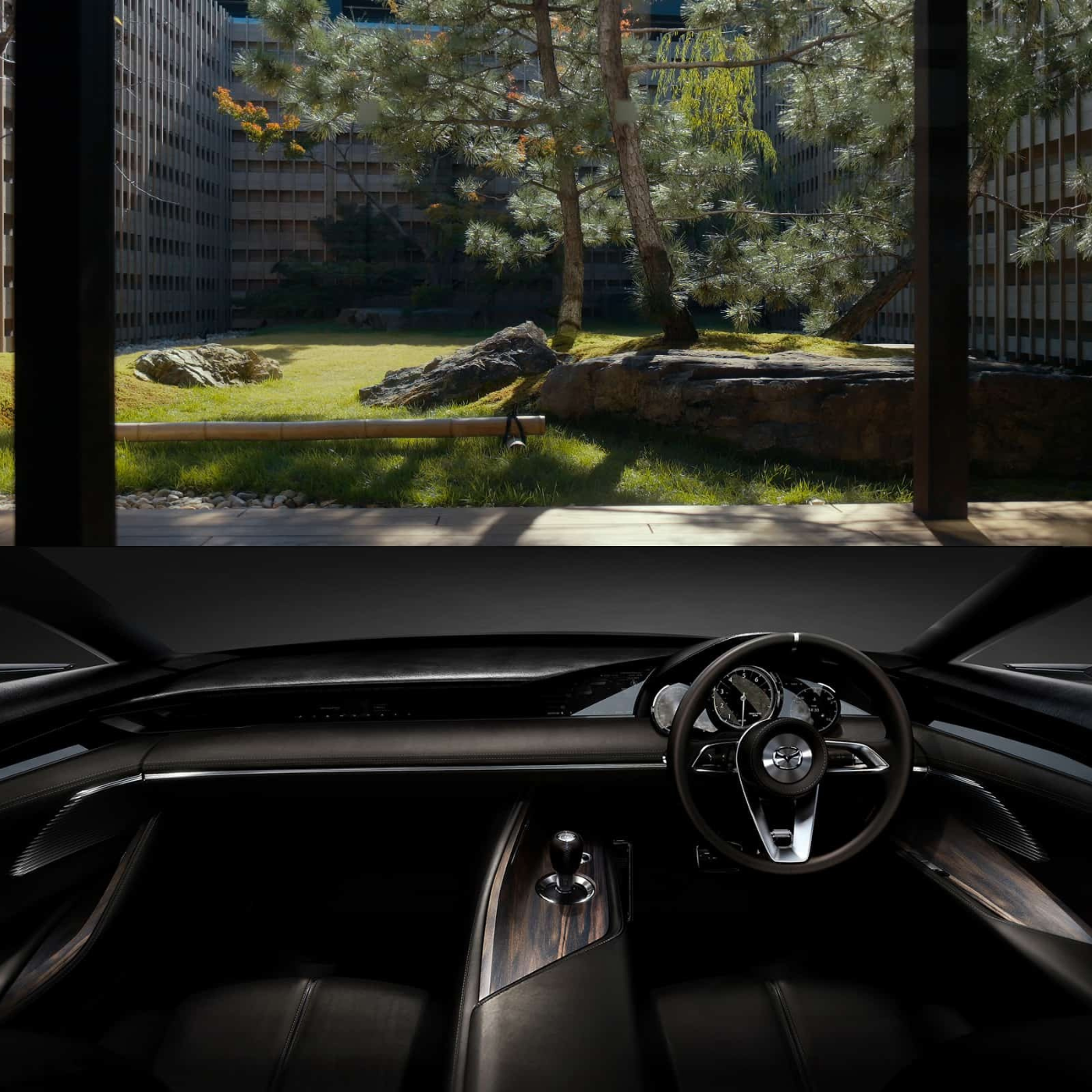
maMa is the Japanese concept of negative space. It has been described as “the silence between the notes that make the music”. It’s not purely a minimalist aesthetic, rather it’s about giving emptiness a metaphysical purpose. For example, the clean lines and deliberately positioned objects in a traditional Japanese home emphasise the empty space around them. Mazda’s designers draw inspiration from ma, creating interior spaces of calm reflection.

Mazda マツダ
ma-tsu-daMazda became the company name in 1984. Previously, the company was called Toyo Kogyo Co. Ltd, with Mazda as a brand name. It is derived from the first production vehicle, a three-wheeled truck called Mazda-Go (in Japanese, Go is a type or number). The truck was named after the company’s founder, Jujiro Matsuda, with the spelling inspired by Ahura Mazda, the Zoroastrian god of harmony, intelligence and wisdom, whose name has the same pronunciation. Key executives at Toyo Kogyo Co. Ltd interpreted Ahura Mazda as a symbol of the rise of automotive civilization and culture.
Monotsukuri モノ造り
mo-no-tsu-ku-liFor Mazda, car manufacturing truly is an art form and monotsukuri is a Japanese term that means “the art of making things”. It covers the practical – product planning, design, development and production – and encompasses a feeling of pride, dedication and skill in pursuit of innovation. Prior to manufacture, making things by hand is a crucial stage of vehicle development at Mazda. For example, a life-sized clay model of a car will always be made and shaped by hand first, before it is transferred into digital data. “We believe that a form sincerely and painstakingly made by human hands gets a soul,” says Global Head of Design Ikuo Maeda.
Mottainai もったいない
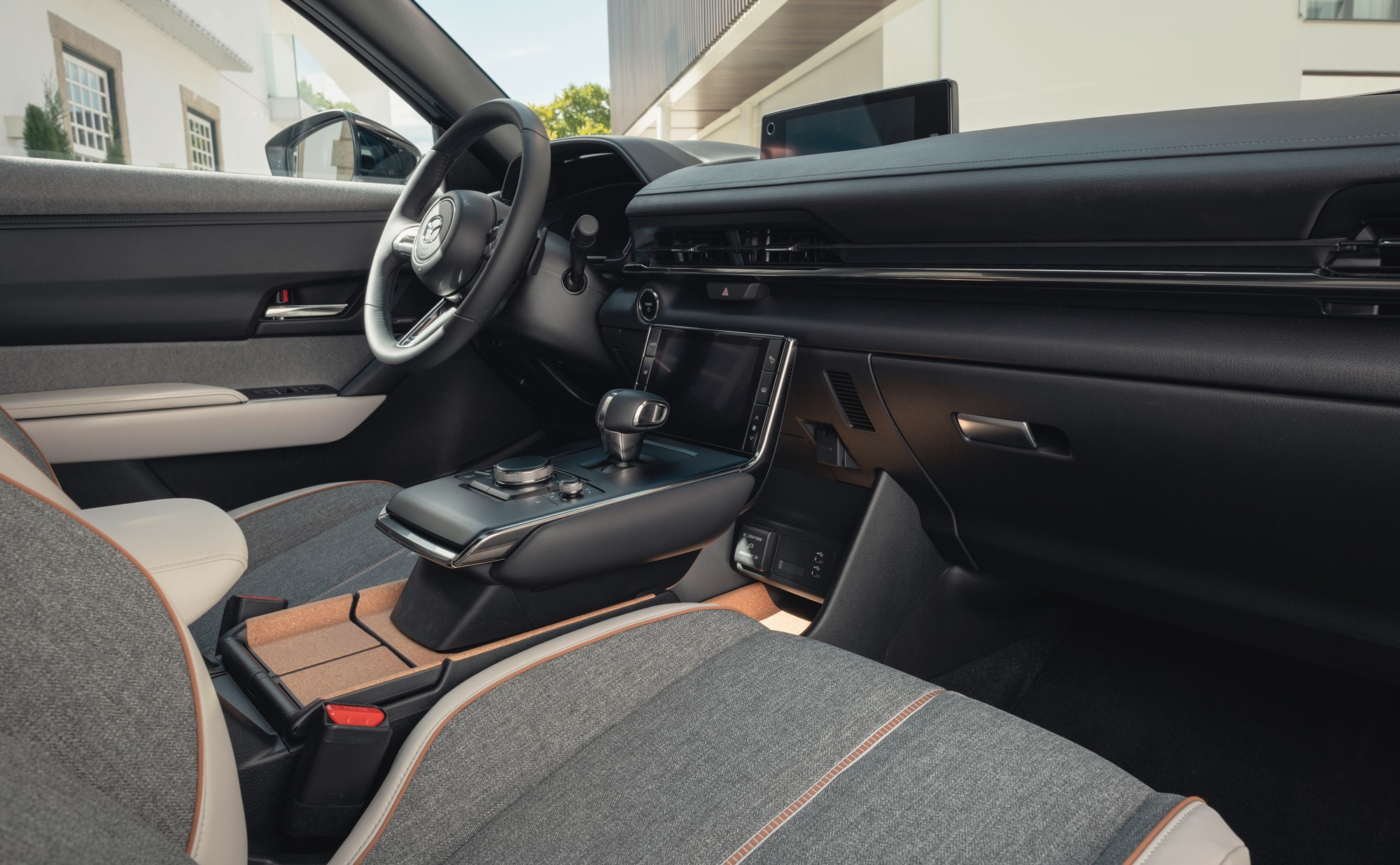
mo-tta–i–na–iMottainai is a Japanese expression formed from the words mottai (importance) and nai (lack of something). In short, it means “don’t be wasteful”. Mazda feels passionately about mottainai and is endeavouring to save and recycle as many resources as possible, whether that’s by using renewable energy in the factory, reusing plastics, or using sustainable materials such as cork in its interior design, as in the MX-30 pictured below.
Musubu 結ぶ
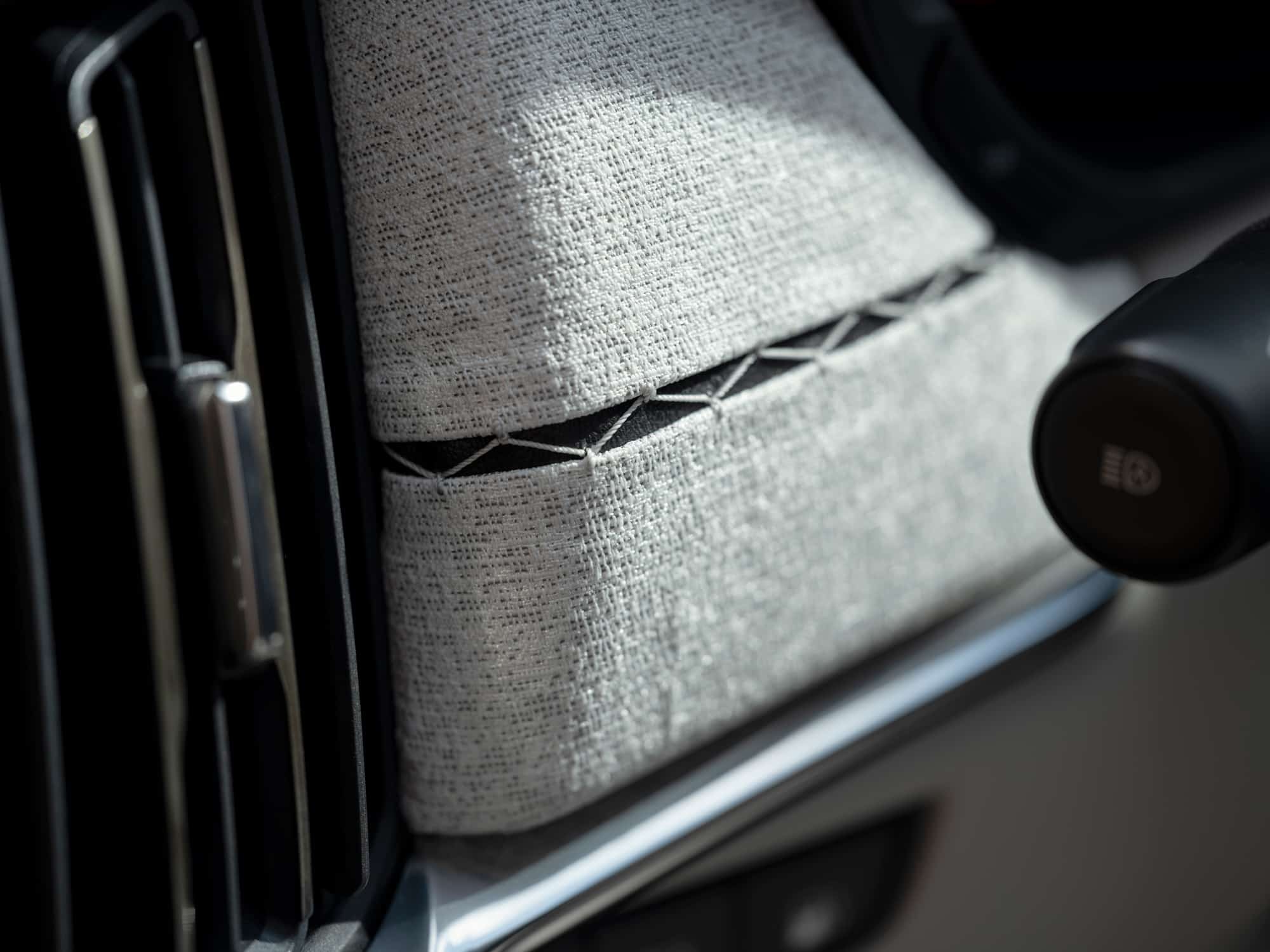
mu-su-buMusubu, the Japanese word for “tie”, has a philosophical meaning at Mazda. Musubu is about creating a strong connection. Inspired by the ancient art of knot tying, Mazda introduced it to great effect in the stitching of the Mazda CX-60, as seen below.
Sori 反り
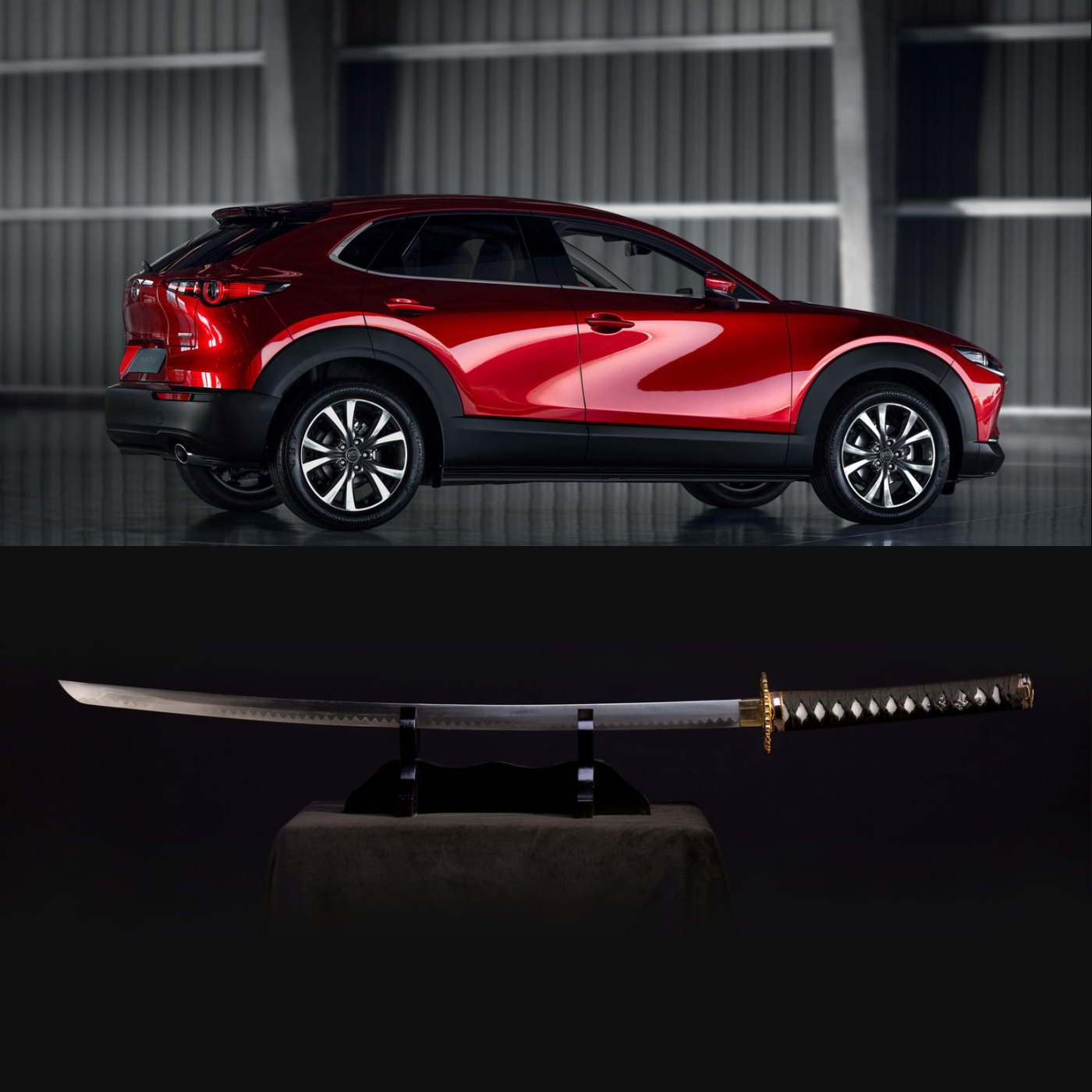
so-liSori describes the process of creating curves with poise and balance. It is notable in Japanese architecture and the curvature of the blade as exemplified in the samurai sword pictured below. You can see sori in the striking S-curves, revealed in the flanks of Mazda cars when light plays along them. It’s a critical part of Kodo design, as the metal sides of the car really do come to life as the light strikes them.
Takumi 匠
ta-ku-miMazda’s takumi are the dedicated master craftsmen and craftswomen who design and build its vehicles, honing their skills over many years. Each takumi has a specialist domain, from fabric to clay or metal, and they take on apprentices to ensure that their techniques carry on into the future. These master craftsmen and craftswomen never compromise in their mission to build Mazda vehicles with the utmost precision.
Takuminuri 匠塗り
ta-ku-mi-nu–liTakuminuri, or “paint by master craftsman”, is a computer-controlled robotic system that mimics the way a takumi master would hand-paint a Mazda. With Mazda’s innovative colours such as Soul Red Crystal enhancing Kodo design, it’s crucial to have the perfect paint finish. Discover more about Mazda’s paint techniques here.
Utsuroi 移ろい
u-tsu–lo–iUtsuroi defines the changes in natural light as the seasons of the year pass. Mazda’s designers and craftspeople study utsuroi, and skilfully manipulate light and shadow to create designs that make the vehicles appear alive. “At Mazda, we want to create designs that make people feel like the car is a living being,” says Mazda’s Global Head of Design, Ikuo Maeda.
Yohaku 余白
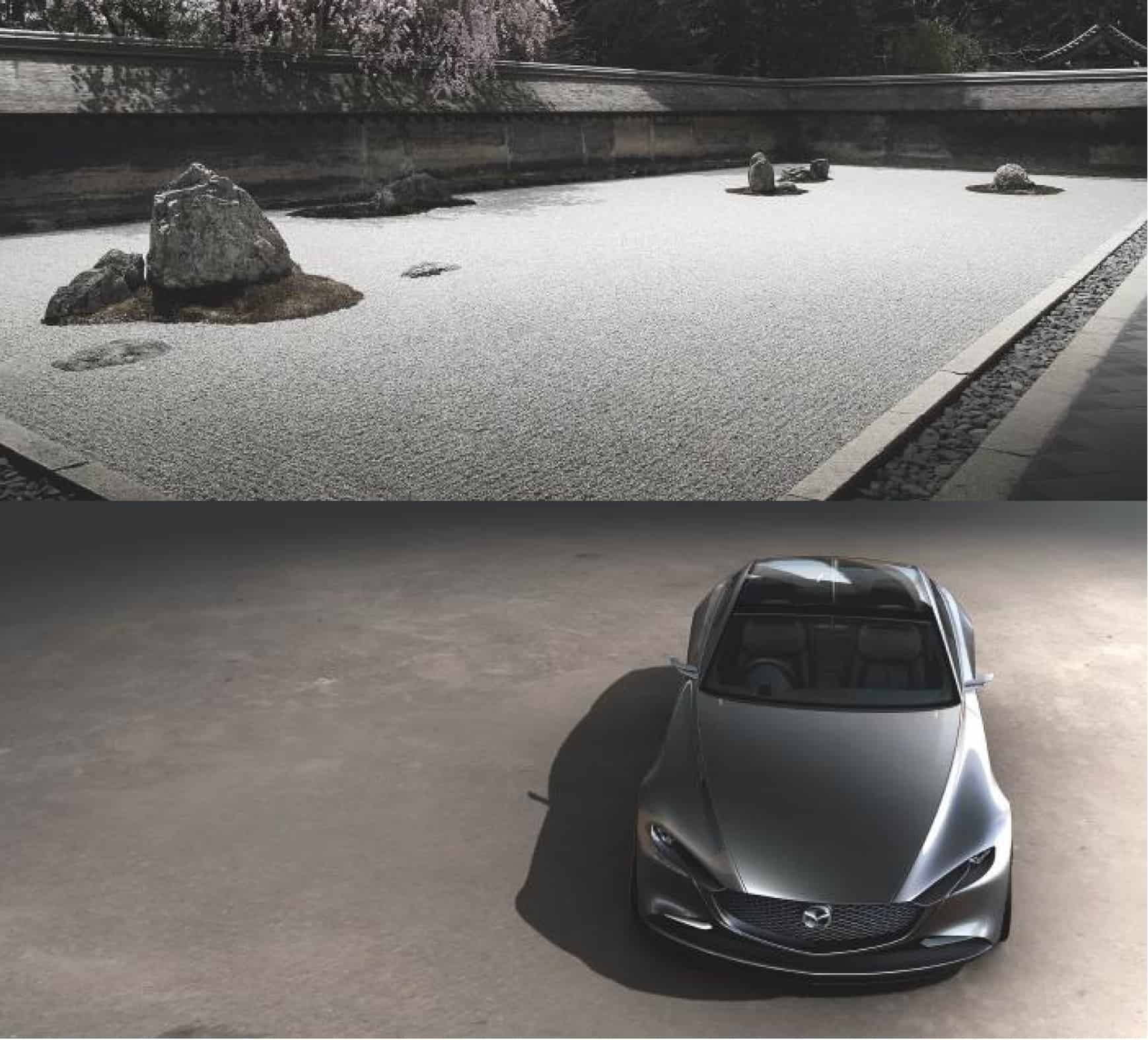
yo-ha-kuYohaku is “the beauty of empty space” and it’s a technique that features in traditional Japanese arts – and Mazda cars. “Importance is attached to making the space look beautiful,” says Interior Designer Mai Utagawa. Sometimes design is as much about what you leave out as what you put in, and yohaku helps to create beautiful exteriors and relaxing interior designs for Mazda cars.
A note about Japanese pronunciation in English: The phonetic spelling above uses the letter “L” in place of the letter “R”, which is used in the formal spelling of the word. It is likely that most English speakers hear “R”, but in Japanese it is actually a hybrid of the English “R”, “L” and “D” sounds. Here is a useful guide to learning how to pronounce the Japanese “R”.
Find out more
MADE IN JAPAN
The proof of Mazda’s superb design and engineering skills is in its unique range of vehicles
More Articles
17/08/2026
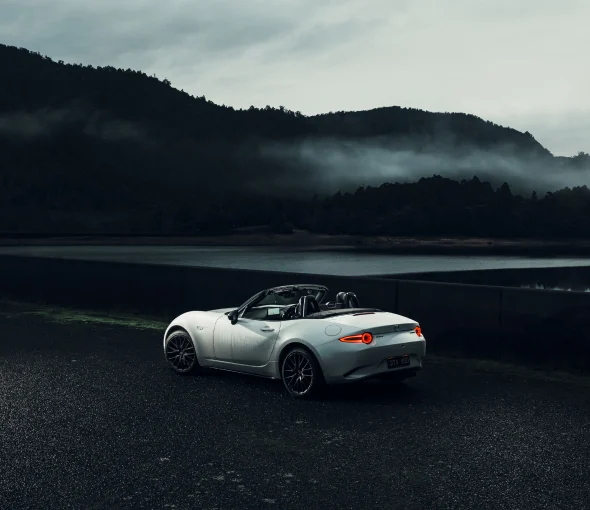
Mazda LifeMazda MX-5 GT RS: Tasmania West Coast Road TripRead more
14/08/2026
Mazda LifeMazda Tech Drive: What Is a Mild Hybrid (MHEV)?Read more
07/08/2026
Mazda LifeMazda CX-5 Tech Drive: Evolution of Kodo DesignRead more
31/07/2026
Mazda LifeMazda CX-5 Tech Drive: Inside the CabinRead more
24/07/2026
Mazda LifeMazda CX-5 Tech Drive: Space and PracticalityRead more
23/07/2026
NewsMazda Large SUV Range: 2026 Pricing and Equipment Updates Read more
15/07/2026
Mazda Life7's Day 2026: Celebrating the Mazda RX-7Read more
13/07/2026
NewsAll-Electric Mazda 6e: Australia's Media VerdictRead more
09/07/2026
NewsMazda Assured: Guaranteed Future Value for EVsRead more
03/07/2026
NewsNext-Gen Mazda CX-5 Receives 5-Star ANCAP Safety RatingRead more
03/07/2026
Mazda LifeWork and Play: 20 Years of the Mazda BT-50Read more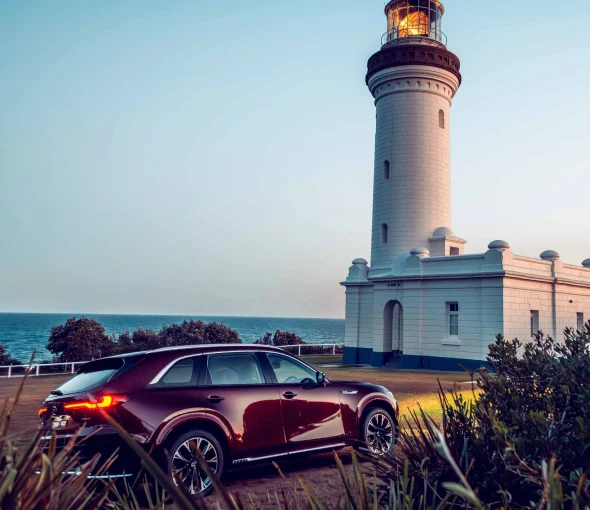
01/07/2026
Mazda LifeMazda CX-90 Goes Round the TwistRead moreMore Mazda announcements
View all →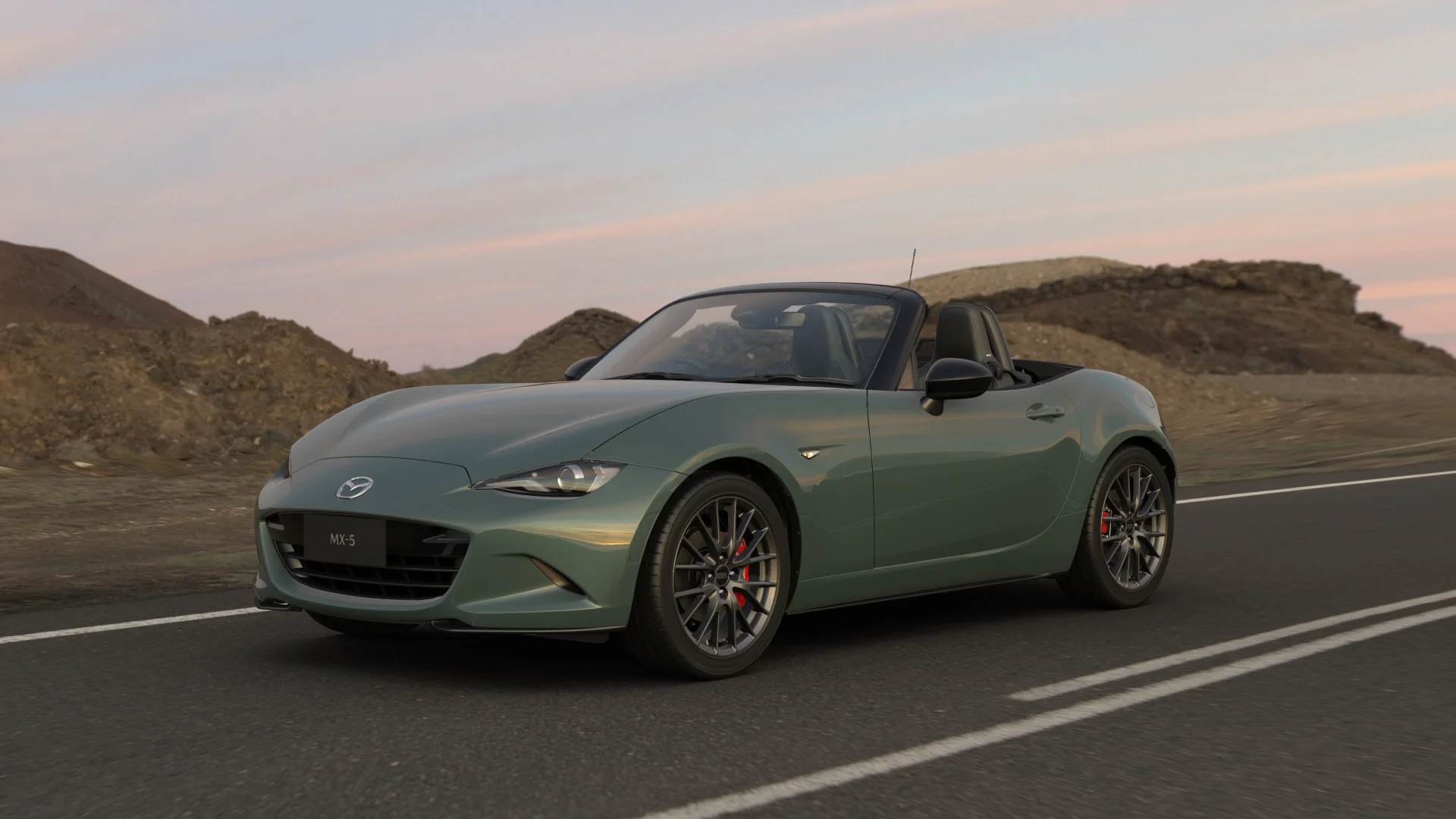
Mazda · Manufacturer news
2026 Mazda MX-5 Update | Mazda Australia
The 2026 Mazda MX-5 arrives with new Zinc Green Metallic paint, standard RECARO seats on the GT RS, and upgraded AEB. Available to order now.
Mazda · Manufacturer news
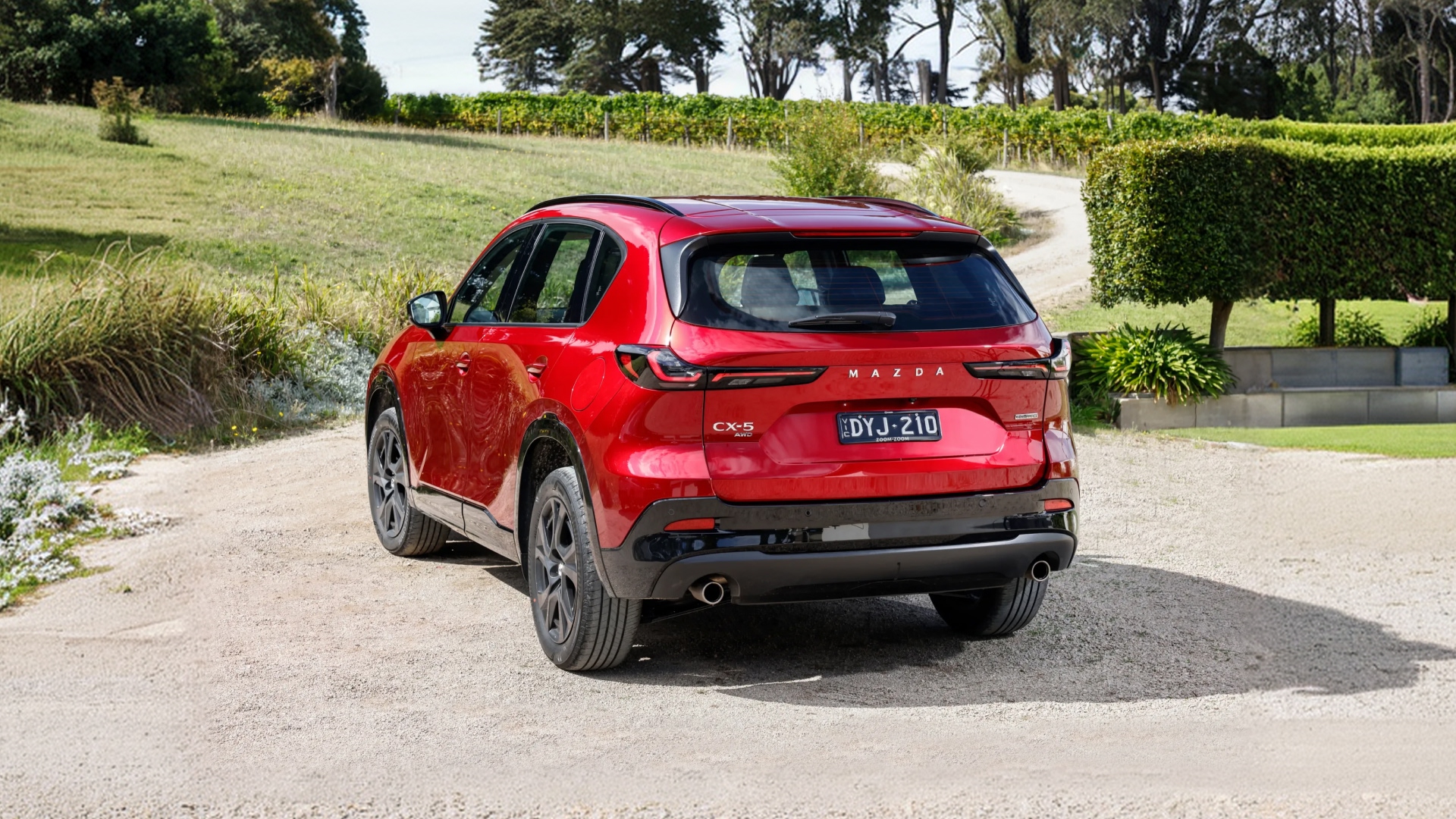
New Mazda CX-5 Space & Practicality | Tech Drive
How much can the next-generation Mazda CX-5 really carry? Explore the space, comfort and clever practicality behind Australia's favourite SUV.
Mazda · Manufacturer news
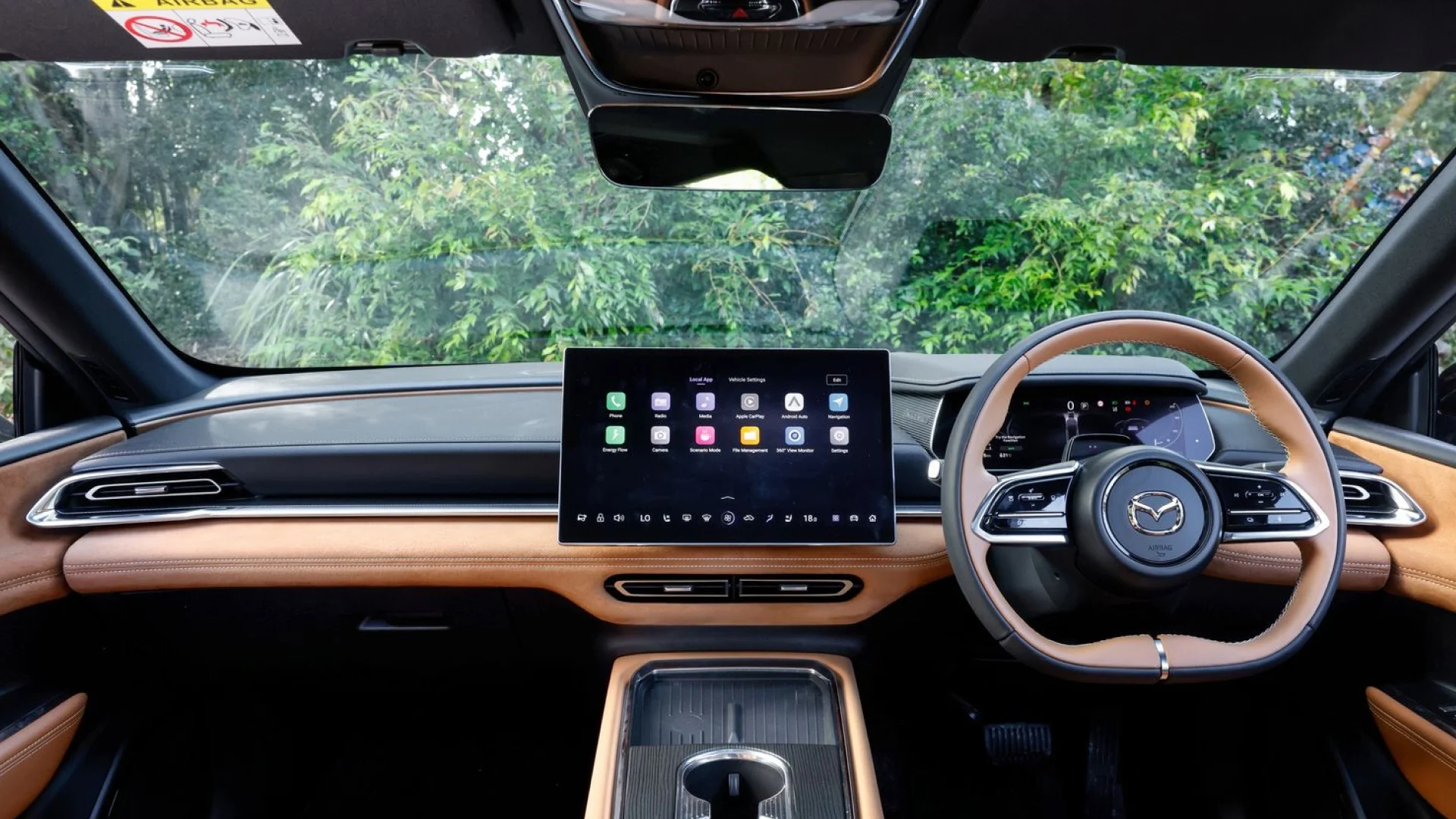
Mazda 6e HMI: Shortcuts & Voice Control | Tech Drive
Make the Mazda 6e your own. See how to program the steering wheel shortcut buttons and use 'Hi Mazda' voice control to reach your favourite functions.