Robotaxis are running overseas while Australia waits on law changes and 2027 trials
Driverless taxis operate commercially in the United States, the Middle East and London, but automated vehicles cannot yet legally run on Australian roads. Tesla, Waymo, Uber, Zoox and XPeng are all positioning for a market whose regulatory framework is only now taking shape.
Synthesised from the cited sources. Research, writing and factual checks are automated using AI. Verify details against the sources. How we produce these reports
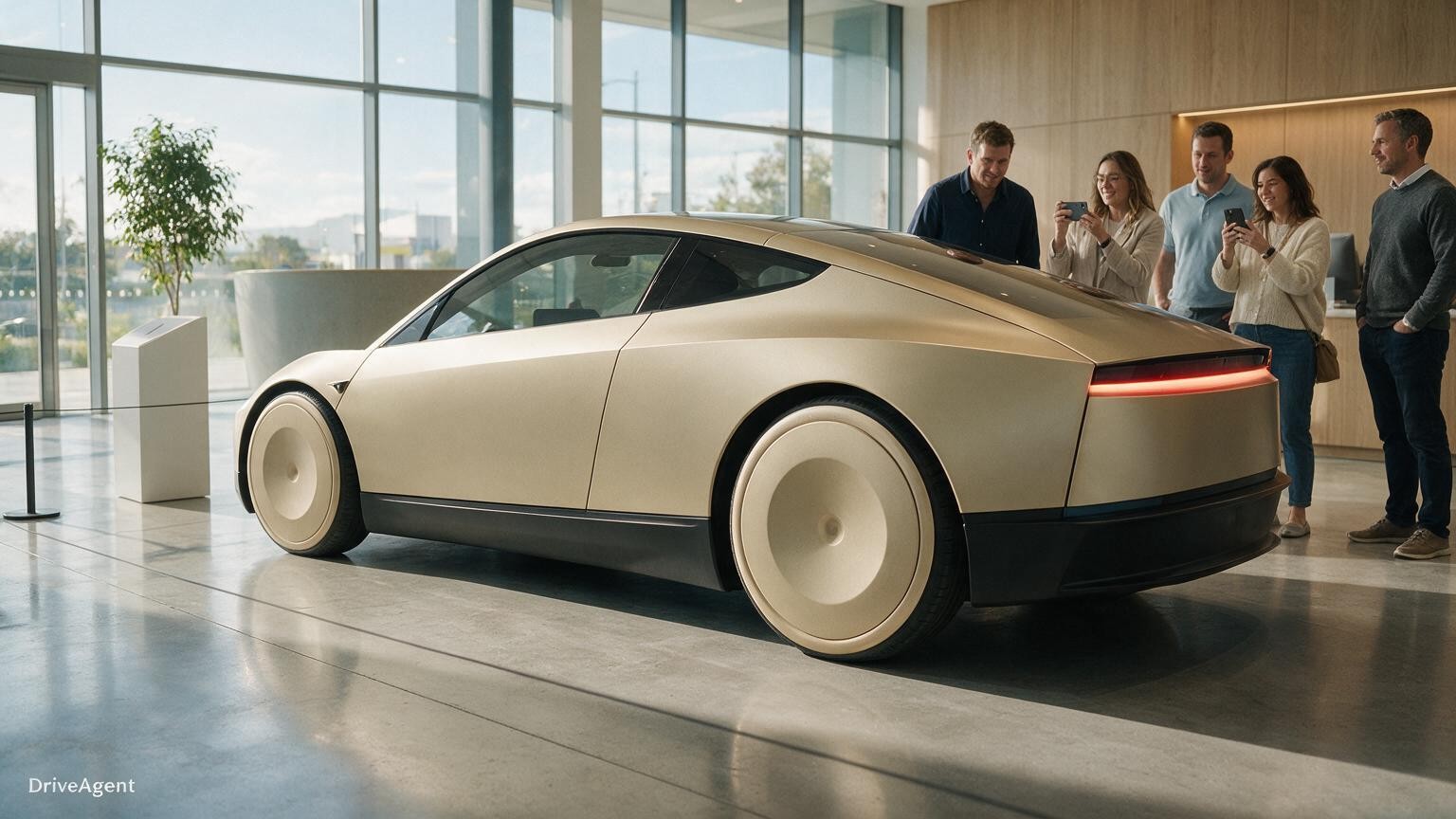
Tesla pushes for a 2027 Australian trial
Tesla has formally urged the federal government to support an autonomous vehicle trial in Australia in 2027, recommending Canberra grant permits for testing on public roads while the national regulatory framework is completed. The recommendation came in a 16 October submission to a parliamentary inquiry on productivity, reported by Information Age, the Australian Computer Society's publication. Tesla argued that bringing forward the expected 2029 implementation of the Automated Vehicle Safety Law by two years would "save hundreds of lives and prevent thousands of injuries" and unlock more than $10 billion in safety, productivity, environmental and economic benefits, figures it said were independently modelled by the Autonomous Vehicle Association of Australia. 1
In the same submission, Tesla described the national framework as having been first proposed by the National Transport Commission back in 2016, writing that progress "remains fragmented and continues to face uncertain timelines". It recommended the government work with states and territories to accelerate the proposed law through streamlined federal-state coordination mechanisms and technical standards development. Transport ministers from around Australia agreed in November 2025 to allow "the conditional deployment of automated vehicles from 2027 in selected locations, with full national readiness to follow", according to the National Transport Commission, though the timeline depends on each state and territory updating its legislation. 1
The submission also disclosed Australian operating data for Tesla's supervised driver-assistance system. Tesla wrote that since launching in September 2025, its vehicles had completed over 160 million kilometres on Australian and New Zealand roads with Full Self-Driving (Supervised) activated, a Level 2 system that still requires active driver supervision. These are company-submitted figures to a parliamentary inquiry, not independently audited results. 15
What Australia can and cannot run today
Under current Australian law, a licensed human driver must always be in control of a vehicle, meaning Level 3 and higher systems are not permitted on public roads. RACQ's explainer, written by Ged Bulmer, notes Level 2 is the highest automation available to the Australian public, and quotes Queensland's Department of Transport and Main Roads as saying there is no vehicle currently available in Australia safe enough to operate in self-driving mode without a driver monitoring the task. A decade-old review counted more than 700 legislative barriers to automated vehicles, according to The Sydney Morning Herald. 56
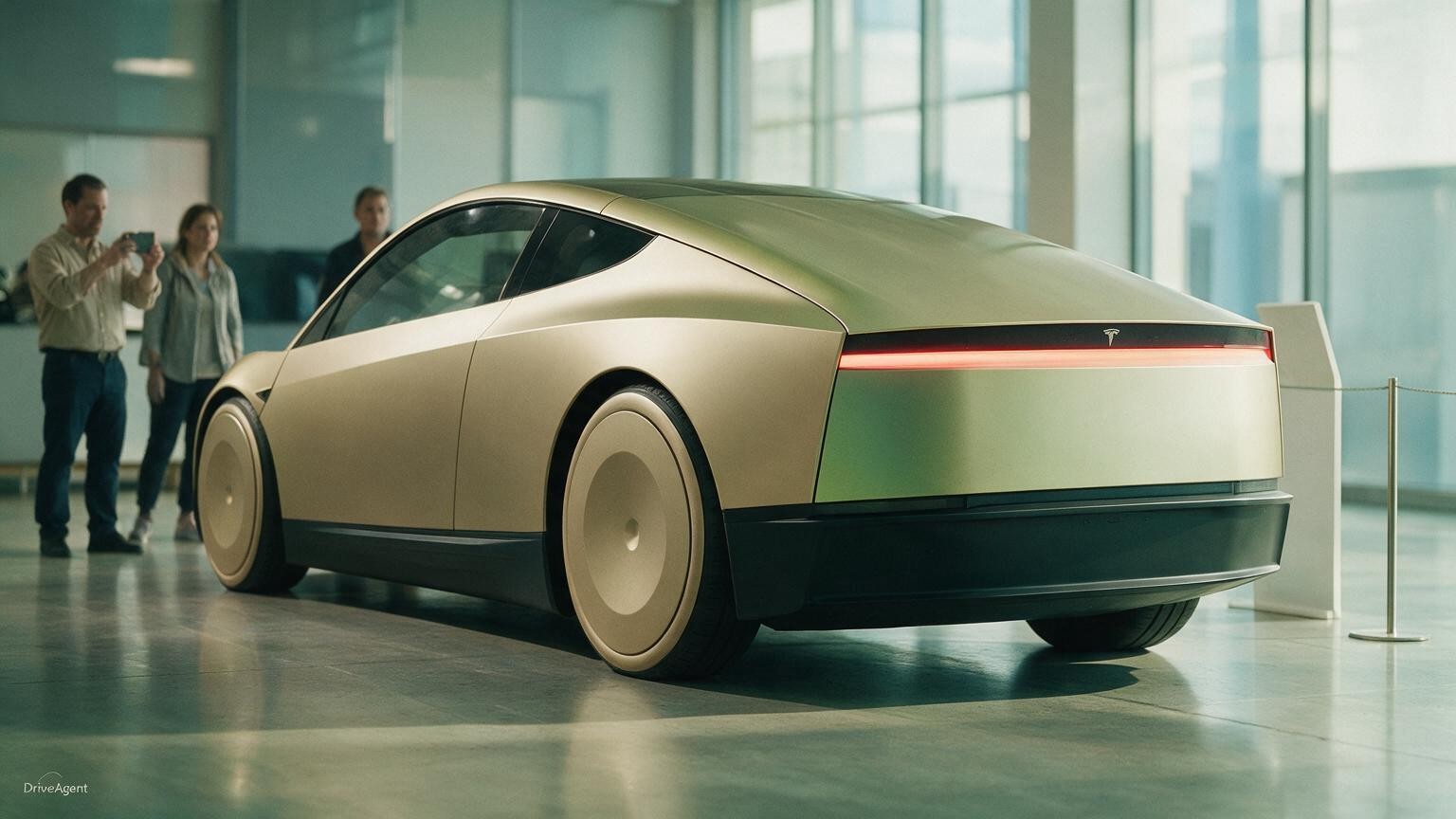
Tesla has been touring its Cybercab around Australian and New Zealand showrooms rather than operating it. CarExpert reported the two-seat, three-door coupe, which has no steering wheel or pedals, began its Australian tour in Sydney on 21 September before moving to Brisbane, the Gold Coast, Canberra, Melbourne, Adelaide and Perth, with an Auckland stop in 2027. Tesla has said the tour isn't a launch of the robotaxi, and country director Thom Drew said: "Cybercab is the destination. Model 3 and Model Y are how Australians and New Zealanders get there today." 3
CarExpert detailed the Cybercab's specifications as revealed in October 2024: a 163kW front-mounted electric motor, a 48kWh battery expected to deliver around 450km of range under the stricter US EPA standard, and wireless inductive charging with no plug. These are US-market figures; no Australian availability or specifications have been confirmed. The vehicle has already been spied in New Zealand undergoing cold-weather testing and is doing robotaxi duty in Austin, Texas, where Tesla is headquartered. 3
The international operators already carrying passengers
Fully driverless commercial services are established overseas. RACQ reports Waymo has tested fully driverless cars on public roads since 2015 and in 2020 became the first company to offer fully driverless robotaxi rides to the public, in Phoenix, later expanding to San Francisco, Los Angeles and Austin, with vehicles overseen by human-staffed control rooms. The Sydney Morning Herald reports Waymo operates about 4000 cars across 15 US metropolitan areas doing roughly half a million paid trips a week, while Zoox, founded by Melbourne designer Tim Kentley Klay and bought by Amazon in 2020, runs about 100 vehicles in San Francisco and Las Vegas. 56
Uber is also in the field, and Australia is in its sights. The Age and WA Today city editor Cara Waters rode in an Uber robotaxi in Abu Dhabi, where the company already operates self-driving taxis alongside Dubai, and reported Uber expects driverless availability in 15 cities worldwide by the end of the year, including London and Zurich, with 1200 self-driving taxis deployed across the Middle East in 2026. Uber's head of autonomous mobility and delivery, Sarfraz Maredia, told her the company is looking for a clear regulatory framework from the Australian government and hopes operations start "sooner rather than later". 2
Chinese carmaker XPeng told a Melbourne event last month it planned to commercialise robotaxis alongside the electric vehicles it sells in Australia, according to The Sydney Morning Herald. Meanwhile the sector's commercial prize is growing: Goldman Sachs expects the robotaxi market to be worth close to $US19 billion in sales by 2030, the SMH reports. 6
Documented setbacks complicate the safety story
The rollout overseas has not been clean. The Sydney Morning Herald reports Waymo has issued three federal recalls since December, including for cars that drove into flooded roads, and that on 4 July its vehicles blocked intersections around San Francisco's waterfront fireworks, with several towed after batteries died in gridlock and one catching fire after rolling over a firework with passengers inside. Zoox's cars, despite logging more than three million driverless miles, are barred from heavy rain and snow and from roads with speed limits above 72km/h. 6
Swinburne University transport engineering professor Hussein Dia told The Age that "the technology is really not 100 per cent ready yet", citing examples of driverless cars driving into floodwaters and freezing during a San Francisco power blackout. He warned of "phantom braking" caused by oversensitive sensors, with resulting crashes often attributed to the driver behind the autonomous car, though he said that once such problems are ironed out the vehicles are likely to be as safe as or safer than human drivers. Waymo itself claims its publicly available data shows fewer crashes and injuries than human drivers, a company claim drawn from its own data set. 25
Regulation, unions and insurance are preparing for the shift
The regulatory path is the critical dependency. Documents released under freedom of information laws show Waymo has spent a year preparing, hiring lobbying firm GRACosway to register on its behalf in four Australian states, and that Transport for NSW warned the company in January that a trial would need seven stages of approvals, ending with the transport minister. NSW Premier Chris Minns has said he supports a Sydney trial, while Waymo said this week it had no updates to share on its Australian plans. 61
Labour and insurance interests are also staking positions. The Transport Workers Union has asked the government to require human drivers to be assigned 95 per cent of transport jobs in the early rollout of autonomous vehicles, dropping to a minimum of 85 per cent over time, arguing in a submission to a separate inquiry that governments must establish a human-focused deployment model first. In the insurance sector, DKG Insurance Group executive general manager Simon Donovan told Insurance Business that self-driving cars "will not kill insurance, but they will transform it", shifting cover toward product liability, fleet operators and technology risks such as software bugs and cyberattacks, with adoption likely to appear first in controlled environments such as ports, logistics hubs and mining. 14
Public sentiment remains cautious. A recent survey of 562 people, reported by The Sydney Morning Herald, found 47 per cent regard autonomous vehicles as a desirable way to travel, but 74 per cent want the option of human control. With conditional deployment agreed only for 2027 in select locations and state legislation still pending, the realistic answer to whether Australia is ready appears to be: not yet, and the timeline is being written by regulators as much as by the technology. 6
AI evidence finder
Ask about this article
Ask a question to find relevant published passages and source links. AI selects evidence; the passages remain exactly as published.
Fact check
Assessment completeThis assessment compares the claims listed below with retained source evidence. It does not establish that every statement is true or replace the original sources.
See assessed claims (55)
Factual statementSupported by the retained evidence
Robotaxis are running overseas while Australia waits on law changes and 2027 trials
Headline framing is consistent with supplied sources: driverless taxis operate overseas, AVs cannot legally operate in Australia, and conditional deployment from 2027 is the agreed timeline.
Factual statementPartly supported
Driverless taxis operate commercially in the United States, the Middle East and London, but automated vehicles cannot yet legally run on Australian roads.
US and Middle East commercial operation and the Australian legal bar are supported. Commercial driverless operation in London is uncertain: s8 says Waymo is only expected to have driverless taxis on London streets by Spring next year; s2 says the Waymo service is already available in London without specifying commercial driverless operation.
Factual statementPartly supported
Tesla, Waymo, Uber, Zoox and XPeng are all positioning for a market whose regulatory framework is only now taking shape.
Tesla, Waymo, Uber and XPeng are documented positioning for Australia. Zoox itself is not shown preparing for the Australian market; only its founder's optimistic view of Australia is reported, and the regulatory framework is documented as in development.
Factual statementSupported by the retained evidence
Automated vehicles cannot legally operate on Australian roads; transport ministers have agreed only to conditional deployment in select locations from 2027, with a national framework still in development.
All three assertions (no legal operation, conditional deployment from 2027, framework in development) are supported across the sources.
Factual statementSupported by the retained evidence
Tesla urged the federal government in a 16 October parliamentary submission to support an autonomous vehicle trial in 2027, ahead of the currently expected 2029 Automated Vehicle Safety Law implementation.
16 October submission, 2027 trial recommendation and expected 2029 AVSL implementation are all supported by the Information Age report.
Factual statementSupported by the retained evidence
Tesla's Cybercab, revealed in October 2024 with a 163kW front motor, 48kWh battery and no steering wheel or pedals, is touring Australian showrooms but cannot be tested on local roads.
Reveal date, 163kW motor, 48kWh battery, no steering wheel or pedals, showroom tour and inability to test on local roads are all supported.
Attributed claimPartly supported
Waymo, Uber, Zoox and XPeng are also preparing for Australia, while Waymo has reportedly lobbied in four states and been told a NSW trial would need seven stages of approvals.
Waymo, Uber and XPeng are documented preparing for Australia, and the four-state lobbying and seven-stage NSW approvals are supported. Zoox itself is not shown preparing for Australia; only founder Kentley Klay's view of Australia is reported.
AnalysisSupported by the retained evidence
Waymo has issued three federal recalls since December, and its vehicles have been involved in incidents including blocking San Francisco intersections and driving into flooded roads, showing the technology's limitations.
The recalls and incidents are supported by the SMH source; the concluding 'showing the technology's limitations' is a reasonable analysis drawn from those documented events.
Factual statementSupported by the retained evidence
Tesla pushes for a 2027 Australian trial
Heading accurately summarises the supported Tesla submission reporting.
Factual statementSupported by the retained evidence
Tesla has formally urged the federal government to support an autonomous vehicle trial in Australia in 2027, recommending Canberra grant permits for testing on public roads while the national regulatory framework is completed.
Tesla's urging, permit recommendation and interim-trials-until-framework position are all supported.
Attributed claimSupported by the retained evidence
The recommendation came in a 16 October submission to a parliamentary inquiry on productivity, reported by Information Age, the Australian Computer Society's publication.
The 16 October productivity-inquiry submission is reported by the ia.acs.org.au article (Information Age, ACS); the document establishes both the report and the publication.
Attributed claimSupported by the retained evidence
Tesla argued that bringing forward the expected 2029 implementation of the Automated Vehicle Safety Law by two years would "save hundreds of lives and prevent thousands of injuries" and unlock more than $10 billion in safety, productivity, environmental and economic benefits, figures it said were independently modelled by the Autonomous Vehicle Association of Australia.
Tesla's submission language on 2029-to-2027 acceleration, lives/injuries and $10 billion, attributed to the Autonomous Vehicle Association of Australia modelling, matches the source exactly; these remain Tesla's claims, not verified outcomes.
Attributed claimSupported by the retained evidence
In the same submission, Tesla described the national framework as having been first proposed by the National Transport Commission back in 2016, writing that progress "remains fragmented and continues to face uncertain timelines".
Tesla's written statements on the 2016 NTC proposal and fragmented progress are directly quoted in the source.
Attributed claimSupported by the retained evidence
It recommended the government work with states and territories to accelerate the proposed law through streamlined federal-state coordination mechanisms and technical standards development.
Tesla's recommendation on accelerating the AVSL via coordination mechanisms and technical standards is directly quoted.
Attributed claimSupported by the retained evidence
Transport ministers from around Australia agreed in November 2025 to allow "the conditional deployment of automated vehicles from 2027 in selected locations, with full national readiness to follow", according to the National Transport Commission, though the timeline depends on each state and territory updating its legislation.
November 2025 ministerial agreement, quoted NTC language and state-legislation dependency are all supported.
Factual statementSupported by the retained evidence
The submission also disclosed Australian operating data for Tesla's supervised driver-assistance system.
The submission is documented as containing Tesla's FSD (Supervised) operating figures for Australian and New Zealand roads.
Attributed claimSupported by the retained evidence
Tesla wrote that since launching in September 2025, its vehicles had completed over 160 million kilometres on Australian and New Zealand roads with Full Self-Driving (Supervised) activated, a Level 2 system that still requires active driver supervision.
September 2025 launch, 160 million kilometres figure and supervision requirement are supported; the Level 2 characterisation is supported by the RACQ source.
AnalysisPartly supported
These are company-submitted figures to a parliamentary inquiry, not independently audited results.
That the figures are company-submitted to a parliamentary inquiry is supported. Their not being independently audited is not affirmatively established by the documents; no audit evidence either way appears.
Factual statementSupported by the retained evidence
What Australia can and cannot run today
Heading is consistent with the RACQ explainer's account of what is permitted in Australia today.
Factual statementSupported by the retained evidence
Under current Australian law, a licensed human driver must always be in control of a vehicle, meaning Level 3 and higher systems are not permitted on public roads.
Directly supported by the RACQ explainer's statement of current Australian law.
Attributed claimSupported by the retained evidence
RACQ's explainer, written by Ged Bulmer, notes Level 2 is the highest automation available to the Australian public, and quotes Queensland's Department of Transport and Main Roads as saying there is no vehicle currently available in Australia safe enough to operate in self-driving mode without a driver monitoring the task.
Ged Bulmer byline, Level 2 claim and the Queensland TMR quote are all present in the RACQ article.
Attributed claimSupported by the retained evidence
A decade-old review counted more than 700 legislative barriers to automated vehicles, according to The Sydney Morning Herald.
The 700-plus legislative barriers from a decade-old review appear in the SMH article, which is the cited outlet.
Factual statementSupported by the retained evidence
Tesla has been touring its Cybercab around Australian and New Zealand showrooms rather than operating it.
Touring rather than operating is supported by CarExpert's report that the Cybercab will tour Tesla locations and cannot be hailed.
Factual statementSupported by the retained evidence
CarExpert reported the two-seat, three-door coupe, which has no steering wheel or pedals, began its Australian tour in Sydney on 21 September before moving to Brisbane, the Gold Coast, Canberra, Melbourne, Adelaide and Perth, with an Auckland stop in 2027.
Tour start (Sydney, September 21), city itinerary, Auckland 2027 stop and vehicle description are all supported by the CarExpert article.
Attributed claimSupported by the retained evidence
Tesla has said the tour isn't a launch of the robotaxi, and country director Thom Drew said: "Cybercab is the destination.
Tesla's stated tour rationale and Thom Drew's quoted words are both present in the source.
Attributed claimSupported by the retained evidence
Model 3 and Model Y are how Australians and New Zealanders get there today."
The quoted sentence is exact in the CarExpert source, attributed to Tesla country director Thom Drew.
Factual statementSupported by the retained evidence
CarExpert detailed the Cybercab's specifications as revealed in October 2024: a 163kW front-mounted electric motor, a 48kWh battery expected to deliver around 450km of range under the stricter US EPA standard, and wireless inductive charging with no plug.
October 2024 reveal, 163kW motor, 48kWh battery, ~450km EPA range and wireless inductive charging all match the CarExpert report; range remains an expectation, correctly qualified.
AnalysisSupported by the retained evidence
These are US-market figures; no Australian availability or specifications have been confirmed.
US EPA basis of the figures is explicit; the tour is documented as display-only, not a launch, and no Australian availability or local specifications appear in the supplied documents.
Factual statementSupported by the retained evidence
The vehicle has already been spied in New Zealand undergoing cold-weather testing and is doing robotaxi duty in Austin, Texas, where Tesla is headquartered.
New Zealand cold-weather spying, Austin robotaxi duty and Tesla's Texas headquarters are all supported by CarExpert.
Factual statementSupported by the retained evidence
The international operators already carrying passengers
Heading is consistent with documented driverless passenger services in the US and Middle East.
Factual statementSupported by the retained evidence
Fully driverless commercial services are established overseas.
Waymo's public driverless rides and Zoox's paid driverless rides are documented in the sources.
Attributed claimSupported by the retained evidence
RACQ reports Waymo has tested fully driverless cars on public roads since 2015 and in 2020 became the first company to offer fully driverless robotaxi rides to the public, in Phoenix, later expanding to San Francisco, Los Angeles and Austin, with vehicles overseen by human-staffed control rooms.
All Waymo history claims match the RACQ article, which is the cited outlet.
Attributed claimSupported by the retained evidence
The Sydney Morning Herald reports Waymo operates about 4000 cars across 15 US metropolitan areas doing roughly half a million paid trips a week, while Zoox, founded by Melbourne designer Tim Kentley Klay and bought by Amazon in 2020, runs about 100 vehicles in San Francisco and Las Vegas.
Waymo fleet/trip figures, Zoox vehicle count and locations, Kentley Klay's Melbourne origin and the 2020 Amazon purchase are all supported in the SMH article.
Factual statementSupported by the retained evidence
Uber is also in the field, and Australia is in its sights.
Uber's operations and stated interest in Australia are directly supported.
Attributed claimSupported by the retained evidence
The Age and WA Today city editor Cara Waters rode in an Uber robotaxi in Abu Dhabi, where the company already operates self-driving taxis alongside Dubai, and reported Uber expects driverless availability in 15 cities worldwide by the end of the year, including London and Zurich, with 1200 self-driving taxis deployed across the Middle East in 2026.
Cara Waters' Abu Dhabi ride, Dubai operations, 15-city and 1200-vehicle expectations are supported; 'this year' in the source corresponds to 2026 given the article's timing. 'WA Today city editor' is consistent with the byline noting her Age city editor role and the WA Today publication.
Attributed claimSupported by the retained evidence
Uber's head of autonomous mobility and delivery, Sarfraz Maredia, told her the company is looking for a clear regulatory framework from the Australian government and hopes operations start "sooner rather than later".
Maredia's role and quoted statements on the regulatory framework and 'sooner rather than later' match the source.
Attributed claimSupported by the retained evidence
Chinese carmaker XPeng told a Melbourne event last month it planned to commercialise robotaxis alongside the electric vehicles it sells in Australia, according to The Sydney Morning Herald.
XPeng's Melbourne-event statement on commercialising robotaxis alongside its Australian EV sales appears in the SMH article.
Attributed claimSupported by the retained evidence
Meanwhile the sector's commercial prize is growing: Goldman Sachs expects the robotaxi market to be worth close to $US19 billion in sales by 2030, the SMH reports.
Goldman Sachs' ~$US19 billion by 2030 forecast appears in the SMH article.
AnalysisSupported by the retained evidence
Documented setbacks complicate the safety story
Heading accurately reflects the documented recalls and incidents.
OpinionSupported by the retained evidence
The rollout overseas has not been clean.
An evaluative characterisation, but consistent with the documented recalls, strandings and fire reported in the source.
Attributed claimSupported by the retained evidence
The Sydney Morning Herald reports Waymo has issued three federal recalls since December, including for cars that drove into flooded roads, and that on 4 July its vehicles blocked intersections around San Francisco's waterfront fireworks, with several towed after batteries died in gridlock and one catching fire after rolling over a firework with passengers inside.
All incident details match the SMH report, including the July 4 events, towing and fire.
Attributed claimSupported by the retained evidence
Zoox's cars, despite logging more than three million driverless miles, are barred from heavy rain and snow and from roads with speed limits above 72km/h.
Zoox's three million driverless miles and operating restrictions (rain, snow, 72km/h roads) are supported by the SMH report.
Attributed claimSupported by the retained evidence
Swinburne University transport engineering professor Hussein Dia told The Age that "the technology is really not 100 per cent ready yet", citing examples of driverless cars driving into floodwaters and freezing during a San Francisco power blackout.
Dia's quoted remark and cited examples (floodwaters, San Francisco blackout freezing) match The Age/WA Today article.
Attributed claimSupported by the retained evidence
He warned of "phantom braking" caused by oversensitive sensors, with resulting crashes often attributed to the driver behind the autonomous car, though he said that once such problems are ironed out the vehicles are likely to be as safe as or safer than human drivers.
Phantom braking warning, attribution of subsequent crashes and Dia's safety outlook are all present in the source.
Attributed claimSupported by the retained evidence
Waymo itself claims its publicly available data shows fewer crashes and injuries than human drivers, a company claim drawn from its own data set.
Waymo's own data-based safety claim is correctly attributed as a company claim in the RACQ article.
AnalysisSupported by the retained evidence
Regulation, unions and insurance are preparing for the shift
Heading is consistent with documented union submissions, insurance commentary and regulatory developments.
OpinionSupported by the retained evidence
The regulatory path is the critical dependency.
An evaluative framing, but consistent with documented evidence that all Australian deployment depends on the developing regulatory framework and ministerial agreements.
Factual statementSupported by the retained evidence
Documents released under freedom of information laws show Waymo has spent a year preparing, hiring lobbying firm GRACosway to register on its behalf in four Australian states, and that Transport for NSW warned the company in January that a trial would need seven stages of approvals, ending with the transport minister.
FOI-released documents showing GRACosway lobbying in four states and Transport for NSW's January warning about seven approval stages are supported by the SMH report.
Factual statementSupported by the retained evidence
NSW Premier Chris Minns has said he supports a Sydney trial, while Waymo said this week it had no updates to share on its Australian plans.
Minns' support for a Sydney trial and Waymo's no-updates response both appear in the SMH report.
AnalysisSupported by the retained evidence
Labour and insurance interests are also staking positions.
TWU's submission and Donovan's insurance commentary document both sectors staking positions.
Attributed claimSupported by the retained evidence
The Transport Workers Union has asked the government to require human drivers to be assigned 95 per cent of transport jobs in the early rollout of autonomous vehicles, dropping to a minimum of 85 per cent over time, arguing in a submission to a separate inquiry that governments must establish a human-focused deployment model first.
The 95/85 per cent figures, separate AI-inquiry submission and human-focused deployment model argument match the source.
Attributed claimSupported by the retained evidence
In the insurance sector, DKG Insurance Group executive general manager Simon Donovan told Insurance Business that self-driving cars "will not kill insurance, but they will transform it", shifting cover toward product liability, fleet operators and technology risks such as software bugs and cyberattacks, with adoption likely to appear first in controlled environments such as ports, logistics hubs and mining.
Donovan's role, quoted transformation remark, liability/technology-risk shift and controlled-environment adoption are all supported by the Insurance Business article.
AnalysisSupported by the retained evidence
Public sentiment remains cautious.
'Cautious' fairly summarises the reported scepticism and desire for human control.
Attributed claimSupported by the retained evidence
A recent survey of 562 people, reported by The Sydney Morning Herald, found 47 per cent regard autonomous vehicles as a desirable way to travel, but 74 per cent want the option of human control.
Survey size (562) and both percentages appear in the SMH article.
OpinionSupported by the retained evidence
With conditional deployment agreed only for 2027 in select locations and state legislation still pending, the realistic answer to whether Australia is ready appears to be: not yet, and the timeline is being written by regulators as much as by the technology.
An opinion/conclusion, but its premises (2027 conditional deployment only, state legislation pending) are documented; the conclusion is the writer's assessment and is reasonably drawn.
Behind this report
Sources & context
Cited source mix
6 cited pages across 6 websites
- News publisher 1
- Role not assessed 5
Website breakdown
- CarExpertcarexpert.com.au1 page
- ia.acs.org.au1 page
- insurancebusinessmag.com1 page
- racq.com.au1 page
- smh.com.au1 page
- watoday.com.au1 page
5 cited pages with an undocumented publisher role. Websites may share ownership or repeat the same reporting.
Saved research extracts
6 / 6 cited pages with saved extracts
0 shortened at our text limit · 0 without a saved-extract record
Extracts retrieved 1 Nov 2026.
Extracts can omit page content. These counts do not verify claims or measure independent reporting. Political leaning and reliability are not rated.
- Tesla wants Australian robotaxi trials in 2027 - ia.acs.org.auRole not assessedSource extract saved
Why these labels?Tesla wants Australian robotaxi trials in 2027 - ia.acs.org.au
Who produced it
We have not documented this publisher’s role. An unassigned label is not a negative rating.
How this report uses it
Cited in 5 paragraphs: Tesla pushes for a 2027 Australian trial; Regulation, unions and insurance are preparing for the shift.
This describes its use in our report. It does not establish the source’s editorial stance or independently corroborate every claim.
Evidence record
Text retrieved 1 Nov 2026. The retained extract did not reach our text limit. Extraction can still omit page content.
- No tips required: Driverless taxis could soon be on Australian roadsRole not assessedSource extract saved
Why these labels?No tips required: Driverless taxis could soon be on Australian roads
Who produced it
We have not documented this publisher’s role. An unassigned label is not a negative rating.
How this report uses it
Cited in 2 paragraphs: The international operators already carrying passengers; Documented setbacks complicate the safety story.
This describes its use in our report. It does not establish the source’s editorial stance or independently corroborate every claim.
Evidence record
Text retrieved 1 Nov 2026. The retained extract did not reach our text limit. Extraction can still omit page content.
- Tesla Cybercab robotaxi following Cybertruck to Australia | CarExpertNews publisherSource extract saved
Why these labels?Tesla Cybercab robotaxi following Cybertruck to Australia | CarExpert
Who produced it
Publishes automotive news and reviews and operates a car-buying service connecting buyers with dealers. Identity reference ↗
How this report uses it
Cited in 2 paragraphs: What Australia can and cannot run today.
This describes its use in our report. It does not establish the source’s editorial stance or independently corroborate every claim.
Evidence record
Text retrieved 1 Nov 2026. The retained extract did not reach our text limit. Extraction can still omit page content.
- Robotaxis set to shake up Australia's motor insurance marketRole not assessedSource extract saved
Why these labels?Robotaxis set to shake up Australia's motor insurance market
Who produced it
We have not documented this publisher’s role. An unassigned label is not a negative rating.
How this report uses it
Cited in 1 paragraph: Regulation, unions and insurance are preparing for the shift.
This describes its use in our report. It does not establish the source’s editorial stance or independently corroborate every claim.
Evidence record
Text retrieved 1 Nov 2026. The retained extract did not reach our text limit. Extraction can still omit page content.
- The road to self-driving carsRole not assessedSource extract saved
Why these labels?The road to self-driving cars
Who produced it
We have not documented this publisher’s role. An unassigned label is not a negative rating.
How this report uses it
Cited in 4 paragraphs: Tesla pushes for a 2027 Australian trial; What Australia can and cannot run today; The international operators already carrying passengers; Documented setbacks complicate the safety story.
This describes its use in our report. It does not establish the source’s editorial stance or independently corroborate every claim.
Evidence record
Text retrieved 1 Nov 2026. The retained extract did not reach our text limit. Extraction can still omit page content.
- Aussie capitals ‘will be driverless within a decade', says robotaxi pioneerRole not assessedSource extract saved
Why these labels?Aussie capitals ‘will be driverless within a decade', says robotaxi pioneer
Who produced it
We have not documented this publisher’s role. An unassigned label is not a negative rating.
How this report uses it
Cited in 6 paragraphs: What Australia can and cannot run today; The international operators already carrying passengers; Documented setbacks complicate the safety story; Regulation, unions and insurance are preparing for the shift.
This describes its use in our report. It does not establish the source’s editorial stance or independently corroborate every claim.
Evidence record
Text retrieved 1 Nov 2026. The retained extract did not reach our text limit. Extraction can still omit page content.
Keep reading
Related subjects and more from this section.
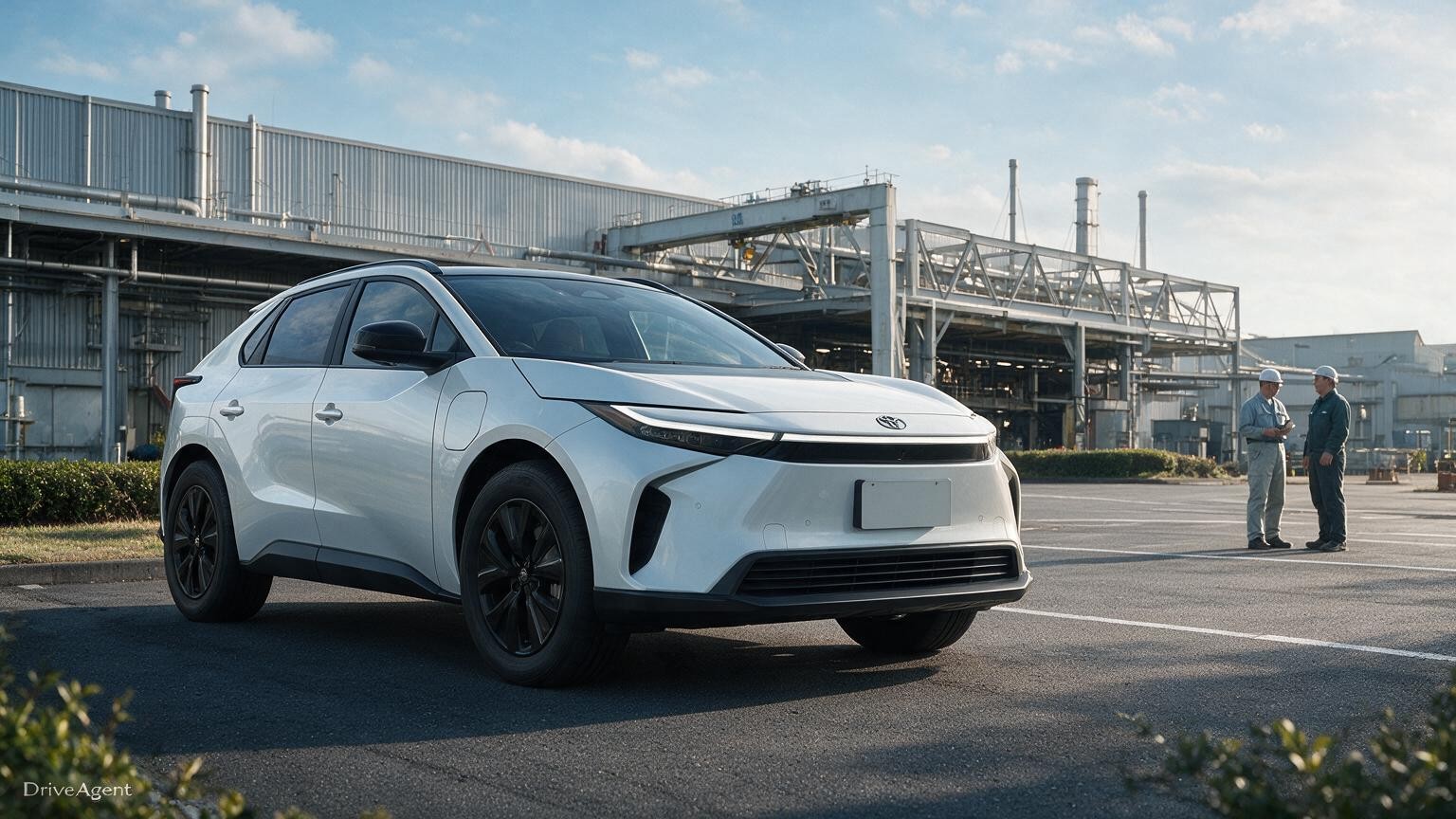
Toyota to build Waymo-equipped bZ4X robotaxis at Takaoka plant, with Japan testing set for 2027
Toyota and Waymo have confirmed the next phase of their autonomous driving collaboration: a Toyota bZ4X robotaxi fleet to be built and outfitted at the Takaoka plant in Japan, with initial testing and validation planned for 2027 and later deployment to the United Kingdom and other Waymo markets. No Australian rollout has been announced.