Volkswagen launches full-hybrid Golf and T-Roc in Europe with 136 PS and 170 PS options
Volkswagen's first full-hybrid Golf and T-Roc pair a 1.5 TSI evo2 petrol engine with two electric motors and a 1.6 kWh gross NMC battery, requiring no plug. Sales have begun in many European countries, but Volkswagen Australia has not confirmed local availability.
Synthesised from the cited sources. Research, writing and factual checks are automated using AI. Verify details against the sources. How we produce these reports
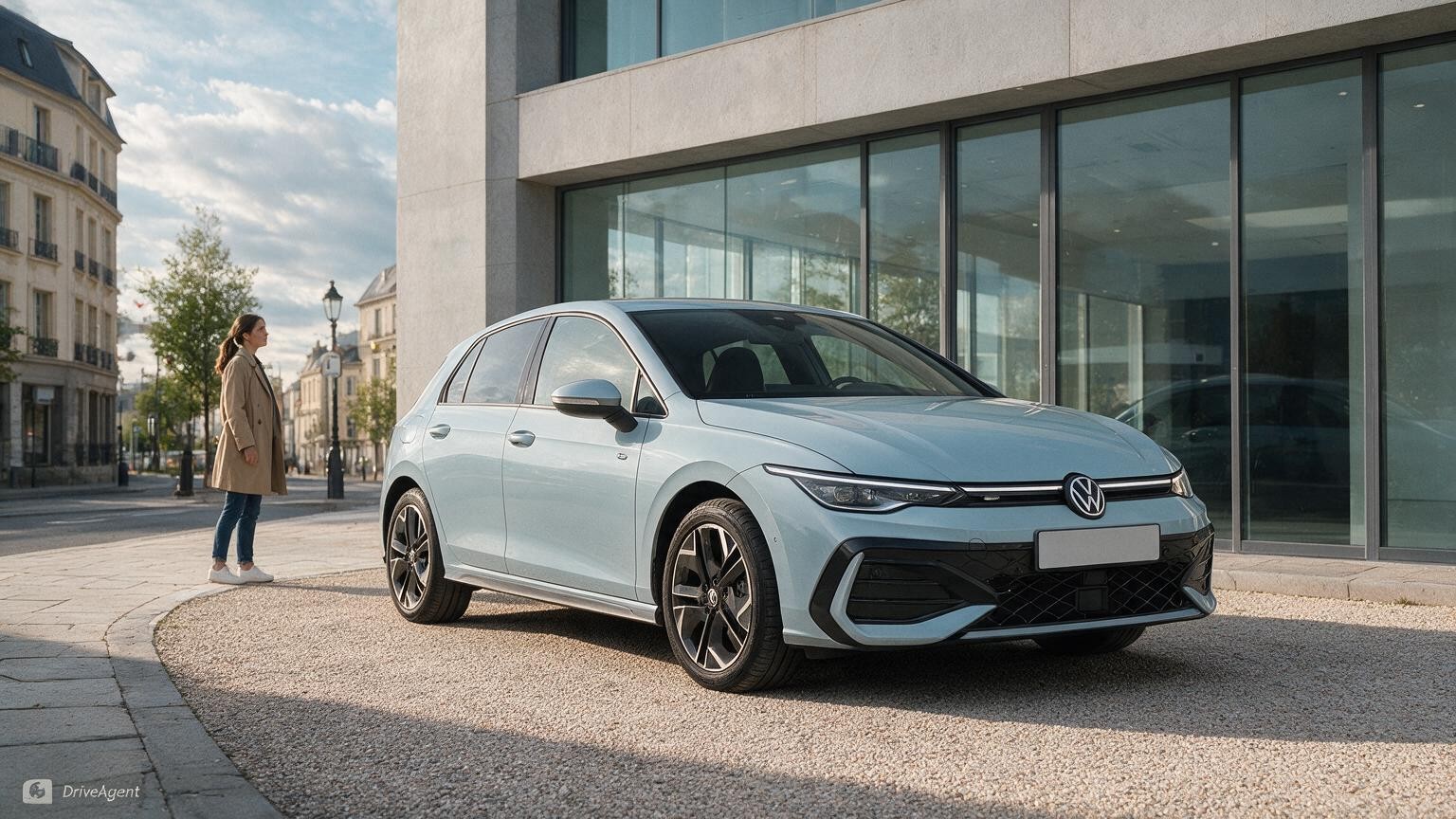
A plugless full hybrid debuts in two compact bestsellers
Volkswagen has launched its first full-hybrid versions of the Golf and T-Roc, sold under the simple 'Hybrid' designation and already on sale in many European countries, according to the company's newsroom. The system was first presented at the International Vienna Motor Symposium on 22–24 April 2026, with Volkswagen Group announcing a fourth-quarter 2026 launch for both models. It slots between the existing eTSI 48V mild hybrids and the plug-in eHybrid/GTE variants, offering temporary all-electric driving without any external charging interface. 24
According to CarExpert's report from April 2026, the drivetrain pairs two electric motors with the brand's 1.5 TSI evo2 turbocharged four-cylinder petrol engine on the MQB evo platform. One motor acts as a generator driven by the petrol engine, while the other drives the front wheels exclusively or in tandem with the engine. Energy is generated on board via recuperation and the generator, so no wallbox or charging cable is needed. 3
Battery, hardware and operating modes
Volkswagen Group's April 2026 announcement details the hardware: a hybrid module containing the drive motor, a second motor as generator, power electronics, a differential, a one-speed gearbox and an electronically controlled multiplate clutch to engage and disengage the TSI. A high-voltage battery with NMC cells and a capacity of 1.6 kWh (gross) – described by Volkswagen as usual for HEV vehicles – is integrated into the vehicle floor at the rear. An electric air-conditioning compressor and an electric brake servo are also integrated into the front end. 43
The system runs in three automatically selected operating modes: electric-only driving at low speeds with the petrol engine off (up to around 60 km/h under normal power demands); series drive, in which the decoupled but running TSI drives the generator to extend electric range; and parallel drive, where the petrol engine is the primary drive from roughly 60 km/h with the electric motor boosting when required, such as under kickdown. Drivers choose between Eco, Comfort and Sport profiles; Eco limits system output to 70 per cent and disables boost, while Sport shifts to series mode earlier to deliver full power quickly. 243
Output levels, performance and WLTP figures
Volkswagen offers the drivetrain in two output levels: 100 kW (136 PS) and 125 kW (170 PS) system power. In Golf Life specification the 100 kW version carries 288 Nm of system torque and sprints from 0 to 100 km/h in 8.8 seconds, while Style and R-Line variants take the 125 kW drive with 310 Nm and a 7.5-second sprint. All Golf Hybrid versions are limited to a 180 km/h top speed, per the Volkswagen newsroom. The T-Roc Hybrid follows the same structure, also starting at Life grade, with 9.7 seconds (100 kW) and 8.5 seconds (125 kW) to 100 km/h and the same 180 km/h limiter. 2
On consumption, Volkswagen quotes WLTP figures of 4.5–5.1 l/100 km for the Golf Hybrid (5.0–4.5 for 100 kW and 5.1–4.6 for 125 kW) and 4.9–5.6 l/100 km for the T-Roc Hybrid, along with combined WLTP ranges of more than 800 kilometres. Compared like-for-like with the Golf Life eTSI in its most fuel-efficient version, the 100 kW Golf Life Hybrid consumes around 11 per cent less, according to Volkswagen's newsroom. These are WLTP combined values in each car's most efficient configuration and are not single-vehicle figures, as Volkswagen's own disclaimer notes. 21
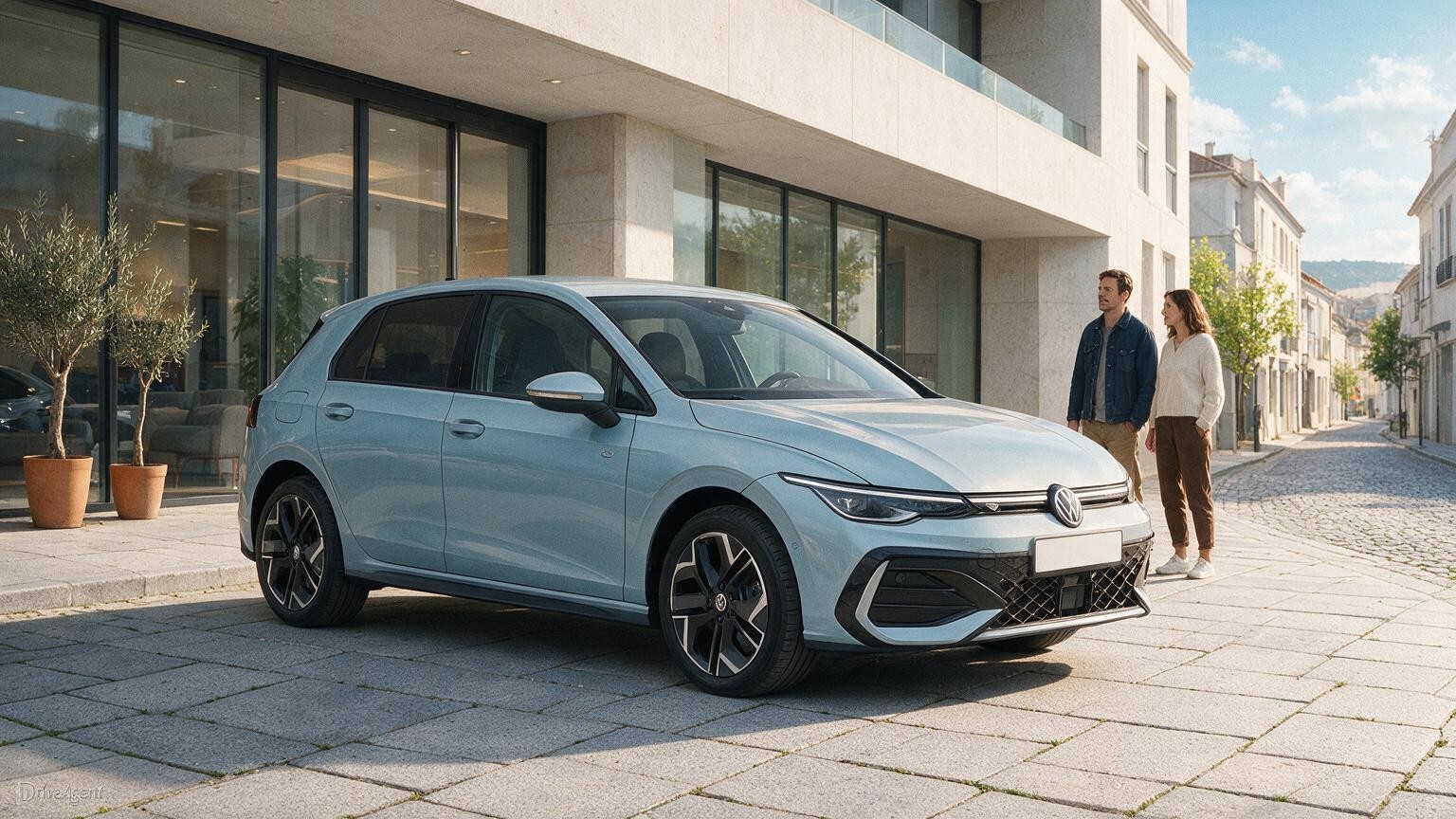
Pricing in Germany, positioned between mild and plug-in hybrids
Volkswagen positions the full hybrids between the mild-hybrid and plug-in hybrid price points. In Germany, the Golf Life Hybrid with 100 kW starts from €37,505 and the identically configured T-Roc Life Hybrid from €37,545, per the Volkswagen newsroom. These are German market prices and do not establish pricing or availability in any other market. 2
In the United Kingdom, Volkswagen's own consumer site lists the Golf range spanning petrol, mild-hybrid and plug-in hybrid fuel types with 115–333 PS, in trims from Life through to R, and lists the Golf eHybrid plug-in with up to 88 miles of electric range. The page's fuel-type listing does not distinguish a full-hybrid variant, so the extent of the Golf Hybrid's UK rollout is not established by this page. 5
Australian availability remains unconfirmed
For Australia, the picture is unchanged: Volkswagen Australia told CarExpert in April 2026, "While Volkswagen Australia continues to assess future opportunities for the local market, we're unable to confirm Australian availability or timing at this stage." CarExpert also noted that the current Australian Golf persists with an older 1.4 TSI turbo petrol and eight-speed automatic combination aimed at less emissions-regulated markets, and that Volkswagen Australia has not yet locked in the latest T-Roc for local introduction. 3
CarExpert's analysis observes that the MQB evo platform underpins many Volkswagen Group models, making further rollout of the hybrid system to other nameplates a matter of time, and that Group brands Audi, Cupra and Skoda already offer mild-hybrid and plug-in options in equivalent vehicles. That is the outlet's assessment; Volkswagen itself has announced only the Golf and T-Roc as the system's debut applications, with the launch scheduled from the fourth quarter of 2026 in Europe. 34
AI evidence finder
Ask about this article
Ask a question to find relevant published passages and source links. AI selects evidence; the passages remain exactly as published.
Fact check
Assessment completeThis assessment compares the claims listed below with retained source evidence. It does not establish that every statement is true or replace the original sources.
See assessed claims (40)
Factual statementSupported by the retained evidence
Volkswagen launches full-hybrid Golf and T-Roc in Europe with 136 PS and 170 PS options
Newsroom spans confirm sales already started in many European countries and the two output levels (100 kW/136 PS, 125 kW/170 PS); 'launches' is consistent with 'sales ... have already started'.
Factual statementSupported by the retained evidence
Volkswagen's first full-hybrid Golf and T-Roc pair a 1.5 TSI evo2 petrol engine with two electric motors and a 1.6 kWh gross NMC battery, requiring no plug.
Both CarExpert and Volkswagen Group material confirm two e-motors, 1.6 kWh gross NMC battery, 1.5 TSI evo2 engine and no charging requirement.
Factual statementSupported by the retained evidence
Sales have begun in many European countries, but Volkswagen Australia has not confirmed local availability.
Volkswagen newsroom states sales already started in many European countries; CarExpert notes local timing remains unclear and VWA could not confirm availability.
Factual statementSupported by the retained evidence
Volkswagen's new 'Hybrid' full-hybrid drivetrain combines a 1.5 TSI evo2 turbo petrol engine with two electric motors, no plug or wallbox required, and electric-only driving up to about 60 km/h.
Newsroom confirms 'Hybrid' designation, two e-motors with TSI, no external charging interface, and all-electric driving up to approx. 60 km/h.
Factual statementSupported by the retained evidence
The battery is a 1.6 kWh (gross) NMC lithium-ion pack integrated into the rear floor; Golf Hybrid WLTP consumption is quoted at 4.5–5.1 l/100 km depending on output.
NMC 1.6 kWh (gross) battery in rear vehicle floor confirmed; Golf WLTP 4.5–5.1 l/100 km confirmed in key aspects and detail spans.
Factual statementSupported by the retained evidence
Two output levels are offered: 100 kW (136 PS, 288 Nm, 0–100 km/h in 8.8 seconds) and 125 kW (170 PS, 310 Nm, 7.5 seconds), with all Golf Hybrid versions limited to 180 km/h.
Spans confirm Golf Life 100 kW/288 Nm, Style and R-Line 125 kW/310 Nm, 8.8 s and 7.5 s 0–100 km/h, and 180 km/h limiter for all Golf Hybrid versions; 136/170 PS PS equivalence confirmed elsewhere.
Factual statementSupported by the retained evidence
German pricing starts from €37,505 for the Golf Life Hybrid 100 kW and €37,545 for the T-Roc Life Hybrid, positioned between the eTSI mild hybrid and plug-in hybrids.
German prices of €37,505 (Golf Life Hybrid) and €37,545 (T-Roc Life) and positioning between mild hybrid and plug-in hybrid confirmed.
Attributed claimSupported by the retained evidence
Volkswagen Australia says it is 'unable to confirm Australian availability or timing at this stage'.
Exact statement attributed to Volkswagen Australia via CarExpert appears verbatim in the CarExpert span.
AnalysisSupported by the retained evidence
A plugless full hybrid debuts in two compact bestsellers
Reasonable analytic framing consistent with newsroom language ('global debut appearance in the two compact bestsellers', no external charging interface).
Factual statementSupported by the retained evidence
Volkswagen has launched its first full-hybrid versions of the Golf and T-Roc, sold under the simple 'Hybrid' designation and already on sale in many European countries, according to the company's newsroom.
Newsroom confirms first full-hybrid Golf/T-Roc, 'Hybrid' designation, and sales already started in many European countries; 'according to the company's newsroom' matches sourcing.
Factual statementPartly supported
The system was first presented at the International Vienna Motor Symposium on 22–24 April 2026, with Volkswagen Group announcing a fourth-quarter 2026 launch for both models.
Vienna Motor Symposium dates (22–24 April 2026) and Q4 launch scheduling are supported; however the Group article (dated 23/04/2026) says Volkswagen 'will present' the system, so that it 'was first presented' at the event is not established by the evidence.
Factual statementSupported by the retained evidence
It slots between the existing eTSI 48V mild hybrids and the plug-in eHybrid/GTE variants, offering temporary all-electric driving without any external charging interface.
Positioning between eTSI mild hybrids and eHybrid/GTE plug-ins, plus all-electric driving without wallbox/external charging, confirmed.
Attributed claimPartly supported
According to CarExpert's report from April 2026, the drivetrain pairs two electric motors with the brand's 1.5 TSI evo2 turbocharged four-cylinder petrol engine on the MQB evo platform.
CarExpert's pairing of two e-motors with the 1.5 TSI evo2 is supported; the 'MQB evo platform' attribution for this drivetrain is not established in the CarExpert spans, which cite MQB evo only for other brands' equivalent vehicles.
Factual statementSupported by the retained evidence
One motor acts as a generator driven by the petrol engine, while the other drives the front wheels exclusively or in tandem with the engine.
CarExpert span confirms one e-motor acts as generator and the other as drive motor, exclusively or in tandem with the petrol engine.
Factual statementSupported by the retained evidence
Energy is generated on board via recuperation and the generator, so no wallbox or charging cable is needed.
On-board generation via recuperation and engine-driven generator, with no dependence on charging cables/infrastructure, confirmed.
AnalysisSupported by the retained evidence
Battery, hardware and operating modes
Section heading accurately reflects the documented hybrid-module hardware and three operating modes/driving profiles in the sources.
Factual statementSupported by the retained evidence
Volkswagen Group's April 2026 announcement details the hardware: a hybrid module containing the drive motor, a second motor as generator, power electronics, a differential, a one-speed gearbox and an electronically controlled multiplate clutch to engage and disengage the TSI.
Hybrid module contents (drive motor, generator motor, power electronics, differential, one-speed gearbox, multiplate clutch with control unit to engage/disengage TSI) match the Volkswagen Group announcement of 23/04/2026.
Factual statementSupported by the retained evidence
A high-voltage battery with NMC cells and a capacity of 1.6 kWh (gross) – described by Volkswagen as usual for HEV vehicles – is integrated into the vehicle floor at the rear.
NMC-cell battery, 1.6 kWh (gross) 'usual for HEV vehicles', integrated into vehicle floor at the rear of both models, confirmed; 'described by Volkswagen' correctly attributes the characterisation.
Factual statementSupported by the retained evidence
An electric air-conditioning compressor and an electric brake servo are also integrated into the front end.
Electric A/C compressor and electric brake servo integrated in the front end confirmed in both Group and CarExpert material.
Factual statementSupported by the retained evidence
The system runs in three automatically selected operating modes: electric-only driving at low speeds with the petrol engine off (up to around 60 km/h under normal power demands); series drive, in which the decoupled but running TSI drives the generator to extend electric range; and parallel drive, where the petrol engine is the primary drive from roughly 60 km/h with the electric motor boosting when required, such as under kickdown.
Three automatically activated modes, electric-only up to ~60 km/h with TSI off, series drive with decoupled but active TSI driving a generator, and parallel drive as primary from ~60 km/h with electric boost, all confirmed; kickdown cited as an example of boost demand.
Factual statementSupported by the retained evidence
Drivers choose between Eco, Comfort and Sport profiles; Eco limits system output to 70 per cent and disables boost, while Sport shifts to series mode earlier to deliver full power quickly.
Eco (70 per cent output limit, boost deactivated), Comfort (no limit) and Sport (earlier shift to series mode for full power) profiles confirmed.
AnalysisSupported by the retained evidence
Output levels, performance and WLTP figures
Heading accurately reflects documented output levels, performance data and WLTP figures in the sources.
Factual statementSupported by the retained evidence
Volkswagen offers the drivetrain in two output levels: 100 kW (136 PS) and 125 kW (170 PS) system power.
Two output levels of 100 kW (136 PS) and 125 kW (170 PS) confirmed in newsroom key aspects and detail text.
Factual statementSupported by the retained evidence
In Golf Life specification the 100 kW version carries 288 Nm of system torque and sprints from 0 to 100 km/h in 8.8 seconds, while Style and R-Line variants take the 125 kW drive with 310 Nm and a 7.5-second sprint.
Golf Life always 100 kW/288 Nm; Style and R-Line offered 125 kW/310 Nm; 8.8 s (100 kW) and 7.5 s (125 kW) confirmed.
Factual statementSupported by the retained evidence
All Golf Hybrid versions are limited to a 180 km/h top speed, per the Volkswagen newsroom.
Maximum speed of all Golf Hybrid versions limited to 180 km/h, per the Volkswagen newsroom span.
Factual statementSupported by the retained evidence
The T-Roc Hybrid follows the same structure, also starting at Life grade, with 9.7 seconds (100 kW) and 8.5 seconds (125 kW) to 100 km/h and the same 180 km/h limiter.
T-Roc from Life upwards, 100 kW base, 9.7 s (100 kW) and 8.5 s (125 kW), all electronically limited to 180 km/h confirmed.
Factual statementSupported by the retained evidence
On consumption, Volkswagen quotes WLTP figures of 4.5–5.1 l/100 km for the Golf Hybrid (5.0–4.5 for 100 kW and 5.1–4.6 for 125 kW) and 4.9–5.6 l/100 km for the T-Roc Hybrid, along with combined WLTP ranges of more than 800 kilometres.
WLTP figures 5.0–4.5 (100 kW) and 5.1–4.6 (125 kW) for Golf, 5.5–4.9 and 5.6–5.0 for T-Roc (aggregate 4.5–5.1 and 4.9–5.6), plus combined ranges of more than 800 km confirmed as Volkswagen-quoted values.
Factual statementSupported by the retained evidence
Compared like-for-like with the Golf Life eTSI in its most fuel-efficient version, the 100 kW Golf Life Hybrid consumes around 11 per cent less, according to Volkswagen's newsroom.
Newsroom comparison states the 100 kW Golf Life Hybrid consumes around 11 per cent less than the 85 kW Golf Life eTSI on combined WLTP values in the most fuel-efficient version; correctly attributed to Volkswagen.
AnalysisSupported by the retained evidence
These are WLTP combined values in each car's most efficient configuration and are not single-vehicle figures, as Volkswagen's own disclaimer notes.
Volkswagen's own disclaimer states the consumption data 'does not refer to a single vehicle' and the comparison is based on the most fuel-efficient version of each, supporting the analytic qualification.
AnalysisSupported by the retained evidence
Pricing in Germany, positioned between mild and plug-in hybrids
Heading matches the newsroom statement that the full hybrids are priced between the mild hybrid and a plug-in hybrid, with Germany as the example.
Factual statementSupported by the retained evidence
Volkswagen positions the full hybrids between the mild-hybrid and plug-in hybrid price points.
Positioning between mild-hybrid and plug-in-hybrid price points confirmed in both the range discussion and the pricing passage.
Factual statementSupported by the retained evidence
In Germany, the Golf Life Hybrid with 100 kW starts from €37,505 and the identically configured T-Roc Life Hybrid from €37,545, per the Volkswagen newsroom.
€37,505 (Golf Life 100 kW) and €37,545 (T-Roc Life, identical engine configuration) confirmed in the Volkswagen newsroom span.
AnalysisSupported by the retained evidence
These are German market prices and do not establish pricing or availability in any other market.
The cited prices are explicitly German-market examples; no other-market pricing appears in the evidence, supporting the limitation.
Factual statementSupported by the retained evidence
In the United Kingdom, Volkswagen's own consumer site lists the Golf range spanning petrol, mild-hybrid and plug-in hybrid fuel types with 115–333 PS, in trims from Life through to R, and lists the Golf eHybrid plug-in with up to 88 miles of electric range.
UK consumer site lists fuel types Petrol, Plug-in Hybrid, Petrol, mHEV; 115–333 PS; trims from Life to R (and beyond); and Golf eHybrid with up to 88 miles electric range.
AnalysisSupported by the retained evidence
The page's fuel-type listing does not distinguish a full-hybrid variant, so the extent of the Golf Hybrid's UK rollout is not established by this page.
The listed fuel types show no full-hybrid entry, so the page cannot establish the extent of the Golf Hybrid's UK rollout; a valid evidence-based limitation.
AnalysisSupported by the retained evidence
Australian availability remains unconfirmed
Consistent with CarExpert's report of unclear Australian timing and the Volkswagen Australia statement quoted in the article.
Attributed claimPartly supported
For Australia, the picture is unchanged: Volkswagen Australia told CarExpert in April 2026, "While Volkswagen Australia continues to assess future opportunities for the local market, we're unable to confirm Australian availability or timing at this stage."
The quotation is supported verbatim as Volkswagen Australia speaking to CarExpert; however the specific 'in April 2026' dating of that statement is not established by the supplied spans, which say only 'today'.
Attributed claimSupported by the retained evidence
CarExpert also noted that the current Australian Golf persists with an older 1.4 TSI turbo petrol and eight-speed automatic combination aimed at less emissions-regulated markets, and that Volkswagen Australia has not yet locked in the latest T-Roc for local introduction.
CarExpert notes the Australian Golf's older 1.4 TSI/eight-speed combination for markets with laxer emissions rules and that VWA has not locked in the latest T-Roc; correctly attributed.
Attributed claimSupported by the retained evidence
CarExpert's analysis observes that the MQB evo platform underpins many Volkswagen Group models, making further rollout of the hybrid system to other nameplates a matter of time, and that Group brands Audi, Cupra and Skoda already offer mild-hybrid and plug-in options in equivalent vehicles.
Both points appear in CarExpert's text: MQB evo shared widely so rollout to other nameplates 'a matter of time', and Audi, Cupra and Skoda offering mild-hybrid and plug-in options in equivalent vehicles.
AnalysisPartly supported
That is the outlet's assessment; Volkswagen itself has announced only the Golf and T-Roc as the system's debut applications, with the launch scheduled from the fourth quarter of 2026 in Europe.
Q4 2026 launch for the Golf and T-Roc is supported, and the CarExpert assessment is correctly attributed; however, that Volkswagen has announced 'only' the Golf and T-Roc as the system's applications is not established — the Group release describes future use more broadly without ruling out other nameplates.
Behind this report
Sources & context
Cited source mix
5 cited pages across 4 websites
- News publisher 1
- Role not assessed 4
Website breakdown
- volkswagen-newsroom.com2 pages
- CarExpertcarexpert.com.au1 page
- volkswagen-group.com1 page
- volkswagen.co.uk1 page
4 cited pages with an undocumented publisher role. Websites may share ownership or repeat the same reporting.
Saved research extracts
5 / 5 cited pages with saved extracts
0 shortened at our text limit · 0 without a saved-extract record
Extracts retrieved 2 Nov 2026.
Extracts can omit page content. These counts do not verify claims or measure independent reporting. Political leaning and reliability are not rated.
- The new Golf Hybrid The new T-Roc HybridRole not assessedSource extract saved
Why these labels?The new Golf Hybrid The new T-Roc Hybrid
Who produced it
We have not documented this publisher’s role. An unassigned label is not a negative rating.
How this report uses it
Cited in 1 paragraph: Output levels, performance and WLTP figures.
This describes its use in our report. It does not establish the source’s editorial stance or independently corroborate every claim.
Evidence record
Text retrieved 2 Nov 2026. The retained extract did not reach our text limit. Extraction can still omit page content.
- In briefRole not assessedSource extract saved
Why these labels?In brief
Who produced it
We have not documented this publisher’s role. An unassigned label is not a negative rating.
How this report uses it
Cited in 5 paragraphs: A plugless full hybrid debuts in two compact bestsellers; Battery, hardware and operating modes; Output levels, performance and WLTP figures; Pricing in Germany, positioned between mild and plug-in hybrids.
This describes its use in our report. It does not establish the source’s editorial stance or independently corroborate every claim.
Evidence record
Text retrieved 2 Nov 2026. The retained extract did not reach our text limit. Extraction can still omit page content.
- 2026 Volkswagen Golf and T-Roc Hybrid revealed, Australian plans unclear | CarExpertNews publisherSource extract saved
Why these labels?2026 Volkswagen Golf and T-Roc Hybrid revealed, Australian plans unclear | CarExpert
Who produced it
Publishes automotive news and reviews and operates a car-buying service connecting buyers with dealers. Identity reference ↗
How this report uses it
Cited in 5 paragraphs: A plugless full hybrid debuts in two compact bestsellers; Battery, hardware and operating modes; Australian availability remains unconfirmed.
This describes its use in our report. It does not establish the source’s editorial stance or independently corroborate every claim.
Evidence record
Text retrieved 2 Nov 2026. The retained extract did not reach our text limit. Extraction can still omit page content.
- Electrification made easy: Volkswagen presents new full ...Role not assessedSource extract saved
Why these labels?Electrification made easy: Volkswagen presents new full ...
Who produced it
We have not documented this publisher’s role. An unassigned label is not a negative rating.
How this report uses it
Cited in 4 paragraphs: A plugless full hybrid debuts in two compact bestsellers; Battery, hardware and operating modes; Australian availability remains unconfirmed.
This describes its use in our report. It does not establish the source’s editorial stance or independently corroborate every claim.
Evidence record
Text retrieved 2 Nov 2026. The retained extract did not reach our text limit. Extraction can still omit page content.
- Build Your Own GolfRole not assessedSource extract saved
Why these labels?Build Your Own Golf
Who produced it
We have not documented this publisher’s role. An unassigned label is not a negative rating.
How this report uses it
Cited in 1 paragraph: Pricing in Germany, positioned between mild and plug-in hybrids.
This describes its use in our report. It does not establish the source’s editorial stance or independently corroborate every claim.
Evidence record
Text retrieved 2 Nov 2026. The retained extract did not reach our text limit. Extraction can still omit page content.
Keep reading
Related subjects and more from this section.
Volkswagen pauses ID. Golf development as CFO confirms cost-driven reassessment
Volkswagen brand has temporarily suspended development of the planned electric ID. Golf while it limits costs and reallocates investments, according to CFO David Pouls as reported by fakti.bg. The model is not cancelled, but its timing remains uncertain and no revised schedule has been announced.