Toyota unveils next-generation 1.5-litre hybrid system for future multi-pathway platforms
Toyota Motor Europe has detailed a compact four-cylinder 1.5-litre hybrid powertrain engineered from the outset for electrification, targeting a fuel-economy gain of more than 15 per cent and designed to sit on one shared architecture covering hybrid, plug-in hybrid and battery-electric vehicles.
Synthesised from the cited sources. Research, writing and factual checks are automated using AI. Verify details against the sources. How we produce these reports
The announcement
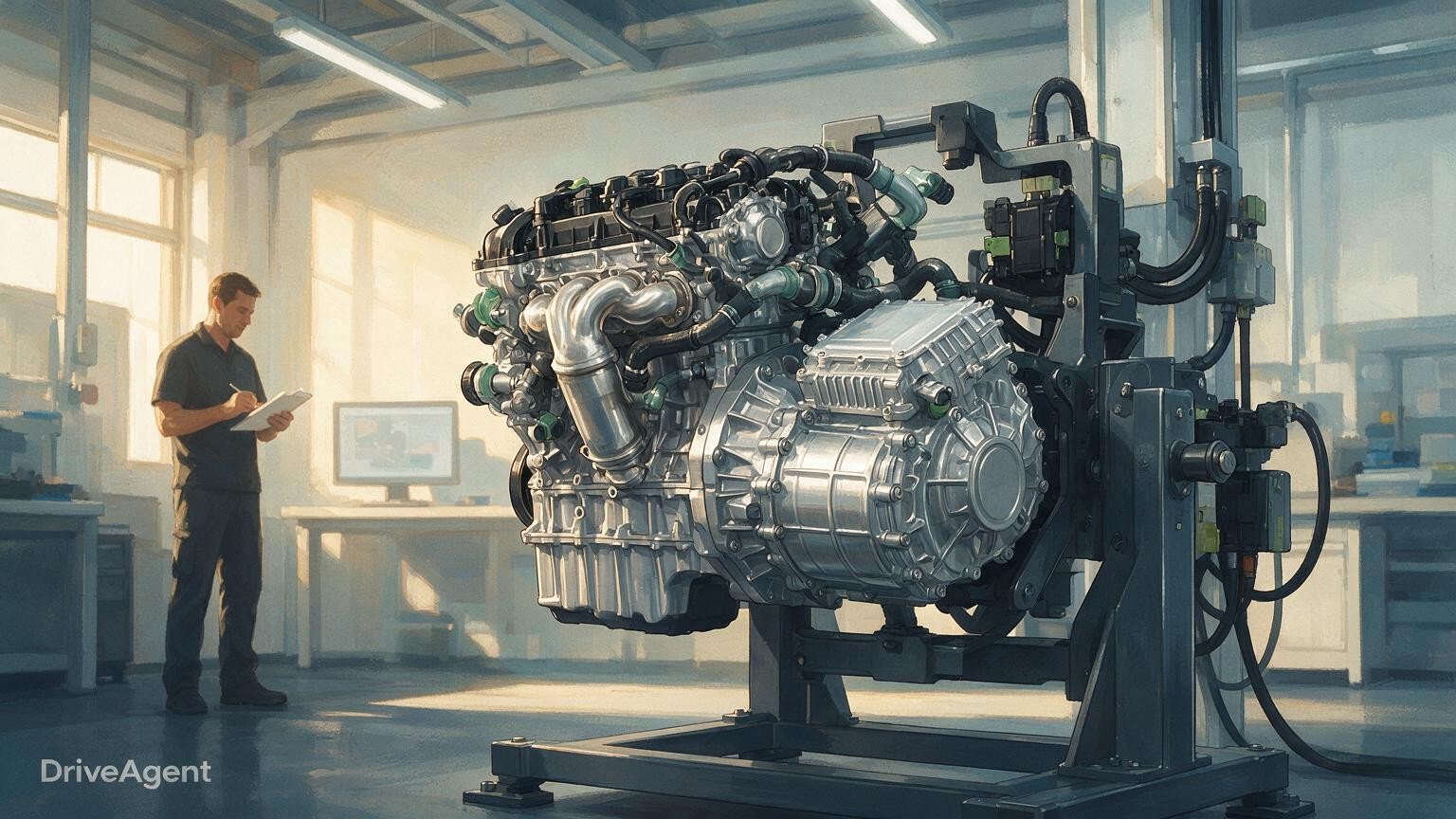
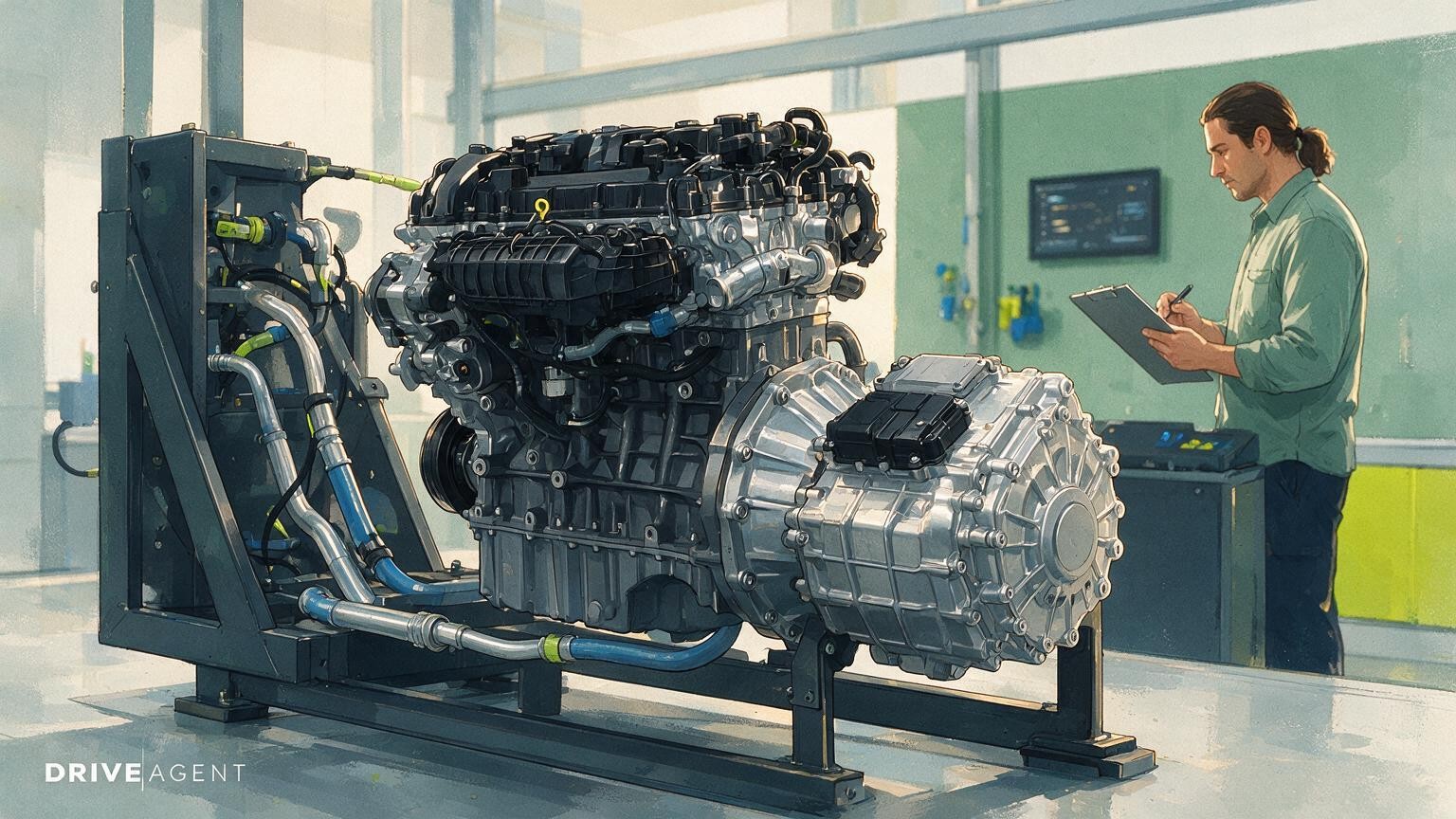
Toyota Motor Europe announced on 28 October 2026 the development of a next-generation hybrid system intended for its future multi-pathway vehicle platforms. The system is built around an entirely new four-cylinder 1.5-litre engine, described by Toyota as a modular design offered in both naturally aspirated and turbocharged variants and conceived for electrification from the start. It pairs with lighter and more compact electric motors, power control units and inverters than its predecessors, in a package small enough to integrate into a battery-electric-first architecture. Toyota states the fuel-economy target is an improvement of more than 15 per cent, a figure presented as a development goal rather than a measured result. 431
The announcement was carried on Toyota's European newsroom sites in multiple languages, with Automotive World summarising the release the same day. Japanese outlet Kuruma News and Taiwanese outlet CarNews also covered the story, each crediting Toyota's European arm as the origin of the information. 3167
How the new system differs from what it replaces
Rather than adapting an existing engine for electrified use, Toyota says it has engineered the engine, the hybrid system and the power electronics as a single integrated unit, according to the company's release. The naturally aspirated version of the new 1.5-litre engine is designed to cover the range of hybrid performance currently delivered by two separate engines: the 1.8-litre unit and the three-cylinder 1.5-litre. The new electric motors, power control units and inverters are smaller and lighter than before, and the French-language release adds that the power electronics use silicon carbide technology developed by Toyota itself, with deeper component integration reducing energy losses across the whole system. 31
Toyota attributes the targeted fuel-economy gain of more than 15 per cent to a combination of measures: reduced mechanical friction, better thermal management, lower electrical losses and aerodynamic optimisation through a reduced drag coefficient. The company also notes that a lower-profile engine package permits a lower bonnet line, which in turn frees designers to pursue more dynamic vehicle proportions. 31
One platform for HEV, PHEV and BEV
The hybrid system has been developed jointly with a new multi-pathway platform intended to serve battery-electric, plug-in hybrid and conventional hybrid vehicles on a single base architecture. Toyota says hybrid and plug-in hybrid drivetrains can be combined with this architecture without altering the vehicle's silhouette, interior space or capability, while the platform still preserves full battery-electric performance for BEV models. CarNews explains the background: because different powertrains differ substantially in size and weight, they have traditionally required separate platforms, which constrained body design and lengthened development times. 37
The shared architecture also has industrial implications. Toyota says it will spread development and production investment across larger combined volumes, producing economies of scale without compromising each variant's performance, and that production sites will be able to adjust the powertrain mix fluidly as customer demand shifts between BEV, PHEV and HEV models. Toyota frames this flexibility as a response to regional differences in energy conditions and customer needs, and positions highly efficient hybrid technology as a lasting element of its multi-pathway approach to carbon neutrality. 13
Third-party supply and carbon-neutral fuels
Two further elements of the announcement stand out. Toyota says it plans to increase sales of its new engines and hybrid technologies to third parties in the coming years, extending the technology beyond its own vehicle line-up. Separately, the company states the system is designed to run on renewable and carbon-neutral fuels, which Toyota argues strengthens the emissions contribution of combustion-equipped electrified vehicles even as its battery-electric and fuel-cell technologies continue to develop. Toyota Motor Europe has separately been involved in a real-world pilot, launched in July 2026 with BMW Group, Repsol and Bosch, testing existing vehicles running exclusively on 100 per cent renewable gasoline in Spain. 315
What models might use it, and what remains unconfirmed
Toyota has not yet announced specific fuel-consumption figures, the vehicles that will carry the new system, or an on-sale timetable, as CarNews notes in its report. The same outlet points out that Toyota has previously indicated the next-generation Corolla will be offered with petrol, HEV, PHEV and BEV variants depending on the market, and accordingly describes it as possible, not confirmed, that the new hybrid system could be applied first from the next-generation Corolla. Kuruma News makes the same connection, headlining the prospect of Corolla adoption as a question rather than a fact. These are media inferences, and no manufacturer statement identifies a launch model or date. 76
No Australian application has been identified. The announcement comes from Toyota Motor Europe, and none of the material establishes Australian availability, specifications or timing for any model using the new system. Any Australian rollout would need to be confirmed separately. 17
Context: the outgoing hybrid generation
For historical context, the current three-cylinder 1.5-litre hybrid system that the new engine family will partially supersede debuted in the fourth-generation Yaris, launched in Japan on 10 February 2020 as the first model on Toyota's TNGA GA-B compact platform. Toyota's 2020 release cited WLTC fuel economy of 36.0 km/L for the Yaris Hybrid X grade, a 40 per cent thermal-efficiency engine, a 27 per cent lighter lithium-ion battery than the nickel-metal hydride unit it replaced, and a nine per cent more compact dual-axis transaxle. Toyota UK's specification sheet for that car listed a 177.6-volt nominal battery voltage and 85 kW combined system output, with figures marked as pending final homologation. 28
That generation was positioned as a scaled-down derivative of the 2.0- and 2.5-litre hybrid systems used in the Corolla, RAV4 and Camry. The newly announced four-cylinder 1.5-litre system represents a further step: consolidating two current hybrid engines into one, and co-developing the powertrain with a platform designed for battery-electric vehicles as well, rather than adapting a combustion-era architecture. 83
AI evidence finder
Ask about this article
Ask a question to find relevant published passages and source links. AI selects evidence; the passages remain exactly as published.
Behind this report
Sources & context
Cited source mix
8 cited pages across 7 websites
- Role not assessed 8
Website breakdown
- newsroom.toyota.eu2 pages
- automotiveworld.com1 page
- carnews.com1 page
- global.toyota1 page
- kuruma-news.jp1 page
- media.toyota.co.uk1 page
- media.toyota.fr1 page
8 cited pages with an undocumented publisher role. Websites may share ownership or repeat the same reporting.
Saved research extracts
8 / 8 cited pages with saved extracts
0 shortened at our text limit · 0 without a saved-extract record
Extracts retrieved 29 Oct 2026.
Extracts can omit page content. These counts do not verify claims or measure independent reporting. Political leaning and reliability are not rated.
- Toyota develops compact 1.5-litre hybrid system for future multi-pathway platformsRole not assessedSource extract saved
Why these labels?Toyota develops compact 1.5-litre hybrid system for future multi-pathway platforms
Who produced it
We have not documented this publisher’s role. An unassigned label is not a negative rating.
How this report uses it
Cited in 7 paragraphs: The announcement; How the new system differs from what it replaces; One platform for HEV, PHEV and BEV; Third-party supply and carbon-neutral fuels; What models might use it, and what remains unconfirmed.
This describes its use in our report. It does not establish the source’s editorial stance or independently corroborate every claim.
Evidence record
Text retrieved 29 Oct 2026. The retained extract did not reach our text limit. Extraction can still omit page content.
- Toyota to Launch New Model Yaris in Japan on February 10, 2020Role not assessedSource extract saved
Why these labels?Toyota to Launch New Model Yaris in Japan on February 10, 2020
Who produced it
We have not documented this publisher’s role. An unassigned label is not a negative rating.
How this report uses it
Cited in 1 paragraph: Context: the outgoing hybrid generation.
This describes its use in our report. It does not establish the source’s editorial stance or independently corroborate every claim.
Evidence record
Text retrieved 29 Oct 2026. The retained extract did not reach our text limit. Extraction can still omit page content.
- Toyota développe une nouvelle génération d'hybride destinée aux futures plateformes multi-technologiesRole not assessedSource extract saved
Why these labels?Toyota développe une nouvelle génération d'hybride destinée aux futures plateformes multi-technologies
Who produced it
We have not documented this publisher’s role. An unassigned label is not a negative rating.
How this report uses it
Cited in 8 paragraphs: The announcement; How the new system differs from what it replaces; One platform for HEV, PHEV and BEV; Third-party supply and carbon-neutral fuels; Context: the outgoing hybrid generation.
This describes its use in our report. It does not establish the source’s editorial stance or independently corroborate every claim.
Evidence record
Text retrieved 29 Oct 2026. The retained extract did not reach our text limit. Extraction can still omit page content.
- Newsroom Toyota EuropeRole not assessedSource extract saved
Why these labels?Newsroom Toyota Europe
Who produced it
We have not documented this publisher’s role. An unassigned label is not a negative rating.
How this report uses it
Cited in 1 paragraph: The announcement.
This describes its use in our report. It does not establish the source’s editorial stance or independently corroborate every claim.
Evidence record
Text retrieved 29 Oct 2026. The retained extract did not reach our text limit. Extraction can still omit page content.
- Articles tagged with 'corporate' & 'toyota' | Toyota EuropeRole not assessedSource extract saved
Why these labels?Articles tagged with 'corporate' & 'toyota' | Toyota Europe
Who produced it
We have not documented this publisher’s role. An unassigned label is not a negative rating.
How this report uses it
Cited in 1 paragraph: Third-party supply and carbon-neutral fuels.
This describes its use in our report. It does not establish the source’s editorial stance or independently corroborate every claim.
Evidence record
Text retrieved 29 Oct 2026. The retained extract did not reach our text limit. Extraction can still omit page content.
- トヨタが「新ハイブリッド」開発を発表! 高効率「1.5リッター4気筒」を採用! 開発・製造コストを「大幅削減」し「マルチパスウェイ戦略」を加速へRole not assessedSource extract saved
Why these labels?トヨタが「新ハイブリッド」開発を発表! 高効率「1.5リッター4気筒」を採用! 開発・製造コストを「大幅削減」し「マルチパスウェイ戦略」を加速へ
Who produced it
We have not documented this publisher’s role. An unassigned label is not a negative rating.
How this report uses it
Cited in 2 paragraphs: The announcement; What models might use it, and what remains unconfirmed.
This describes its use in our report. It does not establish the source’s editorial stance or independently corroborate every claim.
Evidence record
Text retrieved 29 Oct 2026. The retained extract did not reach our text limit. Extraction can still omit page content.
- Toyota「新款Hybrid」油耗有望提升超過15%!採用全新開發的1.5升4缸引擎,預計將從「新一代Corolla」開始搭載?Role not assessedSource extract saved
Why these labels?Toyota「新款Hybrid」油耗有望提升超過15%!採用全新開發的1.5升4缸引擎,預計將從「新一代Corolla」開始搭載?
Who produced it
We have not documented this publisher’s role. An unassigned label is not a negative rating.
How this report uses it
Cited in 4 paragraphs: The announcement; One platform for HEV, PHEV and BEV; What models might use it, and what remains unconfirmed.
This describes its use in our report. It does not establish the source’s editorial stance or independently corroborate every claim.
Evidence record
Text retrieved 29 Oct 2026. The retained extract did not reach our text limit. Extraction can still omit page content.
- The new Toyota Yaris: Designed for Urban LifeRole not assessedSource extract saved
Why these labels?The new Toyota Yaris: Designed for Urban Life
Who produced it
We have not documented this publisher’s role. An unassigned label is not a negative rating.
How this report uses it
Cited in 2 paragraphs: Context: the outgoing hybrid generation.
This describes its use in our report. It does not establish the source’s editorial stance or independently corroborate every claim.
Evidence record
Text retrieved 29 Oct 2026. The retained extract did not reach our text limit. Extraction can still omit page content.
Keep reading
Related subjects and more from this section.
Updated Chery Tiggo 4 previews turbocharged 1.5-litre hybrid, with Australian launch timing still tentative
Chery has shown a facelifted Tiggo 4 with a turbocharged 1.5-litre hybrid powertrain at a preview drive in China, but Australian pricing, specifications and arrival timing for the new variant are yet to be confirmed, with the updated naturally aspirated hybrid set to arrive here first.