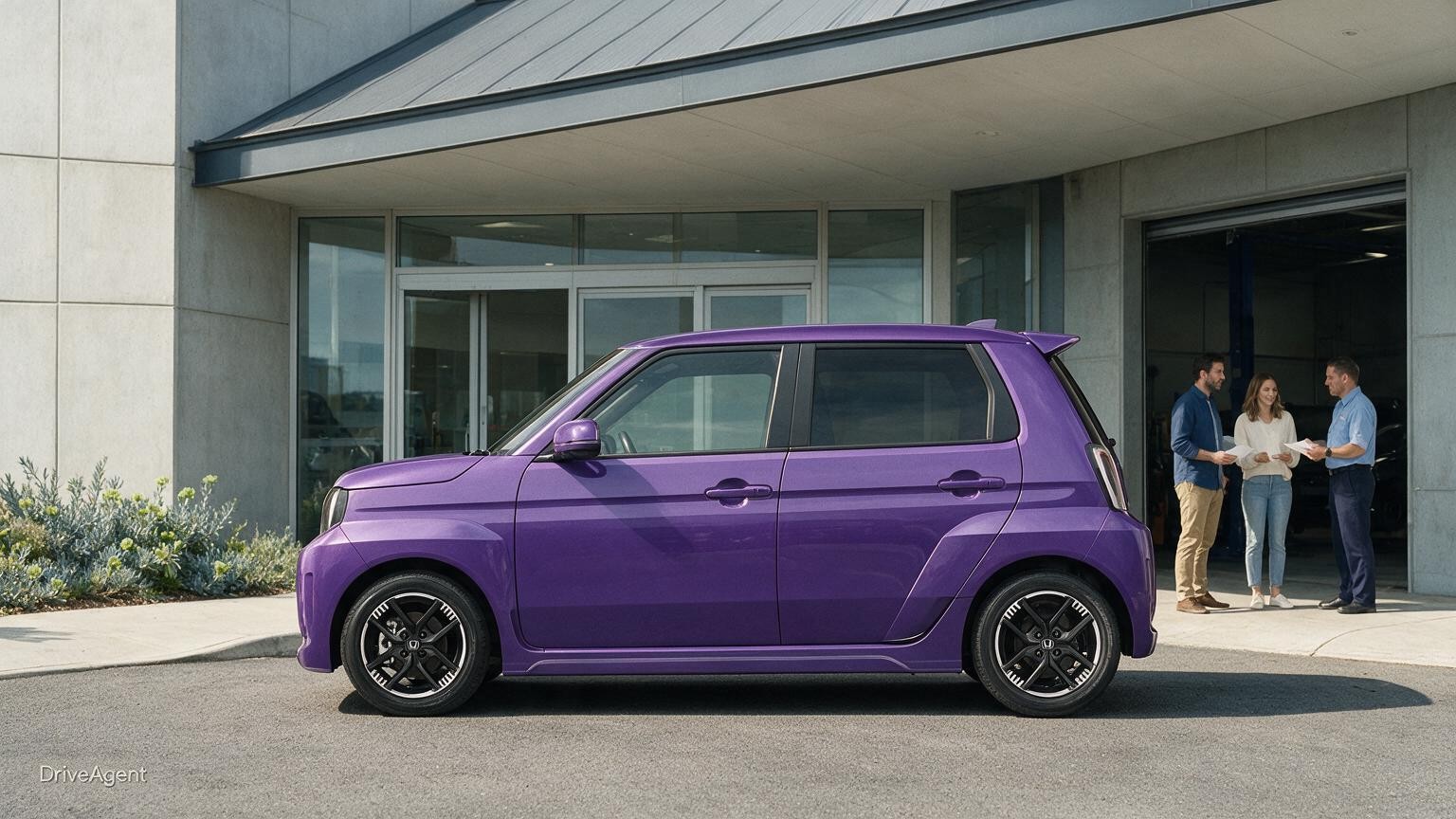
AADA urges Parliament to pass Australia-EU free trade agreement and its 5 per cent car tariff removal
The Australian Automotive Dealer Association has called on federal Parliament to support the Australia-EU Free Trade Agreement, arguing the removal of the 5 per cent passenger vehicle tariff on European imports outweighs its disappointment that the deal stopped short of broader Luxury Car Tax reform.
Synthesised from the cited sources. Research, writing and factual checks are automated using AI. Verify details against the sources. How we produce these reports
What the agreement changes for the automotive sector
The Australian Automotive Dealer Association is calling on the Australian Parliament to support the Australia-European Union Free Trade Agreement and help deliver its benefits for Australian consumers and businesses. In its 19 October 2026 statement, the association welcomed the conclusion of negotiations earlier in the year, particularly the removal of the 5 per cent tariff on passenger vehicles imported from the European Union. 1
AADA CEO James Voortman said the agreement builds on a longstanding automotive trading relationship between Australia and Europe and the commercial partnerships between Australian franchised dealers and European manufacturers. "European automotive brands have been an important part of the Australian new car market for decades, supported by Australian dealers who have invested significantly in facilities, people, training and their local communities," Mr Voortman said, naming Volkswagen, BMW and Audi as brands with longstanding Australian franchising relationships. 1
According to the AADA statement, removing the tariff strengthens those dealer-manufacturer relationships by eliminating what the association described as an unnecessary 5 per cent tariff on European vehicles and putting downward pressure on the cost of bringing those vehicles to Australia. Mr Voortman also argued that maintaining strong trading relationships with major automotive markets such as Europe is important to preserving access to a broad range of brands in one of the world's most diverse new car markets. 1
The association first welcomed the tariff relief when the deal was announced in March 2026, when it said the removal of the 5 per cent tariff on EU-sourced vehicles "will improve affordability and increase competition in the Australian market," according to its media release of 24 March 2026. 4
Timing of the changes and the Luxury Car Tax outcome
In a bulletin issued on the day the agreement was announced, the AADA identified two key measures relevant to franchised new car dealers: removal of the 5 per cent Passenger Vehicle Tariff for vehicles imported from the EU, and introduction of a new Luxury Car Tax category for zero-emission vehicles with a threshold of $120,000, indexed annually. The association said the ZEV LCT measure will require legislation and is expected to take effect from 1 July 2027, while the tariff removal will occur following ratification of the agreement, which it noted may take up to 24 months. 5
The AADA said in that bulletin that it welcomed the removal of the Passenger Vehicle Tariff, which it expected to impact approximately 8 per cent of the new vehicle market, but was disappointed that the LCT changes fell short of the broader reform it has advocated. It considered the LCT change limited in scope, with the immediate market impact likely to be modest, and argued the tax is a relic of an era when Australia manufactured vehicles. 5
In its March media release, the AADA quoted Mr Voortman saying the higher LCT threshold for electric vehicles "provides some benefit" but is "a narrow change that will only affect less than 1 per cent of vehicles sold and does not address the fundamental flaws of the tax." He described the LCT as a legacy policy from the era of domestic vehicle manufacturing that now acts as a distortionary tax, and said the Government had missed an opportunity to either abolish it or ensure it applies only to genuinely luxury vehicles. The association also cited vehicles used by small businesses and regional consumers, such as the LandCruiser, as examples it believes should not be captured, according to the bulletin. 45
In the October statement, the AADA said it continues to believe the agreement should have gone further on Luxury Car Tax reform, but Mr Voortman said this should not stand in the way of securing its broader benefits. "We remain disappointed that the negotiations did not deliver more substantial reform of the Luxury Car Tax, but that should not prevent Australia from securing the wider benefits of this important agreement," he said. The association said it will continue to advocate for a fairer system that targets true luxury vehicles, removes the tax on genuine parts and accessories, and provides a smooth transition, according to its March releases. 145
The March announcement and its scale
The agreement was announced at a press conference at Parliament House in Canberra on 24 March 2026, when Prime Minister Anthony Albanese said that after eight years of negotiations, Australia and the European Union had signed a landmark trade deal. According to the official transcript, the Prime Minister said the agreement would lower trade and investment barriers between Australia and the EU, a market of around 450 million people, and was worth $10 billion to the Australian economy on an annual basis. 2
At the same event, European Commission President Ursula von der Leyen said the EU-Australia Free Trade Agreement was set to add almost $8 billion to Australia's GDP, would make all Australian industrial goods exports to the EU tariff free, and would save EU exporters €1 billion in tariffs, with EU goods exports to Australia expected to grow by 33 per cent over the next decade, according to the transcript. 2
The European Commission's own summary states the EU and Australia concluded negotiations on the free trade agreement in March 2026, that the agreement will remove over 99 per cent of tariffs on EU exports to Australia, and that among the industries gaining the most immediate benefit are EU exporters of machinery, motor vehicles and chemicals, with tariffs on those goods eliminated from day one of the agreement. The Commission lists the expected figures as up to €1 billion in annual duty savings for EU exporters, a 33 per cent increase in EU annual exports over the next decade and a €4 billion increase in EU GDP by 2030. 7
The ratification pathway set out by the European Commission runs from publication of the negotiated texts through legal revision, Council signature and conclusion, European Parliament agreement and the Council's concluding decision, before the agreement can enter into force once Australia also ratifies it. The Commission and Australia published the agreement texts following the announcement of the conclusion of negotiations on 24 March 2026, noting they are for information purposes, may undergo minor modifications during legal and linguistic revision, and that the agreement will become binding only after each party completes its applicable legal procedures. 67
Context beyond vehicles
The agreement extends well beyond automotive. The European Commission says the EU and Australia already trade more than €89.2 billion in goods and services annually, supporting 460,000 jobs across the EU, and that the deal also improves access to critical raw materials such as aluminium, lithium and manganese, which it links to strategic industries including electric vehicles, battery production and renewable energy. 7
On geographical indications, the Department of Foreign Affairs and Trade states Australia has agreed to protect a list of 396 EU geographical indications, including 231 spirits and 165 agricultural goods, with certain terms identified as commercially valuable to Australian producers protected with negotiated flexibilities. DFAT also notes that updates negotiated alongside the FTA to the Wine Agreement include protection of additional wine geographical indications such as Prosecco. 3
For the AADA, the deal is also about the durability of the retail sector. Mr Voortman said in the association's October statement that removing barriers to trade would support consumer choice while contributing to the long-term sustainability of Australia's automotive retail sector, and that the agreement represents an opportunity to deepen Australia's economic relationship with Europe at a time when strong and open international trading relationships are increasingly important. 1
The AADA's October statement concluded with a direct appeal: "Australian dealers have a long history of doing business with European manufacturers. We urge the Parliament to support the agreement and provide greater certainty for businesses to continue investing in these relationships into the future," Mr Voortman said. 1
AI evidence finder
Ask about this article
Ask a question to find relevant published passages and source links. AI selects evidence; the passages remain exactly as published.
Behind this report
Sources & context
Cited source mix
7 cited pages across 5 websites
- Role not assessed 7
Website breakdown
- aada.asn.au3 pages
- commission.europa.eu1 page
- dfat.gov.au1 page
- policy.trade.ec.europa.eu1 page
- trademinister.gov.au1 page
7 cited pages with an undocumented publisher role. Websites may share ownership or repeat the same reporting.
Saved research extracts
7 / 7 cited pages with saved extracts
1 shortened at our text limit · 0 without a saved-extract record
Extracts retrieved 19 Oct 2026.
Extracts can omit page content. These counts do not verify claims or measure independent reporting. Political leaning and reliability are not rated.
- AADA Calls on Parliament to Back Australia-EU Free Trade AgreementRole not assessedSource extract saved
Why these labels?AADA Calls on Parliament to Back Australia-EU Free Trade Agreement
Who produced it
We have not documented this publisher’s role. An unassigned label is not a negative rating.
How this report uses it
Cited in 6 paragraphs: What the agreement changes for the automotive sector; Timing of the changes and the Luxury Car Tax outcome; Context beyond vehicles.
This describes its use in our report. It does not establish the source’s editorial stance or independently corroborate every claim.
Evidence record
Text retrieved 19 Oct 2026. The retained extract did not reach our text limit. Extraction can still omit page content.
- Press conference - Parliament House, CanberraRole not assessedShortened extract saved
Why these labels?Press conference - Parliament House, Canberra
Who produced it
We have not documented this publisher’s role. An unassigned label is not a negative rating.
How this report uses it
Cited in 2 paragraphs: The March announcement and its scale.
This describes its use in our report. It does not establish the source’s editorial stance or independently corroborate every claim.
Evidence record
Text retrieved 19 Oct 2026. The retained extract was cut to our text limit; omitted material has not been assessed here.
- Trade agreementsRole not assessedSource extract saved
Why these labels?Trade agreements
Who produced it
We have not documented this publisher’s role. An unassigned label is not a negative rating.
How this report uses it
Cited in 1 paragraph: Context beyond vehicles.
This describes its use in our report. It does not establish the source’s editorial stance or independently corroborate every claim.
Evidence record
Text retrieved 19 Oct 2026. The retained extract did not reach our text limit. Extraction can still omit page content.
- EU - Australia FTA Delivers on Automotive Tariff Relief but ...Role not assessedSource extract saved
Why these labels?EU - Australia FTA Delivers on Automotive Tariff Relief but ...
Who produced it
We have not documented this publisher’s role. An unassigned label is not a negative rating.
How this report uses it
Cited in 3 paragraphs: What the agreement changes for the automotive sector; Timing of the changes and the Luxury Car Tax outcome.
This describes its use in our report. It does not establish the source’s editorial stance or independently corroborate every claim.
Evidence record
Text retrieved 19 Oct 2026. The retained extract did not reach our text limit. Extraction can still omit page content.
- Australia FTA Delivers on Tariff Relief but Fails on LCT ReformRole not assessedSource extract saved
Why these labels?Australia FTA Delivers on Tariff Relief but Fails on LCT Reform
Who produced it
We have not documented this publisher’s role. An unassigned label is not a negative rating.
How this report uses it
Cited in 4 paragraphs: Timing of the changes and the Luxury Car Tax outcome.
This describes its use in our report. It does not establish the source’s editorial stance or independently corroborate every claim.
Evidence record
Text retrieved 19 Oct 2026. The retained extract did not reach our text limit. Extraction can still omit page content.
- EU-Australia: Text of the agreements - EU TradeRole not assessedSource extract saved
Why these labels?EU-Australia: Text of the agreements - EU Trade
Who produced it
We have not documented this publisher’s role. An unassigned label is not a negative rating.
How this report uses it
Cited in 1 paragraph: The March announcement and its scale.
This describes its use in our report. It does not establish the source’s editorial stance or independently corroborate every claim.
Evidence record
Text retrieved 19 Oct 2026. The retained extract did not reach our text limit. Extraction can still omit page content.
- The EU-Australia trade agreement - European CommissionRole not assessedSource extract saved
Why these labels?The EU-Australia trade agreement - European Commission
Who produced it
We have not documented this publisher’s role. An unassigned label is not a negative rating.
How this report uses it
Cited in 3 paragraphs: The March announcement and its scale; Context beyond vehicles.
This describes its use in our report. It does not establish the source’s editorial stance or independently corroborate every claim.
Evidence record
Text retrieved 19 Oct 2026. The retained extract did not reach our text limit. Extraction can still omit page content.
Keep reading
Related subjects and more from this section.
Used EV sales surge 29.8 per cent in September as petrol and diesel values slide
New AADA and AutoGrab data shows used electric vehicle sales jumped to 5,417 in September while EVs lifted their share of the second-hand market, even as a flood of traded-in petrol and diesel cars pushes down the value of fuel-reliant vehicles.