Australia's EV surge reshapes the market as Ember links electric cars to oil-import savings and charging networks strain to keep up
New analysis from energy think tank Ember argues electric vehicles are the most powerful lever for cutting oil demand as the Hormuz energy crisis pushes up fuel prices, while Challenger and industry figures document Australia's rapid EV uptake, strained charging and servicing capacity, and a looming road-user charge debate.
Synthesised from the cited sources. Research, writing and factual checks are automated using AI. Verify details against the sources. How we produce these reports
Ember links the Hormuz crisis to a shift in oil-import exposure
For countries reliant on oil imports, electric vehicles are the most powerful lever for reducing oil demand, according to an analysis published by energy think tank Ember. The organisation's report, Electric energy security: how EVs are reducing oil import vulnerabilities, argues that countries which made a strategic effort to support EV adoption are much better protected from the current crisis. 2
Ember's analysis says the crisis has further accelerated uptake, with consumers increasingly concerned about the impact of high fuel prices. It notes that long-time battery-electric leaders such as Norway and Denmark are being joined by new pioneers including Viet Nam and Uruguay, while countries with major car manufacturing sectors such as Brazil, India and Japan are now seeing BEV sales increase considerably. 2
Australia among the fastest-growing EV markets
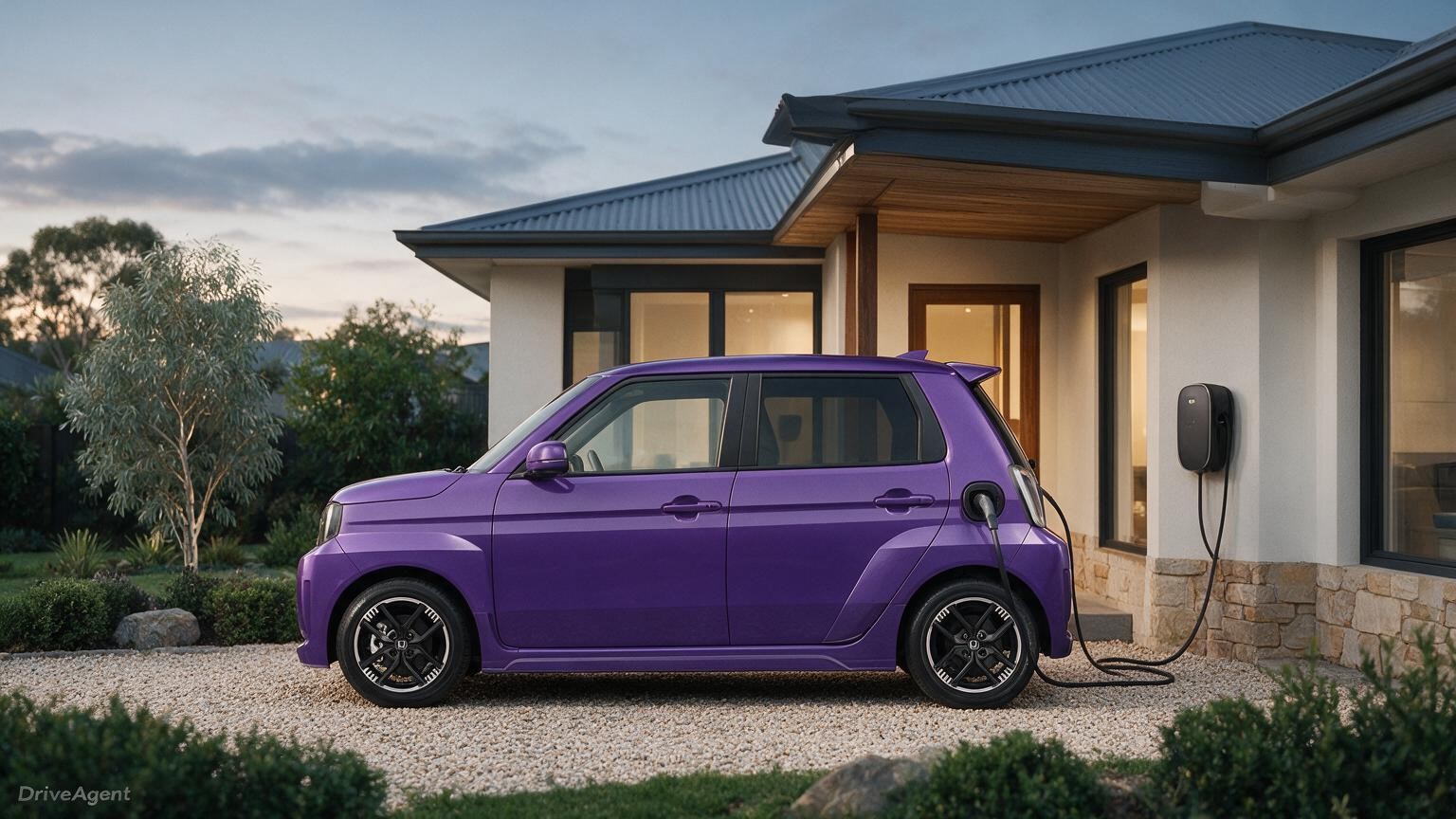
Australia's rapid rise contrasts with its earlier position as a global laggard. The Sydney Morning Herald reported in September that battery-electric models held a 10 per cent share of Australia's new vehicle market in August 2025, and reached 25 per cent last month, while pure petrol and diesel models dropped from 69 per cent to less than 50 per cent over the same period. Cox Automotive analyst Mike Costello described the change as a tipping point, saying it was an enormous change in a very short amount of time. 3
Challenger chief economist Jonathan Kearns wrote in July 2026 that EVs account for almost 20 per cent of vehicle sales in Australia, up sharply from only 2 per cent four years ago, though he noted the increased share also reflects a fall in sales of internal combustion vehicles that had jumped after slumping during the Covid pandemic. He observed that Australia still lags much of the world overall, with EVs accounting for 97 per cent of vehicles purchased in Norway and more than half of vehicle sales in China. 1
The economic incentive is clear. The Sydney Morning Herald reported industry estimates suggesting Australians switching to EVs could save $3000 on fuel this year, with the Middle East war choking crude oil supplies and driving up global fuel prices, while lower-cost Chinese models have brought EV prices to parity with combustion-engine vehicles. BYD's local spokesman Paul Ellis told the masthead the change was not a shift but an absolute turn. 3
Charging infrastructure has not kept pace with sales
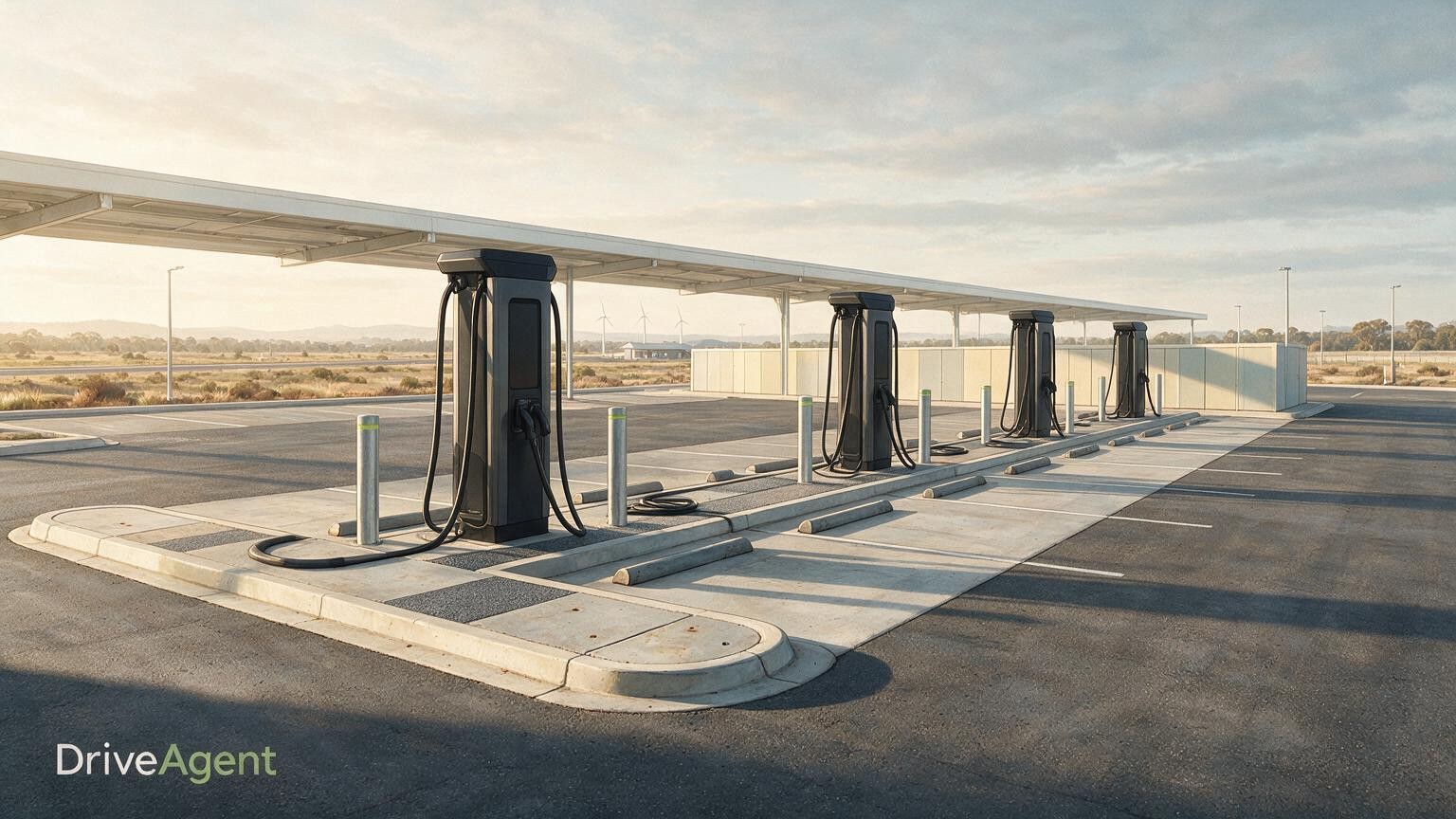
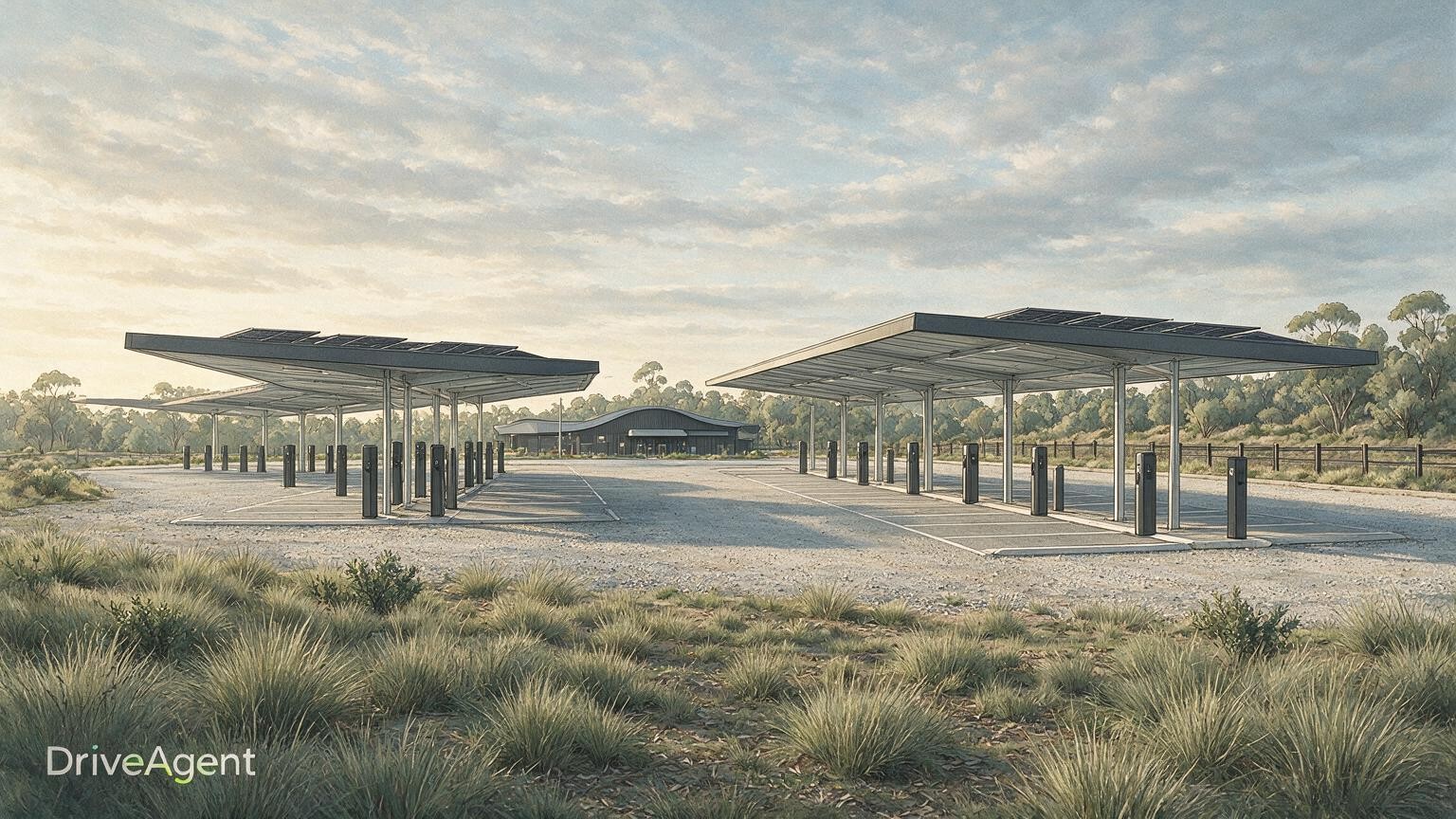
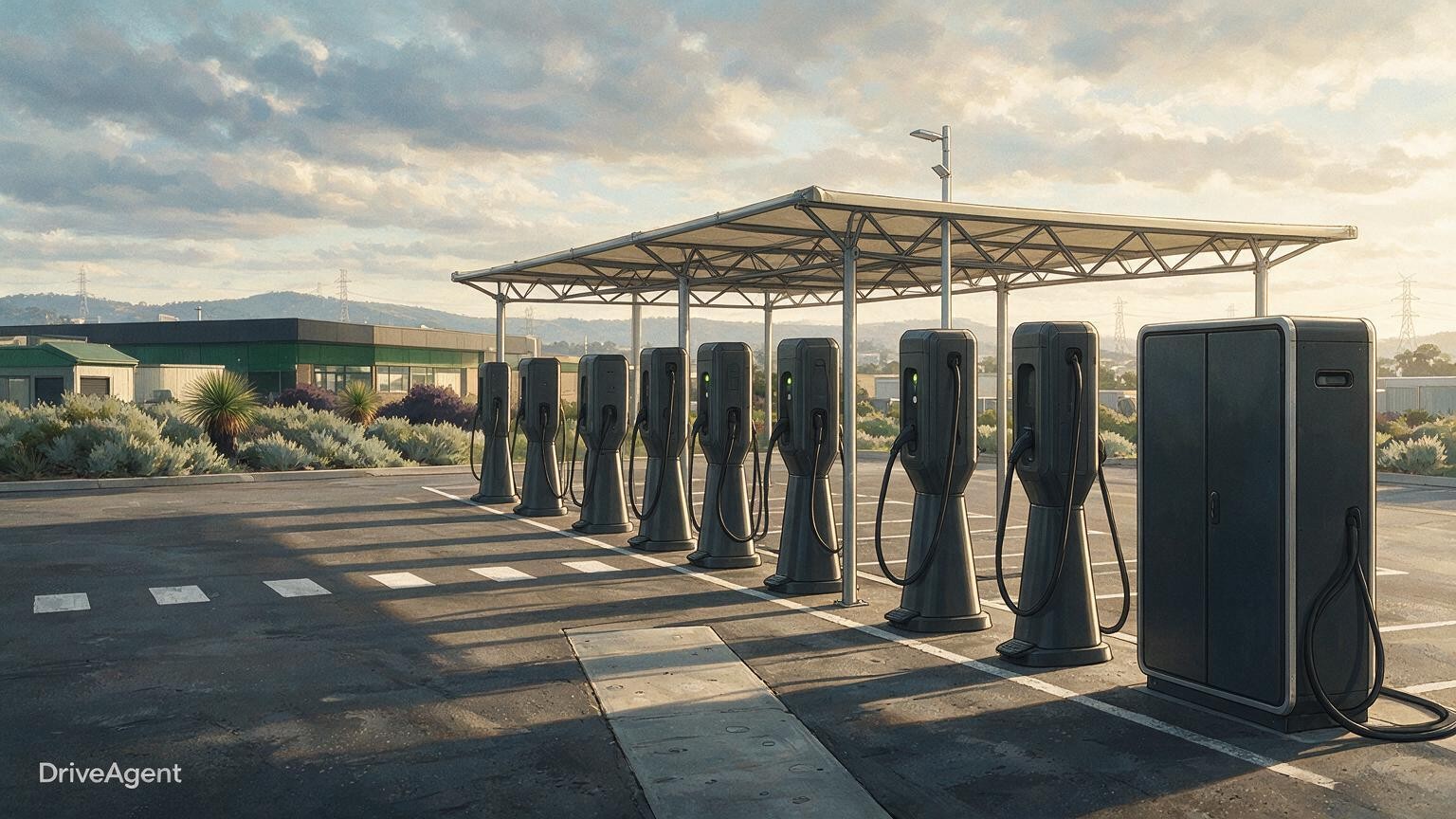
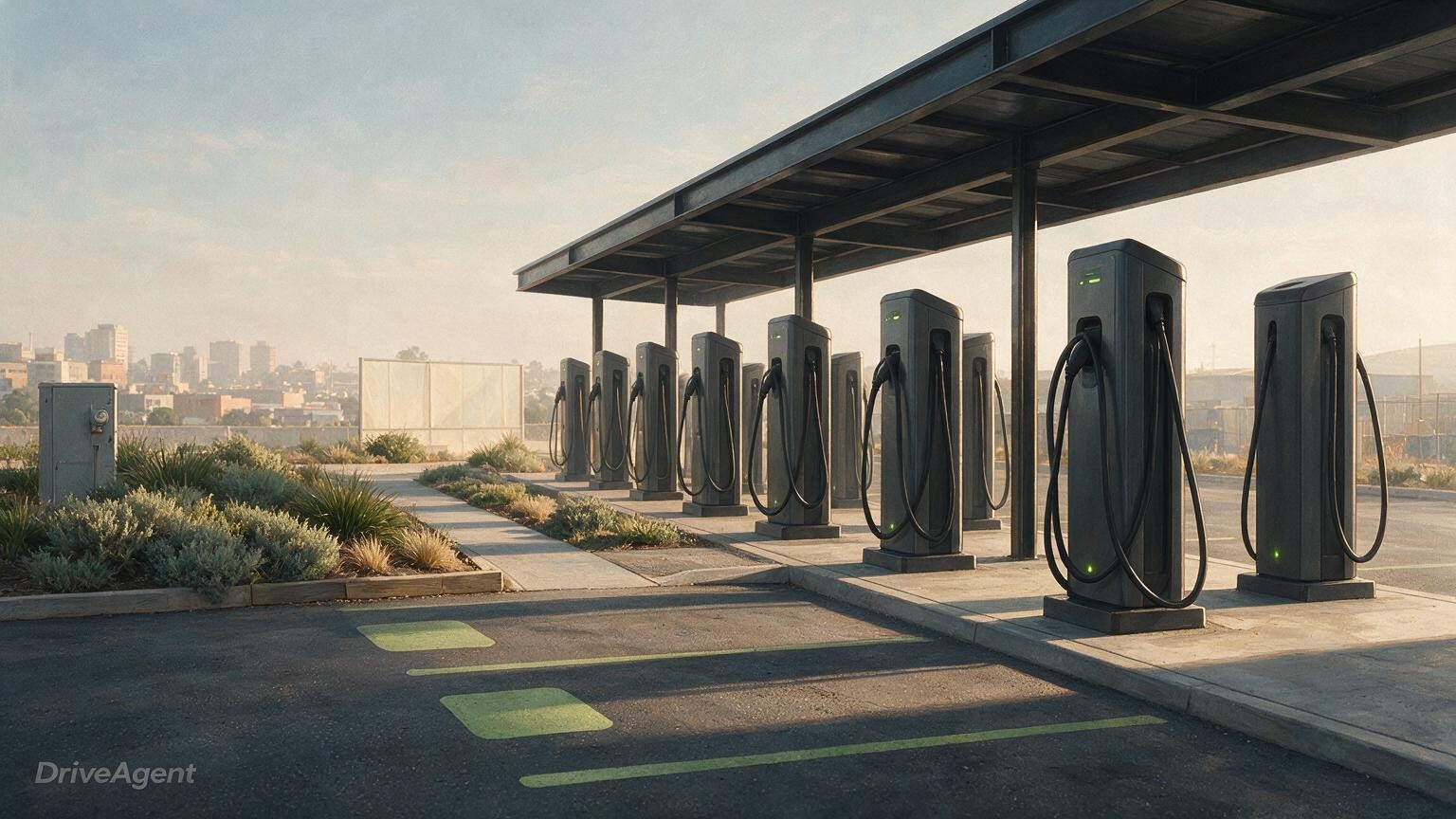
Australia has more EVs per public charging point than almost all other countries with available data, with New Zealand and the United Arab Emirates the only exceptions, according to Challenger's analysis. Kearns wrote this reflects growth in charging points not keeping up with growth in EVs, noting that four years ago there were twice as many public charging points per EV in Australia. He observed that uptake of EVs and growth in public charging points have historically moved together across 42 countries over 15 years of annual data. 1
The Sydney Morning Herald reported Australia currently has more than 1300 public charging sites with more than 4000 individual charging ports, and that Carloop data showed NSW had 515 fast-charging sites as of last month while Victoria had 396. Carloop founder Riz Akhter said that with drivers making the switch faster than ever, public fast-charging infrastructure is failing to keep up, and that this would be the biggest challenge. 3
Kearns also noted a geographic pattern in uptake: the share of EVs among registered vehicles has grown much more rapidly in metropolitan locations, with lower shares in regional and rural areas and very little uptake in remote locations, suggesting rural uptake will depend on further increases in EV range and more fast public charging points in remote areas. 1
On the operator side, the Sydney Morning Herald reported that many public chargers are run by commercial operators such as Evie Networks, EVX and Chargefox, or owned by service station operators like Shell, Ampol and BP and motoring clubs including the NRMA and RACV, while Tesla operates its own extensive network. BYD has plans to invest in ultra-fast charging, capable of replenishing 400 kilometres of range in five minutes, by the end of 2027. 3
A crowded market of more than 60 brands
The surge has made Australia one of the most concentrated and competitive vehicle markets globally. The Sydney Morning Herald reported that more than 20 new brands have entered the market over the past decade, including BYD, MG, Great Wall Motor, Chery and Zeekr, while overall vehicle sales remain broadly static. Costello said that for 1.2 million annual vehicle sales the market has 65 different brands and will have about 80 by this time next year, making it difficult to see how they can all make a strong business case. 3
The EV shift is also reshaping import patterns. Kearns wrote that around three-quarters of EVs sold in Australia are manufactured in China, including many models sold by non-Chinese manufacturers such as Tesla, BMW, Volvo and Polestar, and that the share of vehicle imports from China by value has increased from less than 5 per cent in 2021 to over one-quarter in early 2026. He added that on current trajectories China could overtake Japan as the largest source of vehicle imports later this year. 1
Legacy makers are positioning durability and service as their point of difference. Ford Australia chief executive Fadi Mawal told the Sydney Morning Herald his company is supporting its dealer network and building a business that will be sustainable in the long term, while BMW Group Australia chief executive Vikram Pawah pointed to a $120 million investment in a local parts stockpile occupying 28,000 square metres of warehousing. Ford also unveiled two new purely electric vehicles it plans to launch in Australia next year. 3
BYD acknowledged to the Sydney Morning Herald that some Australian customers have been unsatisfied with after-sales service and long repair times and delays sourcing spare parts, and says it is investing heavily to improve the customer experience. The company manages a growing network of local parts warehouses in four major cities and says it is on track to have 150 dealerships in Australia by the end of the year. 3
Road-user charging and servicing loom as tests of the transition
Manufacturers are bracing for a national road-user charge that could blunt current EV enthusiasm, the Sydney Morning Herald reported. Victoria's recent road-user charge was ruled unconstitutional by the High Court in 2023, and NSW expects a distance-based charge by next July, proposing 2.97 cents per kilometre for fully electric vehicles and 2.38 cents for plug-in hybrids. This week the Australian Electric Vehicle Association proposed a charge of 3 cents per tonne-kilometre, factoring in vehicle weight and distance travelled, under which heavier EVs and large combustion vehicles such as utes and SUVs would pay more. 3
Mawal told the masthead that customers will need to make their own decision on whole-of-life cost and that Ford expects a road-user charge to have an impact on EV sales, while BMW's Pawah called for a level playing field charge, saying the customer should not be skewered into a particular vehicle choice by a levy. The industry is awaiting federal clarity on a nationally consistent road-user charge. 3
Servicing capacity is another open question. Motor Trades Association of Australia executive director Bruce Billson told the Sydney Morning Herald that Australia already has a shortfall of roughly 38,000 mechanics, a problem compounded by the fact that working on electrified vehicles requires additional training, and he urged new manufacturers to make replacement parts easy for local independent mechanics to access. The masthead also reported that mechanics were left off the list of skills exemptions under the government's new migration caps announced that week. 3
Access to repair is itself a friction point. The Sydney Morning Herald reported that EV companies have at times put up barriers to independent mechanics even outside warranty periods, requiring in-house repairs within their networks. It has led to a situation where a Tesla in Tasmania needing servicing must be shipped to the mainland, highlighting how network limitations can affect owners in remote locations. 3
Challenger's Kearns framed the shift as a significant economic shock, changing the countries Australia imports cars from, reducing demand for car servicing and petrol stations, opening opportunities for recharging networks, reducing reliance on imported fuel, increasing demand on the electricity network, and increasing the depreciation rate of vehicles used as collateral for financing. The fuel-import dimension of that shock is exactly what Ember's latest analysis says EVs are now cushioning worldwide. 12
AI evidence finder
Ask about this article
Ask a question to find relevant published passages and source links. AI selects evidence; the passages remain exactly as published.
Behind this report
Sources & context
Cited source mix
3 cited pages across 3 websites
- Role not assessed 3
Website breakdown
- challenger.com.au1 page
- ember-energy.org1 page
- smh.com.au1 page
3 cited pages with an undocumented publisher role. Websites may share ownership or repeat the same reporting.
Saved research extracts
3 / 3 cited pages with saved extracts
0 shortened at our text limit · 0 without a saved-extract record
Extracts retrieved 16 Oct 2026.
Extracts can omit page content. These counts do not verify claims or measure independent reporting. Political leaning and reliability are not rated.
- The rise of EVs in Australia - ChallengerRole not assessedSource extract saved
Why these labels?The rise of EVs in Australia - Challenger
Who produced it
We have not documented this publisher’s role. An unassigned label is not a negative rating.
How this report uses it
Cited in 5 paragraphs: Australia among the fastest-growing EV markets; Charging infrastructure has not kept pace with sales; A crowded market of more than 60 brands; Road-user charging and servicing loom as tests of the transition.
This describes its use in our report. It does not establish the source’s editorial stance or independently corroborate every claim.
Evidence record
Text retrieved 16 Oct 2026. The retained extract did not reach our text limit. Extraction can still omit page content.
- Electric energy security꞉ how EVs are reducing oil import ...Role not assessedSource extract saved
Why these labels?Electric energy security꞉ how EVs are reducing oil import ...
Who produced it
We have not documented this publisher’s role. An unassigned label is not a negative rating.
How this report uses it
Cited in 3 paragraphs: Ember links the Hormuz crisis to a shift in oil-import exposure; Road-user charging and servicing loom as tests of the transition.
This describes its use in our report. It does not establish the source’s editorial stance or independently corroborate every claim.
Evidence record
Text retrieved 16 Oct 2026. The retained extract did not reach our text limit. Extraction can still omit page content.
- EVs are taking over as Australians flee the bowser. What happens next?Role not assessedSource extract saved
Why these labels?EVs are taking over as Australians flee the bowser. What happens next?
Who produced it
We have not documented this publisher’s role. An unassigned label is not a negative rating.
How this report uses it
Cited in 11 paragraphs: Australia among the fastest-growing EV markets; Charging infrastructure has not kept pace with sales; A crowded market of more than 60 brands; Road-user charging and servicing loom as tests of the transition.
This describes its use in our report. It does not establish the source’s editorial stance or independently corroborate every claim.
Evidence record
Text retrieved 16 Oct 2026. The retained extract did not reach our text limit. Extraction can still omit page content.
Keep reading
Related subjects and more from this section.
Electric Vehicle Council to lead $1.43 million National EV Charging Roadmap due mid-2027
Australia's first national charging roadmap, led by the Electric Vehicle Council with $1.06 million in ARENA funding, will map charging demand, pressure points and investment priorities for passenger cars and electric trucks across metropolitan and regional Australia, with the final document due for release in mid-2027.