BYD to begin installing flash chargers at Denza dealerships from October 2026
BYD's premium sub-brand Denza will start fitting ultra-fast flash charging stations at Australian dealerships from October 2026, with the company framing the rollout as the first step toward an off-grid, solar-charged network on highways between major cities.
Automatically researched, written and checked using AI. Verify details against the sources.
What has been announced
BYD will begin installing its ultra-fast flash charging stations at Australian dealerships from October 2026, according to Denza Australia Chief Operating Officer Mark Harland, as reported by ZeCar. The rollout starts with three dealerships in Melbourne, Sydney and Adelaide, with the broader goal of having the majority of Denza's planned 20 to 25 Australian dealer locations fitted with a flash charger by the end of 2026. BYD has not confirmed the total investment figure for the Australian network. 2
GoAuto separately reported in July 2026 that BYD's local director of public relations, Paul Ellis, confirmed the company's first flash chargers would be operable in Australia this year, starting with a pilot program beginning with a handful of Denza dealerships in major cities. "We'll have our first flash chargers operable this year. So we'll start with a pilot program," Mr Ellis told GoAuto at the Australian media launch of the BYD Seal 6. 1
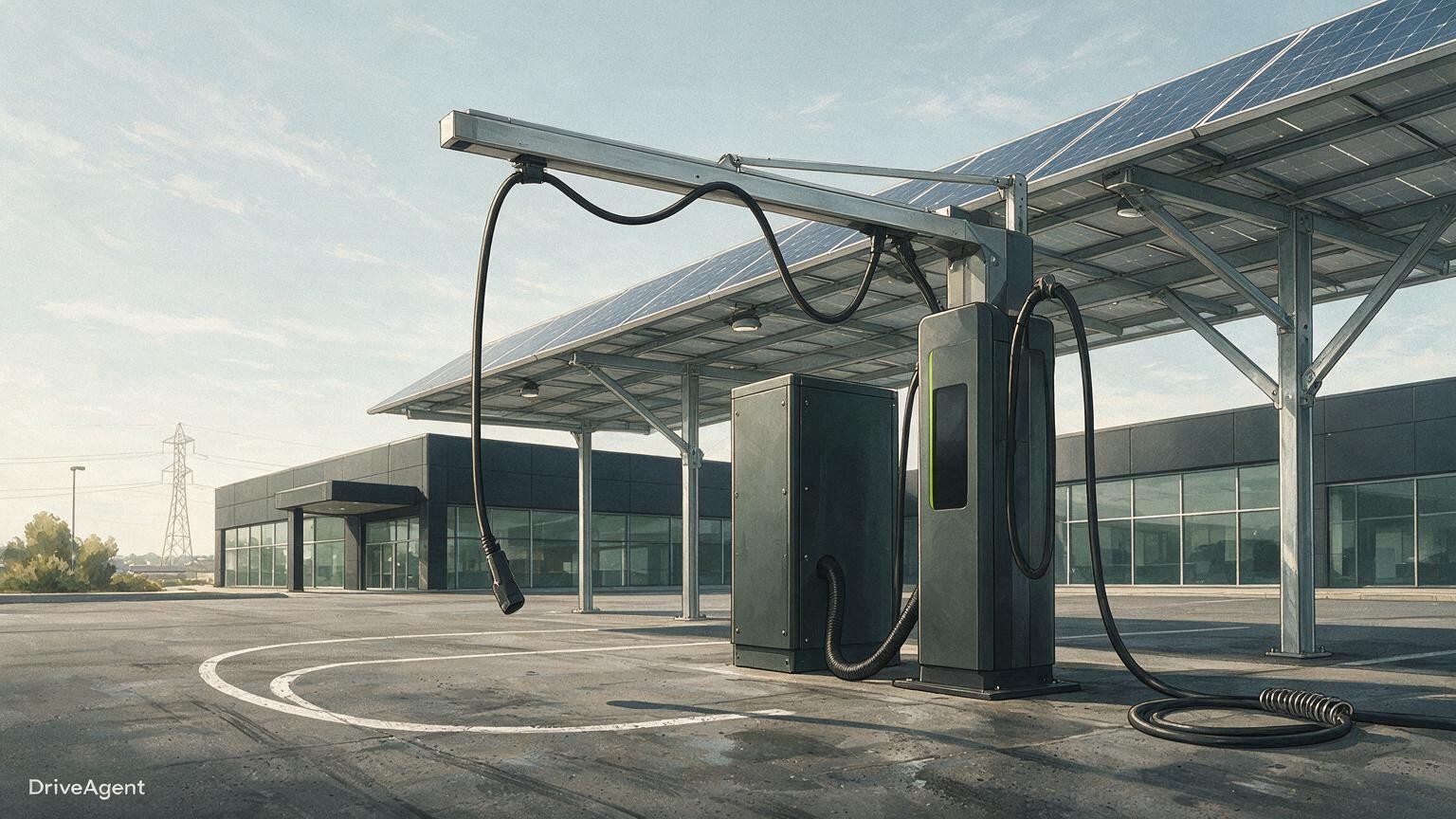
Each charging site occupies roughly the equivalent of three car parking spaces and comprises a battery storage unit, overhead charging booms and a vehicle bay. ZeCar reports government figures put the cost of fast-charging infrastructure at more than $1 million per site. 2
How the technology works
BYD's flash charging system delivers up to 1500kW per charging gun and operates at 1000V. Its distinguishing feature is that it does not require a direct high-power grid connection. Instead, a large on-site battery storage system is kept charged by solar panels, and that stored energy is used to deliver the fast charge to the vehicle. According to ZeCar, this approach avoids the need for a substation upgrade at each site, which is typically one of the main cost and time barriers to deploying high-power charging infrastructure in Australia. 2
The system is underpinned by BYD's second-generation Blade Battery. Figures reported by the two outlets differ slightly on charging speed: ZeCar states a compatible vehicle can charge from 10 per cent to 97 per cent in around nine minutes, while GoAuto describes the technology as reportedly capable of recharging an EV from 10 to 70 per cent in five minutes and 10 to 97 per cent in nine minutes. 21
Speaking to news.com.au, BYD Australia COO Stephen Collins described the charging experience as comparable to refuelling a petrol car, as cited by ZeCar. 2
Which vehicles will use it
The Denza Z9 GT is the first confirmed BYD-family model with flash charging capability heading to Australia. ZeCar lists it as a high-performance electric wagon with 850kW of peak power, a sub-three-second 0-100km/h time and a claimed WLTP range of 820km. Built on BYD's Blade Battery 2.0, it charges from 10 to 97 per cent in approximately nine minutes on a compatible charger. 2
The BYD Atto 5 is identified by ZeCar as another likely candidate for the technology. It has been confirmed with flash charging support for New Zealand and is widely expected to follow in Australia, charging from 10 to 80 per cent in around 10 minutes on a compatible flash charger. 2
BYD has confirmed that the flash charging network will not be limited to Denza and BYD owners: any vehicle that can physically connect via the app or a compatible plug will be able to use the chargers, according to ZeCar. 2
Beyond the dealerships: highways and public sites
Denza is also exploring highway and public-road charging through third-party operators, which would extend the network beyond dealership sites, ZeCar reports. This aligns with what BYD's Paul Ellis described to GoAuto as the company's vision of "utopia" for Australian charging. 21
"Utopia looks like Flash charging on highways in between major cities, where we've got flash charges available for passenger cars, commercial vehicles, transport vehicles, where the charging comes from BYD through solar energy. So charging stations that are off the grid and relying purely on solar," Mr Ellis told GoAuto. He framed the commitment as part of BYD's broader clean-energy positioning: "We're not just here to offer great new energy vehicles. We're here to help with Australians transitioning to a cleaner energy way of life." 1
It is BYD's stated vision rather than a confirmed delivery schedule, and GoAuto's reporting presents the highway network as an aspiration. ZeCar's reporting is clearer that only the dealership rollout has concrete dates attached, with the third-party public and highway charging described as exploration. 12
Why BYD is building its own network
The move follows a difficult Easter holiday period in 2026 in which some Australian EV drivers waited up to five hours to charge, according to ZeCar. With battery electric vehicles accounting for around 14.6 per cent of new car sales in Australia, the public charging network has struggled to keep pace, and the lack of reliable fast-charging corridors remains one of the main concerns cited by buyers considering an EV. ZeCar also notes government-funded fast chargers have been slow to reach the density needed for long-distance travel, particularly outside capital cities. 2
The battery-plus-solar model is presented by ZeCar as particularly relevant for Australia because it reduces the infrastructure burden on the grid and could enable faster deployment in locations where grid upgrades would otherwise cause long delays. BYD's approach is to fund and build its own infrastructure rather than wait for government or third-party networks to scale. 2
The rollout sits within BYD's broader self-description as a clean-energy company rather than a car maker. "BYD is not a car company. BYD is a technology company that builds cars," Mr Ellis told GoAuto, describing the company's positioning as "a clean energy ecosystem" spanning energy acquisition, storage and application. 1
AI evidence finder
Ask about this article
Ask a question to find relevant published passages and source links. AI selects evidence; the passages remain exactly as published.
Behind this report
Sources & context
Cited source mix
2 cited pages across 2 websites
- News publisher 1
- Role not assessed 1
Website breakdown
- GoAutogoauto.com.au1 page
- zecar.com1 page
1 cited page with an undocumented publisher role. Websites may share ownership or repeat the same reporting.
Saved research extracts
2 / 2 cited pages with saved extracts
0 shortened at our text limit · 0 without a saved-extract record
Extracts retrieved 30 Sep 2026.
Extracts can omit page content. These counts do not verify claims or measure independent reporting. Political leaning and reliability are not rated.
- The Chinese brand is focused on tech, not on its rivals says local PR directorNews publisherSource extract saved
Why these labels?The Chinese brand is focused on tech, not on its rivals says local PR director
Who produced it
GoAutoMedia publishes automotive industry and consumer news, vehicle reviews and model information. Identity reference ↗
How this report uses it
Cited in 6 paragraphs: What has been announced; How the technology works; Beyond the dealerships: highways and public sites; Why BYD is building its own network.
This describes its use in our report. It does not establish the source’s editorial stance or independently corroborate every claim.
Evidence record
Text retrieved 30 Sep 2026. The retained extract did not reach our text limit. Extraction can still omit page content.
- BYD to Soon Build Its Own Flash Charging Network in ...Role not assessedSource extract saved
Why these labels?BYD to Soon Build Its Own Flash Charging Network in ...
Who produced it
We have not documented this publisher’s role. An unassigned label is not a negative rating.
How this report uses it
Cited in 12 paragraphs: What has been announced; How the technology works; Which vehicles will use it; Beyond the dealerships: highways and public sites; Why BYD is building its own network.
This describes its use in our report. It does not establish the source’s editorial stance or independently corroborate every claim.
Evidence record
Text retrieved 30 Sep 2026. The retained extract did not reach our text limit. Extraction can still omit page content.
Keep reading
Related subjects and more from this section.
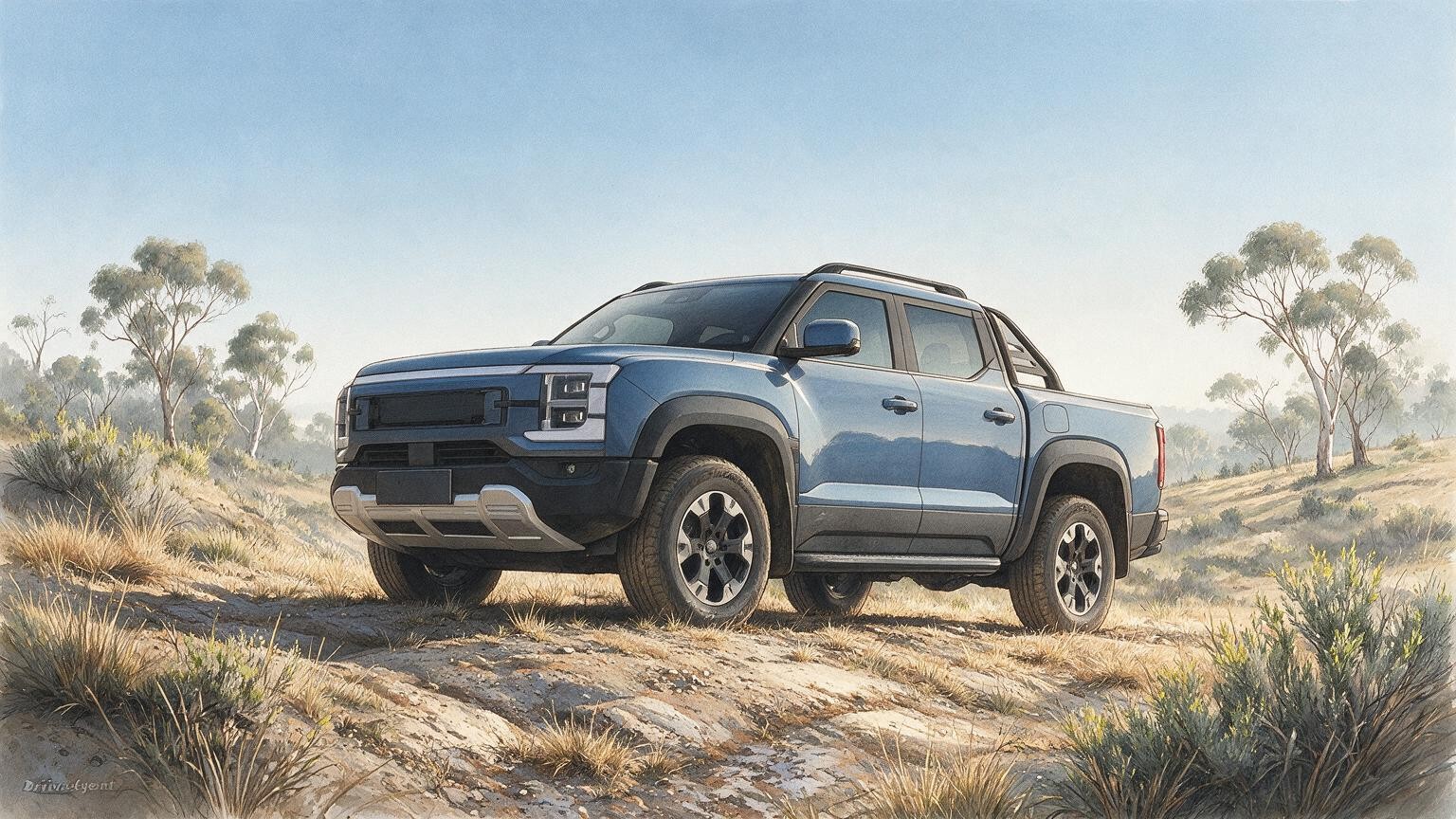
2026 BYD Shark 6 Performance brings 3500kg towing, bigger engine and Crawl Mode to Australia
BYD's new range-topping plug-in hybrid ute swaps the 1.5-litre engine for a 2.0-litre unit, lifts braked towing to the dual-cab benchmark of 3500kg and adds a Crawl Mode, joining a reshaped three-grade 2026 line-up priced from $55,900 before on-road costs.