Kia Australia backs current NVES pathway and will bank its credits rather than sell them
Kia Australia chief executive Dennis Piccoli has endorsed the New Vehicle Efficiency Standard as it undergoes statutory review, saying the brand planned its local product portfolio around the current rules and will retain accrued credits instead of selling them.
Synthesised from the cited sources. Research, writing and factual checks are automated using AI. Verify details against the sources. How we produce these reports
Kia's endorsement of the current standard
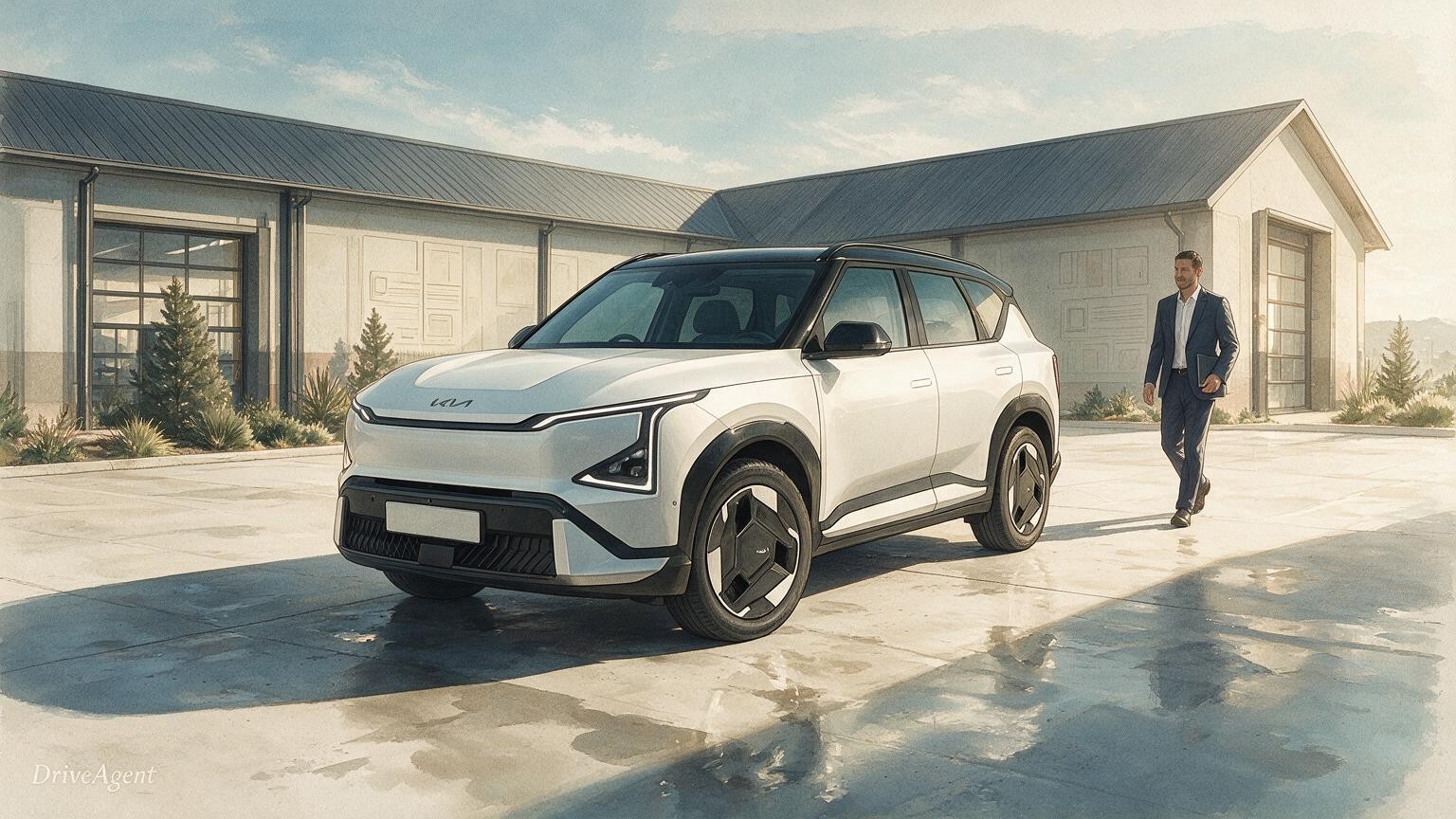
Kia Australia has thrown its support behind the New Vehicle Efficiency Standard (NVES), with chief executive Dennis Piccoli arguing the current pathway remains the right approach to driving consumer uptake of lower-emission vehicles. The comments, reported by NRMA's Open Road, were made at the Australian launch of the new Seltos small SUV, which has become a hybrid-only offering locally after previously being sold strictly as a petrol model. 1
Piccoli acknowledged the standard is now under review but said Kia supports the pathway as it stands. As Open Road describes it, the current pathway was considered the balanced option among those detailed in the federal government's impact consultation paper, taking a conservative approach to the introduction of NVES guidelines in 2025 before ramping up in 2027 and beyond. That characterisation of the policy settings comes from the publication's account of the consultation process, not from a new government decision. 1
Kia's position on the standard is a manufacturer's view during an active policy review, not a change to the standard itself. The NRMA-published report notes the federal government originally detailed three distinct policy options in its impact consultation paper to determine how aggressively vehicle CO2 emissions would be reduced in Australia. 1
Stability over constant change, says Piccoli
"We're happy to work with whatever the ground rules are," Piccoli said, as quoted by Open Road. "What is a concern in any business is when you're changing tack all the time. We all know the gestation period for product is a long, long time, and the ability to move and change and be as agile as we'd like to be, just isn't the case." 1
He added that Kia had long planned towards electric vehicles regardless of the rules. "As a company, strategically we were always planning towards EV anyway – that was always part of the plan. The way we've set our product portfolio up is based on the current rules and we've been supportive of that," Piccoli told Open Road. 1
Kia has pursued a multi-pathway powertrain strategy in Australia, introducing a range of hybrid, plug-in hybrid and electric models over the past year while the new Tasman ute remains, for now, strictly diesel, according to Open Road. 1
Banking credits rather than selling them
Kia has reiterated that it will not on-sell any credits accrued under the NVES rules, instead banking them ahead of the introduction of harsher CO2 penalties under the scheme, Open Road reports. That stance is consistent with what the company told GoAuto in December 2025, when then chief operating officer Dennis Piccoli said: "It is not our plan to be selling credits … longer-term, our (NVES) strategy has always been to create a credit scenario that will take us beyond 2026 and into 2027-2028." 12
Under the scheme's mechanics as reported by GoAuto, a brand in credit for a given year can either bank those credits to offset NVES penalties in future years or sell them to other carmakers seeking to reduce their own fleet-average CO2. Kia's decision to bank rather than trade its credits is a commercial choice by the manufacturer, not a requirement of the standard. 2
How Kia reached a credit position
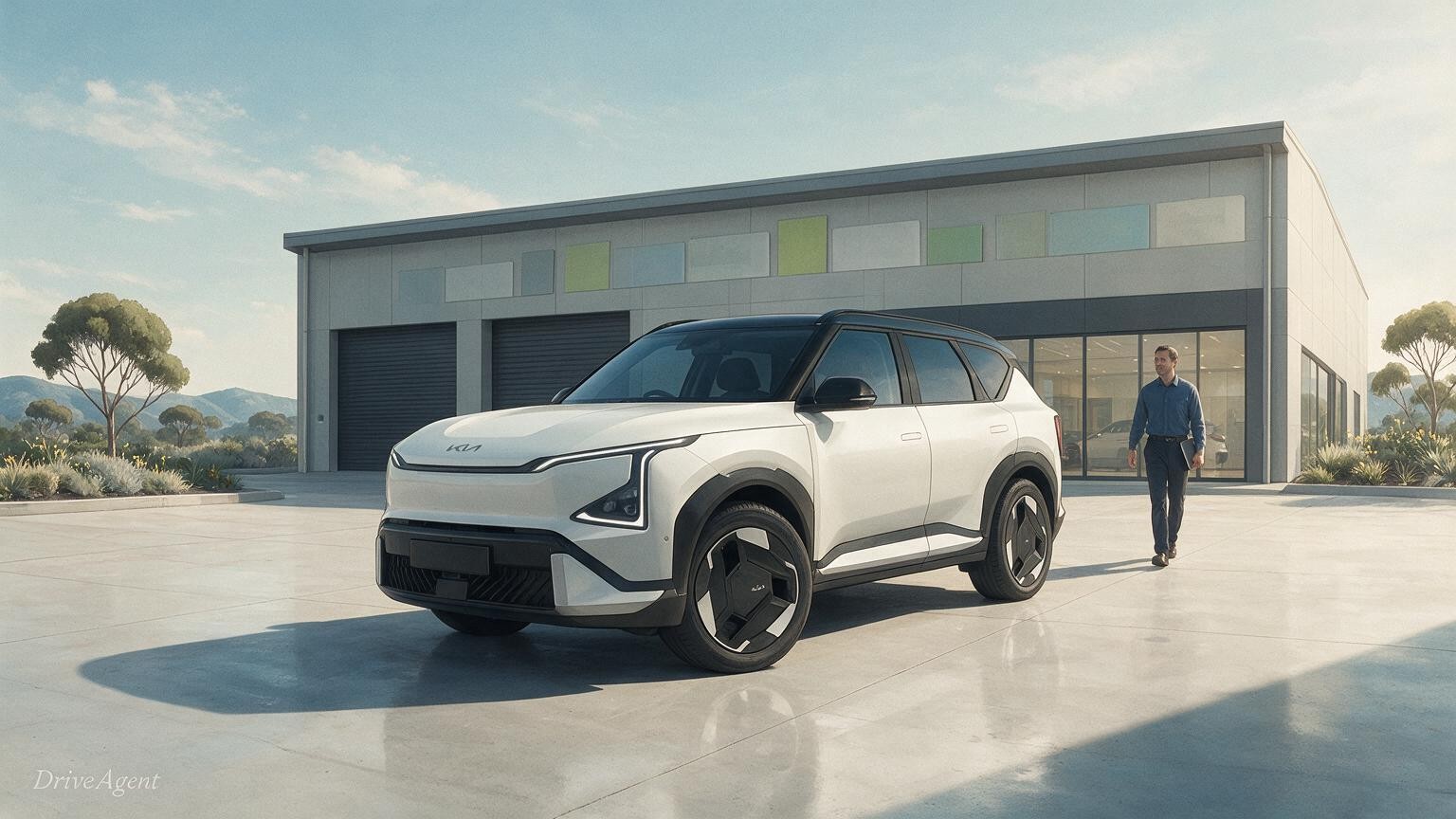
GoAuto reported in December 2025 that Kia Australia expected to be in credit for 2025, with Piccoli saying the most recent NVES performance report he had seen suggested the brand's fleet-average CO2 across all new vehicles sold that year was below the limit. GoAuto also reported that Kia executives had reasonably high confidence of a credit position in 2026, when headline targets were 117g/km for cars and SUVs and 180g/km for utes, before tightening to 92g/km and 150g/km respectively in 2027. Those 2026 and 2027 figures are attributed to GoAuto's reporting of the company's expectations at that time. 2
The credit position was underpinned by sales of Kia's battery electric crossovers, GoAuto reported: 4541 deliveries of the EV5 midsize SUV, which found a larger-than-expected fleet audience, and 2416 EV3s. Kia also lowered entry prices for hybrid versions of its combustion SUVs and planned to expand HEV offerings with factory support. General manager of product planning Roland Rivero told GoAuto that NVES had helped secure hybrid supply: "Sometimes hybrid powertrain supply is pushed to regions that have CO2 regulation, and that has freed up a little more for Australia because (Kia global) is now mindful of our CO2 regulation." 2
GoAuto's December 2025 report also noted slower-than-expected sales of the diesel Tasman ute, which it said emits up to 215g/km, may have relieved pressure on Kia's CO2 balance sheet, and that the discontinuation of the Stinger roughly two years earlier left the line-up comparatively clean. 2
Product plans tied to the efficiency rules
Kia's compliance strategy, as reported by GoAuto, involves keeping relatively strong sales of the EV3 and EV5 while shifting a higher proportion of Sportage and Sorento SUVs to petrol-electric hybrid powertrains. A further plank was the then-expected launch of the second-generation Seltos small SUV, widely tipped to include a hybrid engine, while the diesel-only Tasman ute was slated to gain a 48-volt mild-hybrid system in late 2026 or early 2027. The new Seltos launched in Australia as a hybrid-only model, Open Road reports; the timing of a Tasman mild-hybrid remains a manufacturer plan reported by GoAuto rather than a confirmed on-sale date. 12
The hybrid shift has already been dramatic in at least one model line. Open Road quotes Kia marketing boss Dean Norbiato saying the Sportage went from an 80:20 diesel-petrol-hybrid mix in February to a completed 20:80 turnaround two weeks later, amid historically high petrol prices driven by conflict in the Middle East. "I can only imagine if you're a brand – a legacy brand, possibly – and you didn't have something to offer and be able to meet the market, where that would you put you," Norbiato said. 1
Not every element of Kia's low-emission product plan is settled. GoAuto reported in December 2025 that the on-again, off-again plan to add the European-built EV2 battery electric hatchback to Australian showrooms was once again in doubt due to unfavourable euro-to-Australian-dollar exchange rates. "The currency is not great. The Euro to the Aussie dollar is not something you can easily just turn around, so I think the math at the moment (for EV2) is questionable," Rivero told GoAuto, which reported the EV2 would be revealed in January 2026. Kia's Australian availability for the EV2 has not been confirmed by the company in the available reporting. 2
Where the policy review stands
The NVES has applied to carmakers' new-vehicle sales in Australia since 1 January 2025, with financial credits and penalties accruing from 1 July 2025, GoAuto reported, and this year's targets tightening by about 15 per cent in 2026. Before the harder 2027 step, carmakers will be able to petition the government to change the NVES legislation as part of a statutory review process GoAuto reported as set for late 2026. GoAuto reported that some manufacturers were expected to support the existing timeline while others were tipped to seek a reprieve; those expectations are the publication's own, attributed outlook rather than confirmed positions. 2
Kia's public support for the current pathway places it among manufacturers expected to back the existing timeline, though whether it formally lodges a position in the review process is not stated in the available reporting. The settings of the standard, including the review's outcome, remain a matter for the federal government; no change to the NVES has been announced. What remains unknown is the official outcome of the late-2026 statutory review and Kia's formally credited position for 2025 or 2026 as published by the regulator, neither of which is established by the current reporting. 21
AI evidence finder
Ask about this article
Ask a question to find relevant published passages and source links. AI selects evidence; the passages remain exactly as published.
Fact check
Not yet assessedA claim-by-claim assessment is not yet available. Review the sources below.
Our sourcing and editorial standardsBehind this report
Sources & context
Cited source mix
2 cited pages across 2 websites
- News publisher 1
- Role not assessed 1
Website breakdown
- GoAutogoauto.com.au1 page
- mynrma.com.au1 page
1 cited page with an undocumented publisher role. Websites may share ownership or repeat the same reporting.
Saved research extracts
2 / 2 cited pages with saved extracts
0 shortened at our text limit · 0 without a saved-extract record
Extracts retrieved 31 Oct 2026.
Extracts can omit page content. These counts do not verify claims or measure independent reporting. Political leaning and reliability are not rated.
- Kia Australia backs current NVES pathwayRole not assessedSource extract saved
Why these labels?Kia Australia backs current NVES pathway
Who produced it
We have not documented this publisher’s role. An unassigned label is not a negative rating.
How this report uses it
Cited in 10 paragraphs: Kia's endorsement of the current standard; Stability over constant change, says Piccoli; Banking credits rather than selling them; Product plans tied to the efficiency rules; Where the policy review stands.
This describes its use in our report. It does not establish the source’s editorial stance or independently corroborate every claim.
Evidence record
Text retrieved 31 Oct 2026. The retained extract did not reach our text limit. Extraction can still omit page content.
- EV and hybrid sales see Kia bank NVES creditNews publisherSource extract saved
Why these labels?EV and hybrid sales see Kia bank NVES credit
Who produced it
GoAutoMedia publishes automotive industry and consumer news, vehicle reviews and model information. Identity reference ↗
How this report uses it
Cited in 9 paragraphs: Banking credits rather than selling them; How Kia reached a credit position; Product plans tied to the efficiency rules; Where the policy review stands.
This describes its use in our report. It does not establish the source’s editorial stance or independently corroborate every claim.
Evidence record
Text retrieved 31 Oct 2026. The retained extract did not reach our text limit. Extraction can still omit page content.
Keep reading
Related subjects and more from this section.
NSW Fair Trading blitz on unlicensed car dealers issues 40 fines totalling more than $130,000
Since 1 July, NSW Fair Trading inspectors have conducted almost 200 unannounced inspections of dealerships and suspected unlawful traders, resulting in 65 enforcement outcomes including fines, warnings and court-ordered compensation in cases involving odometer tampering and forged documents.