Mercedes-Benz advances cobalt-free LNMO battery cells targeting 30 per cent more EV range
The German manufacturer says manganese-rich cathode chemistry could eliminate cobalt and lift range by up to 30 per cent over lithium iron phosphate at comparable weight and packaging, while solid-state testing continues with Factorial Energy and ProLogium — all still development-stage work with no confirmed production timing.
Synthesised from the cited sources. Research, writing and factual checks are automated using AI. Verify details against the sources. How we produce these reports
Cobalt-free LNMO chemistry targets bigger range in the same package
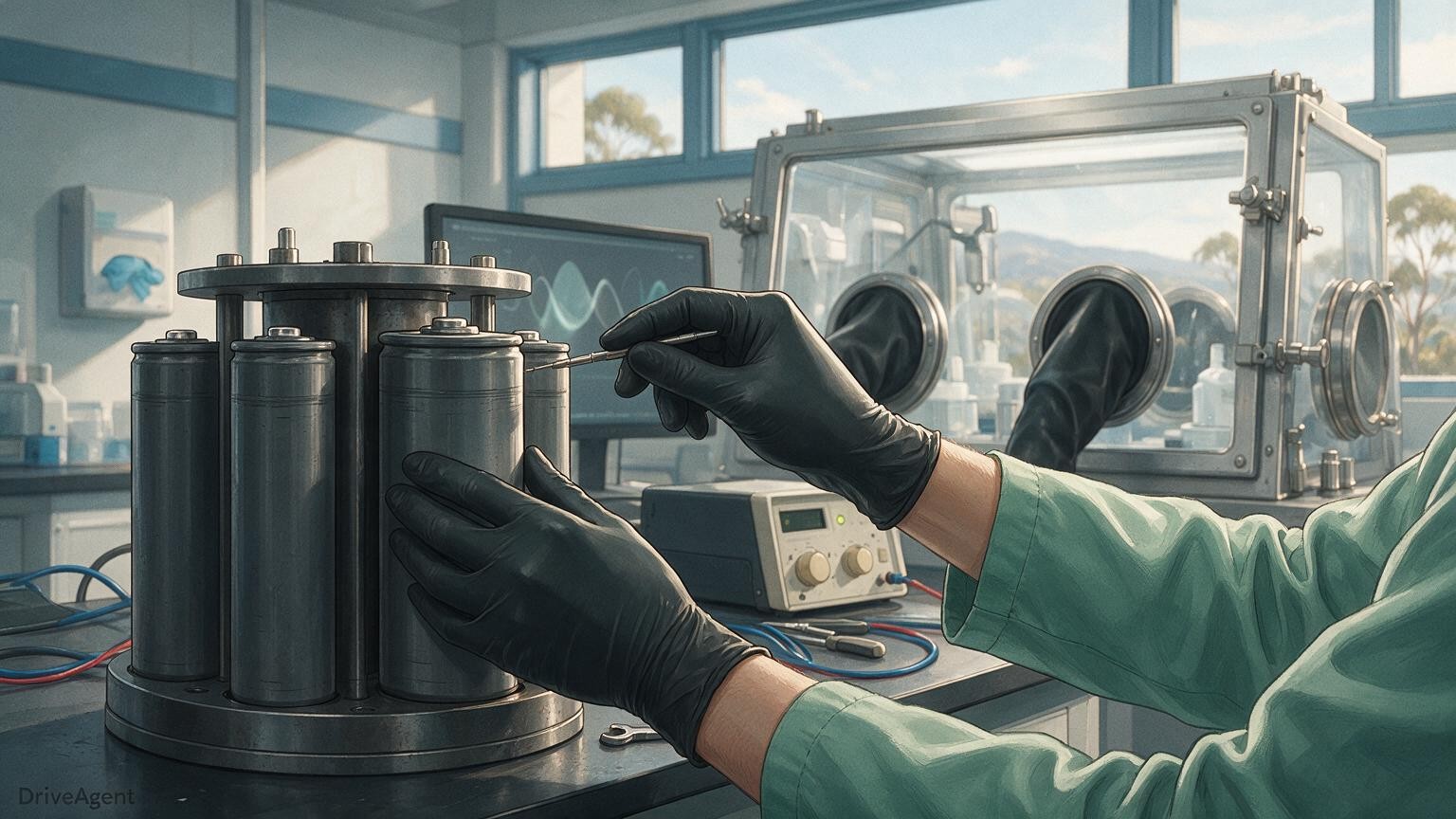
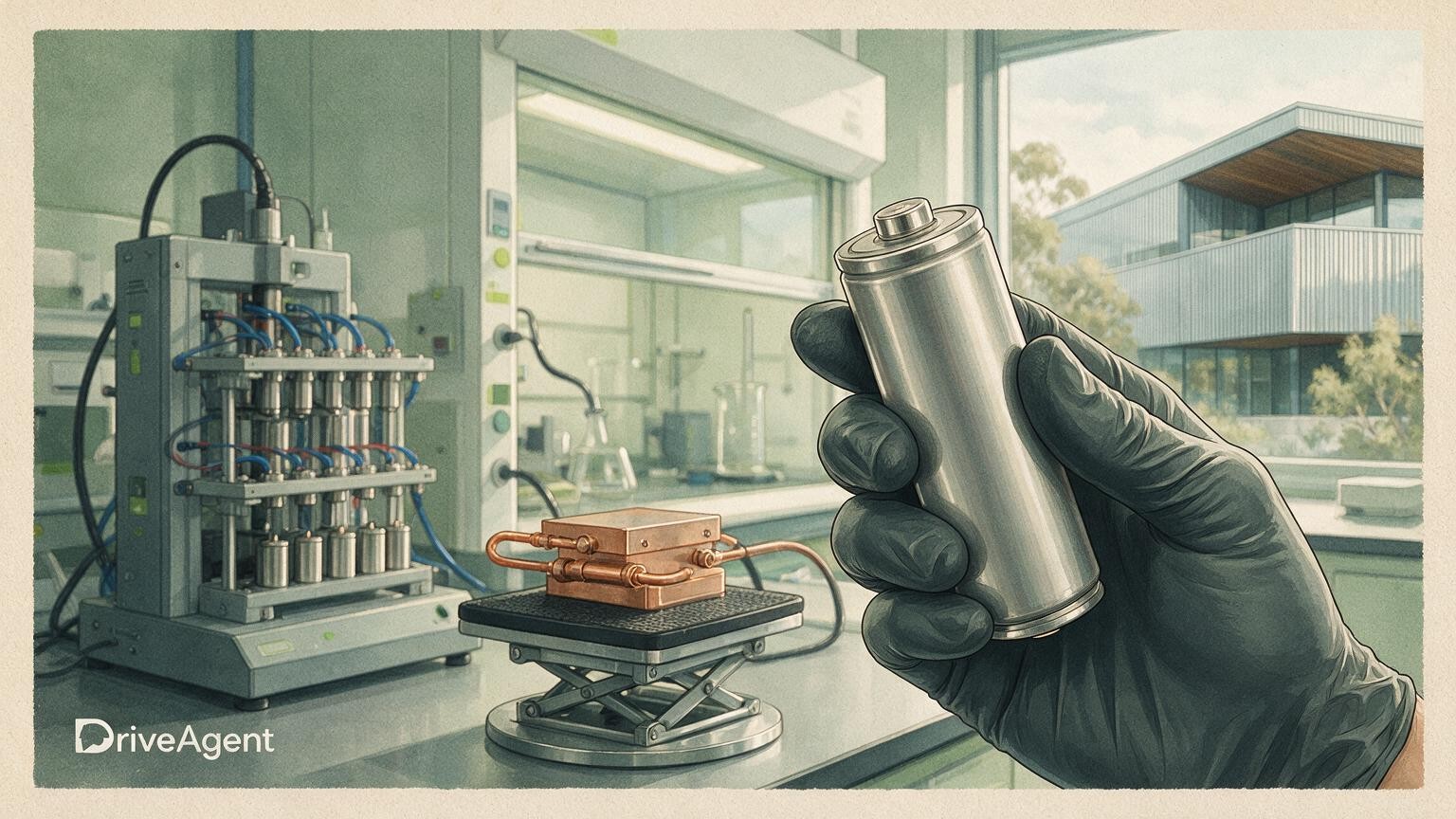
Mercedes-Benz is developing a lithium nickel manganese oxide (LNMO) cathode chemistry that would eliminate cobalt entirely and require significantly less nickel than today's NMC cells, according to reporting by Interesting Engineering, which cites a company press release. The manufacturer says the high-voltage capability of LNMO cells — which could operate at up to five volts — offers the potential to combine high energy density with attractive costs. 1
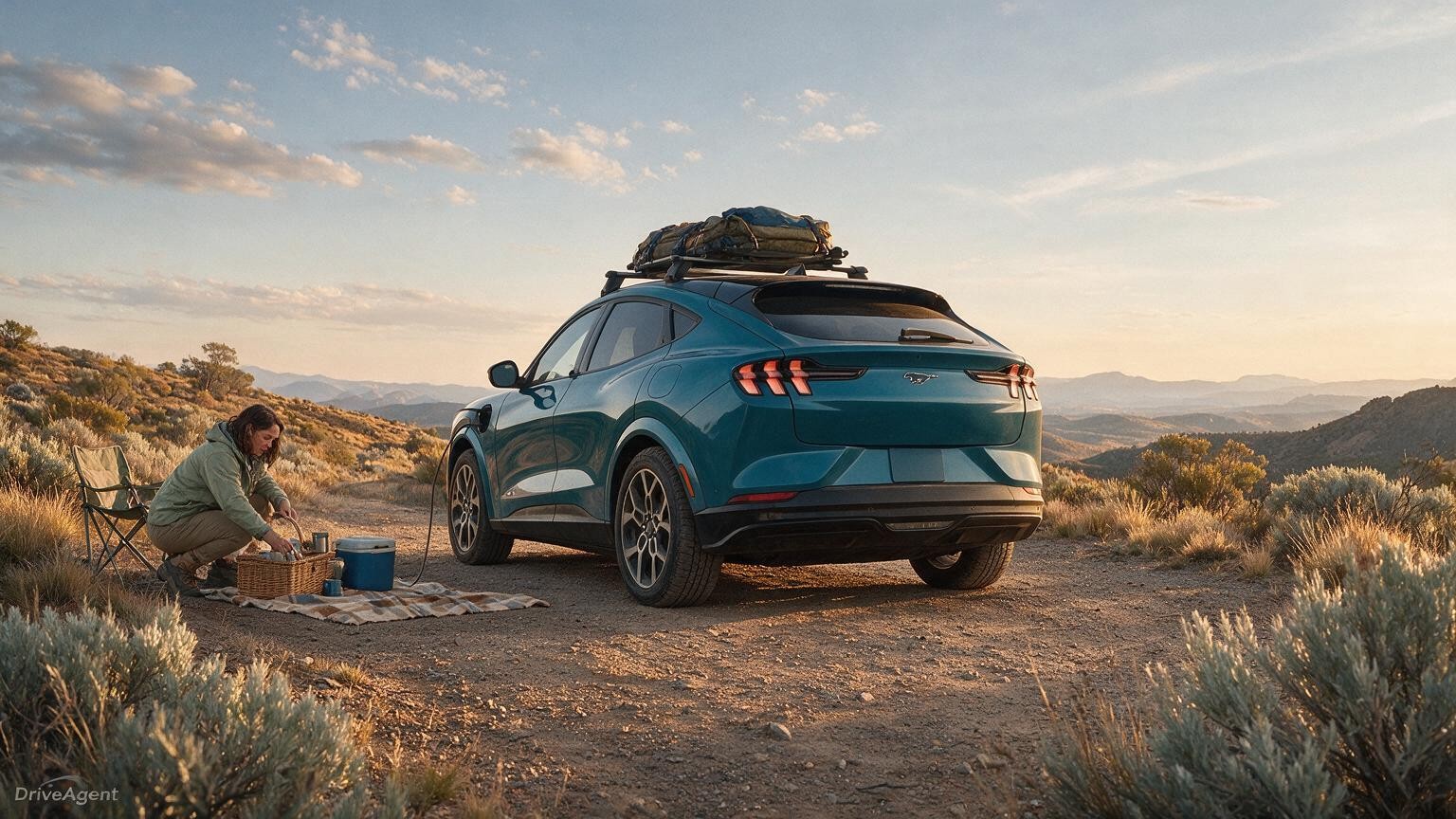
The headline claim is that, compared with lithium iron phosphate (LFP) batteries, LNMO chemistry could deliver range advantages of up to 30 per cent at comparable weight and packaging space. Both CarSauce and Interesting Engineering, drawing on the same company material, emphasise that this remains a development prospect rather than a production-vehicle range figure, and no production timing has been announced. Readers should treat the 30 per cent figure as a manufacturer's engineering target, not a validated test result on any test cycle. 12
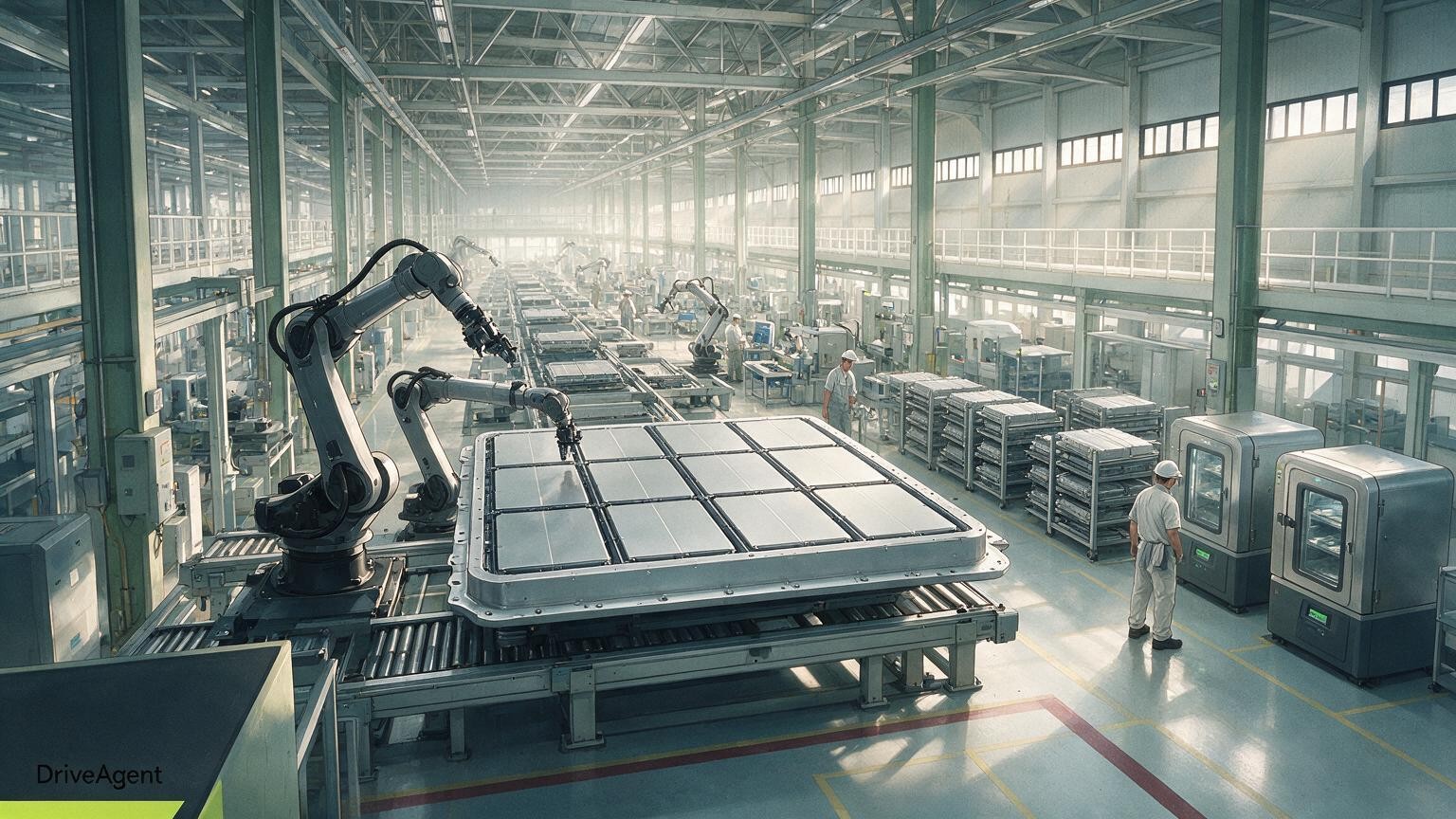
Beyond range, Mercedes-Benz says the work is aimed at developing more compact and lighter battery systems while maintaining or increasing performance, which it says opens new possibilities for vehicle design and interior layout. The company also frames manganese-based cell technologies as a way to reduce reliance on critical raw materials, and argues that in-house cell chemistry platforms increase its flexibility in responding to technological developments, market changes and regulatory requirements. 1
An interim LMO-NMC blend as the bridge technology
Alongside LNMO, Mercedes-Benz is working on a combination of lithium manganese oxide (LMO) and nickel manganese cobalt oxide (NMC). Interesting Engineering reports this cathode blend uses a higher proportion of manganese and less cobalt and nickel, which the manufacturer describes as an attractive balance between energy density and cost. 1
The company positions this LMO-NMC combination as a technological bridge to the manganese-rich cathode materials of the future — that is, toward LNMO itself. The overall programme, as reported by CarSauce, is about reducing reliance on cobalt and nickel while improving energy density and cost across the battery roadmap. 12
Solid-state testing: the 1205km EQS run and ProLogium Gen4 cells
Mercedes-Benz's solid-state development continues with strategic partners Factorial Energy and ProLogium. A lithium-metal solid-state battery developed with Factorial has been tested for the first time under real-world driving conditions in an EQS development vehicle, which covered 1205 kilometres from Stuttgart to Malmö without recharging — a demonstration, according to the company as reported by both outlets, of the technology's potential for long ranges. 12
The manufacturer says it is now investigating next-generation solid-state cells with several partners, including extensive testing of ProLogium's Gen4 cell technology focused on performance, safety and thermal properties. The stated aim is to assess their potential for future series production. Interesting Engineering adds that tests are also under way with solid-state cells from other partners and cells developed in-house, incorporating Formula 1 powertrain know-how from Mercedes-Benz's UK motorsport experts. No dates for series-production solid-state cells have been announced. 12
Batteries sit within a wider 40-plus model and powertrain programme
The battery work forms part of a broader Mercedes-Benz plan, reported by CarSauce, to introduce more than 40 new models in less than three years ending in 2027, spanning hybrid engines, 800-volt electric powertrains and new battery technologies. The modular 800V electric architecture — drawing on the VISION EQXX development programme — currently spans the CLA, CLA Shooting Brake, GLB, GLA, GLC and C-Class, with plans to extend it to the E-Class and S-Class. 2
On the combustion side, CarSauce reports the new M252 LS develops the existing 1.5-litre petrol engine with an electrically assisted exhaust-gas turbocharger of 5kW output running from the 48V electrical system, delivering 170kW plus 23kW. The turbocharger technology was developed through collaboration with Mercedes-AMG High Performance Powertrains in Brixworth, England. The company says the M252 LS-powered GLB 250 accelerates about one-tenth of a second faster than its M260-powered predecessor with roughly 17 per cent fewer CO2 emissions; final WLTP figures are not yet available. 2
On the electric side, the in-house EDU 2.0 drive unit combines the 800V electrical system, a silicon-carbide inverter and a two-speed gearbox with a dog clutch. Jörg Bartels, Vice President of Powertrain Development at Mercedes-Benz AG, is quoted by CarSauce and Interesting Engineering saying: "No technology shapes the character of a vehicle as much as the powertrain, whether fully electric or hybrid." 21
What this means for buyers — and what remains unknown
Every headline figure in this announcement is a manufacturer's development claim: the up-to-30-per-cent range advantage over LFP, the five-volt operating capability and the cost benefits of reduced cobalt and nickel use are engineering prospects, not confirmed specifications of any current or announced vehicle. Neither outlet reports a production timeline for LNMO cells, a specific model application, or gross versus usable capacity figures for the new chemistry. 12
The 1205km Stuttgart-to-Malmö EQS drive was carried out in a development vehicle fitted with a solid-state battery, not a customer car, so it should not be read as a range figure for any production EQS. Likewise, the ProLogium Gen4 testing is explicitly aimed at assessing suitability for future series production, meaning no production decision has been confirmed. 12
Australian availability of any vehicle using these technologies has not been addressed in the available reporting. Mercedes-Benz's local line-up and pricing for existing models — including figures such as the C 400 4MATIC electric at $105,700 AUD MRLP cited in CarSauce's related coverage — are separate matters from this battery development announcement and are not affected by it. 2
AI evidence finder
Ask about this article
Ask a question to find relevant published passages and source links. AI selects evidence; the passages remain exactly as published.
Fact check
Not yet assessedA claim-by-claim assessment is not yet available. Review the sources below.
Our sourcing and editorial standardsBehind this report
Sources & context
Cited source mix
2 cited pages across 2 websites
- Role not assessed 2
Website breakdown
- carsauce.com1 page
- interestingengineering.com1 page
2 cited pages with an undocumented publisher role. Websites may share ownership or repeat the same reporting.
Saved research extracts
2 / 2 cited pages with saved extracts
0 shortened at our text limit · 0 without a saved-extract record
Extracts retrieved 30 Oct 2026.
Extracts can omit page content. These counts do not verify claims or measure independent reporting. Political leaning and reliability are not rated.
- Manganese-based cell tech to boost EV range with compact batteryRole not assessedSource extract saved
Why these labels?Manganese-based cell tech to boost EV range with compact battery
Who produced it
We have not documented this publisher’s role. An unassigned label is not a negative rating.
How this report uses it
Cited in 10 paragraphs: Cobalt-free LNMO chemistry targets bigger range in the same package; An interim LMO-NMC blend as the bridge technology; Solid-state testing: the 1205km EQS run and ProLogium Gen4 cells; Batteries sit within a wider 40-plus model and powertrain programme; What this means for buyers — and what remains unknown.
This describes its use in our report. It does not establish the source’s editorial stance or independently corroborate every claim.
Evidence record
Text retrieved 30 Oct 2026. The retained extract did not reach our text limit. Extraction can still omit page content.
- Mercedes-Benz plans over 40 new models by 2027 with hybrid and EV push | CarSauceRole not assessedSource extract saved
Why these labels?Mercedes-Benz plans over 40 new models by 2027 with hybrid and EV push | CarSauce
Who produced it
We have not documented this publisher’s role. An unassigned label is not a negative rating.
How this report uses it
Cited in 10 paragraphs: Cobalt-free LNMO chemistry targets bigger range in the same package; An interim LMO-NMC blend as the bridge technology; Solid-state testing: the 1205km EQS run and ProLogium Gen4 cells; Batteries sit within a wider 40-plus model and powertrain programme; What this means for buyers — and what remains unknown.
This describes its use in our report. It does not establish the source’s editorial stance or independently corroborate every claim.
Evidence record
Text retrieved 30 Oct 2026. The retained extract did not reach our text limit. Extraction can still omit page content.
Keep reading
Related subjects and more from this section.
Tesla Cybercab battery pack designed for future LFP cells and module-level repair
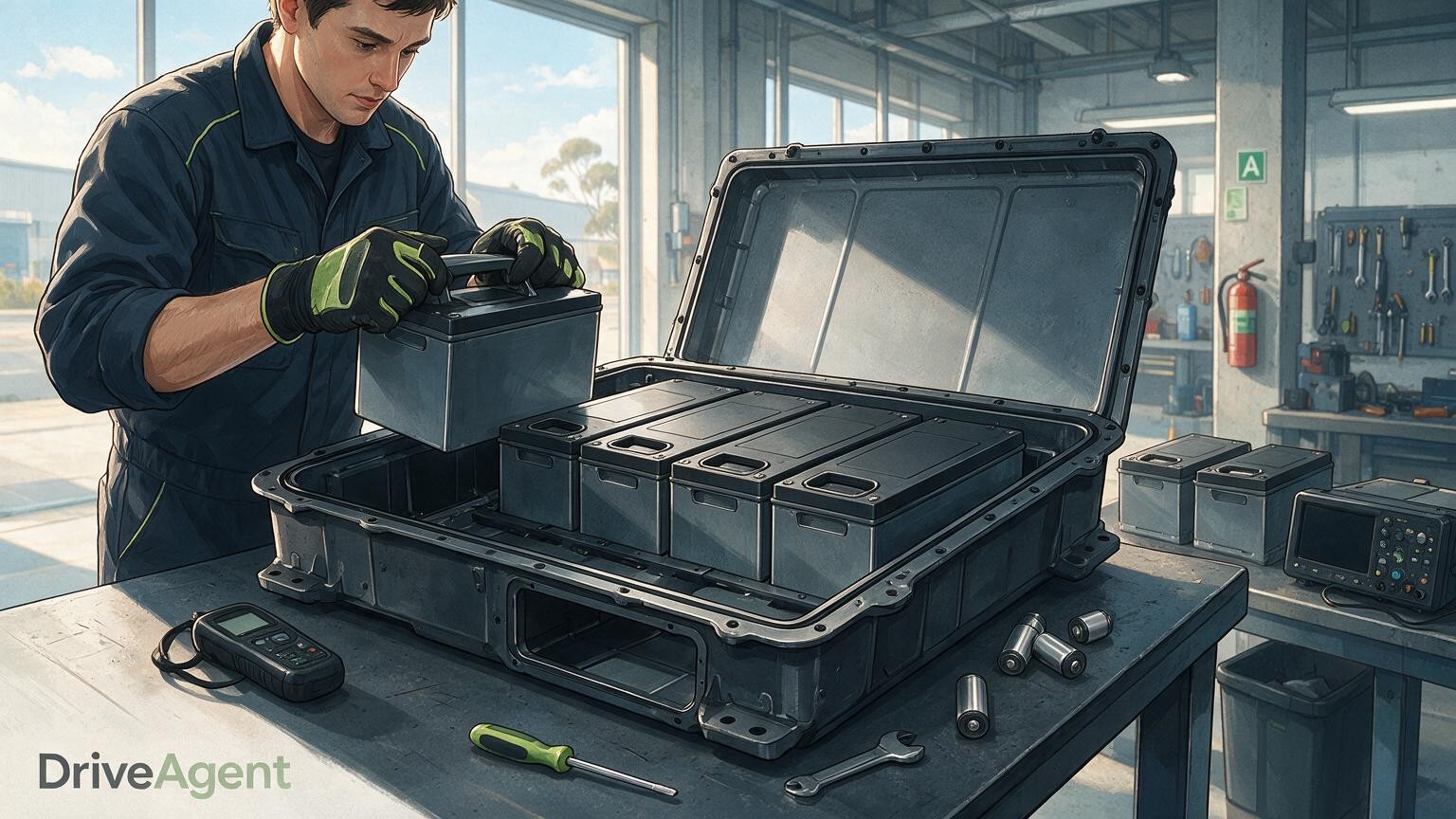
Tesla engineers have detailed how the Cybercab robotaxi's battery pack departs from the structural packs used in some Model Y builds, with four individually sealed modules and reserved space for a possible later switch to LFP cells, though no chemistry change has been announced.