Toyota Australia commits to diesel for regional buyers as sales slide and NVES pressure builds
Toyota Australia's sales vice-president John Pappas has reiterated that diesel remains essential for rural and regional customers, even as VFACTS data shows diesel sales falling sharply and tighter New Vehicle Efficiency Standard targets loom for light commercial vehicles from 2027.
Automatically researched, written and checked using AI. Verify details against the sources.
Pappas: diesel remains part of the heartland
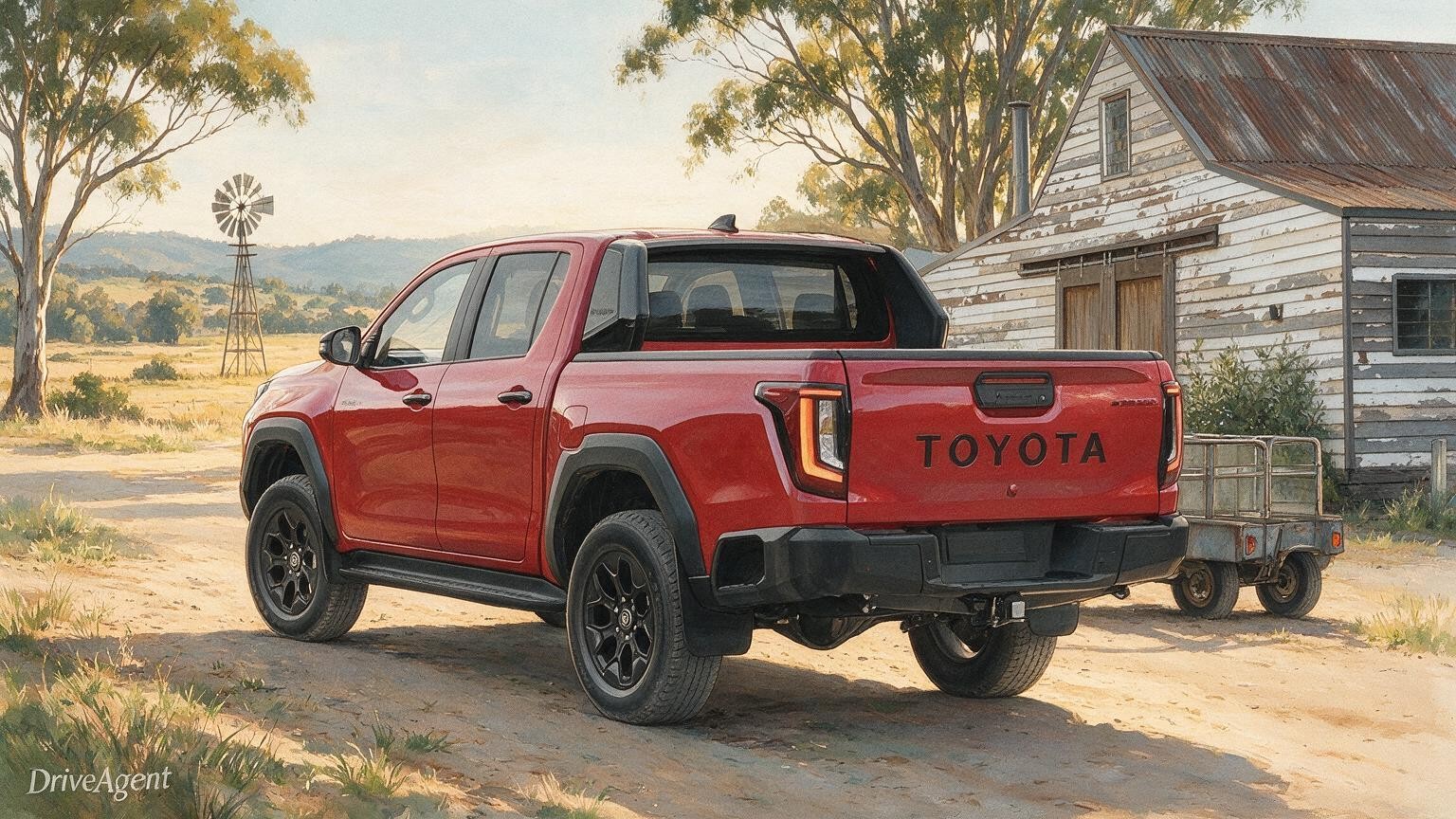
Toyota Australia has moved to reassure buyers that diesel is not going anywhere, despite a sharp slump in diesel sales nationally. Speaking to CarExpert, sales vice-president John Pappas said the company does not want to leave customers behind, and that "customers still need diesel in regional and rural Australia". "It's a very big part and heartland of our country, so we do not want to leave them behind," Mr Pappas told CarExpert, pointing to diesel models' continued presence among the top-selling vehicles in the latest VFACTS figures. 1
According to CarExpert, Toyota says many regional customers use their vehicles as tools of trade or for long distances, towing and off-tarmac environments. Mr Pappas noted that across the combined HiLux and LandCruiser family, nearly 54 per cent of vehicles are purchased and used by customers outside the major metropolitan cities, customers for whom a battery-electric vehicle might not be appropriate. Toyota Australia says it will continue to support those rural and regional customers who rely on diesel vehicles for transport or work. 1
Diesel sales slumping as electrified models climb
The comments come against a shifting market backdrop. CarExpert reports that sales of diesel-powered vehicles slumped 25.5 per cent year-on-year to the end of September 2026, while conventional hybrid sales rose 11.4 per cent. Diesel's market share has fallen from around 33 per cent in 2025 to 24.3 per cent in 2026, with record pump prices for both diesel and petrol among the contributing factors. 1
The sales charts reflect the shift. CarExpert, citing VFACTS data, reports the Ford Ranger still leads the year-to-date charts despite sales falling 10.0 per cent to 37,858, while HiLux is second with 36,616 sales, down 10.3 per cent from 40,813 at the same point in 2025. In September alone, EV sales soared 117.7 per cent year-on-year and plug-in hybrid sales rose 122.7 per cent, with the Tesla Model Y and Toyota RAV4 hybrid interrupting the utes' usual dominance of the top of the charts. 1
Even diesel-only stalwarts are seeing softer demand. CarExpert reports the diesel-only Toyota LandCruiser Prado and Isuzu D-Max placed ninth and tenth respectively in September, but their year-to-date sales are down 28.3 per cent and 12.0 per cent respectively. Toyota's own bZ4X recorded one of its best months with 410 sales across SUV and Touring versions in September. 1
NVES pressure and the call for a fairer LCV target
Toyota's diesel defence is intertwined with its lobbying on the New Vehicle Efficiency Standard. CarExpert reports Toyota Australia is lobbying the federal government for changes it says could unfairly push up prices for popular diesel models including the HiLux and LandCruiser 70 Series light commercial vehicles. Compliance with the NVES has been enforced since 1 July 2025, with a review of the scheme required to commence before the end of 2026 and current targets set through to 2029. 2
Mr Pappas told CarExpert the big challenge comes from 2027 for light commercial vehicles, arguing that tough targets risk leaving customers behind. "We'll be consulting government to be able to really look at a more pragmatic, realistic light commercial vehicle target under NVES that is more equitable to the Australian market," he said, while stressing Toyota remains supportive of an ambitious but pragmatic standard. Yahoo News reports Mr Pappas also said Toyota "cannot rule out price increases" due to the challenging NVES targets for commercial vehicles from 2027 onwards. 23
Yahoo News notes that a HiLux SR5 diesel earned Toyota emissions credits when the scheme began in 2025, but as targets tighten, Drive has estimated the same vehicle will attract a penalty of about $500 this year, rising to roughly $2,000 in 2027. The NVES has already contributed to price increases for models including the Ranger and Ford Mustang, and CarExpert reports Mazda, Isuzu and Ram have also warned of higher prices under the scheme. 23
Mr Pappas also told Yahoo News that rural and regional buyers face particular difficulty switching to electric vehicles because of charging infrastructure and long driving distances, arguing EV growth is not reflected in those markets. CarExpert adds that Mr Pappas pointed to Toyota's more than 20 years of hybrid and battery-electric technology since the first Prius as evidence the brand supports decarbonisation, while seeking balance between demand and regulation. 32
Renewable fuels as a diesel pathway
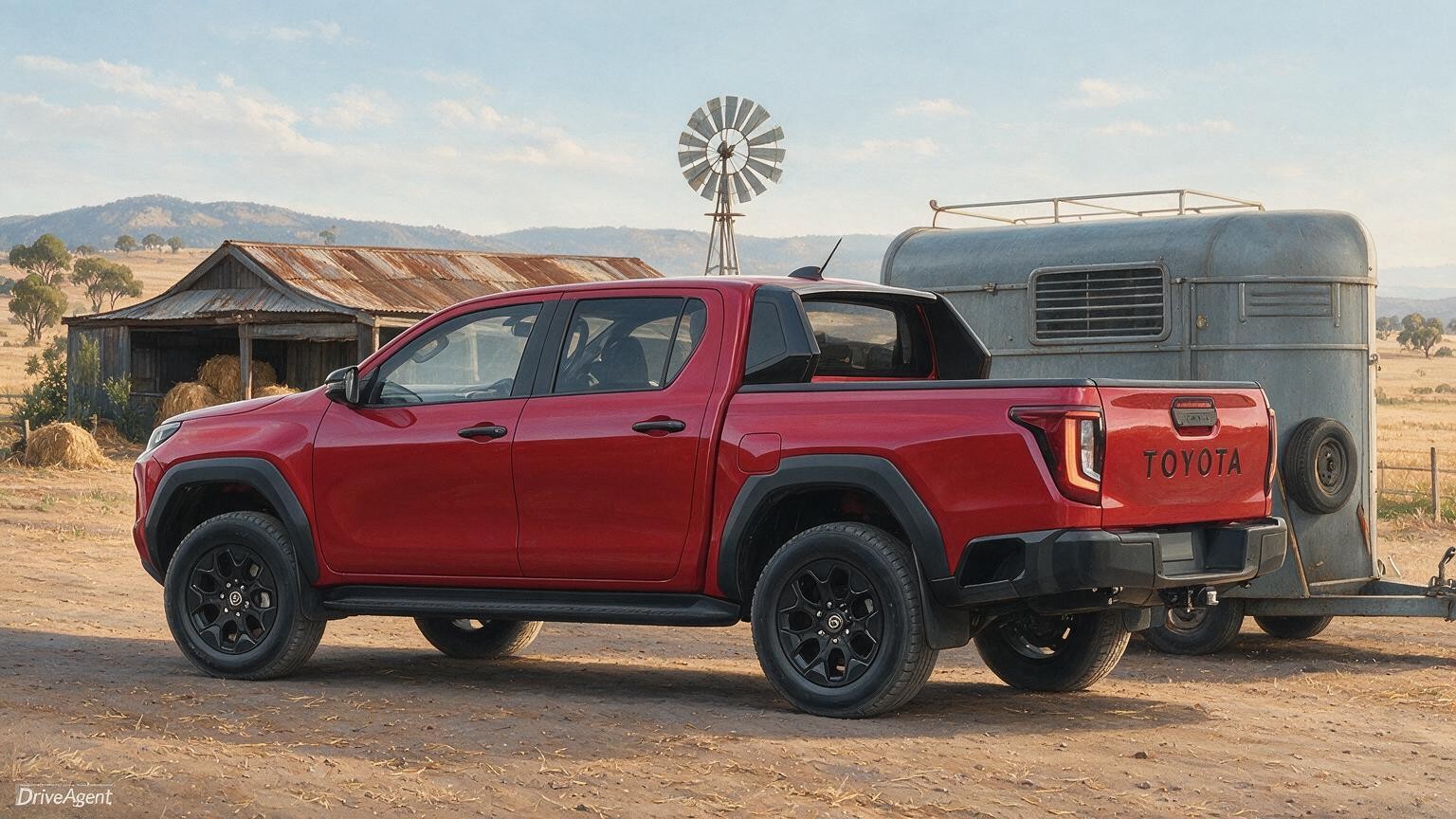
Toyota has also been working to extend the life of its diesel fleet through low-carbon liquid fuels. Unsealed 4X4 reports Toyota has confirmed that HiLux models built from mid-2015 onwards with its 1GD or 2GD turbo-diesel engines are compatible with HVO100, a hydrotreated vegetable oil fuel made from renewable feedstocks including vegetable oil and recycled cooking oil, covering N80 and N90-generation models of which more than half a million are on Australian roads. 4
As part of the confirmation, an HVO100-powered HiLux completed an approximately 3,000km journey through regional Queensland, New South Wales, Victoria and South Australia in conjunction with the National Bush Summit. Unsealed 4X4 reports Toyota says all of its existing diesel vehicles can already operate on a 20 per cent low-carbon liquid fuel blend, and it is studying HVO100 compatibility for additional diesel models, though it has not announced which vehicles will be next. 4
Toyota Australia CEO and President Matthew Callachor told Unsealed 4X4 that decarbonisation requires a multi-pathway approach, and that the HVO100 confirmation is "validation that the vehicle technology exists today". Availability remains the sticking point: Unsealed 4X4 notes Toyota supports development of a domestic low-carbon liquid fuels industry, pointing to the Brisbane Renewable Fuels project being explored by Ampol, GrainCorp and IFM Investors. 4
A changed tone from Toyota, and the road ahead
The company's position has evolved in recent years. CarExpert notes Mr Pappas' predecessor, Sean Hanley, told the publication in 2025 that diesel could fade out in around a decade, saying he could not imagine diesel being "a fuel of the future" because a petrol vehicle can do everything it can do plus some. Mr Hanley also said he believed hydrogen could take over from diesel sometime in the 2030s. 1
Toyota's electrification push continues regardless. CarExpert reports Toyota Australia introduced a battery-electric HiLux in May 2026 and has confirmed plans to introduce a hydrogen fuel-cell HiLux locally in 2028. The latest comments nonetheless make clear the brand intends to keep diesel in its lineup for customers whose needs those alternatives do not yet meet, particularly in regional and rural Australia. 1
AI evidence finder
Ask about this article
Ask a question to find relevant published passages and source links. AI selects evidence; the passages remain exactly as published.
Behind this report
Sources & context
Cited source mix
4 cited pages across 3 websites
- News publisher 2
- Role not assessed 2
Website breakdown
- CarExpertcarexpert.com.au2 pages
- au.news.yahoo.com1 page
- unsealed4x4.com.au1 page
2 cited pages with an undocumented publisher role. Websites may share ownership or repeat the same reporting.
Saved research extracts
4 / 4 cited pages with saved extracts
0 shortened at our text limit · 0 without a saved-extract record
Extracts retrieved 9 Oct 2026.
Extracts can omit page content. These counts do not verify claims or measure independent reporting. Political leaning and reliability are not rated.
- Diesel critical to regional Australia, says ToyotaNews publisherSource extract saved
Why these labels?Diesel critical to regional Australia, says Toyota
Who produced it
Publishes automotive news and reviews and operates a car-buying service connecting buyers with dealers. Identity reference ↗
How this report uses it
Cited in 7 paragraphs: Pappas: diesel remains part of the heartland; Diesel sales slumping as electrified models climb; A changed tone from Toyota, and the road ahead.
This describes its use in our report. It does not establish the source’s editorial stance or independently corroborate every claim.
Evidence record
Text retrieved 9 Oct 2026. The retained extract did not reach our text limit. Extraction can still omit page content.
- Toyota price hikes coming as Australia's top auto brand calls ...News publisherSource extract saved
Why these labels?Toyota price hikes coming as Australia's top auto brand calls ...
Who produced it
Publishes automotive news and reviews and operates a car-buying service connecting buyers with dealers. Identity reference ↗
How this report uses it
Cited in 4 paragraphs: NVES pressure and the call for a fairer LCV target.
This describes its use in our report. It does not establish the source’s editorial stance or independently corroborate every claim.
Evidence record
Text retrieved 9 Oct 2026. The retained extract did not reach our text limit. Extraction can still omit page content.
- New rule to push up cost of popular 4WDs, SUVs and utes for Aussie drivers: 'Can't rule out price increases'Role not assessedSource extract saved
Why these labels?New rule to push up cost of popular 4WDs, SUVs and utes for Aussie drivers: 'Can't rule out price increases'
Who produced it
We have not documented this publisher’s role. An unassigned label is not a negative rating.
How this report uses it
Cited in 3 paragraphs: NVES pressure and the call for a fairer LCV target.
This describes its use in our report. It does not establish the source’s editorial stance or independently corroborate every claim.
Evidence record
Text retrieved 9 Oct 2026. The retained extract did not reach our text limit. Extraction can still omit page content.
- Toyota says your diesel HiLux can run without diesel - Unsealed 4X4Role not assessedSource extract saved
Why these labels?Toyota says your diesel HiLux can run without diesel - Unsealed 4X4
Who produced it
We have not documented this publisher’s role. An unassigned label is not a negative rating.
How this report uses it
Cited in 3 paragraphs: Renewable fuels as a diesel pathway.
This describes its use in our report. It does not establish the source’s editorial stance or independently corroborate every claim.
Evidence record
Text retrieved 9 Oct 2026. The retained extract did not reach our text limit. Extraction can still omit page content.
Keep reading
Related subjects and more from this section.
Toyota pushes for softer NVES ute targets as price rises loom from 2027
Toyota Australia says the New Vehicle Efficiency Standard will pressure prices for diesel light commercial vehicles such as the HiLux and LandCruiser 70 Series from 2027, and wants a more 'fair and equitable' scheme as the mandated review begins.