Toyota pushes for softer NVES ute targets as price rises loom from 2027
Toyota Australia says the New Vehicle Efficiency Standard will pressure prices for diesel light commercial vehicles such as the HiLux and LandCruiser 70 Series from 2027, and wants a more 'fair and equitable' scheme as the mandated review begins.
Automatically researched, written and checked using AI. Verify details against the sources.
Toyota's pitch for a fairer NVES
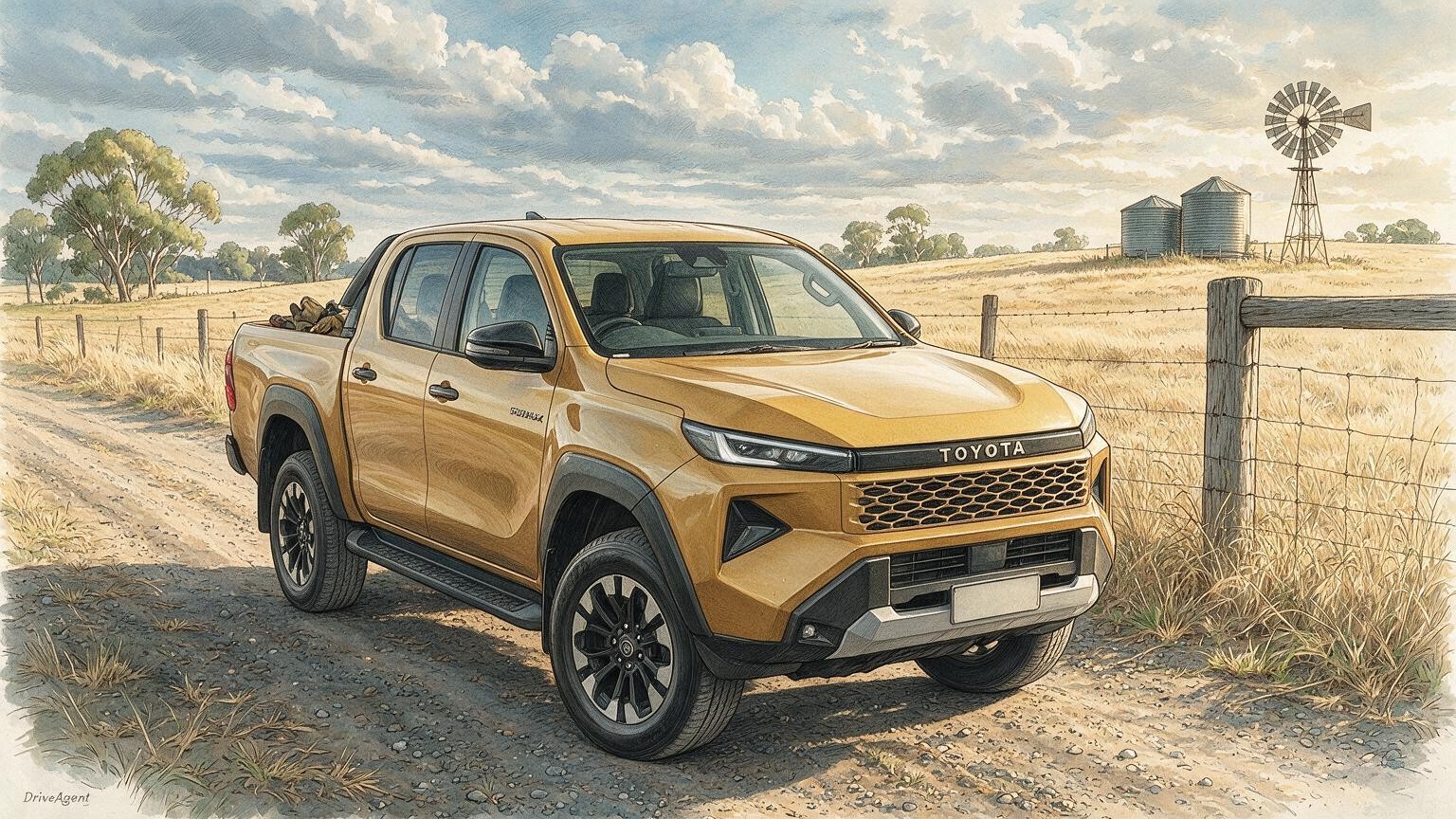
Toyota Australia is lobbying the federal government to change emissions regulations it argues could unfairly push up prices for some of its most popular diesel models, including the HiLux and LandCruiser 70 Series light commercial vehicles. CarExpert reports the brand's sales vice president, John Pappas, warned the New Vehicle Efficiency Standard (NVES) will put increasing pressure on new vehicle prices from 2027, particularly on LCVs, unless the scheme becomes more 'fair and equitable'. 1
'The big challenge comes from 2027 when it comes to light commercial vehicles. We fully support NVES. We fully support having an ambitious albeit equitable and pragmatic NVES, and when you look at the LCV segment, you can see that you're going to be leaving customers behind because they need those vehicles,' Mr Pappas told CarExpert. He said Toyota would consult government on 'a more pragmatic, realistic light commercial vehicle target under NVES that is more equitable to the Australian market'. 1
Mr Pappas argued diesel powertrains remain the right tool of trade for regional and rural Australia, where charging infrastructure and long distances present real challenges for electric vehicles. 'When you talk about rural and regional Australia, it's not exactly like that,' he told CarExpert, pointing also to demand across the wider ute segment. Toyota stressed it remains supportive of the NVES overall, citing more than two decades of hybrid and battery-electric technology since the first Prius, and its 'multi-pathway' strategy spanning petrol, diesel, hybrid, electric and, eventually, hydrogen. 1
The new lobbying push follows an earlier position from Toyota. According to CarExpert, the brand – Australia's best-selling vehicle marque every year since 2008 and well on target to remain on top in 2025 – had recently called for the NVES to include hybrid vehicles in its targets. 2
How the NVES works and where it is heading
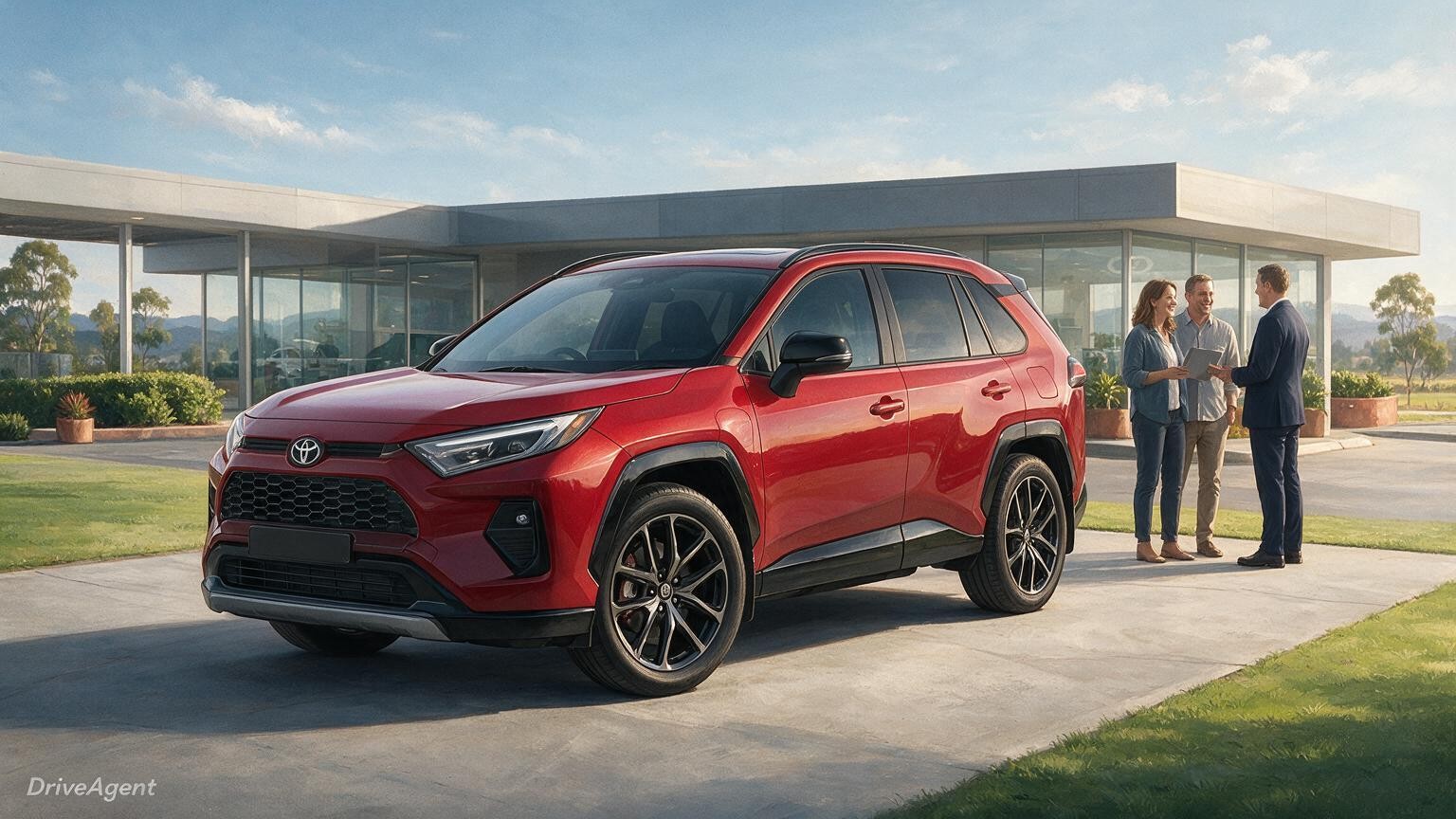
The NVES began on 1 January 2025, with compliance enforced from 1 July 2025, and sets annual average CO2 emissions limits across each car maker's new-vehicle fleet, with separate targets for passenger vehicles and LCVs. Region Canberra reports brands exceeding their limit face $50 per gram per kilometre per vehicle, doubling to $100 if penalties are not settled within two years through cleaner vehicles or credits bought from rivals. In 2025, passenger cars and SUVs faced a 141 g/km limit while utes, vans and large off-road SUVs were held under 210 g/km; targets fall another 17 per cent in 2026 and will be 59 per cent lower than 2025 levels by 2029. By 2029, even today's Toyota RAV4 Hybrid will be in the red, Region Canberra reports – an illustration of how the tightening targets will eventually reach Toyota's hybrid line-up as well as its diesel models. 3
The legislation requires a review of the scheme to commence before the end of 2026, with current targets set through to 2029 and the review helping determine how the NVES operates beyond then. CarExpert notes some critics observe there is no national target date for all new vehicles to be zero-emissions, although the ACT has set a 2035 goal for all new vehicles sold there. The Electric Vehicle Council's State of EVs 2026 report said the NVES was key to the federal government achieving its 2035 emissions-reduction target within a longer-term net-zero by 2050 goal. 13
Compliance mechanics run on a long timeline. According to CarExpert, the NVES Regulator published the interim emissions value for the first performance period, which ran from 1 January to 31 December 2025, in February 2026, with brands able to offset excess light-passenger emissions during 2026 and 2027 and a final deadline of 31 December 2027 to extinguish units against the 2025 final emissions value. The first penalties will be calculated and officially issued in 2028. 2
First-year scorecard: winners, losers and credits
Six months into the scheme, Region Canberra reports the combined industry met its 2025 target, with Federal Chamber of Automotive Industries chief executive Tony Weber crediting 'an increase in the range of zero and low emission vehicles available in the Australian market'. However, he warned 'significant challenges lie ahead', noting EVs represented just 8.3 per cent of new vehicle sales in 2025, only a 1.1 percentage point increase on 2023, and that sustaining compliance as targets tighten 'will require materially stronger uptake of EVs than current market trends indicate'. 3
Region Canberra's figures show about a third of brands in negative territory after six months: Mazda led with $25,425,850 in liabilities, an average of $661 per vehicle, followed by Nissan at $10.8 million, Subaru at $7 million and Hyundai at $4.2 million, with GMSV, Porsche, Mahindra, Honda, KGM and LDV also more than $1 million in the red. On the credit side, BYD including Denza generated $314,141,200 at the base rate, Toyota banked $144,531,250 and Tesla $110,604,650, with Kia, Geely, Volkswagen, Chery, Ford, Great Wall Motor and Isuzu also holding significant credits. Region Canberra adds that if penalties are not settled within two years and the doubled rate applies, Mazda could rack up a bill of nearly $51 million by 2029. Transport Minister Catherine King said the results 'make it clear the NVES supports both lower emissions and consumer affordability'. 3
By late 2026, electric vehicles continue to reach record market shares in Australia, outselling both petrol and diesel vehicles in August and September 2026, according to CarExpert. Toyota has itself recorded strong sales growth for its bZ4X mid-size electric SUV this year, even as its diesel LCVs remain core sellers. 1
Prices and lineups already moving
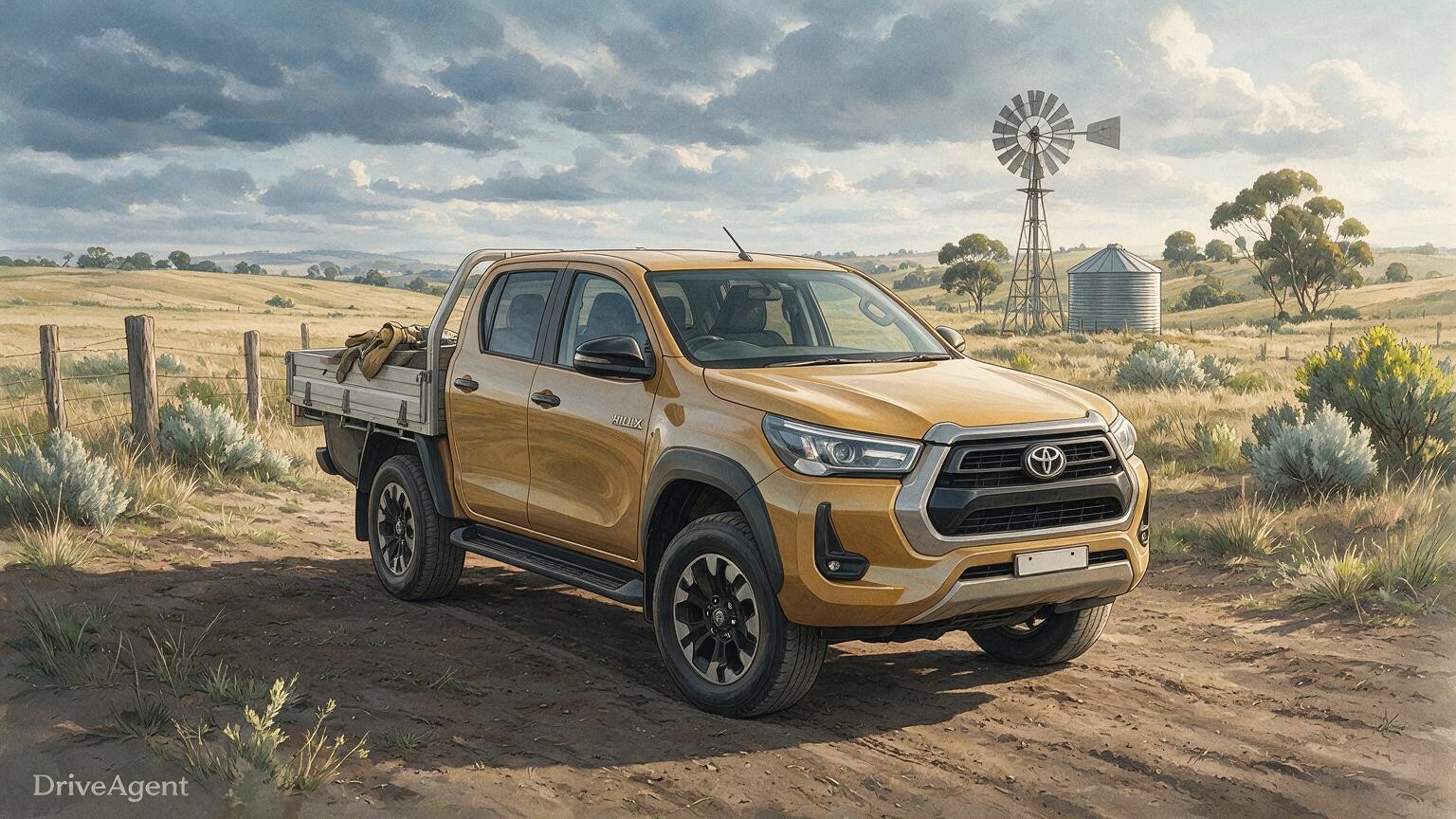
There has been no widespread price shock so far, but many brands have begun lifting prices or trimming high-emission variants. Region Canberra reports the 2025/26 Ford Mustang line-up rose by about $5000, Ford and Isuzu dropped the cheapest versions of their Everest and MU-X SUVs, and Kia axed its Sorento and Carnival V6 petrol models. CarExpert separately reports Ford pointed to the NVES as a factor in the Mustang's $5000 mid-2025 rise, with a further rise announced for 2026, while Nissan Oceania boss Andrew Humberstone told CarExpert the Ariya electric SUV's Australian arrival was delayed as long as possible but was prompted by the NVES's 2025 introduction. Mazda, Isuzu and Ram have also warned of higher prices under the scheme. 321
Ford's Ranger and Everest line-ups have also changed in the NVES era, though without the brand publicly attributing the moves to the scheme. CarExpert reports Ford raised Ranger and Everest prices alongside the Mustang rise, and axed the 2.0-litre bi-turbo diesel four-cylinder engine from both in Australia in November 2025, after the same engine had been dropped in the United Kingdom earlier in 2025 due to emissions laws. Ford Australia has confirmed a single-turbo version of the engine as the new entry-level Ranger and Everest powertrain from mid-2026, CarExpert reports. 2
Toyota's own recent price rises were not attributed to emissions rules. CarExpert reports Toyota Australia increased LandCruiser 300 Series and LandCruiser Prado prices by up to $1000 in February 2026, with the Prado GX now starting from $73,200 before on-road costs and the 300 Series from $99,340 before on-roads, and no specification changes. 'Toyota is committed to keeping price increases to a minimum. These changes came into effect recently due to increased costs and inflationary pressures both here and overseas,' a spokesperson told CarExpert. 4
CarExpert notes the LandCruiser 70 Series is not affected by that increase, as the GXL wagon remains under a stop-sale following an eight-month production pause from September 2025 while Toyota updates the vehicle to meet stricter Euro 6 emissions standards. The 300 Series range now tops out at the Sahara ZX at $147,910 before on-road costs, while a LandCruiser Hybrid using the Tundra's powertrain is yet to be priced locally but is expected to start above the GR Sport at $147,160 before on-roads. 4
What the review means for ute buyers
The stakes are high for the LCV segment because Australia's best sellers are workhorses. CarExpert reports the Ford Ranger, predominantly diesel apart from its petrol V6 Raptor flagship and plug-in hybrid range, leads 2026 year-to-date sales, with the predominantly diesel Toyota HiLux second and the Tesla Model Y third. The HiLux battery-electric BEV went on sale in Australia in May 2026, though versions with 48-volt mild-hybrid diesel technology continue alongside it. 1
Federal opposition leaders have dubbed the NVES a 'tax on families' and 'ute tax', arguing it could raise the cost of popular utes and SUVs in coming years, Region Canberra reports. Industry analyst Matt Hobbs told the ABC the first six months were a 'soft start' with no price shock, 'but by the time you get to 2028 and 2029, those targets are hard to hit'. FCAI chief Tony Weber warned that 'any additional costs generated by the NVES will likely be passed on to new car buyers', adding that subdued EV demand remained 'a major concern and disappointment for car makers'. 3
Toyota has not detailed specific proposals beyond seeking a more pragmatic, realistic LCV target through the review, CarExpert reports. Mr Pappas said the company will continue introducing more zero-emissions vehicles but that customer demand and government regulation needed to be 'balanced'. With the review required to begin before the end of 2026 and Toyota targeting a record fourth-quarter sales finish in 2026 despite lower year-to-date volumes, the outcome will shape how Australia's top-selling brand prices and equips its diesel workhorses beyond 2029. 1
AI evidence finder
Ask about this article
Ask a question to find relevant published passages and source links. AI selects evidence; the passages remain exactly as published.
Behind this report
Sources & context
Cited source mix
4 cited pages across 2 websites
- News publisher 3
- Role not assessed 1
Website breakdown
- CarExpertcarexpert.com.au3 pages
- region.com.au1 page
1 cited page with an undocumented publisher role. Websites may share ownership or repeat the same reporting.
Saved research extracts
4 / 4 cited pages with saved extracts
0 shortened at our text limit · 0 without a saved-extract record
Extracts retrieved 7 Oct 2026.
Extracts can omit page content. These counts do not verify claims or measure independent reporting. Political leaning and reliability are not rated.
- Toyota price hikes coming as Australia's top auto brand calls for more ‘equitable’ emissions lawsNews publisherSource extract saved
Why these labels?Toyota price hikes coming as Australia's top auto brand calls for more ‘equitable’ emissions laws
Who produced it
Publishes automotive news and reviews and operates a car-buying service connecting buyers with dealers. Identity reference ↗
How this report uses it
Cited in 8 paragraphs: Toyota's pitch for a fairer NVES; How the NVES works and where it is heading; First-year scorecard: winners, losers and credits; Prices and lineups already moving; What the review means for ute buyers.
This describes its use in our report. It does not establish the source’s editorial stance or independently corroborate every claim.
Evidence record
Text retrieved 7 Oct 2026. The retained extract did not reach our text limit. Extraction can still omit page content.
- Automakers missing NVES emissions targets to be named and ...News publisherSource extract saved
Why these labels?Automakers missing NVES emissions targets to be named and ...
Who produced it
Publishes automotive news and reviews and operates a car-buying service connecting buyers with dealers. Identity reference ↗
How this report uses it
Cited in 4 paragraphs: Toyota's pitch for a fairer NVES; How the NVES works and where it is heading; Prices and lineups already moving.
This describes its use in our report. It does not establish the source’s editorial stance or independently corroborate every claim.
Evidence record
Text retrieved 7 Oct 2026. The retained extract did not reach our text limit. Extraction can still omit page content.
- Six months into Australia's new emissions rules, here are the winners and losers | Region CanberraRole not assessedSource extract saved
Why these labels?Six months into Australia's new emissions rules, here are the winners and losers | Region Canberra
Who produced it
We have not documented this publisher’s role. An unassigned label is not a negative rating.
How this report uses it
Cited in 6 paragraphs: How the NVES works and where it is heading; First-year scorecard: winners, losers and credits; Prices and lineups already moving; What the review means for ute buyers.
This describes its use in our report. It does not establish the source’s editorial stance or independently corroborate every claim.
Evidence record
Text retrieved 7 Oct 2026. The retained extract did not reach our text limit. Extraction can still omit page content.
- Toyota LandCruiser 300 Series, Prado prices increasedNews publisherSource extract saved
Why these labels?Toyota LandCruiser 300 Series, Prado prices increased
Who produced it
Publishes automotive news and reviews and operates a car-buying service connecting buyers with dealers. Identity reference ↗
How this report uses it
Cited in 2 paragraphs: Prices and lineups already moving.
This describes its use in our report. It does not establish the source’s editorial stance or independently corroborate every claim.
Evidence record
Text retrieved 7 Oct 2026. The retained extract did not reach our text limit. Extraction can still omit page content.
Keep reading
Related subjects and more from this section.
Isuzu Ute Australia won't rule out NVES-driven price rises as D-Max EV launch is shelved
The diesel-only importer says it intends to shield customers from emissions penalties and will buy NVES credits if needed, but concedes it cannot guarantee prices won't rise after cancelling the battery-electric D-Max for Australia.