Allianz data shows Australian EV interest is rising faster than owner confidence
A Pureprofile survey for Allianz Australia finds EV insurance inquiries up 66 per cent year on year, yet almost half of non-EV owners say they are not prepared to switch, while charging, range and one-pedal driving remain the biggest knowledge gaps.
Automatically researched, written and checked using AI. Verify details against the sources.

Interest is climbing, but readiness is lagging
New data from Allianz Australia shows electric vehicle insurance policy inquiries increased by 66 per cent year on year, based on a comparison between the first half of 2025 and the first half of 2026, as reported by zecar. The insurer's figures point to a market where more Australians are at least weighing up an EV, even if that interest is not yet translating into universal buyer confidence. 3
The survey behind the figures was conducted by Pureprofile on behalf of Allianz Australia between July 13 and 17, 2026, and covered 1,096 Australian motorists aged 18 and over, including 178 EV drivers and 918 non-EV drivers. The sample was described as nationally representative by age, gender and location, according to zecar's report of the research. 3
Despite the surge in inquiries, 47 per cent of Australians who do not currently own an EV said they did not feel prepared to make an immediate switch from an internal-combustion vehicle, with a lack of information and education among the major reasons cited, zecar reports. Battery longevity was a concern for 34 per cent of non-EV owners, 29 per cent were uncertain about public charging infrastructure, and 26 per cent lacked confidence in making the transition itself. 3
What would sway hesitant buyers, and what worries them
Financial and environmental arguments still have traction with undecided motorists. Among non-EV owners surveyed, 26 per cent said potential financial savings could encourage them to buy an EV, while 22 per cent pointed to sustainability as a motivating factor, according to the Allianz-commissioned research reported by zecar. 3
Safety-related concerns also feature in the data. Some 42 per cent of respondents said they were nervous about driving around pedestrians and cyclists because EVs are quiet, and 35 per cent were concerned about adapting to the instant acceleration of electric powertrains. zecar's coverage presents these as part of a mixed picture in which interest is moving faster than confidence. 3
Even existing EV owners report gaps in confidence
People who have already made the switch generally felt more prepared than those still considering it, with 68 per cent of surveyed Australian EV drivers saying they felt very or somewhat prepared when they first started driving an EV. That overall confidence dropped when the questions turned to specific EV tasks: only 61 per cent felt confident charging their EV and managing its battery, 52 per cent felt prepared to manage battery range on longer journeys, and just 45 per cent felt confident using one-pedal driving safely and effectively, zecar reports. 3
In-car technology also takes adjustment. Some 51 per cent of surveyed EV drivers said an all-touchscreen interface took time to adapt to and affected their driving ability, while 21 per cent said they found touchscreens more distracting than a mobile phone during their first months of ownership, according to zecar's report of the survey. 3
Allianz emerging risks manager Chris Wood said there could be a learning curve associated with some of the technology and features unique to EVs, and that "building knowledge and experience behind the wheel is what helps Australians get the most out of their EV safely", as quoted by zecar. 3
Charging and range problems persist after purchase
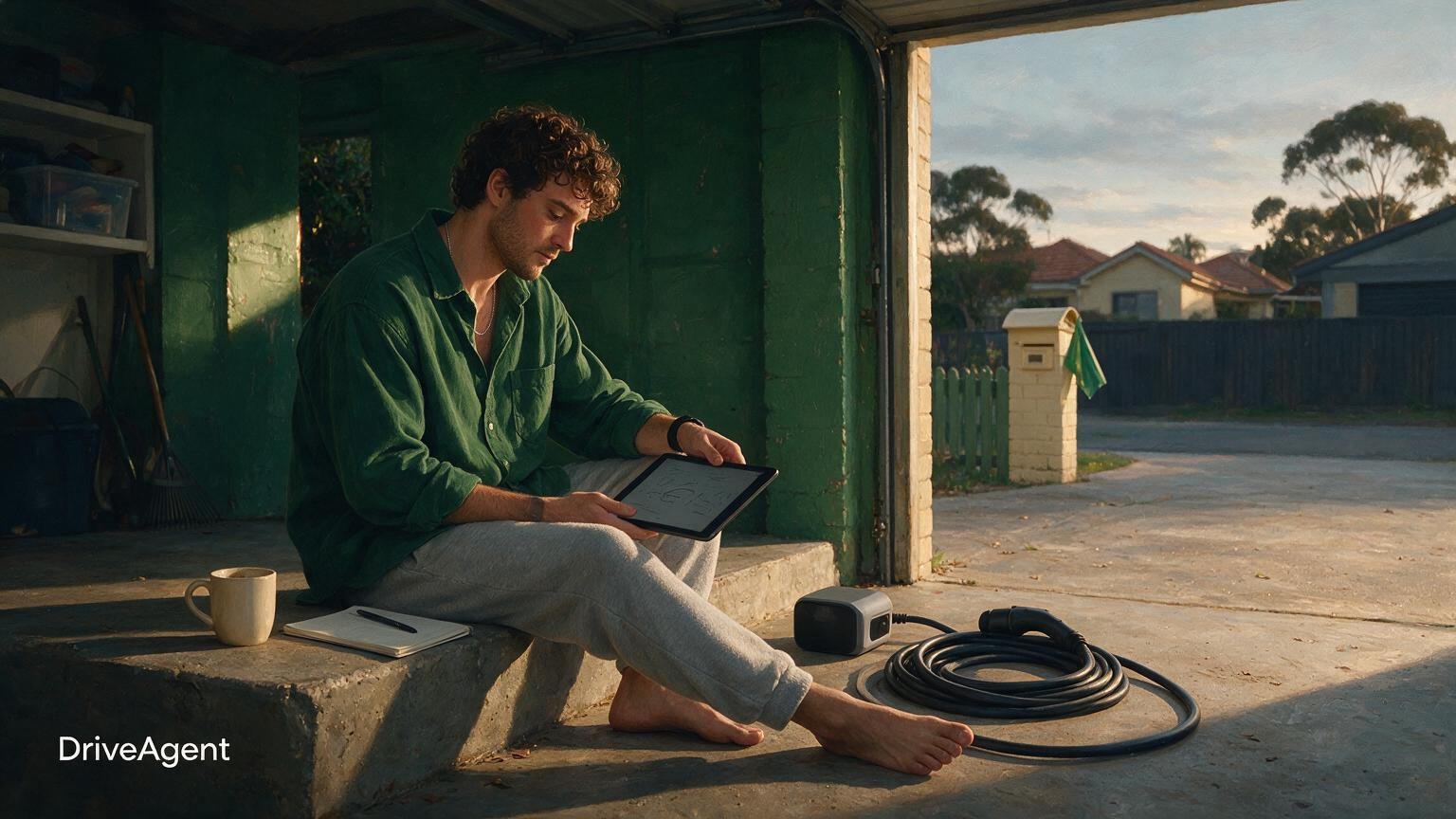
The survey suggests some practical pain points do not disappear once an EV is in the driveway. Among surveyed EV drivers, 19 per cent said they experienced charging-related problems during their first months of ownership, and 18 per cent said they had run out of battery earlier than expected, zecar reports. 3
In response, Allianz recommends that new owners establish a charging routine that fits their lifestyle and become familiar with both home and public charging options. It also advises first-time EV drivers to complete their first DC charging session when they have plenty of time, learn how regenerative braking works, become familiar with driver-assistance technology, and initially practise on familiar roads during quieter periods, according to zecar. The insurer's published guidance also points buyers towards dealerships, experienced EV owners and organisations such as the Australian Electric Vehicle Association. 3
Roadside cover: where Allianz stands out on EV terms
Separate reporting by EV Roadside Assistance, current as of mid-2026, examined the published roadside product pages of five major Australian insurers and found that only Allianz explicitly covers an electric vehicle out of charge. Allianz's Basic plan, from about $99 a year with 50 km towing, and its Platinum plan, from about $139 with 100 km towing plus a replacement vehicle, both list "electric vehicle out of charge" as an included service, with towing arranged to the nearest charging station. The plans carry a 48-hour waiting period after purchase, with a $100 fee for help needed inside it. 2
The same comparison found the other insurers far less explicit. AAMI's Roadside Assist, priced under about $86 a year, mentions EVs only in an exclusion covering carelessly running out of charge. Budget Direct's $89.95-a-year membership confirms EVs are eligible but states it cannot deliver charge to them, meaning a flat traction battery results in a tow capped at $150 per claim. GIO and Apia publish nothing EV-specific at all. EV Roadside Assistance notes these silences leave unanswered whether an out-of-charge callout is treated as a breakdown or driver fault, whether the tow goes to a charger or only a repairer, and whether a flatbed will attend, which most EV manufacturers require. 2
EV Roadside Assistance's own assessment is that insurer add-ons are cheaper and adequate for metropolitan driving, but that a motoring club remains the stronger answer for drivers who venture where chargers thin out, because clubs publish EV policies, employ EV-trained patrols and in some cities offer mobile charging. It cautions that pricing and terms move often and should be verified with each insurer. 2
The wider Allianz EV product picture
Allianz has also developed dedicated EV insurance products in other markets. On its Czech product page, Allianz states it was first to market there with car insurance tailored to electric vehicles, covering towing to the nearest charging station when the battery runs flat, plus cover for the battery and charging equipment such as cables, wall boxes and adapters against damage, fire or theft. Extended assistance tiers include a replacement vehicle, which the company notes may be electric or hybrid depending on rental partner availability. 1
The Czech page also sets out Allianz's battery repair guidance, noting the battery is the most expensive component of an EV and that manufacturers have developed repair procedures allowing damaged casings, wiring, control units and individual modules to be replaced, though individual cells inside modules cannot be. These product details apply to Allianz's Czech offering and are not a description of Australian policy terms, but they illustrate the insurer's broader focus on EV-specific risks alongside the Australian survey findings and roadside cover described above. 1
AI evidence finder
Ask about this article
Ask a question to find relevant published passages and source links. AI selects evidence; the passages remain exactly as published.
Behind this report
Sources & context
Cited source mix
3 cited pages across 3 websites
- Role not assessed 3
Website breakdown
- allianz.cz1 page
- evroadside.com.au1 page
- zecar.com1 page
3 cited pages with an undocumented publisher role. Websites may share ownership or repeat the same reporting.
Saved research extracts
3 / 3 cited pages with saved extracts
0 shortened at our text limit · 0 without a saved-extract record
Extracts retrieved 7 Oct 2026.
Extracts can omit page content. These counts do not verify claims or measure independent reporting. Political leaning and reliability are not rated.
- Pojištění elektromobilu - AzCZRole not assessedSource extract saved
Why these labels?Pojištění elektromobilu - AzCZ
Who produced it
We have not documented this publisher’s role. An unassigned label is not a negative rating.
How this report uses it
Cited in 2 paragraphs: The wider Allianz EV product picture.
This describes its use in our report. It does not establish the source’s editorial stance or independently corroborate every claim.
Evidence record
Text retrieved 7 Oct 2026. The retained extract did not reach our text limit. Extraction can still omit page content.
- Does Your Insurer's Roadside Assistance Cover EVs?Role not assessedSource extract saved
Why these labels?Does Your Insurer's Roadside Assistance Cover EVs?
Who produced it
We have not documented this publisher’s role. An unassigned label is not a negative rating.
How this report uses it
Cited in 3 paragraphs: Roadside cover: where Allianz stands out on EV terms.
This describes its use in our report. It does not establish the source’s editorial stance or independently corroborate every claim.
Evidence record
Text retrieved 7 Oct 2026. The retained extract did not reach our text limit. Extraction can still omit page content.
- Aussies Want EVs, But Many Aren’t Ready to SwitchRole not assessedSource extract saved
Why these labels?Aussies Want EVs, But Many Aren’t Ready to Switch
Who produced it
We have not documented this publisher’s role. An unassigned label is not a negative rating.
How this report uses it
Cited in 10 paragraphs: Interest is climbing, but readiness is lagging; What would sway hesitant buyers, and what worries them; Even existing EV owners report gaps in confidence; Charging and range problems persist after purchase.
This describes its use in our report. It does not establish the source’s editorial stance or independently corroborate every claim.
Evidence record
Text retrieved 7 Oct 2026. The retained extract did not reach our text limit. Extraction can still omit page content.
Keep reading
Related subjects and more from this section.
PHE batteries work harder than EV packs: what the testing data says about plug-in hybrid degradation
An Australian battery-testing specialist warns plug-in hybrids are over-represented in battery problem cases, while a large German real-world study suggests most packs still hold up — but how the vehicle is used and who built it matters more than mileage.