Tesla and major energy retailers unite against AEMC-backed plan to bill all households for 14,000 kerbside EV chargers
Tesla, AGL, EnergyAustralia, Engie and private charging operators have joined forces against a trial letting power distributors mount 14,000 pole-mounted EV chargers and recover 70 per cent of costs from all electricity customers, including those who never own an electric car.
Automatically researched, written and checked using AI. Verify details against the sources.
What the AEMC trial would allow
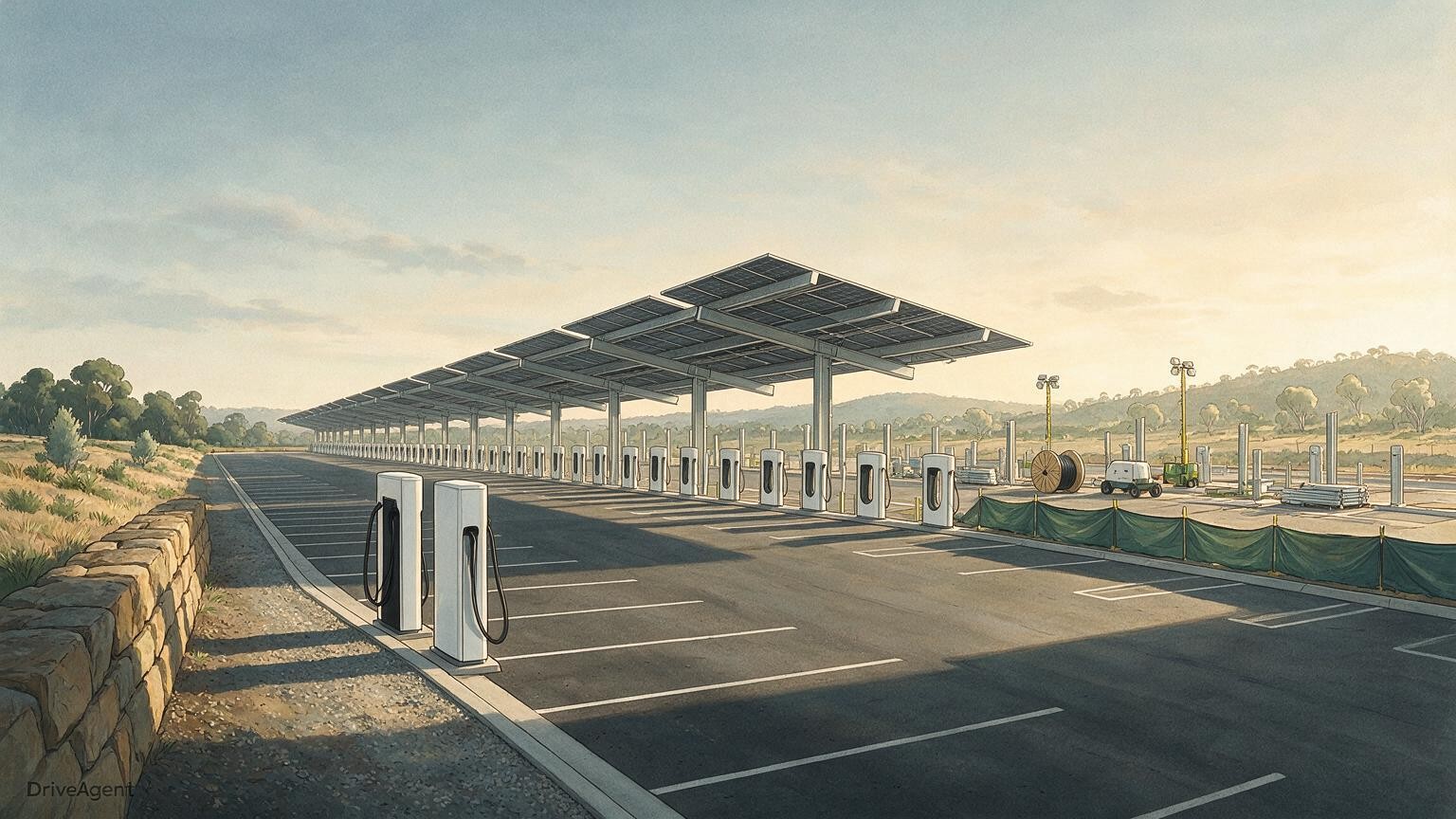
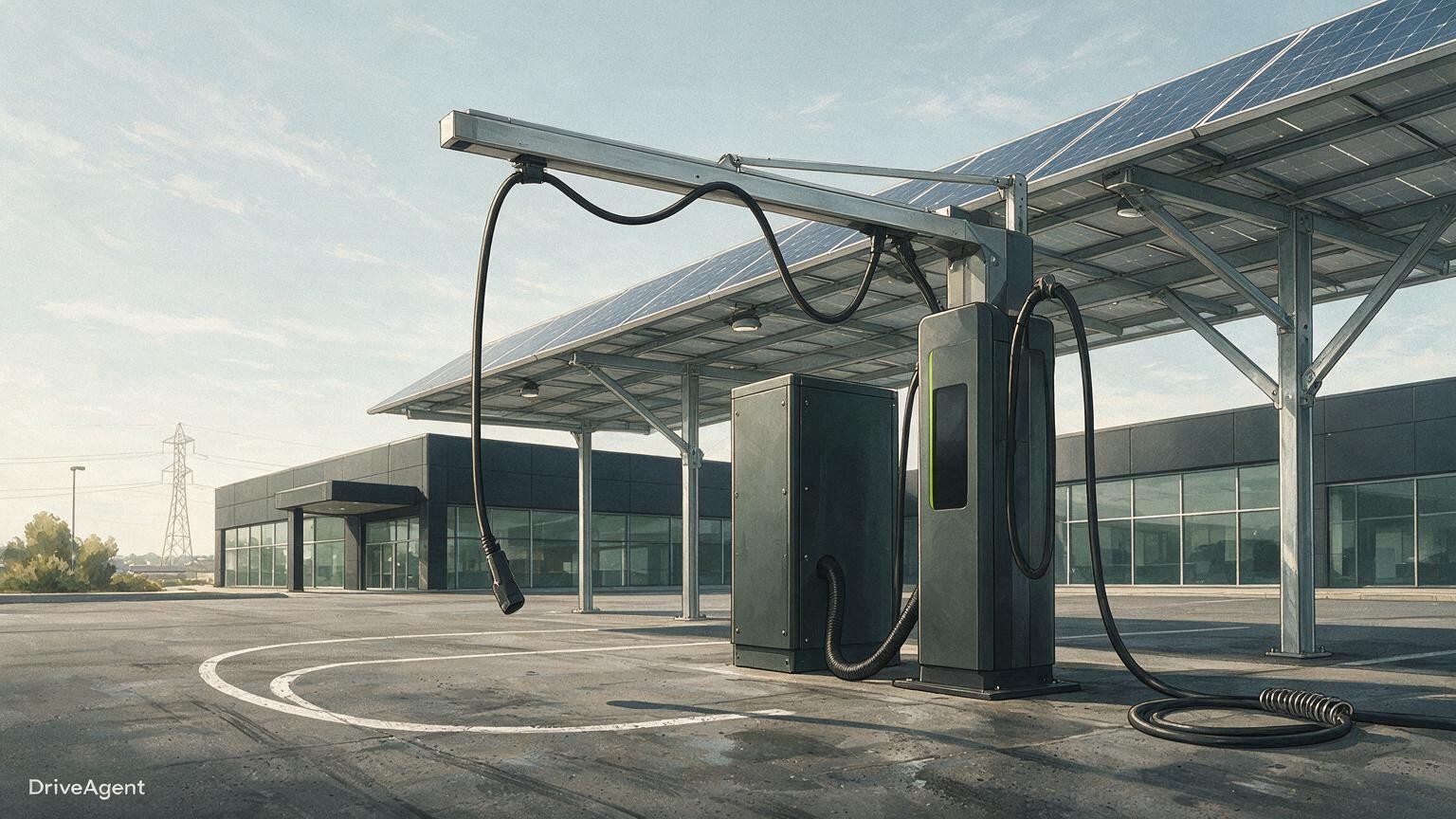
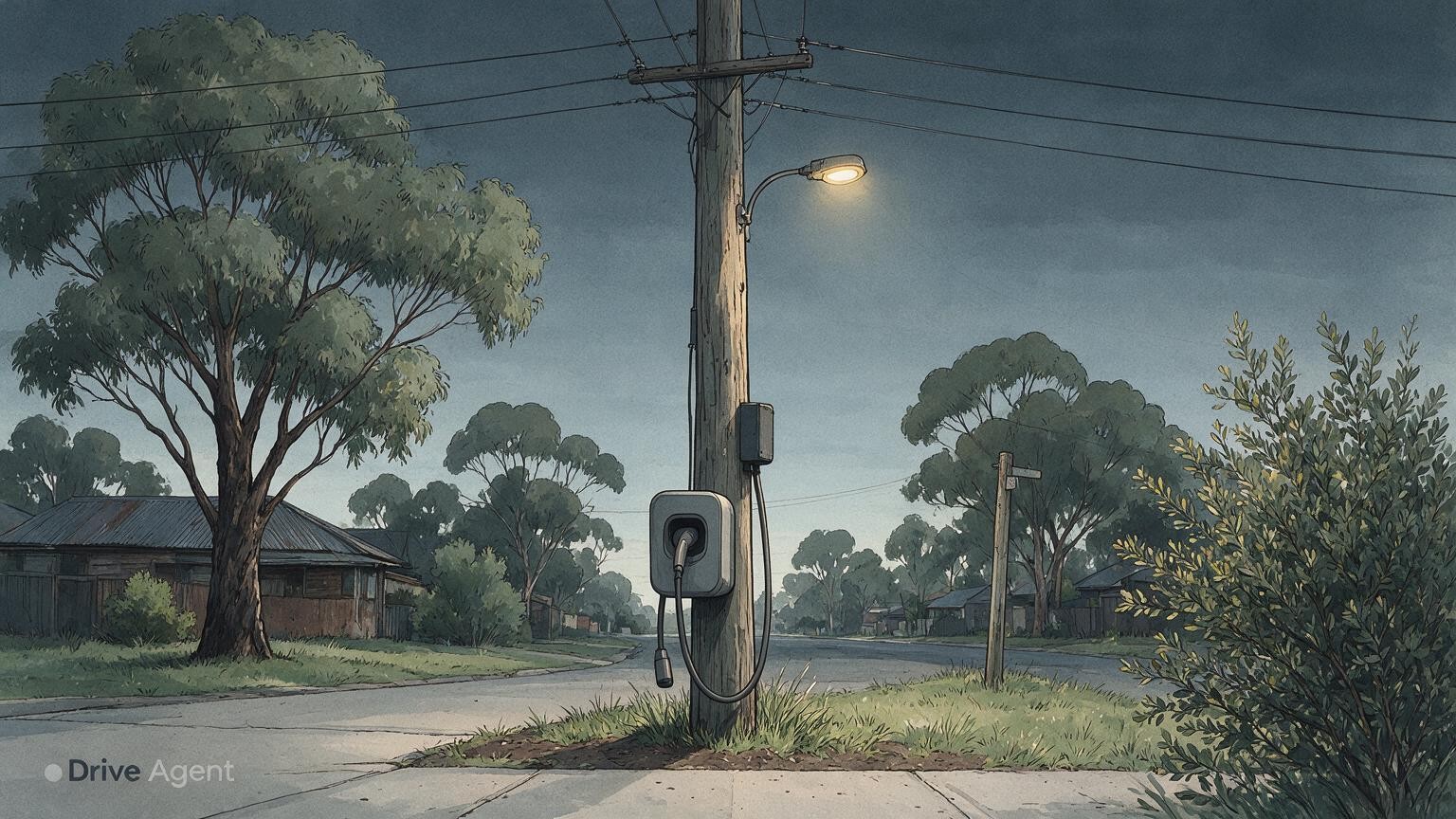
Australian power distributors have secured preliminary approval from the Australian Energy Market Commission to mount 14,000 EV chargers on existing power poles in regional blackspots and other areas underserved by private charging companies, as reported by The Age and the Sydney Morning Herald. Under the trial, the network owners — which control the grid's poles and wires — will be allowed to recover 70 per cent of the costs through regulated charges paid by all electricity consumers, with the federal government funding the remainder. 12
The AEMC estimates the initiative will add $1 a year to household bills over a five-year period, an increase it argues is outweighed by broader economic and environmental benefits. "Having weighed all factors, the commission is satisfied the program's likely benefits outweigh its costs to consumers, given its targeted and time-limited design," AEMC chair Anna Collyer said. "Lessons learned from the trial program will inform future commission decisions regarding EV infrastructure." 12
Tesla, retailers and private operators push back
In a joint letter to the AEMC, Tesla and more than a dozen industry players — including AGL, EnergyAustralia, Engie and private charge-point operators such as Evie Networks — warned that allowing monopoly grid owners into the EV-charging market risks saddling households with higher costs for uncertain benefits, The Age reports. The signatories said the true bill for consumers could escalate beyond the estimated $1 annual charge, and argued that the commission's own analysis had been unable to confirm whether each network-owned charger would lead to the 1.5 to 3.8 new EV purchases needed to justify the cost. 12
Stephanie Bashir, founder of consultancy Nexa Advisory, which organised the letter, said the signatories supported more EV charging but that the need for chargers did not "establish a case for electricity networks to own them or for every electricity customer to help pay for them". "This is potentially like an EV tax on electricity bills," she said. "People who cannot afford an EV, do not own a car or will never use these chargers would still contribute through their electricity bills — the AEMC must explain why that is justified." 12
Tesla argued that a network operator's job was to build, run and maintain the shared grid, "not to own, control, or rollout the batteries, chargers and other equipment sitting in people's homes and driveways", adding that networks "should set the table, so competitive markets can do their work" rather than "pull up a chair and play, while also owning the table, writing the rules for who gets a seat, and acting as umpire". AGL, Australia's second-largest power retailer, echoed the concerns, saying the case for network ownership had "not yet been established" and that allowing monopoly network businesses to lead the rollout "risks higher costs and weaker service outcomes". The letter's signatories also argued that government-regulated grid monopolies entering the market would distort competition against private operators risking their own capital. 12
The opposition is not new. In July, the Australian Financial Review reported that Tesla had opposed proposals by power network operators to own pole-mounted EV chargers across Australia, warning in a submission to the Albanese government's consultation on a proposed $40 million national charger rollout program that it would result in an underused network blocking investment in faster charging options. 5
The networks' case: faster, cheaper charging where it is needed
Network companies including Ausgrid, CitiPower, Powercor and Essential Energy said in a submission earlier this year that waiving "ring-fencing" rules and allowing them into the competitive public-charging market would help ensure greater access for people unable to charge EVs at home because they live in apartments or lack off-street parking. "We do not have enough accessible, affordable public charging," said Energy Networks Australia, the industry group. "By enabling distribution networks to install, own and maintain kerbside electric vehicle charging using existing infrastructure, such as power poles, we can deliver faster, more affordable, and more widespread access to charging where people need it." 12
In April reporting, Energy Networks Australia chief external affairs officer Emma Shanks told the Sydney Morning Herald that the networks were not seeking to enter the fast-charging market but were focused on pole-mounted chargers in urban areas, which it believes should be treated like any other electricity infrastructure. She said its members wanted to install and maintain the chargers but not act as retailers selling electricity from them, and suggested the high costs and connection delays cited by critics probably referred to larger fast-charging stations, which in some cases need as much power as a 12-storey apartment building and require grid upgrades. 4
A charging network already under strain
The dispute unfolds against an infrastructure shortfall documented by the International Energy Agency: Australia has 45 electric cars for every public charging point, compared with a global average of 11, the Sydney Morning Herald reported in April. Smart Energy Council acting chief executive David McElrea said it can take up to two years and $350,000 for networks to connect new chargers to the grid, while EVX chief Sean McGinty — whose company builds kerbside chargers — said the network monopolies control 90 per cent of the costs to the EV charging market and that their entry into competitive charging is slowing private investment. 4
A dozen companies and industry organisations, including Tesla, AGL, the Australian Energy Council and the Smart Energy Council, signed a joint statement calling for clear rules preventing energy networks from entering the charging sector and for improved connection times and fee structures. The statement said the private sector is ready to deploy billions of dollars of cumulative investment by 2030 "under the right policy settings". Climate and Energy Minister Chris Bowen said the government was looking closely at the charging network, noting that Australia's EV charging network grew 20 per cent in 2025 and that remote and regional areas remained "some of the most challenging areas" the government sees as an important public service. 4
Surging EV sales sharpen the stakes
The pressure on charging infrastructure reflects rapidly rising EV uptake. Electric car sales in Australia have more than doubled within a year, with EVs now accounting for one in four new vehicles sold and, for the first time last month, outselling petrol and diesel cars, according to the Electric Vehicle Council's 10th anniversary State of Electric Vehicles Report, covered by ABC News. An electric car is being sold every 100 seconds, the Council said, with more than 600,000 EVs now on Australian roads and uptake highest in outer suburbs such as Tarneit, west of Melbourne. 3
Yet charging remains a bottleneck for further growth. The Electric Vehicle Council's head of legal, policy and advocacy, Aman Gaur, told the ABC that charging infrastructure is increasing but not quite keeping pace, and that Australia needs a coordinated charging plan so Australians can have confidence they can charge their car, truck or van. With EVs at just 3 per cent of the roughly 21 million cars on Australian roads, and the Council's report warning that the 2035 emissions target requires five million battery electric cars on the road by the middle of the next decade, the outcome of the AEMC trial is likely to shape how — and at whose expense — public charging capacity expands. 3
AI evidence finder
Ask about this article
Ask a question to find relevant published passages and source links. AI selects evidence; the passages remain exactly as published.
Behind this report
Sources & context
Cited source mix
5 cited pages across 4 websites
- News publisher 1
- Role not assessed 4
Website breakdown
- smh.com.au2 pages
- abc.net.au1 page
- afr.com1 page
- The Agetheage.com.au1 page
4 cited pages with an undocumented publisher role. Websites may share ownership or repeat the same reporting.
Saved research extracts
5 / 5 cited pages with saved extracts
0 shortened at our text limit · 0 without a saved-extract record
Extracts retrieved 7 Oct 2026.
Extracts can omit page content. These counts do not verify claims or measure independent reporting. Political leaning and reliability are not rated.
- Tesla and power giants revolt against Australia’s ‘EV charger tax’News publisherSource extract saved
Why these labels?Tesla and power giants revolt against Australia’s ‘EV charger tax’
Who produced it
Nine identifies The Age as its newspaper and digital news publication. Identity reference ↗
How this report uses it
Cited in 6 paragraphs: What the AEMC trial would allow; Tesla, retailers and private operators push back; The networks' case: faster, cheaper charging where it is needed.
This describes its use in our report. It does not establish the source’s editorial stance or independently corroborate every claim.
Evidence record
Text retrieved 7 Oct 2026. The retained extract did not reach our text limit. Extraction can still omit page content.
- Tesla and power giants revolt against Australia's ‘EV charger tax'Role not assessedSource extract saved
Why these labels?Tesla and power giants revolt against Australia's ‘EV charger tax'
Who produced it
We have not documented this publisher’s role. An unassigned label is not a negative rating.
How this report uses it
Cited in 6 paragraphs: What the AEMC trial would allow; Tesla, retailers and private operators push back; The networks' case: faster, cheaper charging where it is needed.
This describes its use in our report. It does not establish the source’s editorial stance or independently corroborate every claim.
Evidence record
Text retrieved 7 Oct 2026. The retained extract did not reach our text limit. Extraction can still omit page content.
- One EV sold every 100 seconds as Australia catches up to the worldRole not assessedSource extract saved
Why these labels?One EV sold every 100 seconds as Australia catches up to the world
Who produced it
We have not documented this publisher’s role. An unassigned label is not a negative rating.
How this report uses it
Cited in 2 paragraphs: Surging EV sales sharpen the stakes.
This describes its use in our report. It does not establish the source’s editorial stance or independently corroborate every claim.
Evidence record
Text retrieved 7 Oct 2026. The retained extract did not reach our text limit. Extraction can still omit page content.
- Lack of chargers stalls grand plans for electric carsRole not assessedSource extract saved
Why these labels?Lack of chargers stalls grand plans for electric cars
Who produced it
We have not documented this publisher’s role. An unassigned label is not a negative rating.
How this report uses it
Cited in 3 paragraphs: The networks' case: faster, cheaper charging where it is needed; A charging network already under strain.
This describes its use in our report. It does not establish the source’s editorial stance or independently corroborate every claim.
Evidence record
Text retrieved 7 Oct 2026. The retained extract did not reach our text limit. Extraction can still omit page content.
- Tesla, councils warn EV charger rollout plan could backfireRole not assessedSource extract saved
Why these labels?Tesla, councils warn EV charger rollout plan could backfire
Who produced it
We have not documented this publisher’s role. An unassigned label is not a negative rating.
How this report uses it
Cited in 1 paragraph: Tesla, retailers and private operators push back.
This describes its use in our report. It does not establish the source’s editorial stance or independently corroborate every claim.
Evidence record
Text retrieved 7 Oct 2026. The retained extract did not reach our text limit. Extraction can still omit page content.
Keep reading
Related subjects and more from this section.
Nissan Oceania requests nearly all of its Chinese new-energy line-up while the Leaf stays on hold
Managing director Steve Milette says Nissan Oceania has put its hand up for almost every model shown in the Dongfeng partnership pipeline, but the third-generation Leaf remains paused on business-case grounds and no Chinese model has formal Australian approval or timing.