PHE batteries work harder than EV packs: what the testing data says about plug-in hybrid degradation
An Australian battery-testing specialist warns plug-in hybrids are over-represented in battery problem cases, while a large German real-world study suggests most packs still hold up — but how the vehicle is used and who built it matters more than mileage.
Automatically researched, written and checked using AI. Verify details against the sources.
The warning from the testing bench
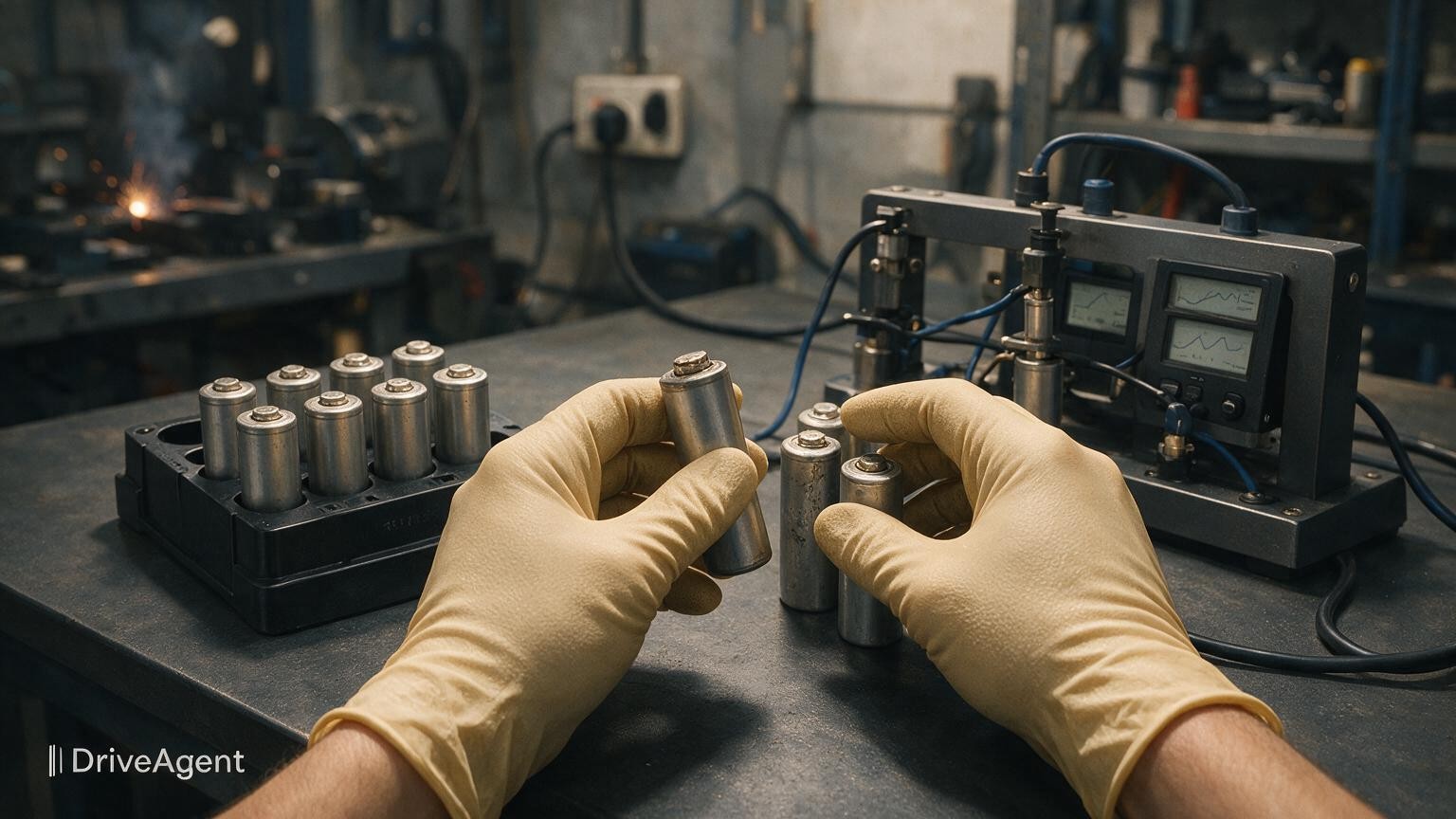
A battery-testing specialist has cautioned that plug-in hybrid packs lead a harder life than those in fully electric vehicles. Reporting carried by Autoblog and republished by AOL says Test EV, an Australian EV-battery testing firm, told carsales that PHEVs are "disproportionately represented among electrified vehicles suffering battery problems". The same report notes Consumer Reports research finding PHEVs experience roughly 80% more issues on average than petrol-only vehicles, attributed to the complexity of combining two powertrains. 1
Test EV founder Nathan Gore-Brown offered owners a practical takeaway rather than a warning off the technology. "There is plenty of feedback from years of PHEVs in the market that they need to be charged regularly to get the best out of the battery and fuel economy," he said, per the Autoblog report. The firm's advice is to plug in regularly rather than avoid electric driving. 1
Why small packs get worked harder
The physics behind the warning is straightforward. As newmobility.news explains, PHEVs carry relatively small batteries — typically 8–20 kWh — while battery-electric vehicles use packs of 50–100 kWh or more. A driver covering 40–50 electric kilometres a day will nearly fully discharge and recharge a PHEV pack daily, whereas an EV covering the same distance uses only 10–30% of its capacity. Over a vehicle's life, the PHEV therefore accumulates many more full-equivalent cycles, and each kilowatt-hour of capacity is worked harder. 3
Smaller packs also operate at higher C-rates — current drawn or charged per unit of capacity — which increases heat generation and internal resistance, both known accelerants of lithium-ion degradation, newmobility.news reports. Earlier-generation PHEVs often rely on simpler thermal management than EVs, leaving them more exposed to temperature-related ageing. Autoblog's report adds that many PHEV packs fall in the 15–25 kWh range while still driving potent electric motors, deepening the stress relative to capacity. 31
Chemistry compounds the issue. The OK.com analysis of PHEV degradation notes most plug-in hybrids use nickel-manganese-cobalt (NMC) cells, chosen for high energy density in a compact package, but high-nickel NMC cells lose capacity more quickly when they spend long stretches at very low or very high states of charge — exactly the pattern of a PHEV owner who drains the pack then plugs back in. Its comparison: over 100,000 miles of electric driving, a 300-mile EV completes roughly 333 full-equivalent cycles, while a 40-mile-range PHEV needs about 2,500 — roughly eight times the workload. 2
Independent research points the same way. newmobility.news cites the European Commission's Joint Research Centre finding that PHEV batteries lose usable capacity faster than EV packs because of their smaller size and higher cycling frequency, and a US Idaho National Laboratory long-term comparison in which a Toyota Prius plug-in reached its degradation threshold sooner than a Nissan Leaf, despite the Leaf processing more total energy. 3
What the biggest real-world study found
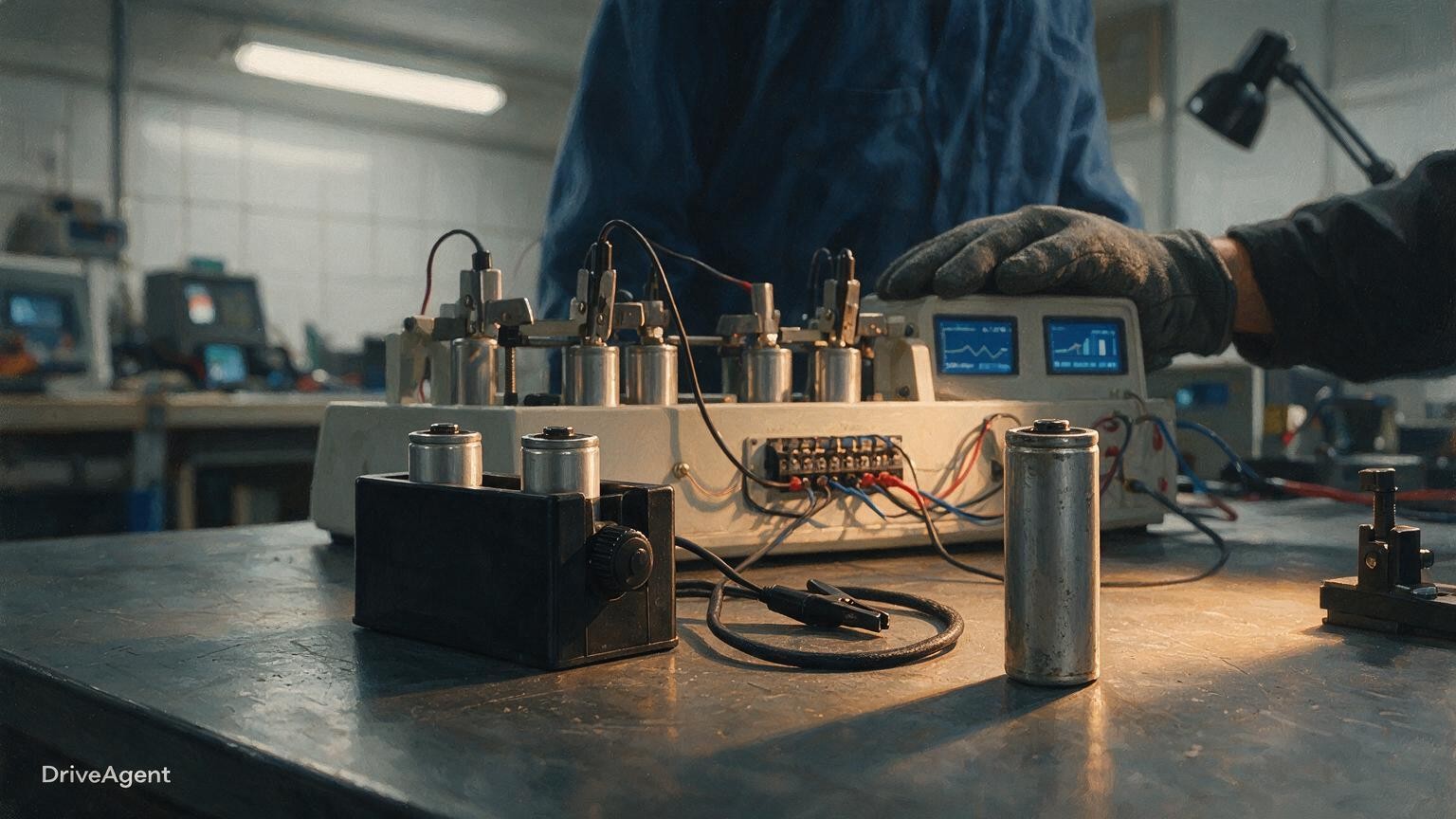
The reassuring counterpoint comes from Germany. In late 2025, automobile club ADAC and battery-testing firm Aviloo published the largest real-world look at PHEV battery health to date, analysing around 28,500 battery-health measurements from BMW, Ford, Mercedes-Benz, Mitsubishi, Volkswagen Group and Volvo plug-in hybrids, according to the OK.com report. The study concluded that PHEVs used heavily in electric mode show more battery ageing, noting that intensive electric use takes batteries "quickly" through a high number of charging cycles. 2
The numbers, though, suggest most packs endure. OK.com reports that at 100,000 km the least-used batteries averaged roughly 94% state of health and the most heavily used about 85%; by 200,000 km the trend lines stood at roughly 91% and 82%. newmobility.news, covering the same study, cites typical values of around 92% after 50,000 km, 88% after 100,000 km and roughly 80% after 200,000 km, describing average degradation as moderate and within the expected limits for a typical vehicle lifespan. 23
ADAC also published benchmarks for prospective buyers, reported consistently by both outlets: a healthy PHEV battery should show at least 92% state of health at 50,000 km, 88% at 100,000 km, 84% at 150,000 km and 80% at 200,000 km. The 80% mark matters because manufacturers and battery specialists often treat it as the end of a battery's useful energy-storage life — the car keeps working, but electric range shrinks and the petrol engine does more. "If the value of the battery check is significantly lower, this could be an indication of an excessively fast-aged battery or individual weakening battery cells," ADAC said, as quoted by newmobility.news, recommending a battery check for anyone considering a used plug-in hybrid. 23
Brand matters more than the odometer
One of the study's most commercially significant findings is how widely battery longevity varies by manufacturer. According to OK.com's account of the ADAC data, Mercedes-Benz PHEVs aged well even at high mileage, while Volkswagen Group and Volvo models mostly appeared trouble-free. BMW's results varied considerably, but the study found a visible link between electric use and degradation in its models. Ford batteries lost capacity earlier than most, and Mitsubishi came in last, trailing the others by a wide margin. The lesson for used-PHEV shoppers, OK.com concludes, is that the badge can say more about battery condition than the odometer does. 2
newmobility.news' coverage of the same analysis echoes the brand split, reporting that Mercedes-Benz vehicles maintained relatively stable state-of-health levels even above 200,000 km while some Mitsubishi models showed earlier declines, and that cars driven more frequently in electric mode degraded faster than those leaning more on their combustion engines. 3
The Australian context and ownership costs
The findings land in a market where plug-in hybrids are firmly established. Autoblog's report notes demand for PHEVs in Australia is strong, with Ford offering a Ranger with a plug-in option and the Mitsubishi Outlander PHEV continuing to sell strongly among non-Chinese models, while BYD leads the segment with the Shark 6 ahead of Chinese brands including Geely and Chery. Mitsubishi's last-place showing in the ADAC battery-health data is worth weighing against that sales strength, though the study covers overseas-market vehicles and does not single out Australian-delivered examples. 1
The picture contrasts with the United States, where PHEVs have struggled to gain broad traction. Autoblog's report notes Jeep discontinued its Wrangler 4xe and Grand Cherokee 4xe for the 2026 model year, and that brands such as Ram are pursuing range-extended electric vehicle (EREV) powertrains instead — an architecture newmobility.news describes as more battery-friendly, with larger packs and controlled operation producing ageing closer to that of pure EVs. 13
For Australian owners weighing long-term costs, Cars24 reports that a new PHEV battery from a manufacturer generally costs between $10,000 and $20,000, with installation labour adding several hundred to over a thousand dollars, while new HEV batteries range from $2,000 to $10,000. Remanufactured packs from companies such as Infinitev cost 40–60% less than new units, and Cars24 puts the realistic average lifespan of a hybrid traction battery at eight to 12 years or roughly 160,000–200,000 km in Australian conditions, where high ambient temperatures, clogged cooling vents and deep cycling all add stress. 5
What owners can do about it
The practical advice converges across sources. Autoblog's report, citing Test EV, advises owners to plug in regularly to get the most from the battery and fuel economy. newmobility.news, drawing on ADAC's findings, adds that frequent charging to 100%, parking for long periods at a high state of charge and heat exposure accelerate wear, while keeping the state of charge within moderate limits and avoiding unnecessary full cycles can significantly extend pack life. It notes most PHEV batteries will function adequately for eight to ten years of everyday use and that smaller packs are comparatively cheap to replace. 13
OK.com's analysis of the ADAC data adds perspective on ownership length: for buyers planning to keep a PHEV only a few years, battery degradation is even less of a concern, with the residual value impact likely to be small. The same analysis and the autoedgeview.com hybrid battery guide both caution that dashboard percentages do not always reflect true physical charge limits, since many PHEVs keep protective buffers at both ends of the range. 24
Deeper technical guidance from the autoedgeview.com hybrid battery guide points to PHEV-specific habits: prefer Level 2 AC charging for daily use and reserve DC fast charging for trips, charge to 80% instead of 100% where the vehicle offers a charge-limit setting if the commute uses only part of the electric range, avoid letting the pack sit fully charged for days, and use shallow rather than full-depth cycles, which it says can double or triple effective cycle life. 4
One safety caveat sits alongside the degradation story. newmobility.news reports that the risk of a PHEV battery fire can rise modestly as packs age but remains statistically very low and far below that of conventional fuel systems when vehicles are adequately maintained, while noting that plug-in hybrids retain petrol-system fire risks that battery-electric vehicles do not carry. 3
The overall picture is one of a technology with a genuine, well-documented trade-off rather than a defect. The ADAC and Aviloo data shows intensive electric driving ages PHEV batteries faster than EV packs, with brand choice and usage behaviour shaping the outcome, yet most packs retain four-fifths of their capacity beyond 200,000 km. For Australian buyers drawn to the plug-in Ranger, Outlander PHEV or Shark 6, the evidence supports using the electric range as intended — while treating battery state of health as a key checklist item, especially on a used example. 23
AI evidence finder
Ask about this article
Ask a question to find relevant published passages and source links. AI selects evidence; the passages remain exactly as published.
Behind this report
Sources & context
Cited source mix
5 cited pages across 5 websites
- Dealer / retailer 1
- Role not assessed 4
Website breakdown
- aol.ca1 page
- autoedgeview.com1 page
- Cars24cars24.com.au1 page
- newmobility.news1 page
- us.ok.com1 page
4 cited pages with an undocumented publisher role. Websites may share ownership or repeat the same reporting.
Saved research extracts
5 / 5 cited pages with saved extracts
1 shortened at our text limit · 0 without a saved-extract record
Extracts retrieved 6 Oct 2026.
Extracts can omit page content. These counts do not verify claims or measure independent reporting. Political leaning and reliability are not rated.
- Plug-In Hybrids Show Up More Often in Battery Problem Cases - AOLRole not assessedSource extract saved
Why these labels?Plug-In Hybrids Show Up More Often in Battery Problem Cases - AOL
Who produced it
We have not documented this publisher’s role. An unassigned label is not a negative rating.
How this report uses it
Cited in 6 paragraphs: The warning from the testing bench; Why small packs get worked harder; The Australian context and ownership costs; What owners can do about it.
This describes its use in our report. It does not establish the source’s editorial stance or independently corroborate every claim.
Evidence record
Text retrieved 6 Oct 2026. The retained extract did not reach our text limit. Extraction can still omit page content.
- us.ok.com › ask_news_cars › phev-battery-degradationPHEV Battery Degradation: Real-World Data Says They LastRole not assessedSource extract saved
Why these labels?us.ok.com › ask_news_cars › phev-battery-degradationPHEV Battery Degradation: Real-World Data Says They Last
Who produced it
We have not documented this publisher’s role. An unassigned label is not a negative rating.
How this report uses it
Cited in 7 paragraphs: Why small packs get worked harder; What the biggest real-world study found; Brand matters more than the odometer; What owners can do about it.
This describes its use in our report. It does not establish the source’s editorial stance or independently corroborate every claim.
Evidence record
Text retrieved 6 Oct 2026. The retained extract did not reach our text limit. Extraction can still omit page content.
- How plug-in hybrid batteries degrade faster than full EVsRole not assessedSource extract saved
Why these labels?How plug-in hybrid batteries degrade faster than full EVs
Who produced it
We have not documented this publisher’s role. An unassigned label is not a negative rating.
How this report uses it
Cited in 10 paragraphs: Why small packs get worked harder; What the biggest real-world study found; Brand matters more than the odometer; The Australian context and ownership costs; What owners can do about it.
This describes its use in our report. It does not establish the source’s editorial stance or independently corroborate every claim.
Evidence record
Text retrieved 6 Oct 2026. The retained extract did not reach our text limit. Extraction can still omit page content.
- autoedgeview.com · battery-guides · hybrid-car-batteryHow Does a Hybrid Car Charge Its Battery? HEV vs PHEV Battery...Role not assessedShortened extract saved
Why these labels?autoedgeview.com · battery-guides · hybrid-car-batteryHow Does a Hybrid Car Charge Its Battery? HEV vs PHEV Battery...
Who produced it
We have not documented this publisher’s role. An unassigned label is not a negative rating.
How this report uses it
Cited in 2 paragraphs: What owners can do about it.
This describes its use in our report. It does not establish the source’s editorial stance or independently corroborate every claim.
Evidence record
Text retrieved 6 Oct 2026. The retained extract was cut to our text limit; omitted material has not been assessed here.
- How long can you expect a hybrid car battery to last? - Cars24Dealer / retailerSource extract saved
Why these labels?How long can you expect a hybrid car battery to last? - Cars24
Who produced it
Cars24 buys and sells used cars in Australia and states that it owns the cars it sells. Identity reference ↗
How this report uses it
Cited in 1 paragraph: The Australian context and ownership costs.
This describes its use in our report. It does not establish the source’s editorial stance or independently corroborate every claim.
Evidence record
Text retrieved 6 Oct 2026. The retained extract did not reach our text limit. Extraction can still omit page content.
Keep reading
Related subjects and more from this section.
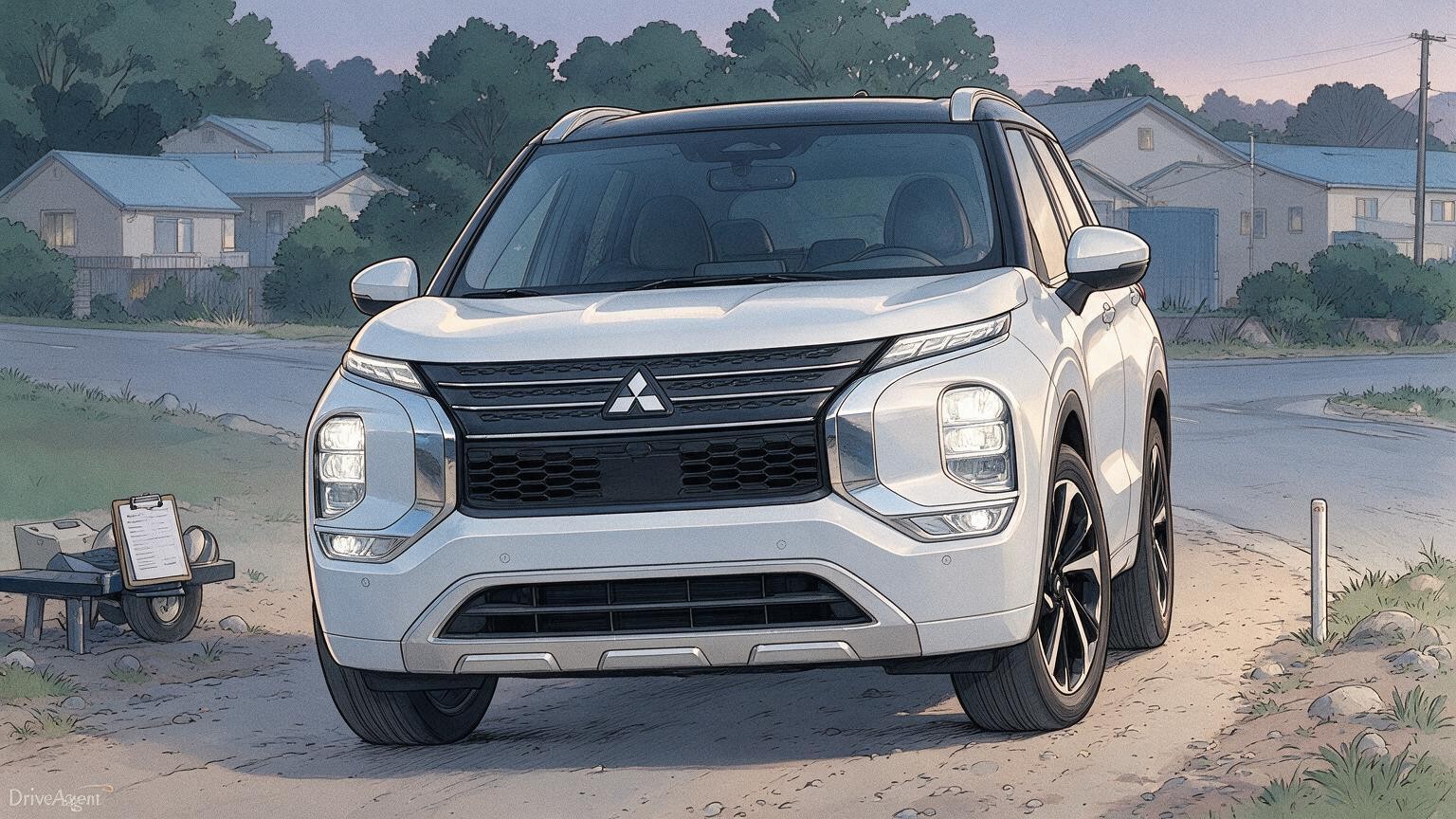
Next Mitsubishi Outlander reported for 2028 with four-motor plug-in hybrid and Elevance concept styling
Japanese outlet Response reports the fifth-generation Mitsubishi Outlander is in development for a 2028 debut, with up to four electric motors previewed by the Elevance concept — though Mitsubishi has not confirmed the plans.