Electric vehicle sales hit record pace as State of EVs 2026 finds an EV bought every 100 seconds
Australians bought a record 157,958 electrified vehicles in the first half of 2026, more than doubling year-on-year, according to the Electric Vehicle Council's annual State of EVs report — but the lobby group says the fleet still needs to grow tenfold by 2035 to meet national emissions goals.
Automatically researched, written and checked using AI. Verify details against the sources.
Record first-half sales and a growing share of the market
An electric vehicle was sold somewhere in Australia every 100 seconds during the first half of 2026, according to the Electric Vehicle Council's latest annual figures released on Wednesday. The council's State of EVs 2026 report, launched by Federal Climate Change and Energy Minister Chris Bowen, records a total of 157,958 electrified vehicles sold in the six months to June — 103,716 fully battery-electric and 54,241 plug-in hybrids — a rise of 117 per cent compared with the same period in 2025. 124
The Sydney Morning Herald, which reported the figures, says electric vehicles have expanded their share of the new car market from 10 per cent last year to more than 25 per cent as of last month, meaning more than one in every four new vehicles sold was electrified. The council's report puts the national EV fleet past 612,000 vehicles by the end of June, and the council's policy head Aman Gaur said the fleet had tipped over 500,000 battery-electric cars in the weeks before the report's release. 12
Council chief executive Julie Delvecchio contrasted the result with the organisation's first annual report in 2017, when motorists purchased just 2284 electrified vehicles. In her view, the 2026 figures point to a structural shift rather than a temporary spike, with more models, more competition and more affordable EVs arriving as households feel the pressure of high petrol prices. 2
Affordability and fuel prices as the drivers of change
The surge has been propelled by two converging forces. The Sydney Morning Herald reports that soaring petrol and diesel prices — driven by the war between the United States and Iran cutting off global oil supplies — have pushed motorists to seek running-cost relief, while an influx of lower-cost, predominantly Chinese, brands has introduced models priced close to, and in some cases below, comparable petrol and diesel vehicles. 1
Delvecchio attributed the boom to a powerful combination of greater vehicle availability, improved affordability and growing awareness that EVs are one of the best ways to cut the cost of living, adding that Australians are voting with their wallets against a backdrop of extreme fuel volatility. The report's context also notes petrol and diesel prices reached their highest average level since April due to the impact of ongoing conflict in the Middle East. 12
Consumer sentiment appears to be shifting alongside the sales figures. A major survey of more than 42,000 NRMA members, released last month, found drivers of petrol and diesel vehicles were now more anxious about high fuel costs than electric vehicle owners were about charging availability — a long-standing worry among prospective EV buyers. NRMA spokesman Peter Khoury said the sales growth showed longstanding barriers were evaporating and that 2026 would be remembered as the tipping point, adding this is not a flash in the pan. 1
August milestone: electric cars outsell petrol for the first time
Federal Energy Minister Chris Bowen said Australia's August monthly sales figures showed full battery-electric vehicles outselling petrol-only vehicles for the first time, 27,078 to 25,824, describing it as a landmark moment. Drive.com.au separately reported the August figures, adding that electric vehicles also outsold diesel (23,608) in the month — the first time in the country's history EVs topped both categories in new registrations. 13
Bowen said Australians have seen through scare campaigns and are voting with their wallets for cars that are cheaper to run, cleaner and reduce exposure to international petrol price shocks. 1
A long road to 2035: tenfold fleet growth still needed
Despite the record sales, the Electric Vehicle Council says uptake must accelerate substantially to meet Australia's emissions goals. Citing Climate Change Authority estimates, policy head Aman Gaur said the battery-electric fleet of just over 500,000 vehicles needs to increase by ten times to hit the 2035 target. The AAP report on the findings notes the fleet would need to grow to about 10 times its present size to help meet the 2035 emissions target, prompting the council's calls for policy change. 123
The council's report ranks states and territories on transport policy, placing the federal government, NSW and the ACT at the top, while Queensland, South Australia, Tasmania and the Northern Territory ranked equal last with a score of two out of 10 for ambition and efforts to electrify buses, freight vehicles and government fleets. Victoria received a pass mark for its electric heavy-vehicle trial. Among the policy changes recommended are extending the New Vehicle Efficiency Standard beyond 2029, implementing a national road-user charge that does not discourage EV purchases, and introducing assistance for disadvantaged households. 2
Vans and trucks lag as freight electrification stalls
The transition is moving far slower in commercial transport. The Electric Vehicle Council's analysis finds battery-electric models account for just one per cent of van sales and 0.6 per cent of truck sales, and the council describes the shift in electric vans and light trucks as happening at a crawl, with the report calling freight electrification the biggest unseized opportunity in Australia's transition. 12
Gaur said trucks are left eating dust because there is not enough financial support to help Australians, particularly small businesses running freight operations. The council is calling on governments to remove restrictions on heavy electric vehicles, introduce tax concessions or financial assistance to boost adoption, and expand financial incentives for electric trucks and vans, along with equity-focused support to help lower-income households switch. 21
Charging network expands but must keep pace
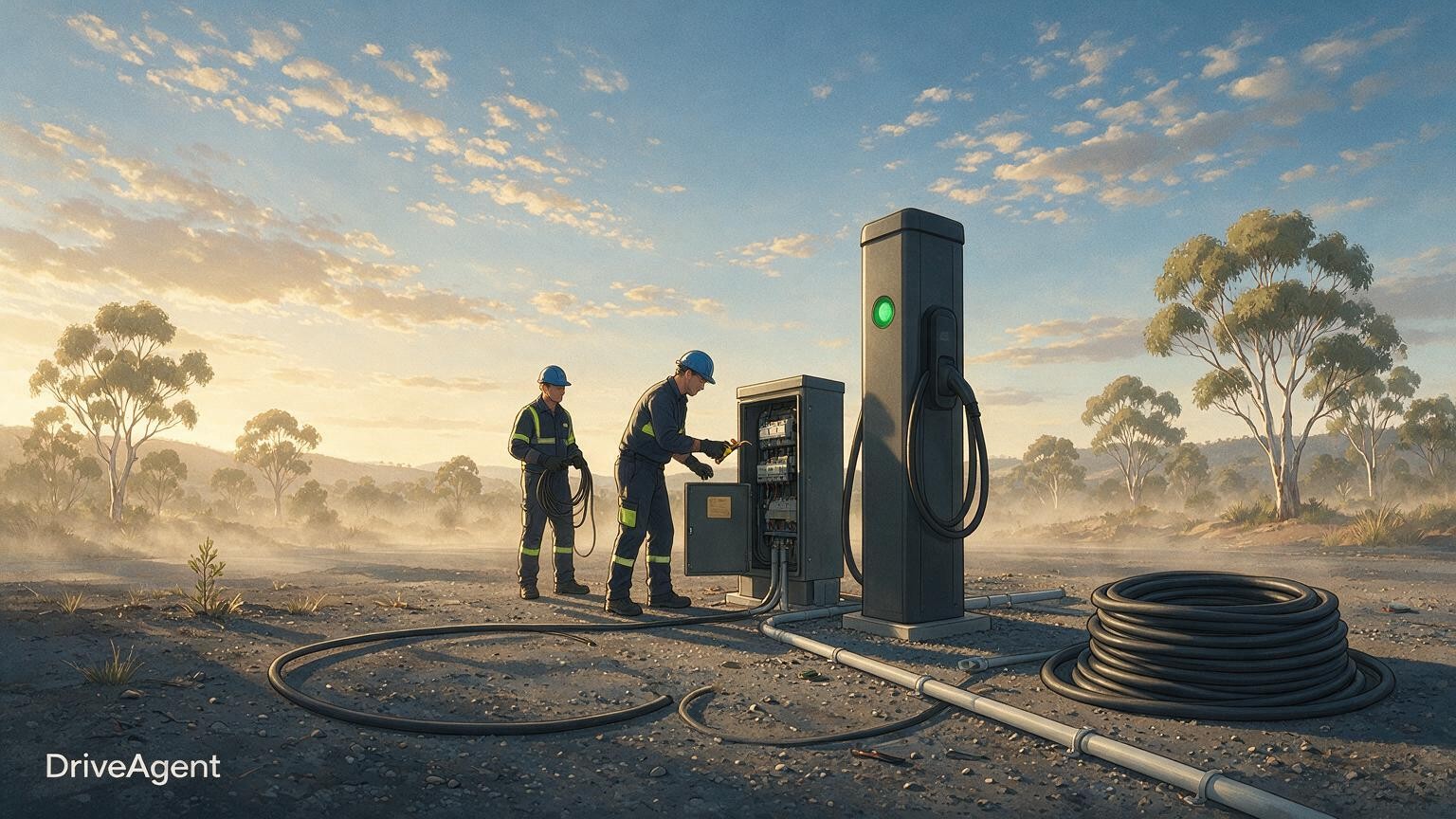
The public charging network has grown substantially alongside the sales boom. The Electric Vehicle Council's report finds charging locations grew from 476 in 2017 to 4268, and the Sydney Morning Herald reports the network now exceeds 4000 locations, up 235 per cent from the council's previous count in June 2025. 12
The report warns, however, that the greatest risk is that the pace and quality of charging development fail to keep up with EV uptake — leading to too few chargers, queues at busy locations, persistent black spots, unreliable equipment, slow repairs and limited options for people who cannot charge at home. It adds that charging problems are highly visible, meaning even a relatively small number of poor experiences could have an outsize effect on public confidence as more Australians become first-time EV owners. The council is calling for a nationally coordinated road map for the charging rollout and a fair federal road-user charge to replace lost fuel-excise revenue, with funds delivered into local charging infrastructure. 1
AI evidence finder
Ask about this article
Ask a question to find relevant published passages and source links. AI selects evidence; the passages remain exactly as published.
Behind this report
Sources & context
Cited source mix
4 cited pages across 4 websites
- Role not assessed 4
Website breakdown
- aapnews.aap.com.au1 page
- ground.news1 page
- nationaltribune.com.au1 page
- smh.com.au1 page
4 cited pages with an undocumented publisher role. Websites may share ownership or repeat the same reporting.
Saved research extracts
4 / 4 cited pages with saved extracts
0 shortened at our text limit · 0 without a saved-extract record
Extracts retrieved 30 Sep 2026.
Extracts can omit page content. These counts do not verify claims or measure independent reporting. Political leaning and reliability are not rated.
- One EV sold every 100 seconds: More electric cars to hit Australia's roadsRole not assessedSource extract saved
Why these labels?One EV sold every 100 seconds: More electric cars to hit Australia's roads
Who produced it
We have not documented this publisher’s role. An unassigned label is not a negative rating.
How this report uses it
Cited in 12 paragraphs: Record first-half sales and a growing share of the market; Affordability and fuel prices as the drivers of change; August milestone: electric cars outsell petrol for the first time; A long road to 2035: tenfold fleet growth still needed; Vans and trucks lag as freight electrification stalls; Charging network expands but must keep pace.
This describes its use in our report. It does not establish the source’s editorial stance or independently corroborate every claim.
Evidence record
Text retrieved 30 Sep 2026. The retained extract did not reach our text limit. Extraction can still omit page content.
- Tenfold surge in EV sales needed to meet climate goalsRole not assessedSource extract saved
Why these labels?Tenfold surge in EV sales needed to meet climate goals
Who produced it
We have not documented this publisher’s role. An unassigned label is not a negative rating.
How this report uses it
Cited in 9 paragraphs: Record first-half sales and a growing share of the market; Affordability and fuel prices as the drivers of change; A long road to 2035: tenfold fleet growth still needed; Vans and trucks lag as freight electrification stalls; Charging network expands but must keep pace.
This describes its use in our report. It does not establish the source’s editorial stance or independently corroborate every claim.
Evidence record
Text retrieved 30 Sep 2026. The retained extract did not reach our text limit. Extraction can still omit page content.
- One EV sold every 100 seconds: More electric cars to hit Australia’s roadsRole not assessedSource extract saved
Why these labels?One EV sold every 100 seconds: More electric cars to hit Australia’s roads
Who produced it
We have not documented this publisher’s role. An unassigned label is not a negative rating.
How this report uses it
Cited in 2 paragraphs: August milestone: electric cars outsell petrol for the first time; A long road to 2035: tenfold fleet growth still needed.
This describes its use in our report. It does not establish the source’s editorial stance or independently corroborate every claim.
Evidence record
Text retrieved 30 Sep 2026. The retained extract did not reach our text limit. Extraction can still omit page content.
- State Of EVs 2026Role not assessedSource extract saved
Why these labels?State Of EVs 2026
Who produced it
We have not documented this publisher’s role. An unassigned label is not a negative rating.
How this report uses it
Cited in 1 paragraph: Record first-half sales and a growing share of the market.
This describes its use in our report. It does not establish the source’s editorial stance or independently corroborate every claim.
Evidence record
Text retrieved 30 Sep 2026. The retained extract did not reach our text limit. Extraction can still omit page content.
Keep reading
Related subjects and more from this section.
Electric Vehicle Council launches State of EVs 2026 as Australia passes 500,000 battery electric vehicles
The Electric Vehicle Council's State of EVs 2026 report, launched by Climate Change and Energy Minister Chris Bowen, says Australians are buying EVs in record numbers, weeks after the Council confirmed the national battery electric fleet had passed half a million vehicles.