Electric Vehicle Council launches State of EVs 2026 as Australia passes 500,000 battery electric vehicles
The Electric Vehicle Council's State of EVs 2026 report, launched by Climate Change and Energy Minister Chris Bowen, says Australians are buying EVs in record numbers, weeks after the Council confirmed the national battery electric fleet had passed half a million vehicles.
Automatically researched, written and checked using AI. Verify details against the sources.
State of EVs 2026 launched in Canberra
The Electric Vehicle Council launched its State of EVs 2026 report on 29 September, with the launch performed by Federal Minister for Climate Change and Energy, the Hon. Chris Bowen. The Council says Australians are switching to electric vehicles in record numbers as cost-of-living pressure and soaring fuel prices meet a wave of more affordable models and greater choice. 1
Mirage News carried the Council's media release for the launch, titled 'State of EVs 2026: An EV bought every 100 seconds as car choice, charging and innovation accelerate'. The release frames rising adoption around affordability and vehicle choice, although the supplied text does not include sales figures quantifying the claim. 1
Half a million BEVs on Australian roads
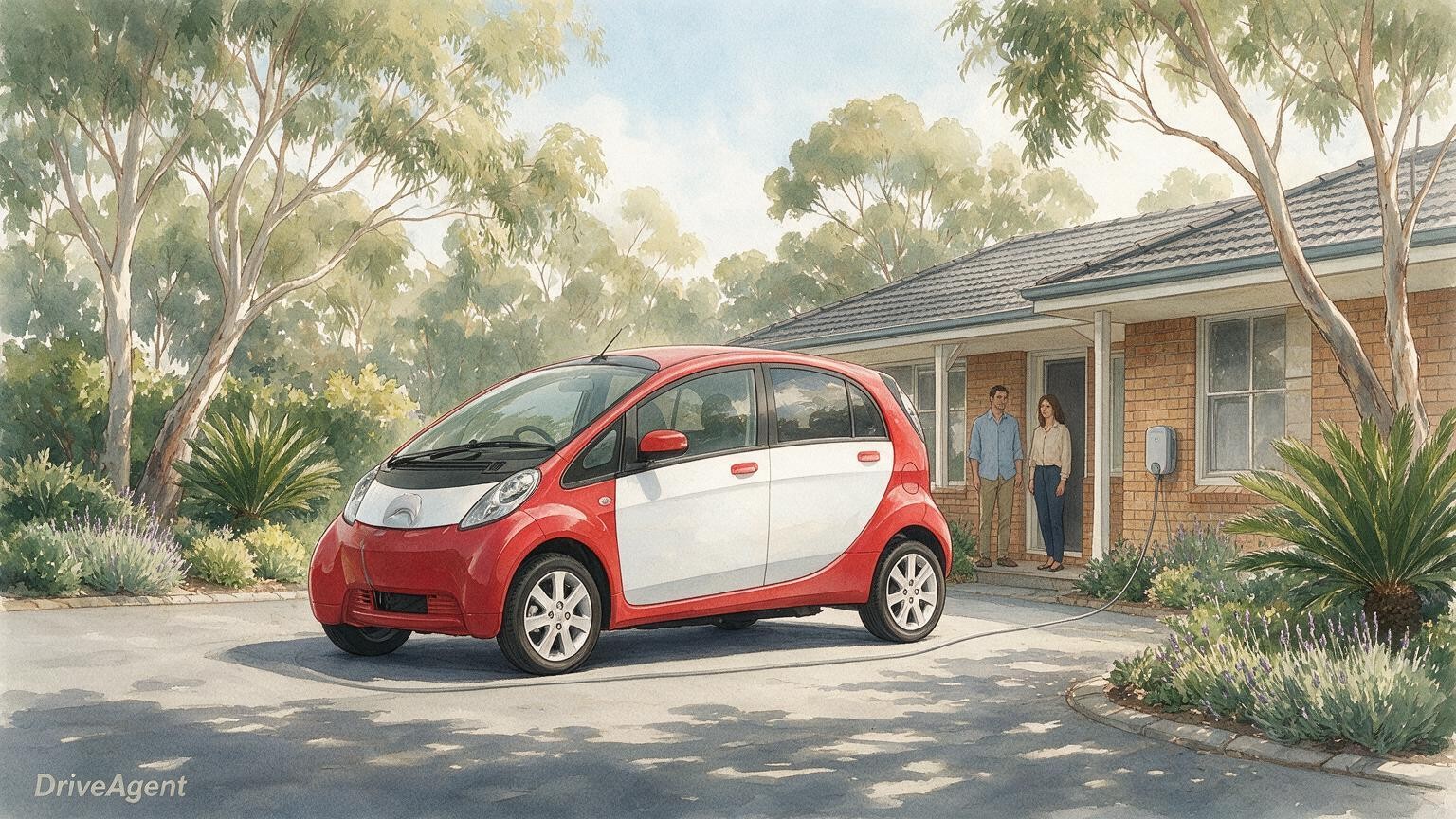
Ahead of the report launch, the Electric Vehicle Council announced that Australia has officially passed 500,000 battery electric vehicles on its roads. EV Infrastructure News, which reported the milestone on 11 September, noted it took 16 years to reach, counting from the country's first BEV, the Mitsubishi i-MiEV, going on sale in 2010. 23
The Australasian Fleet Management Association (AfMA) reported the same milestone, noting it was announced by the EVC on World EV Day, and repeating the Council's attribution of the growth to growing model choice, falling costs and supportive policies, with almost 200 EV models now available in Australia. 3
A record month for BEV sales
The 500,000 milestone coincided with a record month for new-vehicle sales. According to figures reported by EV Infrastructure News and AfMA, battery electric vehicles accounted for 24.9 per cent of all new car sales in August 2026, the highest monthly share on record and more than any other single fuel type for the month. 23
Both outlets, citing the EVC's announcement, reported that petrol and diesel vehicles combined accounted for less than half of new car sales for the first time, while BEVs and plug-in hybrids together made up more than a third of the new car market. 23
EV Infrastructure News additionally reported that EV sales rose 91 per cent year-on-year across the first eight months of 2026, according to EVC-reported figures, with Tesla and Polestar alone delivering 7,821 battery EVs in August, up 148 per cent on the same month in 2025. The outlet also cited the Australian Automobile Association's EV Index, which put combined electric, plug-in hybrid and conventional hybrid sales at 49.16 per cent of all new light vehicle sales in Q2 2026, with battery EVs alone at a record 21.03 per cent quarterly share. 2
From 500,000 to five million by 2035
The Council cautioned that the milestone is only the start. EVC chief executive Julie Delvecchio said Australia needs to add another 4.5 million BEVs over the next nine years to reach the national target of five million on the road by 2035, telling EV Infrastructure News: 'That means achieving nine times the growth it took us 16 years to deliver, in little more than half the time.' 23
Delvecchio described the 500,000 milestone, in remarks quoted by both EV Infrastructure News and AfMA, as 'a remarkable achievement that we always believed was possible, even when others doubted it', and argued falling running costs are a primary driver of uptake: 'When people realise they can save $3,000 per year driving electric, they don't need convincing – they just buy one.' 23
The EVC identified three areas it says will shape the next stage: continued improvement in model choice and affordability, coordinated delivery of charging access for apartment residents, renters, businesses and regional communities, and policy certainty around measures such as the New Vehicle Efficiency Standard and the Electric Car Discount. 23
Policy settings and industry readiness
Delvecchio singled out the upcoming review of the New Vehicle Efficiency Standard as a pivotal moment. 'If the Standard is allowed to stagnate after 2029, Australians will be forced to drive expensive petrol cars,' she said, in quotes reported by both EV Infrastructure News and AfMA. AfMA also noted that upcoming discussions around the Standard and a potential road user charge could influence the next phase of the transition. 23
The Council welcomed the latest round of the federal government's DRIVEN rebate, under which dealerships and repairers can claim up to 80 per cent of the cost of EV-specific tooling, protective equipment and workshop upgrades, capped at $50,000 per site. 'Dealerships and repair workshops right across the country need to be ready for the customers already walking through their doors,' Delvecchio said. 23
On industry readiness more broadly, EV Infrastructure News cited NRMA Insurance research finding only around one in ten Australian repairers are currently EV-certified, even as more than 80 per cent of Australians say they would now consider buying an EV, up from 20 per cent considering a battery EV in 2024. NRMA Insurance chief executive Julie Batch has said the barriers are 'less about the technology itself and more about the everyday realities of ownership', citing battery health, range, charging time and public charging availability. 2
The year of acceleration: 2025 context
The 2026 figures represent a sharp acceleration on the previous year. Zecar's coverage of the Electric Vehicle Council's State of EVs 2025 report, published in October 2025, recorded 72,758 BEVs and PHEVs sold in the first half of 2025, up 24.4 per cent on 2024, with EVs at 12.1 per cent of all new car sales and the registered EV fleet at just over 410,000 vehicles. 4
That same report, as covered by Zecar, counted 153 EV models available (94 BEVs and 59 PHEVs, up from 123 in 2024) and 1,272 fast-charging locations with 4,192 public high-power plugs of 24kW DC or more, both up more than 20 per cent year-on-year. It also warned Australia needed at least one million EVs on the road by 2028 to stay aligned with emissions targets, with annual sales targets of 145,000 in 2025, 240,000 in 2026 and 320,000 in 2027. 4
AI evidence finder
Ask about this article
Ask a question to find relevant published passages and source links. AI selects evidence; the passages remain exactly as published.
Behind this report
Sources & context
Cited source mix
4 cited pages across 4 websites
- Role not assessed 4
Website breakdown
- afma.org.au1 page
- evinfrastructurenews.com1 page
- miragenews.com1 page
- zecar.com1 page
4 cited pages with an undocumented publisher role. Websites may share ownership or repeat the same reporting.
Saved research extracts
4 / 4 cited pages with saved extracts
0 shortened at our text limit · 0 without a saved-extract record
Extracts retrieved 29 Sep 2026.
Extracts can omit page content. These counts do not verify claims or measure independent reporting. Political leaning and reliability are not rated.
- Electric Vehicle Council says EV uptake has reached record levelsRole not assessedSource extract saved
Why these labels?Electric Vehicle Council says EV uptake has reached record levels
Who produced it
We have not documented this publisher’s role. An unassigned label is not a negative rating.
How this report uses it
Cited in 2 paragraphs: State of EVs 2026 launched in Canberra.
This describes its use in our report. It does not establish the source’s editorial stance or independently corroborate every claim.
Evidence record
Text retrieved 29 Sep 2026. The retained extract did not reach our text limit. Extraction can still omit page content.
- Australia surpasses 500,000 battery electric vehiclesRole not assessedSource extract saved
Why these labels?Australia surpasses 500,000 battery electric vehicles
Who produced it
We have not documented this publisher’s role. An unassigned label is not a negative rating.
How this report uses it
Cited in 10 paragraphs: Half a million BEVs on Australian roads; A record month for BEV sales; From 500,000 to five million by 2035; Policy settings and industry readiness.
This describes its use in our report. It does not establish the source’s editorial stance or independently corroborate every claim.
Evidence record
Text retrieved 29 Sep 2026. The retained extract did not reach our text limit. Extraction can still omit page content.
- Australia reaches 500,000 BEVs - AfMARole not assessedSource extract saved
Why these labels?Australia reaches 500,000 BEVs - AfMA
Who produced it
We have not documented this publisher’s role. An unassigned label is not a negative rating.
How this report uses it
Cited in 9 paragraphs: Half a million BEVs on Australian roads; A record month for BEV sales; From 500,000 to five million by 2035; Policy settings and industry readiness.
This describes its use in our report. It does not establish the source’s editorial stance or independently corroborate every claim.
Evidence record
Text retrieved 29 Sep 2026. The retained extract did not reach our text limit. Extraction can still omit page content.
- Record EV Sales, But Australia's Road to Net-Zero Still ...Role not assessedSource extract saved
Why these labels?Record EV Sales, But Australia's Road to Net-Zero Still ...
Who produced it
We have not documented this publisher’s role. An unassigned label is not a negative rating.
How this report uses it
Cited in 2 paragraphs: The year of acceleration: 2025 context.
This describes its use in our report. It does not establish the source’s editorial stance or independently corroborate every claim.
Evidence record
Text retrieved 29 Sep 2026. The retained extract did not reach our text limit. Extraction can still omit page content.
Keep reading
Related subjects and more from this section.
Australia’s battery-electric fleet passes 500,000 as Electric Vehicle Council warns a far bigger task lies ahead
The Electric Vehicle Council says more than half a million battery-electric vehicles are now on Australian roads, with a record 24.9 per cent share of new-vehicle sales in August — but reaching five million by 2035 would require nine times the pace of adoption achieved over the past 16 years.