Australia holds off on Chinese vehicle bans at military sites despite moves by US and allies
Defence Minister Richard Marles says Australia has taken no steps to restrict Chinese electric vehicles at its bases, even after the US banned BYD cars from a key air base in Japan and several allied nations imposed their own restrictions.
Synthesised from the cited sources. Research, writing and factual checks are automated using AI. Verify details against the sources. How we produce these reports
Marles rules out a ban, for now
Australia has not made any move to restrict Chinese electric vehicles at its military bases, Defence Minister Richard Marles said on Wednesday, speaking to Reuters in an interview at the ASEAN Defence Ministerial Meetings in Cebu, Philippines, as reported by Channel News Asia. "We obviously continue to monitor all the safety around our bases in every respect, but we haven't taken that step," Marles said. He added there had been no request from the United States for Australia to take a similar step. 2
Marles's remarks, published on 28 October 2026, follow the US military's announcement the previous week that it had banned BYD vehicles at Kadena Air Base on Japan's Okinawa island. Brigadier General John Gallemore made the decision, according to CarExpert's report, "after a thorough, consultative process which determined that these vehicles present an unacceptable and unmitigable risk to our personnel and our mission". Note that CarExpert and the Reuters-sourced CNA report share the same underlying material, so Marles's position rests on a single original interview rather than multiple independent confirmations. 12
Australia's stance is commercially significant for Chinese manufacturers: Reuters, as carried by Channel News Asia, noted Australia is one of BYD's largest export markets, along with Brazil and Britain, aided by relatively low trade barriers. 2
How other countries have acted
Australia is out of step with a growing group of nations. In February 2026, Poland's Ministry of Defence announced a ban on Chinese cars — and any vehicles with technology capable of recording position, images or sound — from entering protected military facilities, following a risk analysis of the potential for in-car devices to allow "uncontrolled acquisition and use of data", The Register reported. Officials are also prohibited from connecting work phones to infotainment systems in China-made cars. 4
The Polish ban is not permanent: the ministry has called for a vetting process under which carmakers could undergo a security assessment allowing their vehicles into protected facilities, with exemptions for state and local government inspections and rescues. Poland says its measures align with standards observed by NATO members and other countries, per The Register, which also noted the US has banned Chinese and Russian software in connected cars — effectively excluding cars made in both countries from its market. 4
CarExpert separately reports that the UK and Czechia have instituted similar bans, and that in Switzerland connected vehicles are not permitted to drive near sensitive defence locations. Swiss outlet SRF quoted Federal Intelligence Service director Serge Bavaud describing such cars as "smartphones on wheels". On the other side of the ledger, China itself banned Tesla vehicles from sensitive locations — a move first made in 2021, according to the ABC's Four Corners, covering even Teslas built at the Shanghai plant. 13
The Four Corners findings on Leapmotor and Dahua
Concerns about Chinese vehicles recording sensitive Australian sites gained prominence after the ABC's Four Corners program aired its "Asleep at the Wheel" investigation on data security in connected vehicles in September 2026. The program reported that cameras made by Dahua Technology — whose CCTV products were removed from federal government buildings and defence sites in 2023 over surveillance fears — are now appearing in electric vehicles sold in Australia through the Leapmotor brand, which arrived locally in 2024. 31
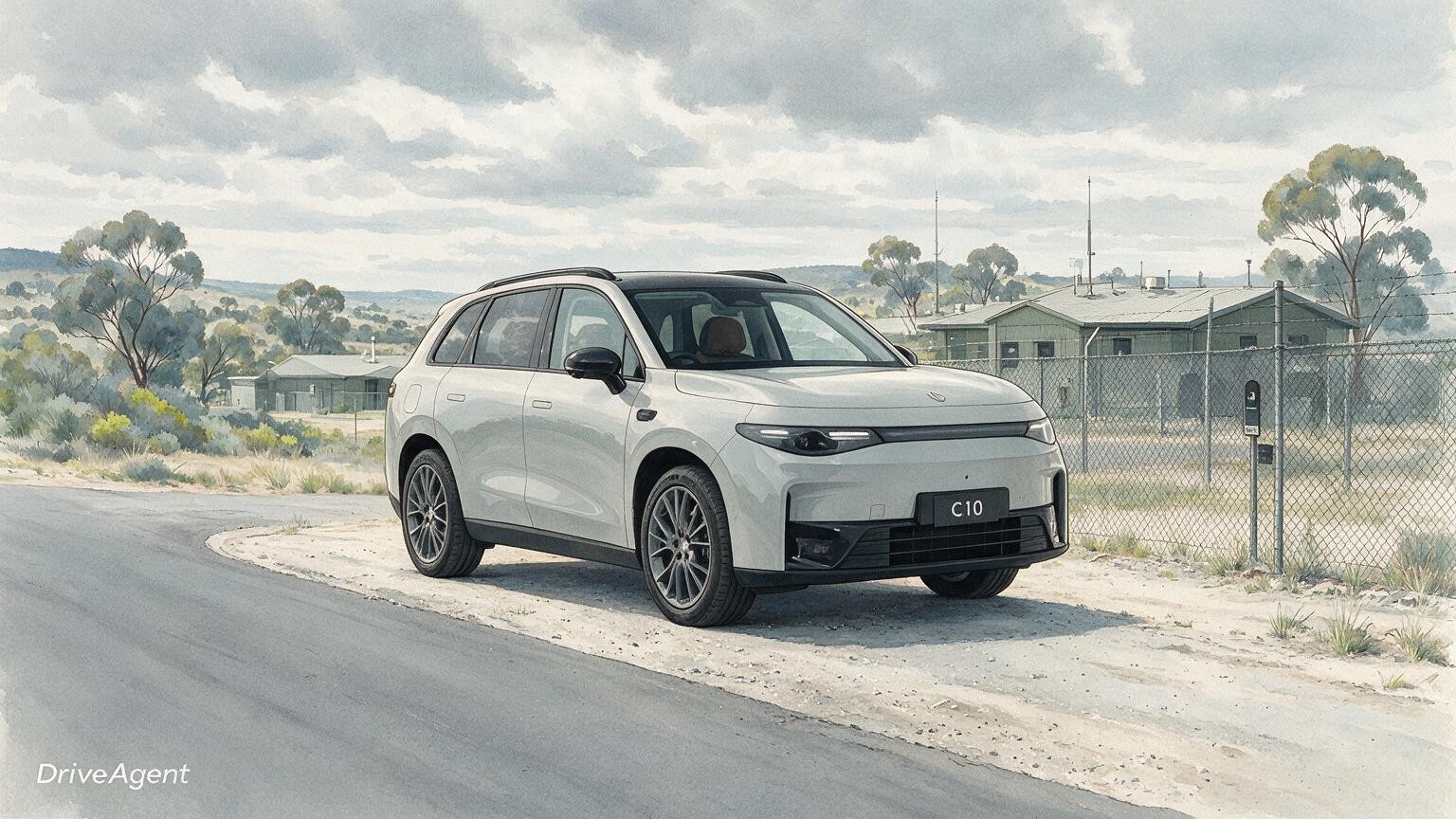
Four Corners reported that documents filed with the Hong Kong Stock Exchange show Leapmotor has an ongoing procurement contract with a Dahua subsidiary covering cameras, sensors and radars, and that a rear camera it purchased carried the Dahua (DH) identifier. In the Leapmotor C10, six cameras provide a 360-degree view of the car's surrounds and interior. The program noted there is nothing preventing such a car being driven past or parked near Defence sites. 3
Leapmotor responded to the claims after the report, telling CarExpert that while its vehicles do use Dahua cameras, they are "independently tested for certification for privacy", and that footage can only be exported via the dashcam function, which requires a USB drive to be physically inserted in the vehicle. The company did not respond to questions from Four Corners, the ABC reported. Separately, CarExpert reported that the program demonstrated how certain vehicles could be remotely accessed, though only once a hacker had physically obtained access to the car. 13
Australian precautions and political pressure
Rather than a blanket ban, Australia applies case-by-case measures. Home Affairs Minister Tony Burke told Four Corners: "I know of examples of people driving in with a different sort of connected vehicle and being told to have to park a long distance away. So, the fact that you don't have the blanket ban [in Australia] doesn't mean you don't have a whole lot of precautions that are taking place." The Department of Defence declined to say what restrictions are in place, according to the ABC. 3
The Register, in its February 2026 report, noted that Cybersecurity Minister Tony Burke had earlier acquired a made-in-China electric vehicle and reported it to relevant authorities, who advised him on necessary precautions. Four Corners also cited former national cybersecurity adviser Alastair MacGibbon, who said the microphones and cameras on an EV made it an ideal surveillance device, capable of recording staff movements at government buildings, and called for Chinese-connected vehicles to be banned from military bases, intelligence facilities and other sensitive sites. That is his attributed view, not an established government finding. 34
Opposition pressure is documented too. Shadow Defence Minister James Paterson told Four Corners it was "extraordinary" that vehicles using the same Dahua technology removed from defence bases are allowed to drive around those bases, and pointed to China's own Tesla restrictions as a telling data point. CarExpert quoted him similarly arguing that vehicles with cameras from a company implicated in human rights abuses and mass surveillance of Uyghur people should not be driven around government buildings and installations. 31
What is established and what is not
What is confirmed: the US ban on BYD vehicles at Kadena Air Base, Poland's February 2026 restriction with its vetting pathway, bans in the UK and Czechia as reported by CarExpert, Switzerland's exclusion zone around sensitive sites, and Marles's statement that Australia has taken no such step. What remains unknown, per the available reporting, is the detail of any Australian base-level precautions — Defence declined to disclose them — and whether any future vetting or restriction regime will be introduced. No evidence in this reporting establishes that Chinese vehicles sold in Australia have actually been used for surveillance at Australian sites; the documented concerns rest on risk analysis, expert opinion and political argument rather than a proven incident. 1234
AI evidence finder
Ask about this article
Ask a question to find relevant published passages and source links. AI selects evidence; the passages remain exactly as published.
Fact check
Not yet assessedA claim-by-claim assessment is not yet available. Review the sources below.
Our sourcing and editorial standardsBehind this report
Sources & context
Cited source mix
4 cited pages across 4 websites
- News publisher 1
- Role not assessed 3
Website breakdown
- abc.net.au1 page
- CarExpertcarexpert.com.au1 page
- channelnewsasia.com1 page
- theregister.com1 page
3 cited pages with an undocumented publisher role. Websites may share ownership or repeat the same reporting.
Saved research extracts
4 / 4 cited pages with saved extracts
0 shortened at our text limit · 0 without a saved-extract record
Extracts retrieved 30 Oct 2026.
Extracts can omit page content. These counts do not verify claims or measure independent reporting. Political leaning and reliability are not rated.
- Australia won’t follow US, other nations in banning Chinese cars from military sitesNews publisherSource extract saved
Why these labels?Australia won’t follow US, other nations in banning Chinese cars from military sites
Who produced it
Publishes automotive news and reviews and operates a car-buying service connecting buyers with dealers. Identity reference ↗
How this report uses it
Cited in 6 paragraphs: Marles rules out a ban, for now; How other countries have acted; The Four Corners findings on Leapmotor and Dahua; Australian precautions and political pressure; What is established and what is not.
This describes its use in our report. It does not establish the source’s editorial stance or independently corroborate every claim.
Evidence record
Text retrieved 30 Oct 2026. The retained extract did not reach our text limit. Extraction can still omit page content.
- Australia has not taken steps to ban Chinese EVs at bases ...Role not assessedSource extract saved
Why these labels?Australia has not taken steps to ban Chinese EVs at bases ...
Who produced it
We have not documented this publisher’s role. An unassigned label is not a negative rating.
How this report uses it
Cited in 4 paragraphs: Marles rules out a ban, for now; What is established and what is not.
This describes its use in our report. It does not establish the source’s editorial stance or independently corroborate every claim.
Evidence record
Text retrieved 30 Oct 2026. The retained extract did not reach our text limit. Extraction can still omit page content.
- Chinese-made cameras banned from government buildings show up in EVsRole not assessedSource extract saved
Why these labels?Chinese-made cameras banned from government buildings show up in EVs
Who produced it
We have not documented this publisher’s role. An unassigned label is not a negative rating.
How this report uses it
Cited in 8 paragraphs: How other countries have acted; The Four Corners findings on Leapmotor and Dahua; Australian precautions and political pressure; What is established and what is not.
This describes its use in our report. It does not establish the source’s editorial stance or independently corroborate every claim.
Evidence record
Text retrieved 30 Oct 2026. The retained extract did not reach our text limit. Extraction can still omit page content.
- Poland bans Chinese cars from military basesRole not assessedSource extract saved
Why these labels?Poland bans Chinese cars from military bases
Who produced it
We have not documented this publisher’s role. An unassigned label is not a negative rating.
How this report uses it
Cited in 4 paragraphs: How other countries have acted; Australian precautions and political pressure; What is established and what is not.
This describes its use in our report. It does not establish the source’s editorial stance or independently corroborate every claim.
Evidence record
Text retrieved 30 Oct 2026. The retained extract did not reach our text limit. Extraction can still omit page content.
Keep reading
Related subjects and more from this section.
MG holds off on confirming timing for U9 plug-in hybrid ute in Australia
MG Motor Australia says a plug-in hybrid version of the U9 dual-cab remains under consideration, but the brand has stopped short of reaffirming the mid-2027 launch target announced a year earlier, according to a report by Cenyavto.