Ford says US-bound Fathom EV will integrate home backup inverter, cutting bidirectional power costs
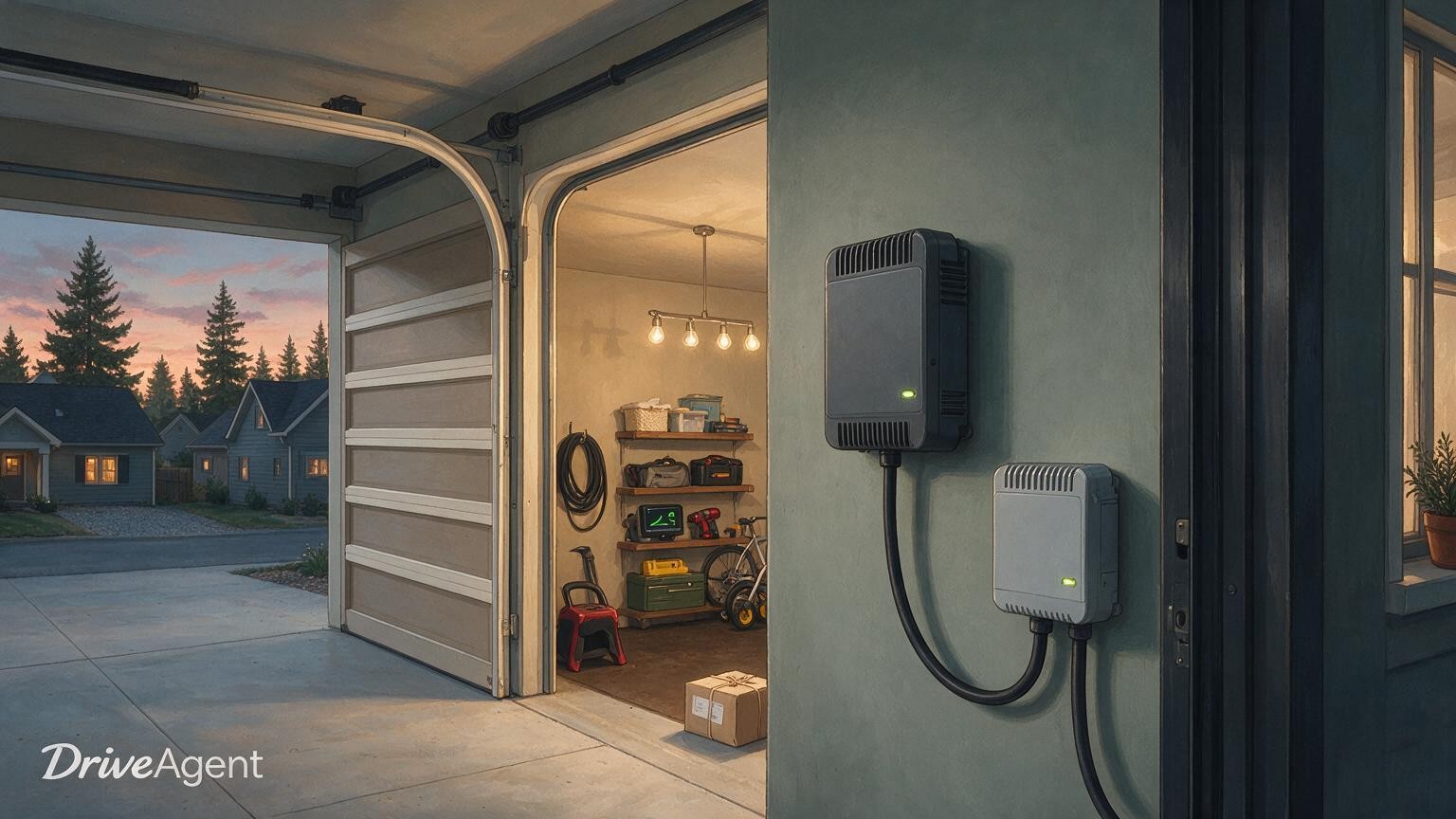
Ford has outlined a bidirectional charging system for its upcoming sub-US$30,000 Fathom electric pickup that puts the inverter inside the truck, removing the costly external equipment its discontinued F-150 Lightning required. The details apply to the US market; no Australian availability has been announced.
Synthesised from the cited sources. Research, writing and factual checks are automated using AI. Verify details against the sources. How we produce these reports

Inverter integrated into the truck itself
Ford has announced that its upcoming Fathom electric pickup for the United States market will offer bidirectional charging without a separate wall-mounted inverter, according to reporting by MotorTrend. Instead, the inverter hardware is built into the truck's E-box, one of five main modules that run all aspects of the vehicle. Ford says the system is designed to supply more than 10 kW of AC power to a home, meeting the requirements and regulations needed for grid connection. The announcement was also covered by WardsAuto, The Verge, Fortune and Canary Media. 123456
The engineering work traces back to Auto Motive Power, a startup Ford acquired in 2023. MotorTrend reports that Ford's team, working with AMP, redesigned the bidirectional hardware and software from scratch while engineering the Universal EV Platform that underpins the Fathom. WardsAuto quotes Dave McCreadie, Ford's director of grid and energy services, saying the goal "wasn't just to add bidirectional power to our EVs, but to redesign the system to cost far less". Jiaqi Liang, AMP's former vice president of hardware and now a senior director at Ford, told Canary Media the key was doing it "from scratch, so you don't have the legacy-platform constraint". 126
WardsAuto describes the E-box as a single unit managing charging, bidirectional charging and the truck's 48-volt accessory system. Ford says the resulting system is simpler and cheaper than the approach used on the F-150 Lightning, which required an expensive external DC-to-AC inverter installed at the home; that model has since been discontinued. Ford has not published the full Fathom battery specifications in these announcements. 12
What the hardware will cost, with pricing still pending
Ford is not yet sharing exact prices for the Fathom's companion equipment. A Ford spokesperson told Fortune that the everyday home power management setup, using the Ford Home Power Station, will cost about half as much as the first-generation Charge Station Pro, which was priced at US$1,310. For whole-home blackout backup, owners will need the Home Power Station plus a Ford Home Backup Power Panel, which Ford says is expected to cost about 60% less than the first-generation combination of the Charge Station Pro and the US$3,895 Home Integration System, a total of US$5,205. Neither figure includes installation. 145
Based on Ford's percentages, Fortune calculates the Fathom backup hardware at roughly US$2,080 and the everyday charger at about US$655, excluding installation and potential electrical panel upgrades. Fortune notes that Sunrun quotes for Lightning-era installations ran about US$8,900 to US$9,400 all in, meaning labour and electrical work could add considerably to the total. The Verge reports a different framing, describing a target of roughly US$3,123 for the backup panel combination, about a 40% reduction; this conflicts with Ford's stated 60% reduction, and finalised pricing remains pending. 453
Ford says more than 10,000 watts at once is enough to run a refrigerator, lights, Wi-Fi, a TV and a microwave or coffee maker, according to Fortune. Ford has not said how long a full battery will keep a house running, telling Fortune it will share that closer to launch. Asked how Ford makes money from the feature, the spokesperson said the company sees it as "a compelling reason to buy Fathom" rather than pointing to grid fees or utility revenue sharing. 45
Utility rules remain the bigger barrier
Connecting a vehicle to the grid is complicated by the more than 3,000 utility companies across the US and Canada, whose interconnection processes were largely written for rooftop solar and stationary batteries rather than vehicles, Ford says. In July 2026, Ford formed a working group with five major utilities: American Electric Power, BC Hydro, Consumers Energy, Exelon and Pacific Gas and Electric Co. The group has aligned on principles including not requiring utility interconnection for customers using their EV solely for backup power, reserving that requirement for power delivered in parallel with the grid, and clarifying standards for AC and DC bidirectional charging. 12
WardsAuto reports Ford says the system leverages open communication protocols and was designed to meet UL 1741 and IEEE 1547 grid-support standards. Canary Media adds that Ford's system uses communications technology from SAE J3068, a standard certified by SAE International, and quotes University of Delaware professor Willett Kempton, who helped develop the standard, estimating that designing AC bidirectional capability into a vehicle from the start costs "in the $200 to $300 range". 26
The savings only materialise where utilities allow grid-connected bidirectional use. Canary Media reports that only California and Maryland currently have certification pathways for AC bidirectional charging outside pilot projects, with Nevada and Connecticut proposals pending, citing a mid-2026 ChargedEVs report. Fortune notes Ford cited an existing PG&E program offering US$2,500 upfront, or US$3,000 in disadvantaged communities, as an example, but Ford did not say the Fathom would qualify; that program's enrolment closes June 30, 2027. 645
How it compares with Tesla and General Motors
Canary Media and WardsAuto both report that the only other EVs sold in the US equipped to send AC power back to a home are built by Tesla. According to Tesla, recent Model 3, Model Y and Cybertruck models built from October 1 onward carry hardware for home backup at up to 11.5 kW via the Powershare system, which requires a US$1,970 Powershare Home Backup Bundle on the Cybertruck, while the Model 3 and Model Y integration relies on Tesla's Universal Wall Connector and a Powerwall 3 home battery. Canary Media also notes General Motors' DC-based vehicle-to-home bundle sells for US$6,748, illustrating the higher cost of DC approaches. 26
The comparisons rest on different architectures and conditions: Ford's Fathom system is AC-based and targets more than 10 kW, Tesla's Powershare output is specified at up to 11.5 kW, and GM's bundle is DC-based, so the hardware and home requirements differ. Canary Media quotes Kempton saying other automakers he speaks with are interested in embedded AC bidirectional capability, but that is his assessment rather than an announced competitor plan. 26
Production timing and the vehicle behind it
The Fathom is Ford's first product on the Universal EV Platform and will be built at the Louisville plant in Kentucky, which is undergoing a US$2 billion retooling for affordable electric vehicles on the new platform. MotorTrend reports the base truck is expected to use a rear electric motor powered by a less costly lithium iron phosphate (LFP) battery pack. Reported US pricing starts at US$28,350 according to Fortune and Canary Media, with Ford positioning the truck under US$30,000; these are US figures only. 1456
On timing, WardsAuto reports Ford will open pre-orders in early 2027 with deliveries due later that year, while MotorTrend says production is due sometime in early 2027 and The Verge notes the official reveal is still months away. Ford CEO Jim Farley has said it will be a challenge to launch the Fathom at scale, at cost, and on time, according to MotorTrend. Canary Media quotes McCreadie saying this will not be Ford's last bidirectional-capable EV, with other Universal EV Platform vehicles also carrying AC bidirectional charging. 2136
These details concern the United States market, where the Fathom is being developed and produced. Ford has not announced Australian availability, specifications or pricing for the Fathom, and no Australian connection should be assumed from the US announcement. 12
AI evidence finder
Ask about this article
Ask a question to find relevant published passages and source links. AI selects evidence; the passages remain exactly as published.
Behind this report
Sources & context
Cited source mix
5 cited pages across 5 websites
- Role not assessed 5
Website breakdown
- canarymedia.com1 page
- fortune.com1 page
- motortrend.com1 page
- theverge.com1 page
- wardsauto.com1 page
5 cited pages with an undocumented publisher role. Websites may share ownership or repeat the same reporting.
Saved research extracts
5 / 5 cited pages with saved extracts
0 shortened at our text limit · 0 without a saved-extract record
Extracts retrieved 28 Oct 2026.
Extracts can omit page content. These counts do not verify claims or measure independent reporting. Political leaning and reliability are not rated.
- Ford outlines inverter-integrated home backup power for US Fathom EVRole not assessedSource extract saved
Why these labels?Ford outlines inverter-integrated home backup power for US Fathom EV
Who produced it
We have not documented this publisher’s role. An unassigned label is not a negative rating.
How this report uses it
Cited in 8 paragraphs: Inverter integrated into the truck itself; What the hardware will cost, with pricing still pending; Utility rules remain the bigger barrier; Production timing and the vehicle behind it.
This describes its use in our report. It does not establish the source’s editorial stance or independently corroborate every claim.
Evidence record
Text retrieved 28 Oct 2026. The retained extract did not reach our text limit. Extraction can still omit page content.
- Ford’s $30,000 Fathom EV aims to simplify bidirectional chargingRole not assessedSource extract saved
Why these labels?Ford’s $30,000 Fathom EV aims to simplify bidirectional charging
Who produced it
We have not documented this publisher’s role. An unassigned label is not a negative rating.
How this report uses it
Cited in 9 paragraphs: Inverter integrated into the truck itself; Utility rules remain the bigger barrier; How it compares with Tesla and General Motors; Production timing and the vehicle behind it.
This describes its use in our report. It does not establish the source’s editorial stance or independently corroborate every claim.
Evidence record
Text retrieved 28 Oct 2026. The retained extract did not reach our text limit. Extraction can still omit page content.
- Ford's sub-$30K electric truck puts the home backup inverter right inside the vehicleRole not assessedSource extract saved
Why these labels?Ford's sub-$30K electric truck puts the home backup inverter right inside the vehicle
Who produced it
We have not documented this publisher’s role. An unassigned label is not a negative rating.
How this report uses it
Cited in 3 paragraphs: Inverter integrated into the truck itself; What the hardware will cost, with pricing still pending; Production timing and the vehicle behind it.
This describes its use in our report. It does not establish the source’s editorial stance or independently corroborate every claim.
Evidence record
Text retrieved 28 Oct 2026. The retained extract did not reach our text limit. Extraction can still omit page content.
- Ford's $28000 electric truck can power your house. Here's ...Role not assessedSource extract saved
Why these labels?Ford's $28000 electric truck can power your house. Here's ...
Who produced it
We have not documented this publisher’s role. An unassigned label is not a negative rating.
How this report uses it
Cited in 6 paragraphs: Inverter integrated into the truck itself; What the hardware will cost, with pricing still pending; Utility rules remain the bigger barrier; Production timing and the vehicle behind it.
This describes its use in our report. It does not establish the source’s editorial stance or independently corroborate every claim.
Evidence record
Text retrieved 28 Oct 2026. The retained extract did not reach our text limit. Extraction can still omit page content.
- Ford’s new EV pickup will come with more affordable home-power backupRole not assessedSource extract saved
Why these labels?Ford’s new EV pickup will come with more affordable home-power backup
Who produced it
We have not documented this publisher’s role. An unassigned label is not a negative rating.
How this report uses it
Cited in 8 paragraphs: Inverter integrated into the truck itself; Utility rules remain the bigger barrier; How it compares with Tesla and General Motors; Production timing and the vehicle behind it.
This describes its use in our report. It does not establish the source’s editorial stance or independently corroborate every claim.
Evidence record
Text retrieved 28 Oct 2026. The retained extract did not reach our text limit. Extraction can still omit page content.
Keep reading
Related subjects and more from this section.

Solid Power begins commissioning Mobius continuous solid-electrolyte line in Colorado
Solid Power has started commissioning Mobius, its continuous manufacturing pilot line for sulfide-based solid electrolyte at Thornton, Colorado, with construction substantially complete and operational start-up planned for the fourth quarter of 2026.