Holden fleet falls below 1.01 million as BITRE data tracks the brand's decline
Government data shows 1,000,292 Holdens were registered in Australia on 31 January 2026, down almost 27 per cent in four years, as the retired brand slips further down the national registration order.
Synthesised from the cited sources. Research, writing and factual checks are automated using AI. Verify details against the sources. How we produce these reports

Just over one million Holdens remain registered
Australia's Holden fleet has slipped to just over one million vehicles, according to the Australian Government's Bureau of Infrastructure and Transport Research Economics (BITRE), which this week published its Road Vehicles Australia report using data collected on 31 January 2026. Torquecafe's analysis of the figures counts 1,000,292 Holdens registered nationally at the January 2026 census date, placing the retired brand fourth among the 30 top brands by registrations. 15
The dataset is the latest instalment of BITRE's Road Vehicles Australia series, which the bureau's resource library describes as presenting estimates of all motor vehicles registered for road use in Australia on 31 January 2026. It was released on 12 October 2026. 5
A steep decline since production and the brand ended
The decline is stark when set against recent years. According to the figures reported by Torquecafe, 1,186,057 Holdens were registered in January 2024, while in January 2022 — the first year in which no Holdens were sold new, after leftover stock ran out in 2021 — the count stood at 1,369,528. Across the four years from 2022 to 2026, that is 369,236 fewer registered Holdens, a fall of almost 27 per cent. Even over the past two years alone, the drop has been close to 17 per cent. 1
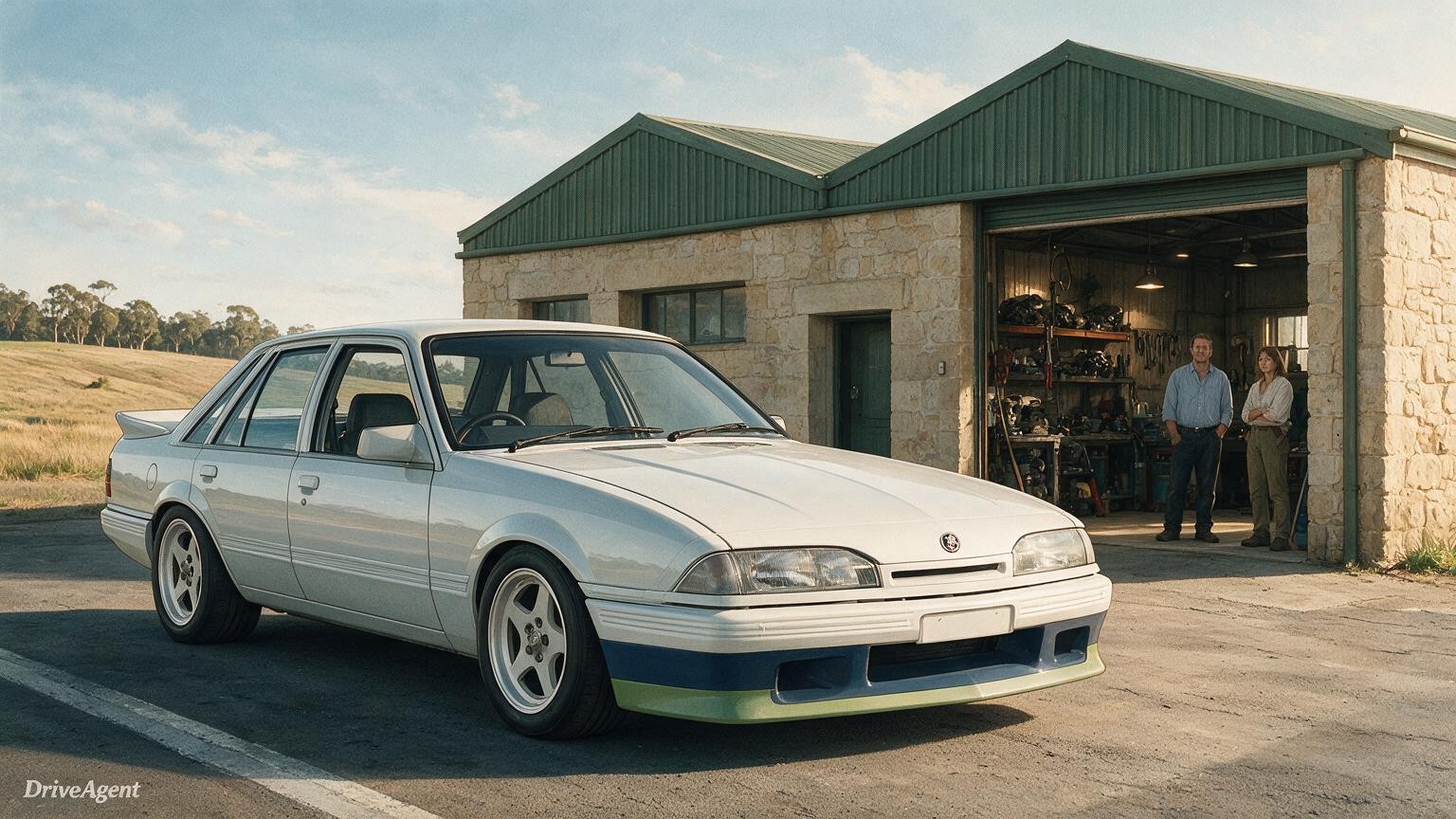
Holden ended Australian manufacturing in 2017, with the final VF Series II Commodores marking the close of local production, and the brand was retired entirely at the end of 2020. Torquecafe notes that from once being the dominant brand on Australian roads, Holdens are becoming an increasingly rare sight almost 10 years after local production ended and more than five years after the brand closed. 1
Where Holden now sits in the national order
At the January 2026 census, Holden sat fourth among the top 30 brands, sandwiched between Hyundai on 1,342,431 registrations and Mitsubishi on 917,678, according to the data as reported by Torquecafe. The brand remains well above Ford, which has 836,433 vehicles registered despite a five-year head start in sales and holding the title of Australia's best-selling new vehicle with the Ranger. 1
Toyota, Australia's most popular new-car brand for 23 consecutive years, leads the registration count with 3,317,413 vehicles on the road, a figure that continues to rise year on year. Mazda holds second place with 1,576,072 registrations, also rising. In contrast, Ford's count has fallen by 63,816 registrations over the past two years, leaving it vulnerable to Kia, which has climbed to 823,647 registrations from 697,258 over the same period. 1

What the figures do and do not capture
There are important caveats to the count. BITRE's data does not include veteran and vintage vehicles registered for restricted use only, which means cars on historic or special-interest registration in some states — with age restrictions varying from 25 to 30 years depending on the jurisdiction — are not captured. The data also excludes consular vehicles and vehicles registered by the defence forces, though these are expected to contribute only a small amount to the Holden total, as Torquecafe's report notes. The figures therefore measure registered vehicles, not how many remain in roadworthy condition. 1
The wider Australian fleet context
The January 2026 data also sketches the broader national picture. Australia's passenger vehicle fleet has reached at least 16,387,610 registrations, while the average age of cars on the road has increased from 11.33 years in 2025 to around 11.45 years in 2026 — equivalent to vehicles built in 2014–2015. In total there are 22.7 million registered motor vehicles in Australia, up from 18.4 million in 2016, an increase of 23.4 per cent. Over the same 10-year period, new vehicle sales rose from 1,155,408 to 1,241,037, or 7.4 per cent. 1
The registration census sits alongside BITRE's broader road transport statistics. The bureau's Australian Infrastructure and Transport Statistics Yearbook 2025 roads chapter reports an estimated 264 billion vehicle kilometres travelled on Australian roads in 2024–25, with SUVs comprising 59 per cent of new motor vehicle sales in 2024–25, excluding motorcycles, up from 33 per cent ten years earlier. That shift away from traditional passenger cars underlines how far the market has moved from the large sedans and Commodores that once underpinned Holden's fleet. 243
AI evidence finder
Ask about this article
Ask a question to find relevant published passages and source links. AI selects evidence; the passages remain exactly as published.
Behind this report
Sources & context
Cited source mix
5 cited pages across 2 websites
- Role not assessed 5
Website breakdown
- bitre.gov.au4 pages
- torquecafe.com1 page
5 cited pages with an undocumented publisher role. Websites may share ownership or repeat the same reporting.
Saved research extracts
5 / 5 cited pages with saved extracts
0 shortened at our text limit · 0 without a saved-extract record
Extracts retrieved 14 Oct 2026.
Extracts can omit page content. These counts do not verify claims or measure independent reporting. Political leaning and reliability are not rated.
- BITRE figures put Australia’s Holden fleet at just over one millionRole not assessedSource extract saved
Why these labels?BITRE figures put Australia’s Holden fleet at just over one million
Who produced it
We have not documented this publisher’s role. An unassigned label is not a negative rating.
How this report uses it
Cited in 7 paragraphs: Just over one million Holdens remain registered; A steep decline since production and the brand ended; Where Holden now sits in the national order; What the figures do and do not capture; The wider Australian fleet context.
This describes its use in our report. It does not establish the source’s editorial stance or independently corroborate every claim.
Evidence record
Text retrieved 14 Oct 2026. The retained extract did not reach our text limit. Extraction can still omit page content.
- Australian Infrastructure and Transport Statistics Yearbook ...Role not assessedSource extract saved
Why these labels?Australian Infrastructure and Transport Statistics Yearbook ...
Who produced it
We have not documented this publisher’s role. An unassigned label is not a negative rating.
How this report uses it
Cited in 1 paragraph: The wider Australian fleet context.
This describes its use in our report. It does not establish the source’s editorial stance or independently corroborate every claim.
Evidence record
Text retrieved 14 Oct 2026. The retained extract did not reach our text limit. Extraction can still omit page content.
- Australian Infrastructure and Transport Statistics Yearbook 2025Role not assessedSource extract saved
Why these labels?Australian Infrastructure and Transport Statistics Yearbook 2025
Who produced it
We have not documented this publisher’s role. An unassigned label is not a negative rating.
How this report uses it
Cited in 1 paragraph: The wider Australian fleet context.
This describes its use in our report. It does not establish the source’s editorial stance or independently corroborate every claim.
Evidence record
Text retrieved 14 Oct 2026. The retained extract did not reach our text limit. Extraction can still omit page content.
- Road chapter - Yearbook 2025 | Bureau of Infrastructure and ...Role not assessedSource extract saved
Why these labels?Road chapter - Yearbook 2025 | Bureau of Infrastructure and ...
Who produced it
We have not documented this publisher’s role. An unassigned label is not a negative rating.
How this report uses it
Cited in 1 paragraph: The wider Australian fleet context.
This describes its use in our report. It does not establish the source’s editorial stance or independently corroborate every claim.
Evidence record
Text retrieved 14 Oct 2026. The retained extract did not reach our text limit. Extraction can still omit page content.
- Resource library | Bureau of Infrastructure and Transport ...Role not assessedSource extract saved
Why these labels?Resource library | Bureau of Infrastructure and Transport ...
Who produced it
We have not documented this publisher’s role. An unassigned label is not a negative rating.
How this report uses it
Cited in 2 paragraphs: Just over one million Holdens remain registered.
This describes its use in our report. It does not establish the source’s editorial stance or independently corroborate every claim.
Evidence record
Text retrieved 14 Oct 2026. The retained extract did not reach our text limit. Extraction can still omit page content.
Keep reading
Related subjects and more from this section.

Electrification is reshaping the fleet manager's job, from buying vehicles to managing charging, data and drivers
Fleet managers are taking on charging strategy, tax expertise, data reporting and driver change management as electric vehicles move from a niche purchase decision to the core of the role, with new research and operator accounts pointing to a profession in transition.