Higher-profile tyres on smaller wheels: what Australian guides say about sidewalls, comfort and cost
Lower-profile rubber on big rims may look sharp, but Australian tyre guides explain why taller sidewalls can ride better on rough roads, cost less and matter for electric vehicle range — provided the placard specification is respected.
Automatically researched, written and checked using AI. Verify details against the sources.
Reading the sidewall code
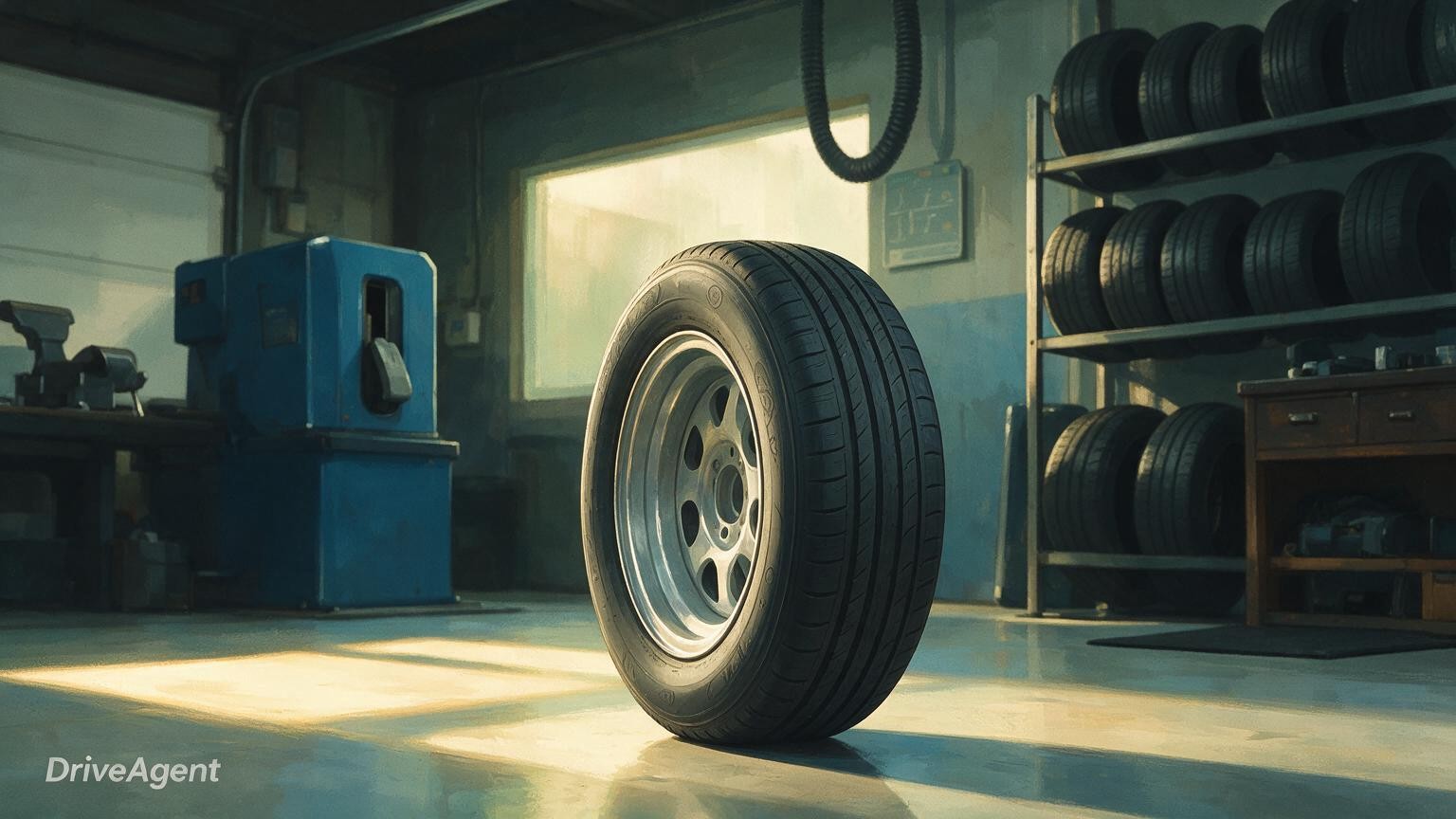
The starting point for comparing tyre options is the string of numbers on the sidewall, and two Australian guides walk through it in almost identical terms. Cars24, in its comprehensive guide to car tyre types, uses the example 205/55R16: 205 is the tyre width in millimetres, 55 is the sidewall height expressed as 55 per cent of that width, R denotes radial construction and 16 is the wheel rim diameter in inches. Hot Tyres, a Sydney tyre fitting workshop, uses a parallel example of 225/45 R17 94W and makes the key point explicit: a lower aspect ratio number means a lower-profile tyre. 12
That arithmetic explains the trade-off behind taller-sidewall options. The same physical wheel-plus-tyre package can be achieved with a smaller rim carrying a higher aspect ratio tyre, giving the tyre a thicker, more compliant sidewall, while the fashion-oriented end of the market pairs large rims — commonly 20 inches or more — with very thin rubber. Cars24 even records the enthusiast slang for the latter: rubber bands, extremely low-profile tyres wrapped around oversized alloy wheels. 1
Both guides also anchor the discussion in Australian regulation. Cars24 notes that car tyres are regulated under the Australian Design Rules and that every tyre carries codes for size, construction, load capacity and speed rating, with a load index such as 91 supporting 615kg per tyre and a speed letter such as V marking a 240km/h maximum. Hot Tyres sets out the same decoding for its example, where 94 is the load index and W the speed rating. 12
The legal boundaries of any tyre change
Whichever wheel size a driver settles on, both guides stress that the placard rules. Australian law prohibits fitting tyres below the factory load rating, according to Cars24, which warns that incorrect tyres can compromise braking, stability, insurance coverage and roadworthiness inspections, and advises checking the placard inside the driver's door or fuel filler cap. Hot Tyres is equally direct: fitting the wrong size, or a lower load or speed rating than the car needs, is unsafe and can fail rego, and the figures on the tyre placard should be matched exactly. 12
Tread legality is part of the same picture. Cars24 states that tread must remain at least 1.5mm deep across the central 75 per cent of the tyre and its full circumference, below which the car becomes unroadworthy and risks fines, demerit points or insurance issues, and that most tyres should be replaced every five to six years or sooner if damaged or unevenly worn. 1
Sidewall stiffness and ride comfort
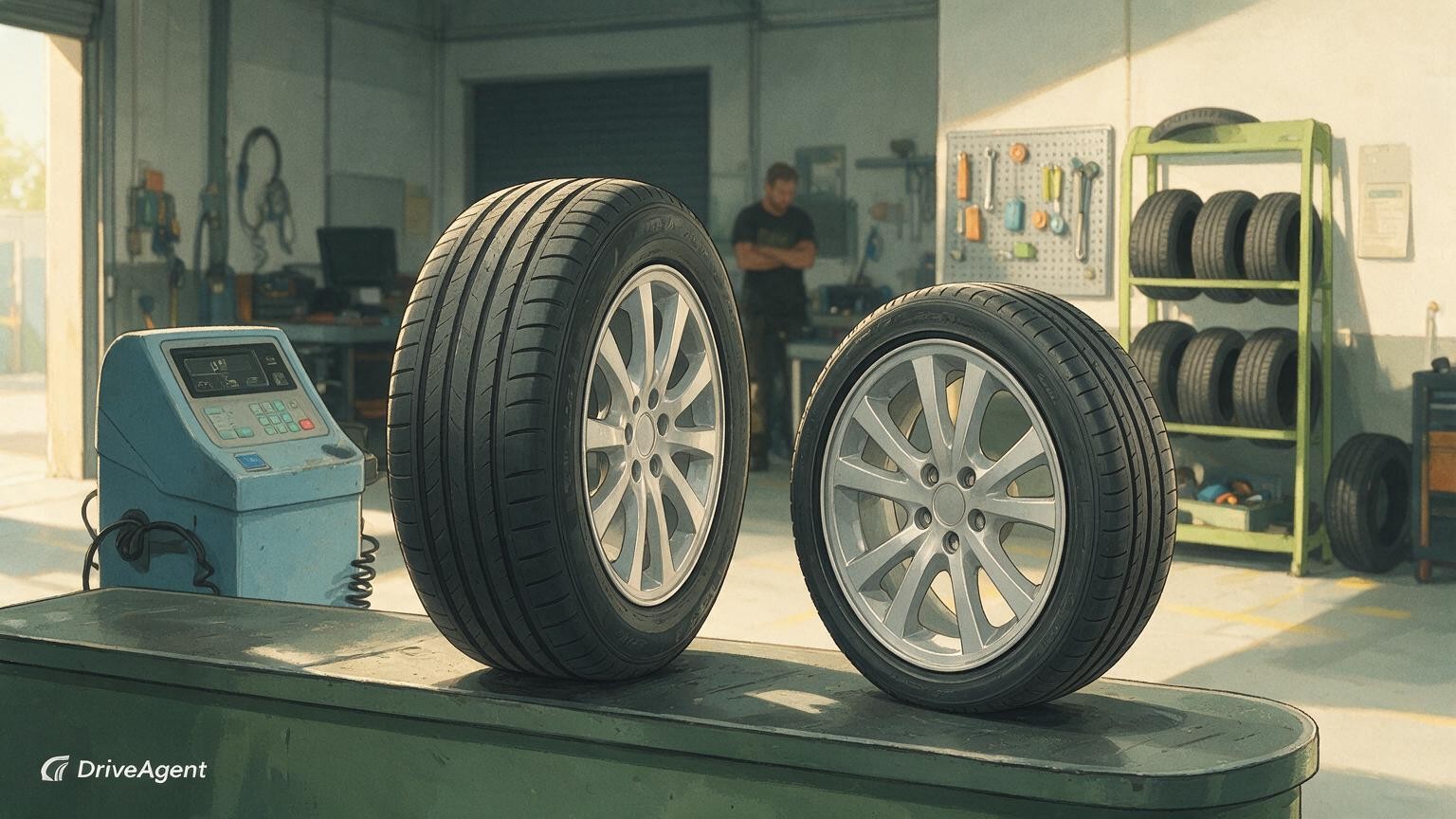
The comfort argument for taller, more flexible sidewalls finds direct support in run-flat comparison material from Scott Forbes Automotive, a Newcastle workshop. It explains that reinforced run-flat tyres can transmit more of the road surface into the cabin, particularly on patched suburban streets, potholes and sharp joins, and that on some vehicles changing from run-flats to conventional tyres can noticeably improve ride comfort and reduce road noise. Standard tyres, with more flexible sidewalls, are described as generally more forgiving on rough roads, as well as usually lighter. 3
Cost follows a similar pattern in the workshop's account. Scott Forbes Automotive notes that run-flats commonly cost more than equivalent conventional tyres because of their construction and, in some sizes, a more limited range of options, with availability sometimes an issue for specialist sizes, while conventional tyres offer a broader choice of brands and patterns at a lower purchase price and more repair opportunities after a puncture. The workshop cautions that any change away from factory tyres should follow the manufacturer's approved sizes, load index and speed rating, and that cars supplied without a spare may need a repair kit or roadside backup if conventional tyres are fitted. 3
Rolling resistance, range and electric vehicles
For electric vehicle owners, tyre choice reaches the battery. Cars24 describes eco and fuel-saving tyres as designed to lower rolling resistance using high-silica compounds, improving fuel or EV battery efficiency, though generally providing less wet-weather traction. Hot Tyres adds that electric cars are heavier than petrol equivalents because of the battery and deliver torque instantly, both of which wear tyres faster, and that EV-specific tyres combine stronger construction with low rolling resistance to protect range and internal noise-reducing foam for quieter cabins. 12
Scott Forbes Automotive urges EV owners to look beyond any single tyre label: tyre noise and rolling resistance can affect both the driving experience and range, so fitting the exact approved specification matters, along with correct load ratings, alignment and pressures. 3
Choosing between the options
For the decision itself, Cars24 sets out a five-step process: check the tyre placard, match the tyre to your driving, choose a performance tier within budget, look for promotions such as the buy-three-get-one-free deals and cashback offers it says Australian retailers commonly run, and ask for a drive-away quote covering fitting, balancing, valves, the recycling levy and wheel alignment. Its guide positions mid-tier brands such as Kumho, Hankook and Yokohama as reliable everyday choices between budget imports and premium names like Michelin, Bridgestone and Pirelli. 1
One caution applies regardless of wheel size or price point. Hot Tyres advises against mixing tyre types, brands or tread depths across an axle, because uneven grip can make the car behave unpredictably under braking or in the wet, and says that if all four cannot be replaced at once, matching tyres should be kept on the same axle with the newer pair on the rear. On all-wheel-drive and 4WD vehicles, it adds, mismatched tread depths can also stress the drivetrain. 2
AI evidence finder
Ask about this article
Ask a question to find relevant published passages and source links. AI selects evidence; the passages remain exactly as published.
Behind this report
Sources & context
Cited source mix
3 cited pages across 3 websites
- Dealer / retailer 1
- Role not assessed 2
Website breakdown
- Cars24cars24.com.au1 page
- hottyres.com.au1 page
- scottforbesauto.com.au1 page
2 cited pages with an undocumented publisher role. Websites may share ownership or repeat the same reporting.
Saved research extracts
3 / 3 cited pages with saved extracts
0 shortened at our text limit · 0 without a saved-extract record
Extracts retrieved 7 Oct 2026.
Extracts can omit page content. These counts do not verify claims or measure independent reporting. Political leaning and reliability are not rated.
- Car tyre types explained: A comprehensive guide - Cars24Dealer / retailerSource extract saved
Why these labels?Car tyre types explained: A comprehensive guide - Cars24
Who produced it
Cars24 buys and sells used cars in Australia and states that it owns the cars it sells. Identity reference ↗
How this report uses it
Cited in 7 paragraphs: Reading the sidewall code; The legal boundaries of any tyre change; Rolling resistance, range and electric vehicles; Choosing between the options.
This describes its use in our report. It does not establish the source’s editorial stance or independently corroborate every claim.
Evidence record
Text retrieved 7 Oct 2026. The retained extract did not reach our text limit. Extraction can still omit page content.
- Types of Car Tyres Explained: A Simple GuideRole not assessedSource extract saved
Why these labels?Types of Car Tyres Explained: A Simple Guide
Who produced it
We have not documented this publisher’s role. An unassigned label is not a negative rating.
How this report uses it
Cited in 5 paragraphs: Reading the sidewall code; The legal boundaries of any tyre change; Rolling resistance, range and electric vehicles; Choosing between the options.
This describes its use in our report. It does not establish the source’s editorial stance or independently corroborate every claim.
Evidence record
Text retrieved 7 Oct 2026. The retained extract did not reach our text limit. Extraction can still omit page content.
- Run Flat Versus Standard Tyres: Which Suits You?Role not assessedSource extract saved
Why these labels?Run Flat Versus Standard Tyres: Which Suits You?
Who produced it
We have not documented this publisher’s role. An unassigned label is not a negative rating.
How this report uses it
Cited in 3 paragraphs: Sidewall stiffness and ride comfort; Rolling resistance, range and electric vehicles.
This describes its use in our report. It does not establish the source’s editorial stance or independently corroborate every claim.
Evidence record
Text retrieved 7 Oct 2026. The retained extract did not reach our text limit. Extraction can still omit page content.
Keep reading
Related subjects and more from this section.
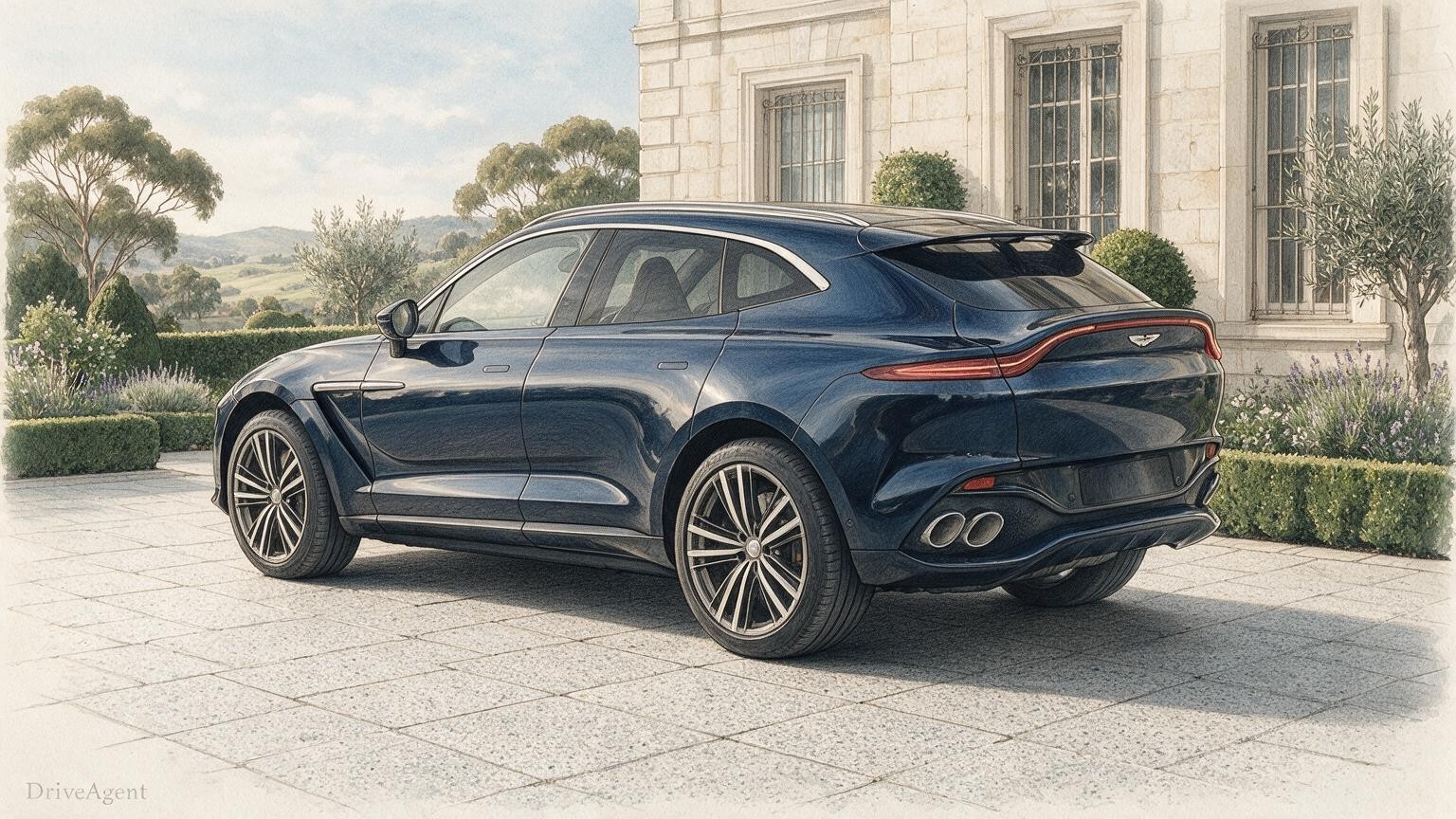
Aston Martin DBX GT adds a comfort-focused flagship to the SUV range with DBX S power
Aston Martin has unveiled the DBX GT, a new luxury-oriented variant of its supercar-adjacent SUV that keeps the DBX S's twin-turbo V8 but reworks the cabin, suspension and styling towards refinement rather than sporting aggression. First customer deliveries are slated for the fourth quarter of 2026.